

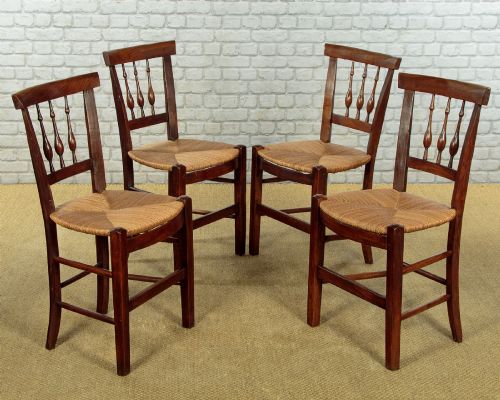
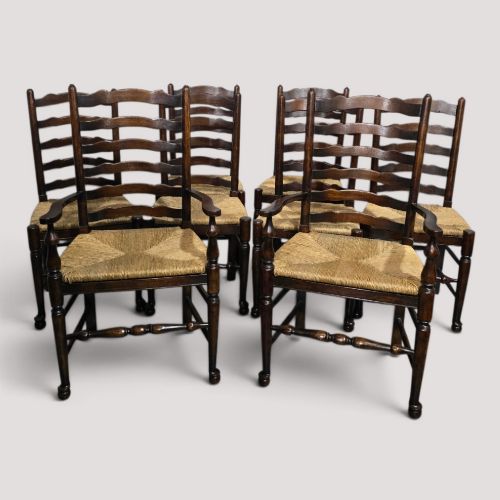
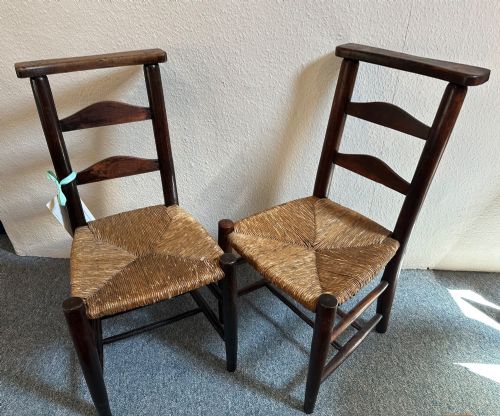
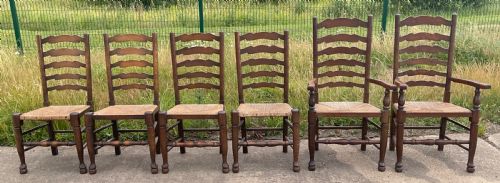
Rush Seat Side Chairs
These rush seat side chairs bring tactile country tradition into daily rooms through woven organic cord and sturdy native timbers.
Rush Seat Side Chairs
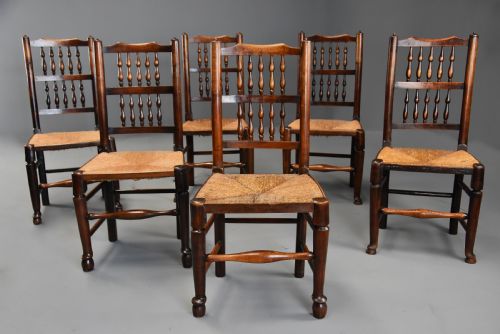
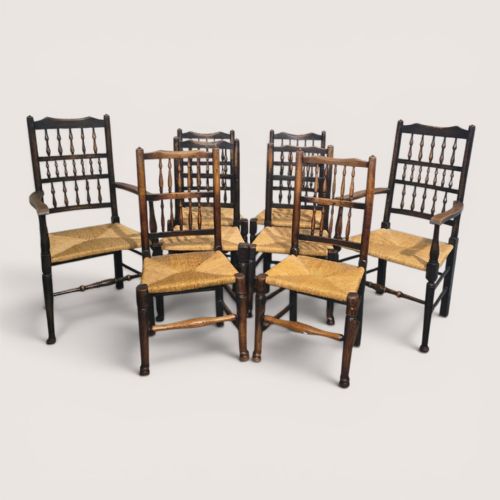
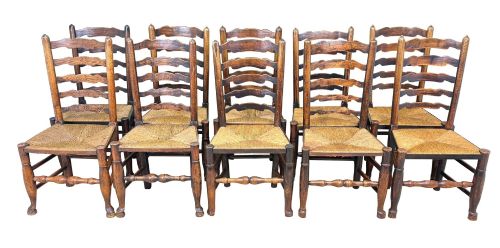
When you search for rush seat side chairs, you enter a diverse tradition of vernacular seating spanning from the eighteenth century through the Arts and Crafts movement. The pieces listed here range from simple farmhouse singles and kitchen sets to specific regional forms such as Lancashire chairs and Dales chairs.
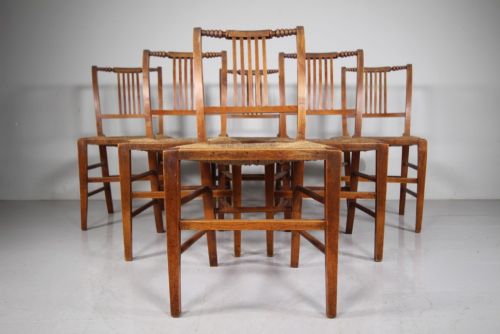
You are most likely to encounter nineteenth century ladder back and spindle back examples constructed in regional timbers. These seating forms served practical domestic roles in kitchens and dining spaces across Britain and Europe.
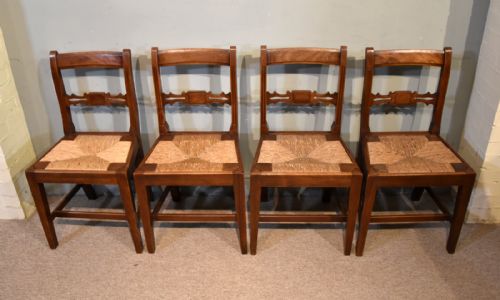
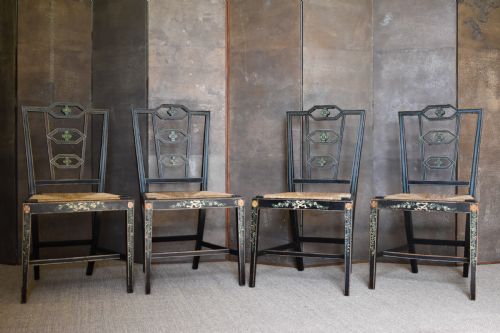
The inventory includes smaller child variants alongside large dining sets and pairs intended for halls or parlours. Origins stretch from English country workshops to French provincial makers and institutional commissions.
Materials and construction
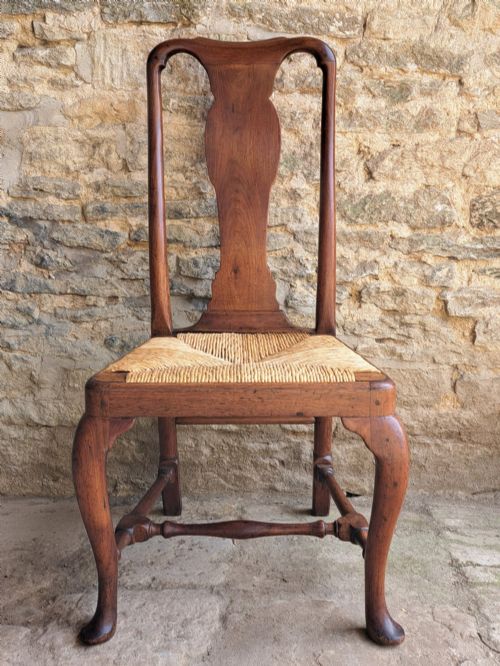
Makers utilised native hardwoods including elm, ash, oak, fruitwood, and beech for the frames, often turning spindles on a lathe or shaping ladder backs by hand. These strong timbers provided the essential rigid skeleton required to support tightly woven seating surfaces.
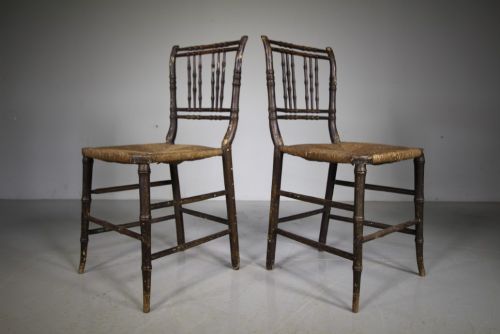
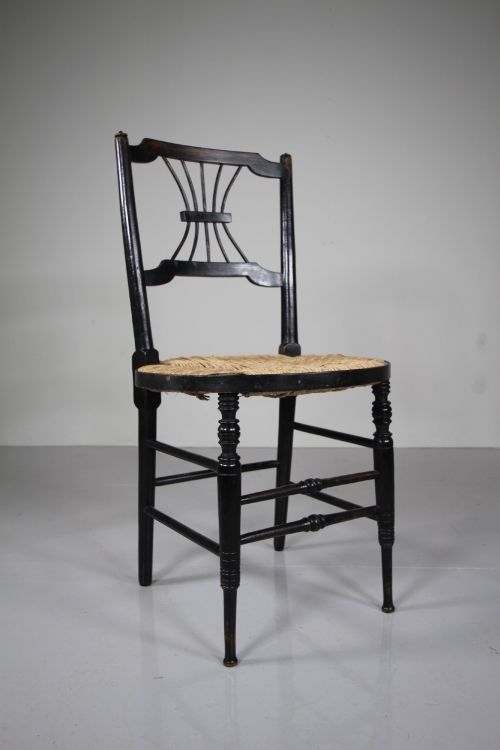
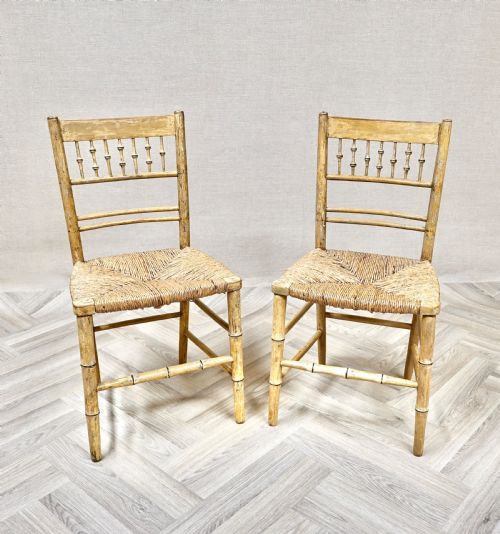
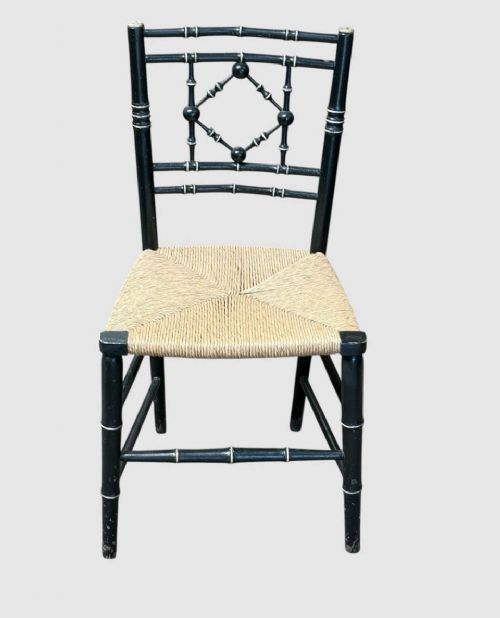
The distinctive seating surface consists of rush or plaited straw wrapped tightly around wooden rails to form a durable, textured pad. Regional variations incorporate painted finishes, ebonisation, or bamboo forms depending on the prevailing style of the period.
Rush Seat Side Chairs Retail Price Guide 2026
Typical asking prices for rush seat side chairs among the pieces listed under this phrase on Sellingantiques today, from the lower quarter to the upper quarter. They describe what is for sale here now, not the wider market.
The listings span from the early eighteenth century through the Arts and Crafts period, featuring oak, elm, ash, and painted pine.
Assessing the execution
Quality rests upon the integrity of the timber frame and the tightness of the woven rush. Superior examples display balanced proportions, honest patination on the wood, and sturdy joinery that remains firm through generations of use.
The finesse of the turning on ladder backs and spindle backs distinguishes ordinary utility seating from refined workshop output. Consistency across a larger matched or harlequin set elevates the desirability of the group.
William Morris·Rossetti·Philip Webb·Ford Maddox Brown·Lawrence Neal·Edward Gardener
The Rush Seat Side Chairs Glossary
- Ladder back
- A chair back featuring multiple horizontal wooden slats between the upright posts. This traditional construction provides sturdy back support in vernacular seating.
- Rush
- Marshland plant stems twisted and woven to create a resilient seating surface. It offers a natural texture that feels comfortable and flexes with weight.
- Spindle back
- A chair back composed of numerous thin, vertical turned wooden rods. This design lightens the visual weight of the frame while maintaining structural strength.
- Elm
- A tough, fibrous native hardwood frequently chosen for seats and structural components due to its resistance to splitting. Furniture makers valued its interlocking grain for durability.
- Harlequin set
- A collection of dining chairs that match in style and period but vary slightly in detail or provenance. Such groupings reflect how domestic seating accumulated organically over time.
Rush Seat Side Chairs: Frequently Asked Questions
How do I care for a rush seat?
Keep woven rush seats dry and clean them gently with a soft brush to remove dust. Avoid excess moisture, which can weaken the natural fibres over time.
Applying a light paste wax to the wooden frame preserves the finish while leaving the woven seating surface in its natural state.
Can these chairs be used daily?
Most of these sturdy wooden designs were built for heavy domestic service in kitchens and dining rooms. Their robust construction handles everyday sitting comfortably.
Check that the joints remain tight and the woven cord is secure before placing them into heavy rotation around a modern dining table.
What is a Dales chair?
A Dales chair is a traditional regional ladder back seating form originating from the Yorkshire dales. These pieces typically feature characteristic turning and rush pads.
They represent distinct local woodworking traditions that prioritised functional comfort and sturdy native materials.
How do I spot an Arts and Crafts example?
Arts and Crafts pieces often display honest construction, simple structural lines, and visible craftsmanship associated with reformers like William Morris. They celebrate traditional techniques over industrial ornamentation.
Look for maker marks, simplified ladder backs, and unpretentious finishes that highlight the natural grain of the timber.