


Rural Scene Canvas Painting
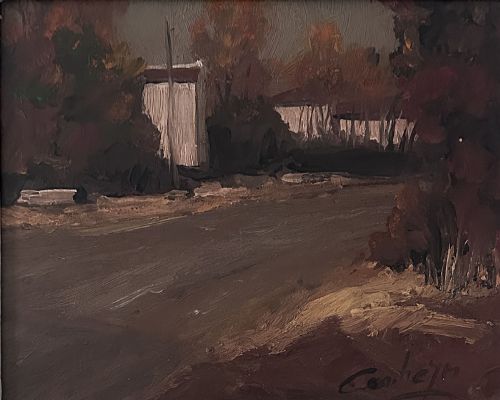
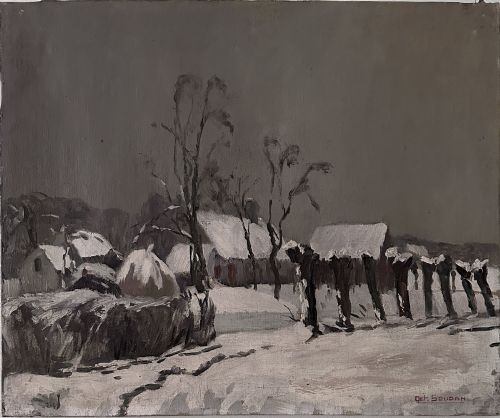
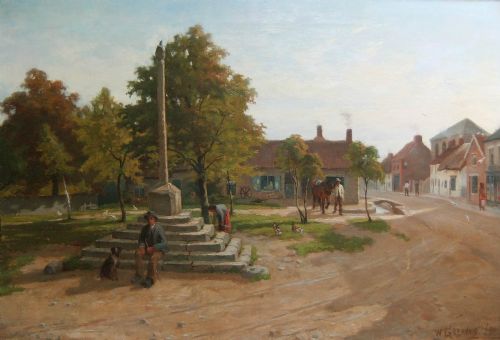
A rural scene canvas painting brings nineteenth and twentieth century pastoral life, agriculture and village architecture directly onto the wall.
Rural Scene Canvas Painting
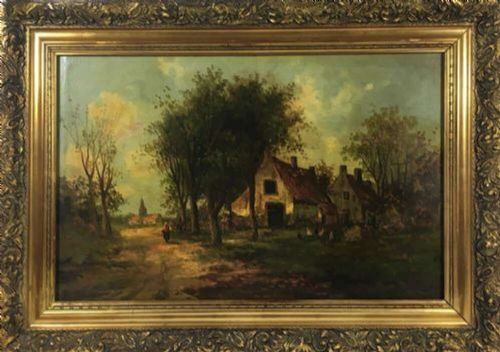
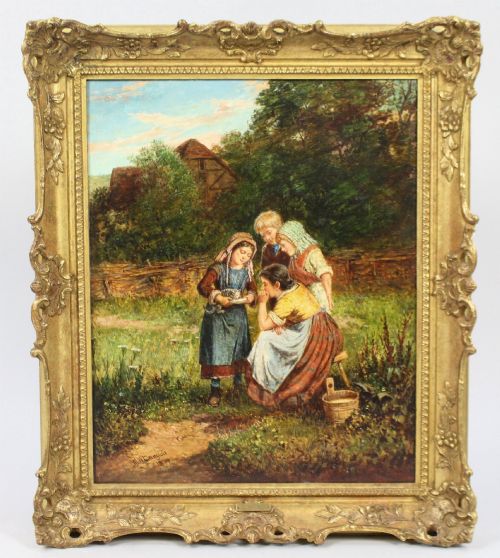
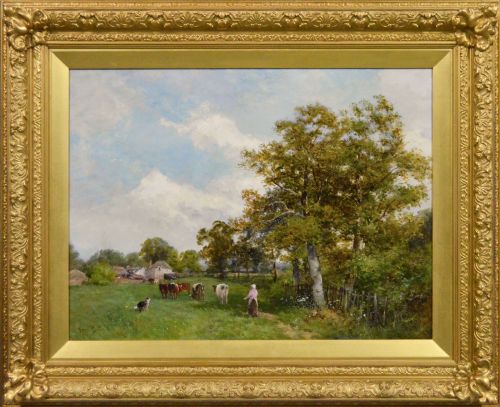
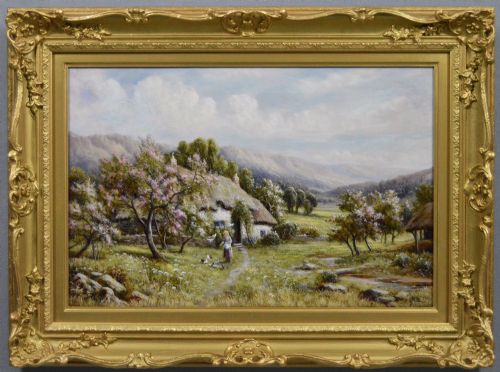
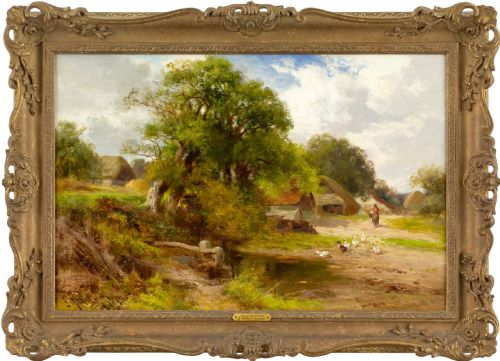
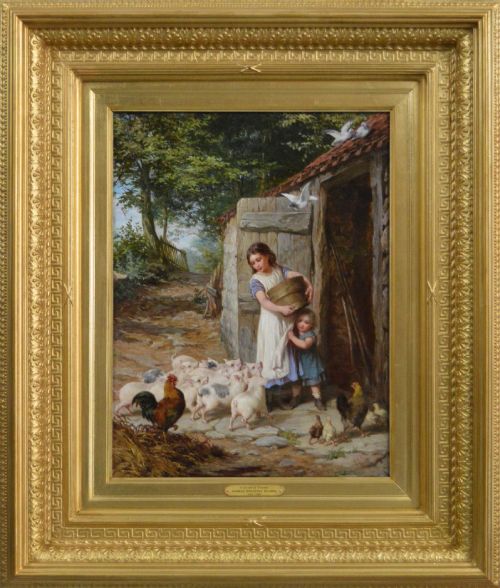
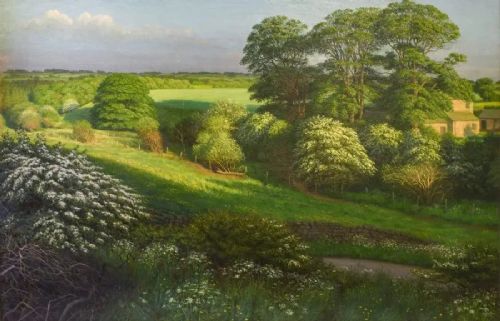
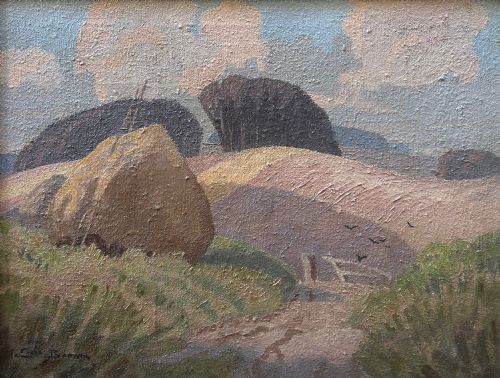
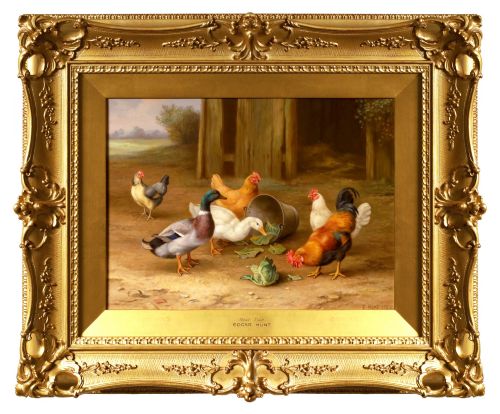
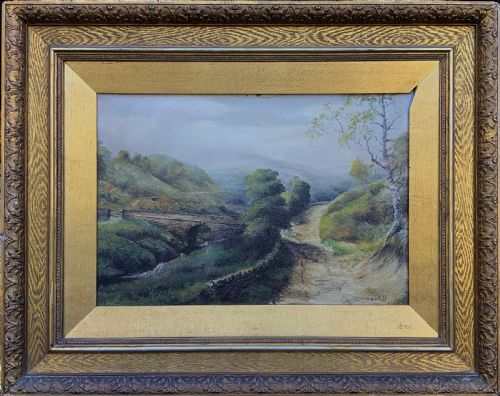
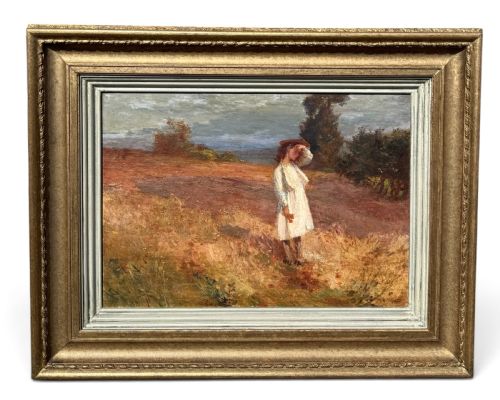
A rural scene canvas painting depicts agricultural land, farmyard animals, cottages and country workers captured in oil paint. These works span nineteenth century Victorian pastoral compositions through to mid twentieth century impressions of the countryside.
The selections available here rely heavily on nineteenth century British and European schools, featuring working horses, cattle, streams and thatched cottages. Painters record harvest gatherings, livestock grazing and quiet village lanes across canvas supports.
Buyers encounter framed works executed by named artists and regional schools working within traditional country, impressionist and realism movements. These paintings document rural trades and agrarian routines from decades past.
How They Were Made
Artists painted primarily with oil paint on stretched canvas, often mounted within wooden frames finished with gesso and giltwood details. The physical support consists of woven canvas fixed over a wooden stretcher frame.
Pigments were applied using brushwork that ranged from precise Victorian realism to looser impressionist dabs. Finished works frequently received protective varnishes and sat within moulded or ebonised frames.
Several canvases faithfully record the stubborn expressions of working shire horses, stubborn sheep, and inquisitive farmyard pigs.
What Varies in Quality
Quality rests upon the artist's command of light, atmosphere and anatomical proportion within the figures and animals. Superior canvases display confident brushwork and balanced compositions that capture movement and depth convincingly.
The condition of the painted surface and the original frame influences the overall integrity of the piece. Works retaining their untouched surface texture and period framing demonstrate higher preservation standards.
Mark William Langlois·David Bates·Robert John Hammond·George Augustus Holmes·Edgar Hunt·Umberto Volpato·Sydney Yates Johnson·Raimond Louis Lecourt·Thomas Sidney Cooper·Herbert Royle·Ernest Higgins Rigg·Owen Bowen·Henry John Yeend King·Samuel Joseph Clark·Henry John Boddington·Willem Anton Alexander Knip·Charles Vickers
The Rural Scene Canvas Painting Glossary
- Oil on Canvas
- Pigment mixed with drying oils applied to a woven fabric support stretched over a wooden frame. This medium allows for rich colour depth and blended transitions.
- Gesso
- A plaster mixture applied to wood frames before gilding or painting. It provides a smooth base for decorative mouldings.
- Barbizon School
- A nineteenth century French art movement centred on realistic landscape painting inspired by nature. Artists painted directly out of doors to capture natural light.
- Genre Painting
- Depictions of aspects of everyday life by portraying ordinary people occupied in common scenes. These works document historical social activities and labour.
- Giltwood
- Wood carved and coated with a thin layer of gold leaf or metallic powder. It provides ornamental framing for nineteenth century works.
Rural Scene Canvas Painting: Frequently Asked Questions
How do I clean an oil painting?
Surface dust is removed gently using a soft, dry brush without applying moisture or pressure. Professional conservators handle deep cleaning to protect the oil paint layers.
Harsh chemical cleaners or water damage historical canvases permanently. Specialist intervention keeps the pigment and gesso secure.
Are these paintings supplied with frames?
Many listings include period wooden frames, such as giltwood or ebonised moulding, appropriate to the painting's era. Frame details appear clearly within the individual item description.
Some pieces are sold in their original frames, while others require mounting. Checking the description confirms the exact framing status.
How do I identify the date of a canvas?
Dates are determined through stylistic markers, artist signatures, framing techniques, and canvas stamps on the reverse. Victorian and early twentieth century works show distinct handling of rural subjects.
Comparative study of recorded works by specific artists helps narrow down the production decade. Documentation or signatures provide the most reliable dating evidence.
Where should I hang a rural scene?
These works suit dining rooms, living spaces, and studies where natural light complements the painted pastoral tones. Direct sunlight should be avoided to protect oil pigments from fading over time.
Stable room humidity prevents the canvas from slackening and protects the wooden stretcher. Proper placement preserves the structural integrity of the artwork.