




Rural French Scene Art
Rural french scene art captures the quiet rhythms of the countryside through oil on canvas and watercolour.
Rural French Scene Art
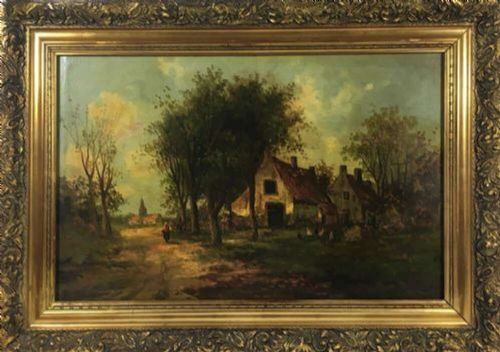
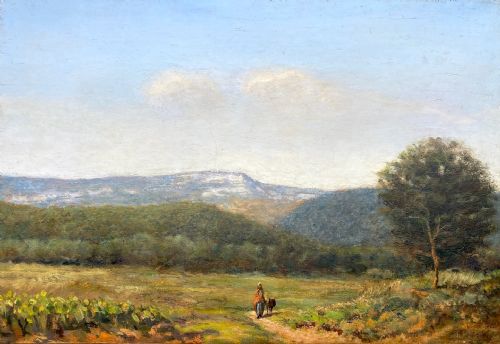
Rural french scene art encompasses pastoral landscapes, farmyards, and village life across various periods. These works record agricultural labour, village lanes, and riverbanks in regions such as Provence, Normandy, and Brittany. Collectors encounter oil paintings on canvas alongside works on panel and paper.
The material spans the nineteenth century through the mid twentieth century. Pieces emerge from movements including the Barbizon School, French Impressionism, and Post-Impressionism. Domestic scenes and working horses appear frequently alongside quiet courtyards and haystacks.
Many examples arrive in period frames, often giltwood, which complement the canvas. Artists document everyday provincial existence with figures on paths or beside streams. The focus rests firmly on the unhurried atmosphere of the French countryside.
How they were made
Painters utilised oil paint applied to canvas, wood panels, or paper supports. Brushwork ranges from tight academic realism to the looser strokes characteristic of impressionist and post-impressionist approaches. Pigments capture natural light upon fields, farmhouses, and livestock.
Periods recorded span from eighteen sixty through the nineteen fifties, including nineteenth century pastoral and art deco examples.
What varies in quality
The strength of composition and brushwork distinguishes accomplished works from simpler decorative pieces. Handling of light and atmospheric perspective creates depth within the landscape. Provenance and secure attribution to recorded artists elevate the standing of a painting.
Condition of the canvas and original paint layers remains central to the integrity of the work. The presence of a period frame matching the era of the painting adds historical completeness. Subtle colour palettes and confident draughtsmanship indicate superior execution.
Raimond Louis Lecourt·Robert McGregor·Eugene Battaille·Antoine Bouvard·Maurice Asselin·Henri Joseph Harpignies·Salomon le Tropezien
The Rural French Scene Art Glossary
- Barbizon School
- A nineteenth century French art movement focused on real life landscape painting. Artists painted directly from nature in the forests and fields surrounding a specific village.
- Giltwood
- Wood that has been covered with a thin layer of gold leaf. This material frequently appears on the antique frames enclosing these paintings.
- Pastoral landscape
- A genre of art depicting country life and agricultural scenes in an idealized manner. These compositions often feature figures working fields or tending livestock.
- Post-Impressionism
- An art movement extending roughly from the late nineteenth century to the early twentieth century. Practitioners explored emotion and symbolic content through bold colours and distinct brushstrokes.
- Watercolour
- A painting method where colours are made of pigments suspended in a water soluble vehicle. Artists apply these mixtures to paper surfaces for delicate landscape studies.
Rural French Scene Art: Frequently Asked Questions
What periods do these paintings cover?
The works span from the nineteenth century through the mid twentieth century. Dates within the evidence stretch from eighteen sixty to nineteen fifty.
Earlier pieces reflect Barbizon traditions whilst later examples embrace impressionist and art deco sensibilities.
What subjects appear in these scenes?
Motifs include farmyards, working horses, cattle by streams, and figures engaged in laundry or field labour. Locations such as Provence, Normandy, and Brittany feature prominently.
Village landscapes and country lanes capture the quiet character of rural existence.
Which materials support the paint?
Canvas serves as the primary support for oil paint across the majority of works. Wood panels and paper also appear in select examples.
Original frames constructed from giltwood frequently accompany the paintings.
How do styles differ across the selection?
Styles range from nineteenth century pastoral realism to French impressionism and post-impressionism. Some works show precise academic execution whilst others display looser brushwork.
Movements like the Barbizon school and the Camden group influence individual artists.