



Rural Farm Scene Painting
When you search for a rural farm scene painting, you are looking at works capturing agricultural life, working animals, and pastoral landscapes from the nineteenth and twentieth centuries.
Rural Farm Scene Painting
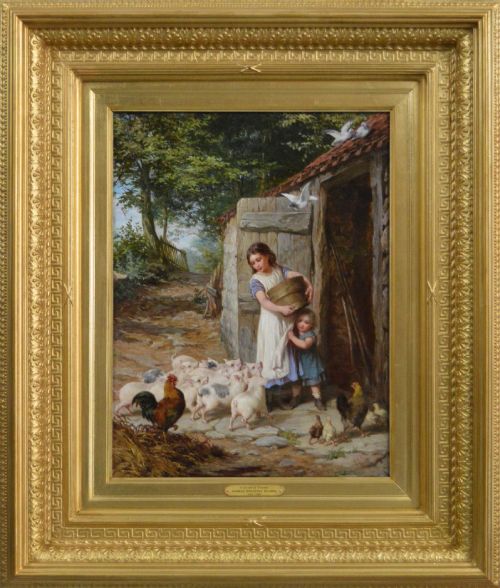
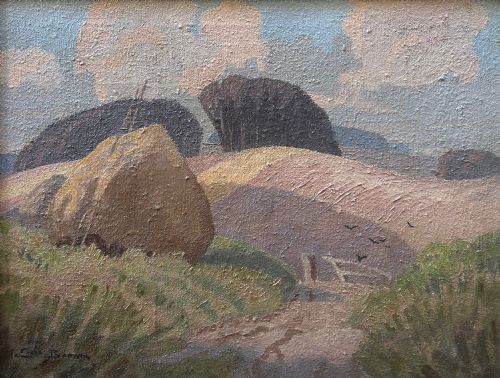
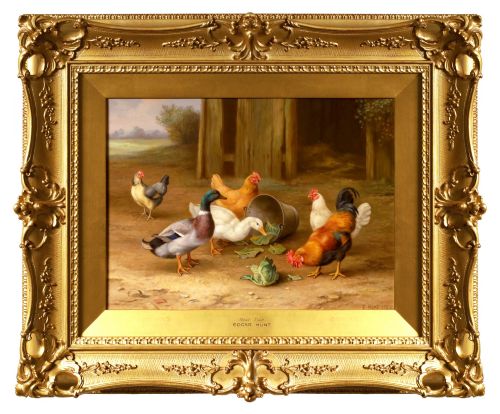
A rural farm scene painting captures agricultural labour, livestock, and country life across British and European art traditions. The works available here span from the nineteenth century through the mid twentieth century, encompassing pastoral landscapes, farmyard animal studies, and depictions of farmworkers.
The most common subjects encountered in these listings are shire horses at work, cattle resting by streams, haymaking scenes, and homesteads. These pieces range from detailed Victorian genre paintings to looser Edwardian watercolours and mid century oils on board or canvas.
How They Were Made
These works rely primarily on oil paint applied to canvas, wood panels, or board, alongside watercolours on paper. Artists utilised traditional layering and brushwork techniques to build texture in fields, animals, and farm buildings.
Supports varied according to the period and scale, with nineteenth century works frequently utilising heavy stretched canvas, while later pieces occasionally employed panel or board. Many pieces retain period frames, including ebonised wood mouldings.
Listings feature works spanning the nineteenth and twentieth centuries, executed in oil paint, watercolour, and oil on panel.
What Varies in Quality
Quality in a rural farm scene painting rests on the artist's ability to render anatomical accuracy in working animals and the natural light of the countryside. Stronger examples demonstrate confident brushwork and balanced composition in complex farmyard settings.
The distinction between standard works and finer pieces often lies in the depth of atmospheric detail and the character given to human and animal figures alike. Greater mastery shows in the handling of textures such as straw, fleece, and weathered timber.
George Augustus Holmes·Edgar Hunt·Raimond Louis Lecourt·Herbert Royle·James William Booth·Ernest Pile Bucknall·Samuel Joseph Clark·Charles Vickers·John Linnell·George Soper·Florence Hess·Arthur Winter Shaw·John Frederic Greenwood·Robert Russell MacNee·Owen Bowen·B. Kaufmann·Rowland Henry Hill·Frederick J. Knowles·John Frederick Herring Jnr·John R. K. Duff·Frederick William Jackson·John Percy Cooke·Ernest Higgins Rigg·George Hamilton Constantine·Thomas Mackay
The Rural Farm Scene Painting Glossary
- Genre painting
- A style depicting scenes from everyday life, often featuring farmworkers, market activities, or domestic animals. These works focus on ordinary human routines rather than grand historical narratives.
- Pastoral
- An artistic style celebrating rural life and agricultural landscapes, typically conveying a sense of peace or industrious harmony. It frequently incorporates depictions of shepherds, ploughmen, and livestock.
- Oil on canvas
- A traditional medium where pigments suspended in oil are applied to a woven fabric surface. This combination allows for rich colour blending and substantial textural depth.
- Watercolour
- A paint consisting of water-soluble pigments applied to paper. It produces translucent washes of colour well suited for capturing light and atmospheric sky effects.
- Provenance
- The documented history of ownership surrounding a work of art. Established records help confirm the authenticity and origin of nineteenth and twentieth century paintings.
Rural Farm Scene Painting: Frequently Asked Questions
What periods do these farm paintings cover?
The works listed here primarily date from the nineteenth century up through the mid twentieth century. You will find Victorian interpretations alongside Edwardian watercolours and later twentieth century regional landscapes.
This broad timeline reflects shifting artistic styles, moving from detailed Victorian pastoral realism toward freer impressionistic brushwork in the 1900s and 1920s.
What subjects appear in these scenes?
Common subjects include shire horses ploughing fields, cattle resting near streams, farmhands harvesting hay, and depictions of traditional farmyards. Animals feature prominently alongside human labour.
Many compositions focus on specific rural locations across Britain and Normandy, recording the daily realities of agricultural work before mechanisation.
How should I frame an antique painting?
Selecting a frame depends on the period of the artwork, with many pieces already housed in period ebonised wood or gilt frames. Maintaining a sympathetic wooden or moulded frame helps preserve the historical context of the canvas.
Consulting a professional framer ensures that the backing and materials used will protect the oil or watercolour without damaging the original edges.
Where were these rural scenes painted?
Artists painted these scenes across various British rural regions, including Yorkshire, Cumberland, and the dales, as well as continental locations like Normandy. Painters often worked outdoors or translated field sketches into finished studio pieces.
Local topography heavily influenced the mood and palette, from northern gritstone barns to southern harvest fields.