




Rural Country Scene Picture
A rural country scene picture brings the quiet of fields, cottages and farmyards directly onto the wall through traditional British painting.
Rural Country Scene Picture
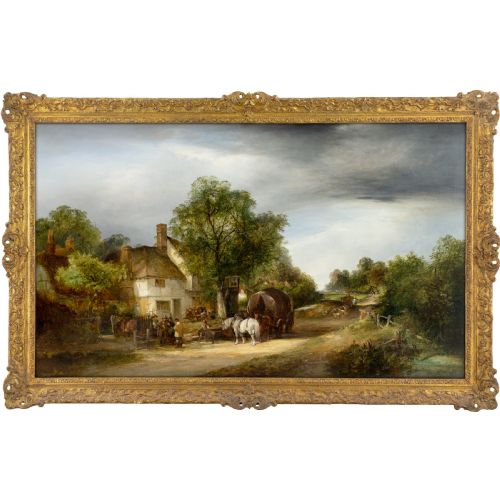
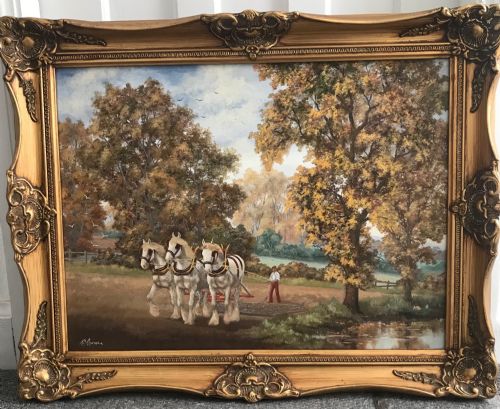
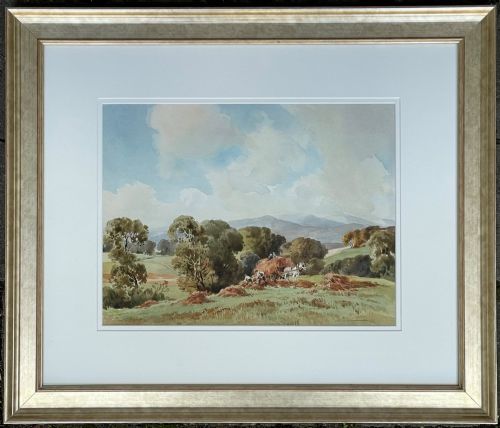
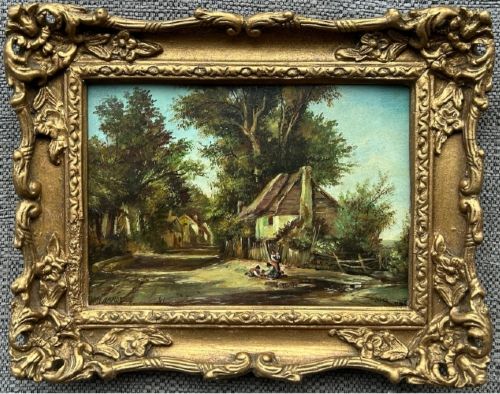
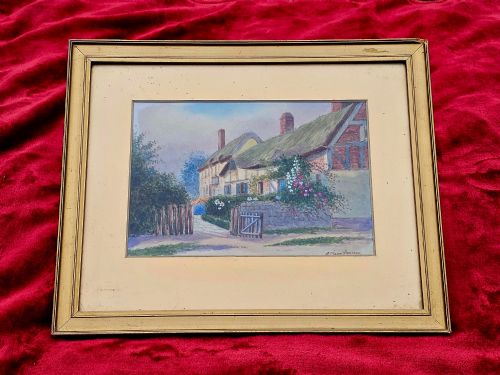
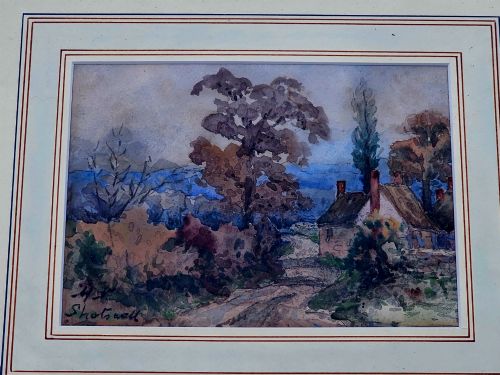
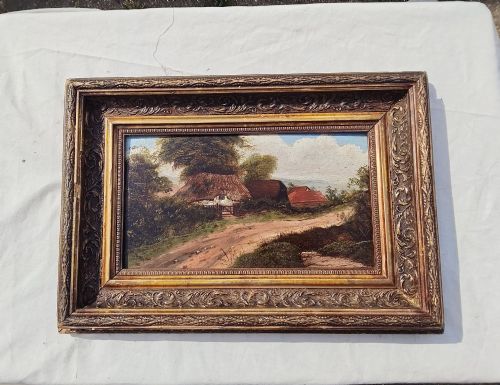
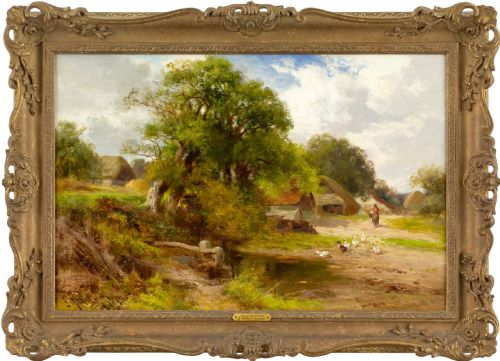
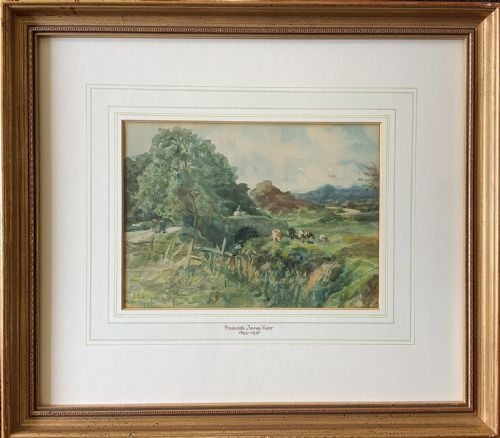
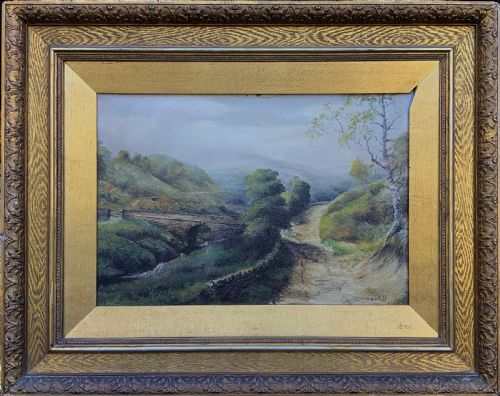
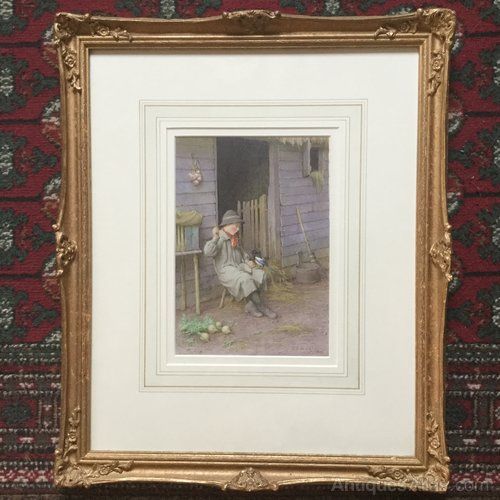
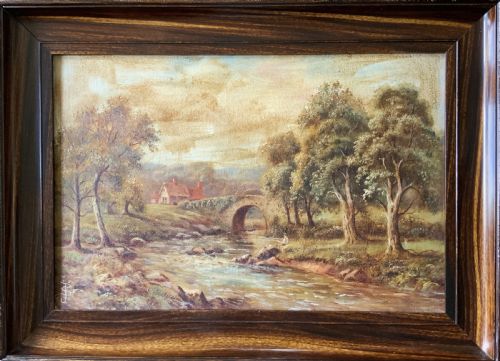
A rural country scene picture captures agricultural life, village lanes and pastoral landscapes across Britain from the nineteenth century into the twentieth century. These works range from intimate watercolours of haymaking to substantial oil paintings on canvas depicting working horses, cattle and thatched cottages.
Buyers seeking this phrase encounter framed artwork executed by regional artists belonging to the British School, Norwich School and various Impressionist circles. The subjects focus closely on daily agrarian routines, streamside pastures and quiet rural retreats.
The material formats span traditional oil on canvas and wood panel alongside delicate paper watercolours, often preserved behind glass within period gilt wood frames. Each piece records a vanished countryside through the specific lens of Victorian and Edwardian observation.
Materials and Methods
Artists painted these rural subjects using oil on canvas, wood panel or card, applying pigment to build rich textures in fields and foliage. Watercolours on paper utilised washes and fine brushwork to capture atmospheric light over valleys and farmyards.
Many works incorporate original gilt wood frames finished with gold leaf, completing the presentation of these nineteenth and early twentieth century paintings. The combination of durable oil paints and protected watercolours ensures these historical depictions survive in recognizable form.
Several canvases quietly preserve the stubborn gaze of working shire horses, patient cattle and small farmyard ducks interrupting the harvest.
Evaluating Quality and Execution
Quality rests upon the artist's handling of light, atmospheric depth and the natural animation of figures and animals within the landscape. Superior works demonstrate confident brushwork and precise tonal balance rather than stiff or formulaic composition.
The preservation of the original medium, whether oil pigment or watercolour on paper, alongside the integrity of the period frame, determines the overall standard of the piece.
Percy Lancaster·William Howard Hardy·Thomas Sidney Cooper·Henry John Yeend King·William Langley
The Rural Country Scene Picture Glossary
- Watercolour Painting
- A work executed with water-soluble pigments on paper, valued for its translucent washes and delicate depiction of light. These pieces require protection behind glass to prevent moisture damage.
- Oil on Canvas
- A traditional painting method utilising pigments suspended in drying oil applied to stretched fabric. This technique allows for rich texture and deep colour layering.
- British School
- A collective term for artists working within Great Britain who shared stylistic approaches influenced by national traditions of landscape and genre painting. It encompasses regional groups like the Norwich School.
- Gilt Wood
- Wood carved and coated with a thin layer of gold leaf or metallic powder, commonly used for framing traditional paintings from the Victorian and Edwardian eras.
Rural Country Scene Picture: Frequently Asked Questions
What periods do these rural paintings come from?
The available works date primarily from the nineteenth century through the Edwardian period and into the early twentieth century. This span includes Victorian pastoral scenes and later traditional British school paintings.
Specific dates on the pieces range from the 1830s through to the 1960s, reflecting changing artistic interpretations of the countryside over time.
How should I hang and care for a watercolour?
Watercolour paintings on paper require careful placement away from direct sunlight to prevent the pigments and paper from fading. Maintaining stable indoor humidity protects both the delicate medium and the underlying paper support.
Keeping the original glass and frame intact helps shield the artwork from environmental pollutants and physical wear.
What subjects are most common in these scenes?
Common subjects include agricultural labour such as haymaking, ploughing teams with shire horses, and cattle resting by streams. Artists also frequently depicted thatched cottages, village lanes and quiet pastoral landscapes.
These depictions focus directly on traditional rural life and agricultural routines across British counties.
How can I tell an oil painting from a watercolour?
Oil paintings feature textured, opaque pigment applied to canvas, wood panel or card, often displaying visible brushstrokes and a rich sheen. Watercolours present a transparent, flat appearance on paper where the texture of the sheet remains visible beneath thin washes.
Watercolours are invariably displayed behind glass, whereas many oil paintings on canvas remain exposed to the air within their frames.