



Vintage English Countryside Art
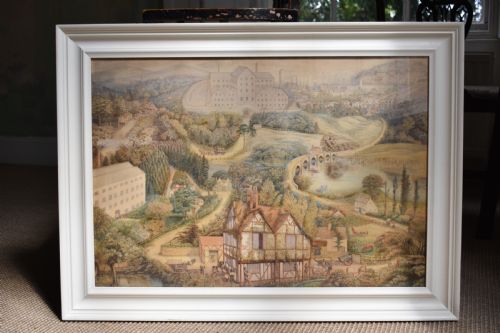
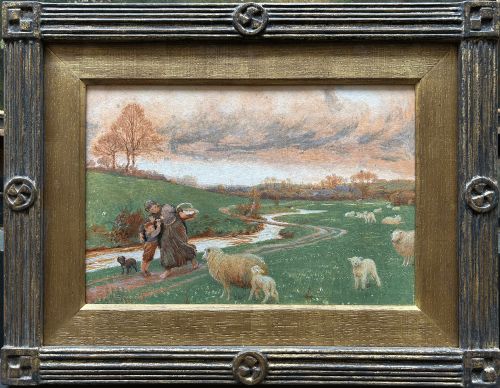
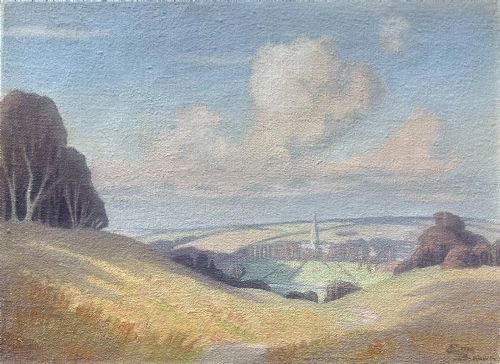
Vintage English countryside art captures rural rivers, farms, and hills through paintings that bring historic pastoral scenes directly into domestic interiors.
Vintage English Countryside Art
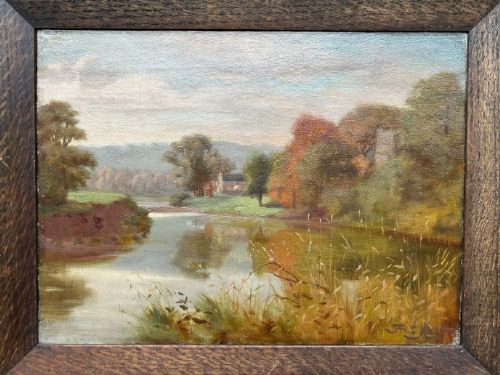
When you search for vintage English countryside art, you are looking at original paintings that depict rural life, rivers, cottages, and agricultural landscapes across Britain. These works record local topography from Yorkshire, Dorset, Devon, and the West Country through the eyes of regional artists.
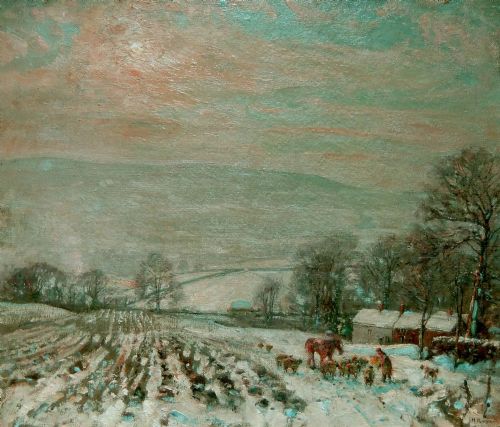
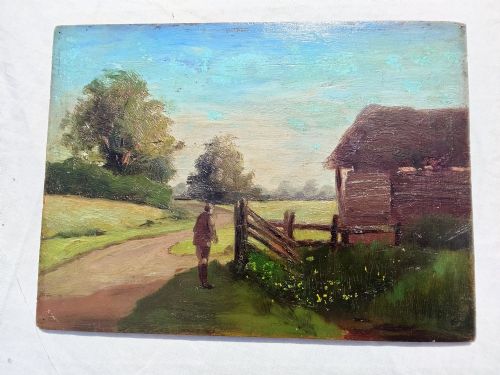
The pieces you are most likely to meet on this page span the Victorian era through the mid-twentieth century, encompassing Edwardian pastoral scenes and early modern British interpretations. They capture specific rural moments, ranging from winter feeding scenes to harvest carts by streams.
Most examples present framed compositions executed on canvas, wood panel, or paper. They serve as historical records of changing rural architecture and working countryside methods before modern suburban expansion.
Materials and Technique
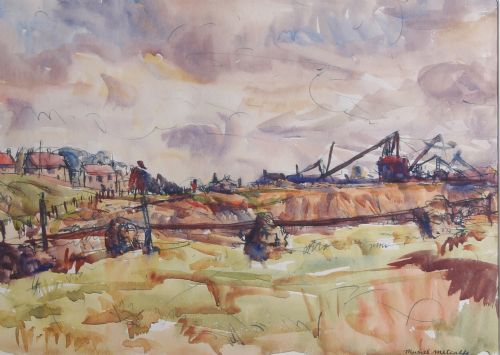
Artists working within this tradition relied primarily on oil paint applied to canvas, wood panels, or wooden boards, alongside watercolour pigment on paper. Oil mediums allowed for textured impasto effects and rich layering, whilst watercolours captured translucent light across rivers and estuaries.
Support materials varied from traditional stretched canvas to wooden panels and heavy paper sheets, often housed within original period frames. Pigments were brushed, layered, or washed to render the atmospheric light of Yorkshire moors and southern chalk streams.
Several canvases faithfully record stubborn Dartmoor ponies refusing to move out of the artist's way.
Variations in Quality
Quality in these rural paintings rests upon the artist's handling of light, atmosphere, and spatial depth within the landscape. Works by established painters who captured transient weather and seasonal nuance stand apart from ordinary topographical sketches.
The strength of composition and the fidelity of brushwork define the upper tier of the range, where artists translated mundane farmyards or riverbanks into compelling pastoral studies. The preservation of the original surface and period framing also influences the character of each piece.
Frederick Marriott·Herbert Royle·Muriel Metcalfe·Frederick Walker·Florence Adelina Hess·Hubert Wellington·Joseph Edward Hennah·Charles Walter Simpson·Helen Layfield Bradley·Henry Charles Fox·Cuthbert Crossley·John Sanderson Wells·Reginald Grange Brundrit·George Graham·James William Booth·Frederick Septimus Lewis·J Phipps·M C Hider·William Greaves·Frank Percy Wild·Charles Vickers·Benjamin Williams Leader·William Joseph Boyes·Owen Bowen·Harry Sylvester Stannard
The Vintage English Countryside Art Glossary
- Oil on Canvas
- Pigment suspended in drying oil applied to a woven fabric stretched across a wooden frame. This method was widely utilised for durable, large-scale landscape paintings.
- Watercolour Pigment
- Finely ground colour suspended in a water-soluble binder, applied to paper to create luminous washes. It is frequently associated with detailed topographical views and river scenes.
- Impasto
- Paint applied thickly to a canvas or panel so that the brush or palette knife marks remain clearly visible. This technique adds tactile dimension to elements like clouds and foliage.
- British Impressionism
- A painting style influenced by French techniques, focusing on natural light, outdoor settings, and everyday rural subjects. It gained prominence among artists working in late Victorian and Edwardian periods.
Vintage English Countryside Art: Frequently Asked Questions
What periods do these paintings cover?
The works span from the nineteenth century through the 1960s, capturing shifting artistic approaches across Victorian, Edwardian, and mid-century British schools.
Earlier pieces often reflect nineteenth-century naturalism, while mid-century examples show the evolution of modern British landscape painting.
How were these landscape scenes painted?
Artists used oil paint on canvas, panel, or board, as well as watercolour pigment on paper, to record rural views. Many practitioners painted outdoors to capture authentic lighting and atmospheric conditions.
Brushwork ranged from smooth academic application to textured impasto finishes that emphasised light on water or fields.
Where do the depicted locations come from?
The compositions record specific British geographies, including Yorkshire moors, Dorset coastlines, Devon valleys, and Gloucestershire rivers. Artists frequently titled their works after exact local farms, villages, and landmarks.
This topographical grounding provides a direct window into historic rural communities across England.
How should I frame and display vintage art?
Many pieces retain their original wooden frames, which complement the period aesthetic of the artwork. Displaying them away from direct sunlight protects the pigments from fading over time.
Allowing adequate wall space lets the narrative of the countryside scene engage the room properly.