


Ruffled Shade Lamp
These ruffled shade lamp examples bring together blown glass and heavy brass, offering a distinct lighting choice for period interiors.
Ruffled Shade Lamp
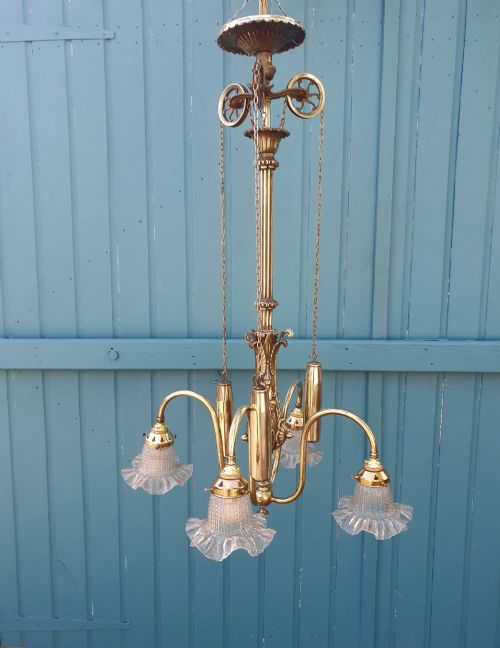
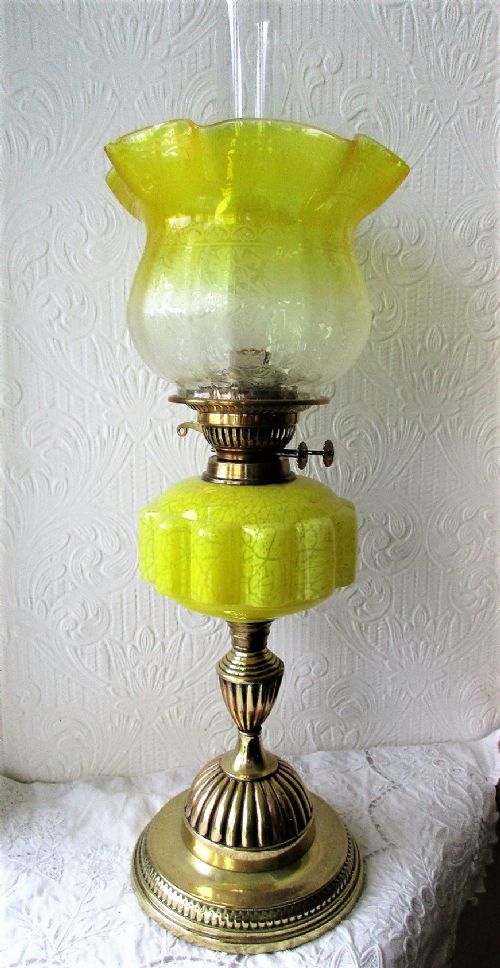
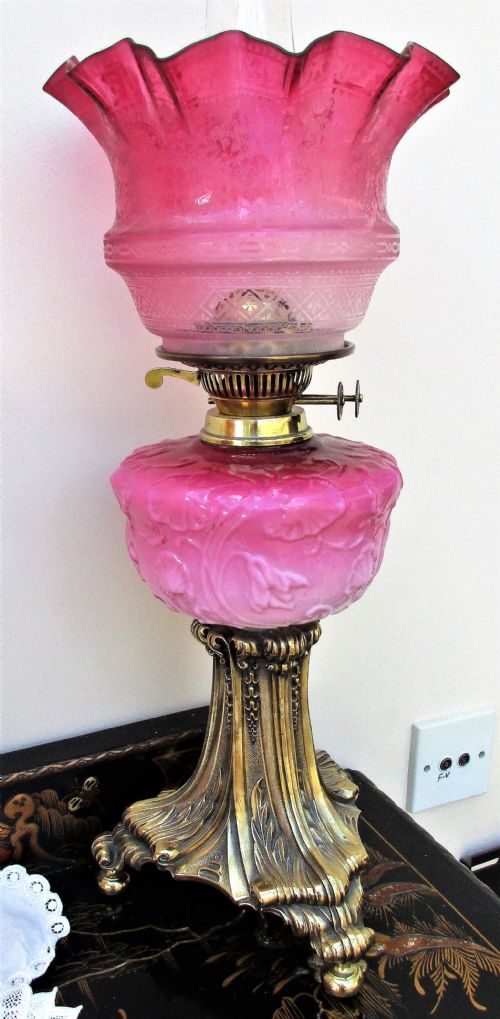
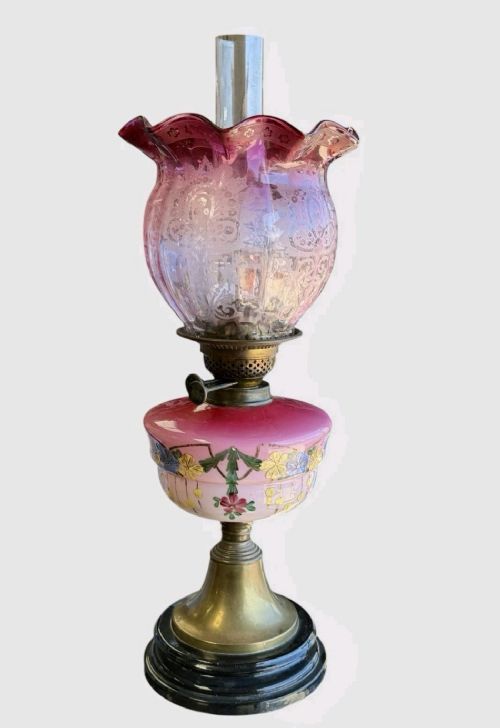
When you search for a ruffled shade lamp, you encounter lighting fixtures that span the Victorian, Edwardian, and Art Nouveau periods, frequently combining functional oil burners with decorative glass elements. The selection relies heavily on nineteenth and early twentieth-century designs, where manipulated glass edges define the upper portion of the fitting.
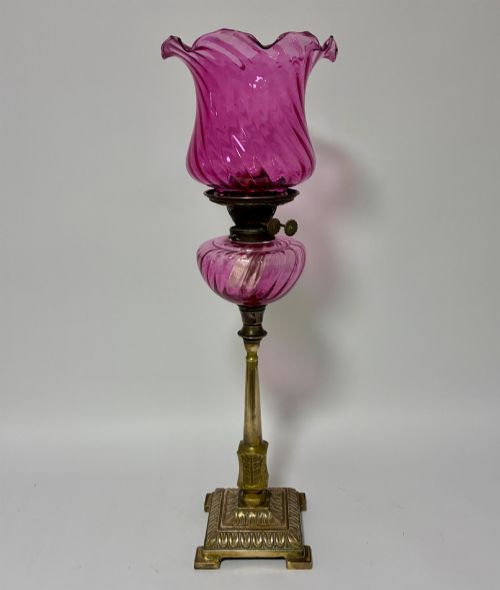
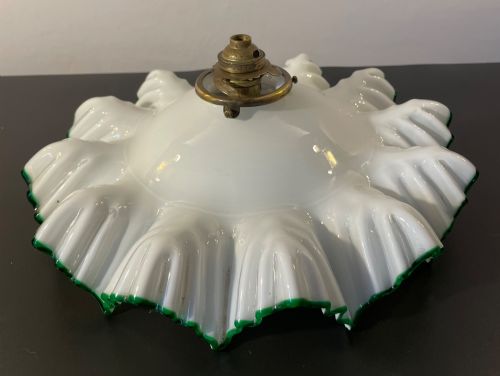
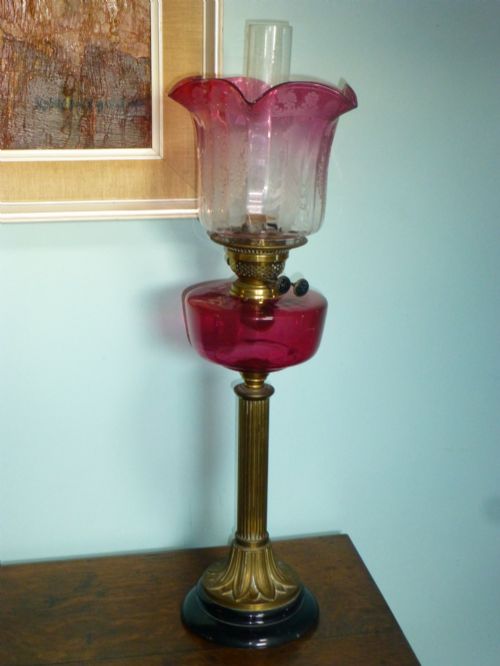
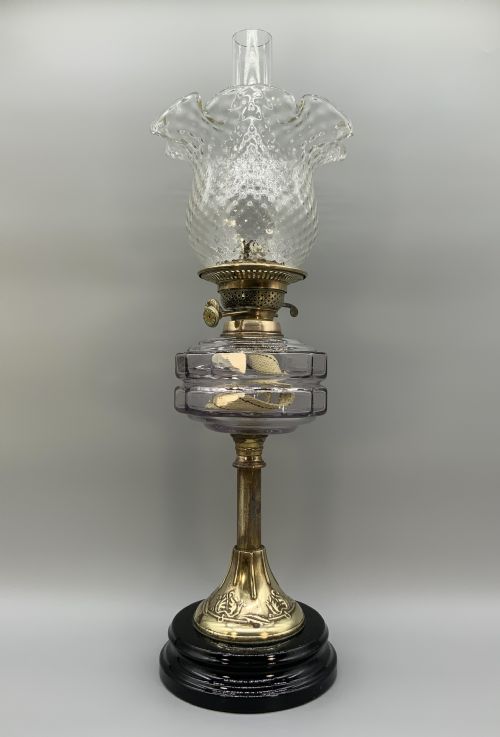
The most common formats on this page pair a brass or ceramic base with an expansive glass shade or font, ranging from tall duplex column lamps to ceiling fittings and desk lights. These pieces originate across the Victorian and Edwardian eras, utilising coloured glass techniques such as cranberry, opaline, and hand-painted finishes to catch and diffuse light.
How they were made
Makers utilised brass for structural columns, bases, and rise-and-fall chandelier mechanisms, often combining the metal with ceramic reservoirs or slate foundations. Casting and turning formed the heavy metal components necessary to support substantial glass oil reservoirs and burners.
Glass components, including the distinctive frilled shades and decorated fonts, relied on hand-blowing and manipulation while hot to create the characteristic ruffled rims. Coloured glass batches, particularly cranberry and opaline variants, were frequently enhanced with hand-painted botanical or decorative motifs before final assembly.
Listings feature 19th Century, Victorian, and Edwardian periods, utilising brass, cranberry glass, and opaline glass in table and ceiling configurations.
What varies in quality
The degree of hand-finishing in the glass components separates standard production from finer examples, particularly where glass is hand-blown and hand-painted with intricate floral or botanical motifs. Heavier brass casting and more complex mechanisms, such as twin-burning burners or rise-and-fall ceiling counterweights, elevate the manufacturing standard.
Proportion and material integration define the better pieces, where brass columns, Corinthian capitals, and coloured glass fonts achieve a balanced visual weight. The crispness of the frilled glass edges and the depth of colour in cranberry or opaline glass further distinguish the upper tier of survivals.
The Ruffled Shade Lamp Glossary
- Duplex burner
- A double-wick mechanism designed to produce a brighter flame in larger nineteenth-century oil lamps. It requires two flat wicks housed within a shared brass gallery.
- Cranberry glass
- Transparent pinkish-red glass created by adding gold chloride to the molten batch. It appears frequently in Victorian lamp shades and fonts.
- Opaline glass
- A pale, translucent white or tinted glass that diffuses light softly. It gained popularity during the nineteenth century for decorative lighting fixtures.
- Font
- The oil reservoir of a lamp, usually positioned above the base and beneath the burner. In many examples, it matches the glass shade in colour and material.
- Corinthian column
- An architectural column style featuring ornate, acanthus-leaf capitals adapted for nineteenth-century lamp standards. It provides a classical brass support for the oil reservoir.
Ruffled Shade Lamp: Frequently Asked Questions
What is a ruffled shade lamp?
A ruffled shade lamp typically combines a brass or ceramic base with a glass shade featuring a manipulated, frilled edge. These pieces largely date from the Victorian and Edwardian periods.
They often incorporate oil-burning mechanisms or ceiling fittings, using coloured glass such as cranberry or opaline to diffuse light.
How do I date a lamp?
Dating relies on examining the materials, burner types, and stylistic indicators such as Corinthian columns or Art Nouveau curves. Victorian pieces often feature heavy brass casting and hand-painted glass.
Edwardian and later examples introduce flexible desk fittings and simpler ceiling hardware, reflecting changing domestic lighting habits.
Were these originally oil lamps?
Many examples on this page started as oil lamps utilising brass burners and glass fonts before later conversion to electricity. The presence of twin burners or duplex mechanisms indicates their original fuel-burning purpose.
Some items were manufactured as ceiling fittings or desk lamps from the outset, depending on the period and form.
How do I clean cranberry glass?
Cranberry glass requires gentle cleaning with warm water and mild, non-abrasive soap to protect hand-painted details or delicate glass surfaces. Avoid harsh chemicals that might damage the surface finish or decorative enamel.
Dry the glass thoroughly with a soft cloth to maintain the clarity and rich colour of the material.