


Ruby Red Glass Perfume Bottle
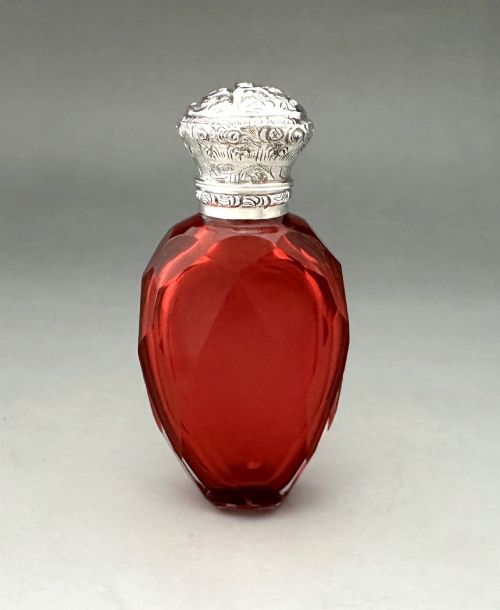
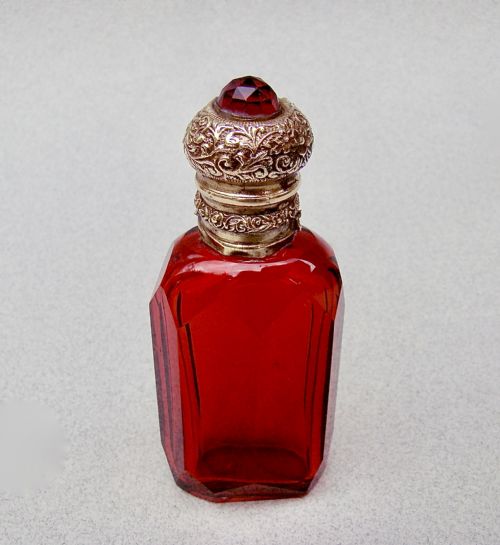
A ruby red glass perfume bottle brings a rich flash of colour to a dressing table, combining deep crimson hues with gleaming metal mounts.
Ruby Red Glass Perfume Bottle
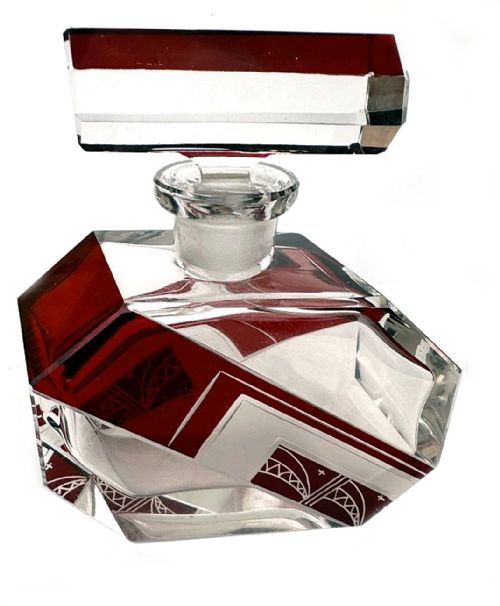
A ruby red glass perfume bottle represents a diverse group of vanity items designed to hold precious scents and oils. These vessels appear frequently in Victorian and Edwardian iterations, alongside examples from the Art Deco period.
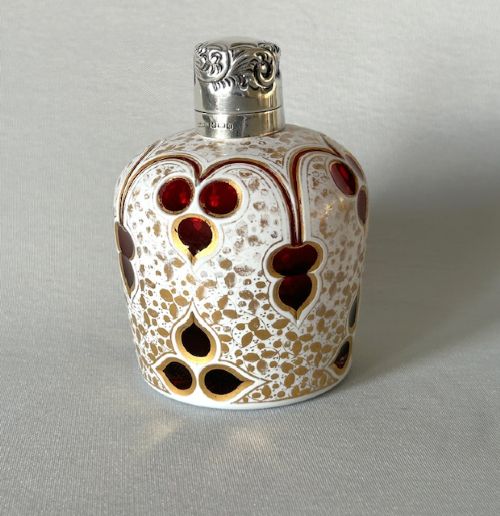
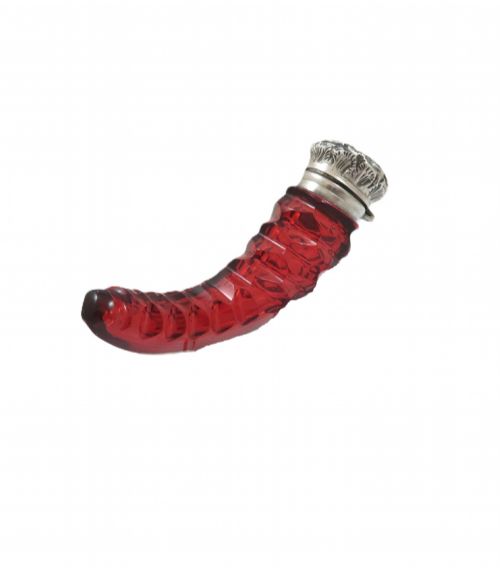
The objects take various forms, from simple cylindrical scent bottles to elaborate vanity ensembles and figural shapes like owls. French and Bohemian makers contribute significantly to the variety found within this category.
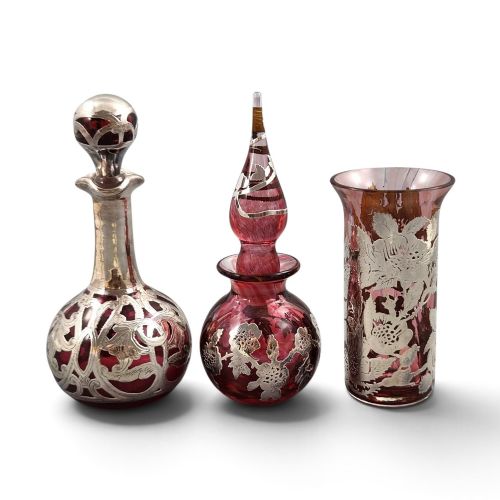
Buyers encounter pieces featuring sterling silver mounts, silver overlay, or ormolu accents alongside the characteristic red glass body. These items served both practical daily use on dressing tables and decorative display purposes.
How they were made
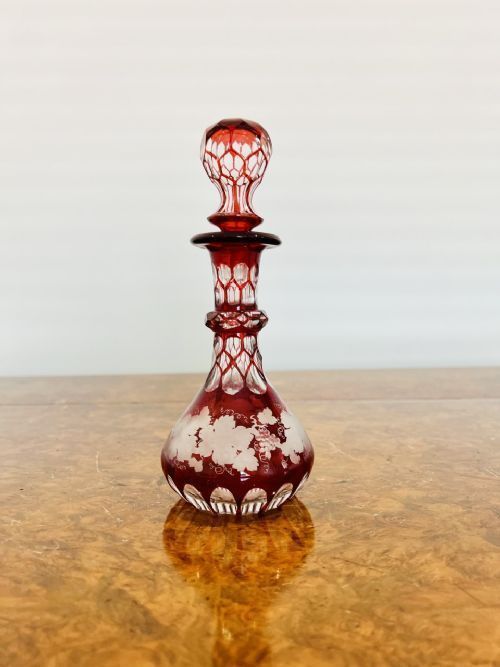
The primary material is ruby glass or cranberry glass, sometimes formed as cut glass, crystal, or mercury glass. Artisans shaped these molten materials into distinct vessel forms before applying decorative surface treatments.
Metalwork plays a crucial role in construction, utilising sterling silver, standard silver, and ormolu for collars, hinged caps, and elaborate overlays. Additional ornamentation includes enamel work and delicate applications of gold leaf.
Some Victorian glass bottles take the form of an owl, combining deep red glass with sterling silver to peer watchfully from the vanity table.
What varies in quality
The refinement of the glasswork distinguishes standard vessels from exceptional examples, particularly where deep ruby coloration meets precise cutting or overlay techniques. Heavy crystal bodies and crisp facets indicate superior manufacturing standards.
The quality of the metal mounts, whether sterling silver, ormolu, or intricate silver overlay, dictates the overall sophistication of the piece. Well-preserved gilding, tight hinges on caps, and intact stoppers complete the standard of excellence.
Gorham·Karl Palda
The Ruby Red Glass Perfume Bottle Glossary
- Ruby Glass
- A deep red glass coloured by the addition of gold chloride during manufacture. It forms the primary body of many traditional scent bottles.
- Cranberry Glass
- A pinkish-red transparent glass produced using copper or gold, frequently associated with nineteenth-century decorative tableware and scent bottles.
- Ormolu
- Gilded bronze or brass applied as decorative mounts and hardware on glass bodies. It provides a bright metallic contrast to the dark red glass.
- Silver Overlay
- A decorative technique where sterling silver is bonded directly onto the glass surface in intricate patterns. This method creates a striking visual contrast between metal and glass.
Ruby Red Glass Perfume Bottle: Frequently Asked Questions
How do I date a ruby red glass perfume bottle?
Dating relies heavily on the style of the metal mounts, hallmarks on the silver, and the manufacturing technique of the glass body. Victorian and Edwardian pieces often display specific aesthetic traits and assay marks that narrow down the decade.
Later items from the Art Deco period exhibit geometric forms and distinct modernist styling compared to nineteenth-century French or Bohemian vessels.
Are stoppers usually original to these bottles?
Many surviving scent bottles retain their matching glass or metal stoppers, which is an important consideration for completeness. Replacements do occur due to the fragile nature of small glass components.
Examining the fit and the wear patterns around the neck helps determine if the stopper belongs to the original vessel.
How were these bottles used originally?
These vessels held concentrated perfumes, smelling salts, or spirits for personal use on dressing tables or carried in small evening bags. The secure metal caps prevented evaporation of the contents.
Wealthy owners displayed them as part of matching vanity sets alongside brushes and powder jars.
How should I clean a glass and silver scent bottle?
Careful dusting with a soft cloth protects both the glass surface and any delicate silver overlay or gold leaf. Moisture should be kept away from interior paper labels or old residues.
Silver mounts respond gently to appropriate metal cleaners applied with a cotton bud, ensuring the polish does not touch the glass.