


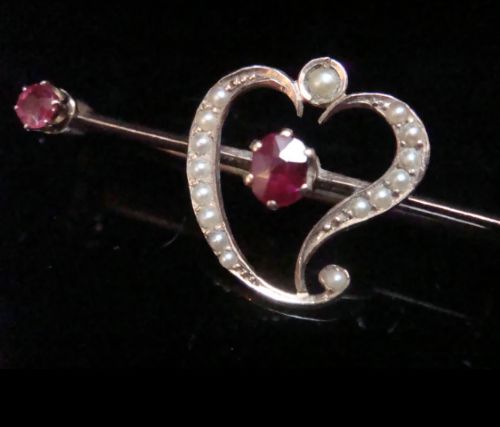


Ruby Pearl Jewellery
Ruby pearl jewellery brings together crimson corundum and lustrous nacre across Georgian, Victorian, Edwardian and mid-century designs.
Ruby Pearl Jewellery
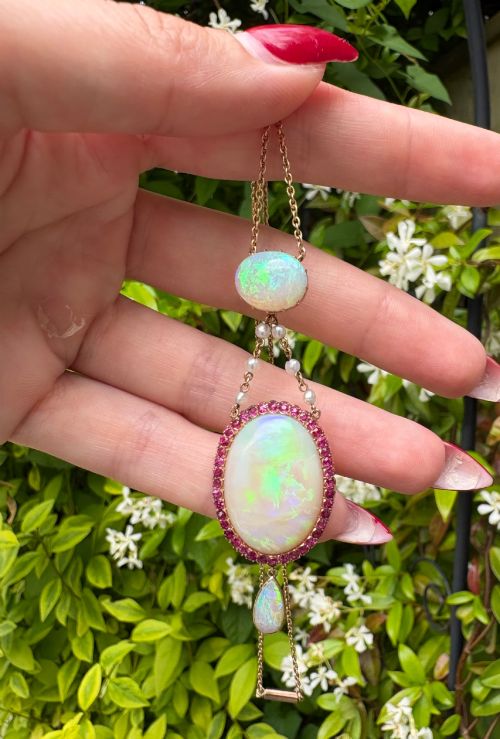
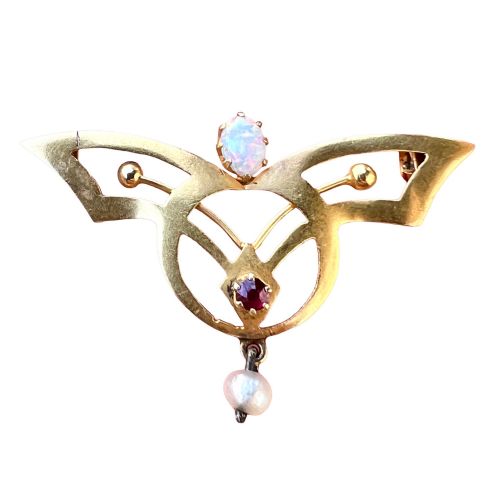
Ruby pearl jewellery encompasses rings, necklaces, brooches, lockets, pendants and bracelets spanning multiple historical eras. When exploring ruby pearl jewellery, expect to encounter items featuring central red stones accompanied by organic white or cream spheres.
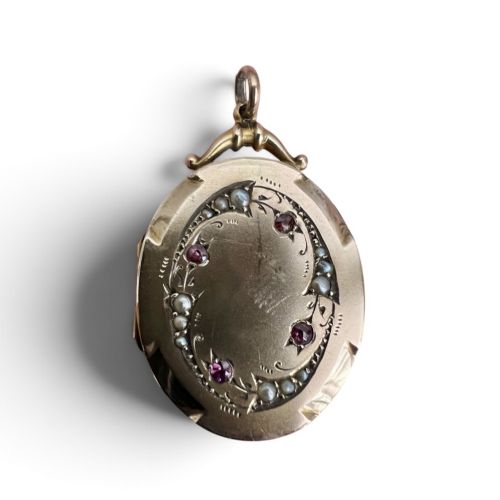
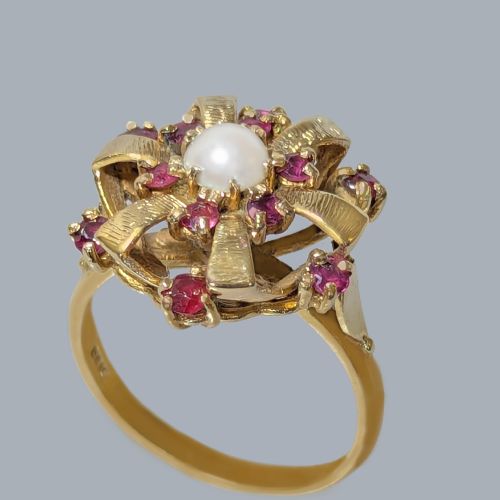
The selections range from early nineteenth-century Georgian mourning pieces and Victorian heart padlocks to Edwardian crescent brooches and mid-century cluster rings. These pieces combine deep crimson hues with the soft lustre of natural, cultured or seed pearls.
Materials and construction
Maker techniques rely on gold alloys spanning nine, fifteen and eighteen carats, alongside platinum and silver-topped settings. Stones are secured in collet, bezel or prong mounts, often accompanied by supporting diamonds, emeralds, sapphires or enamel work.
Constructing these items involves careful stone matching and metal fabrication, particularly in intricate crescent brooches, articulated necklaces and multi-gem cluster rings. Seed pearls are frequently threaded or secured in floral, snake, swallow and bow motifs.
Listings feature gold alloys ranging from nine to eighteen carats, alongside platinum and silver settings across multiple historic periods.
Assessing quality and craftsmanship
Quality rests upon the saturation and clarity of the rubies, the matching and lustre of the pearls, and the precision of the metalwork. Hand-finished gold settings and well-preserved stones distinguish finer examples from standard production.
The integrity of the original mountings, secure stone settings and legible hallmarks or assay tests indicate superior execution. Pieces that retain their original configuration without replacement elements demonstrate greater integrity.
The Ruby Pearl Jewellery Glossary
- Seed pearl
- Very small natural or cultured pearls, often half-drilled and glued or pegged onto a backing, frequently seen in delicate cluster and floral designs.
- Locket
- A hinged ornamental case designed to hold a miniature portrait or lock of hair, commonly taking heart or geometric forms in Victorian and Edwardian examples.
- Cluster ring
- A ring featuring a central gemstone surrounded by a border of smaller stones, such as rubies framed by pearls and diamonds.
- Collet setting
- A low, vertical metal collar that encircles the girdle of a gemstone to hold it securely within the jewellery mount.
- Rose cut
- An antique diamond or gemstone cut characterised by a flat base and a domed crown consisting of triangular facets.
Ruby Pearl Jewellery: Frequently Asked Questions
How do I date ruby pearl jewellery?
Dating relies upon stylistic motifs, metal types, hallmarks and construction techniques. Georgian and Victorian pieces often feature closed-back settings or mourning elements, whereas Edwardian items favour platinum-topped gold and delicate openwork.
Assay marks and maker stamps, where present, provide specific verification. Comparing the overall design against known period trends helps narrow the era of production.
Are pearls in these pieces natural or cultured?
Period pieces from the Georgian, Victorian and Edwardian eras frequently utilise natural saltwater or freshwater seed pearls. Later mid-century items may incorporate cultured pearls.
Professional gemmological testing is often required to determine the origin of the pearls definitively. Visual inspection under magnification reveals surface characteristics typical of organic nacre growth.
How should I care for ruby pearl jewellery?
Pearls are organic gems sensitive to acids, cosmetics, perfumes and ultrasonic cleaners. They require gentle wiping with a soft, dry cloth after wearing to preserve their lustre.
Rubies are durable but benefit from avoiding harsh chemical exposure. Store pieces individually in soft pouches to prevent scratching between the harder rubies and softer pearls.
What motifs are common in this jewellery?
Common motifs include crescents, snakes, hearts, swallows, bows and floral sprays, particularly during the Victorian and Edwardian periods. These designs often carried sentimental or symbolic meanings.
Geometric clusters and stacked bands appear more frequently in later twentieth-century pieces. Each style reflects the prevailing aesthetic sensibilities of its manufacturing era.