
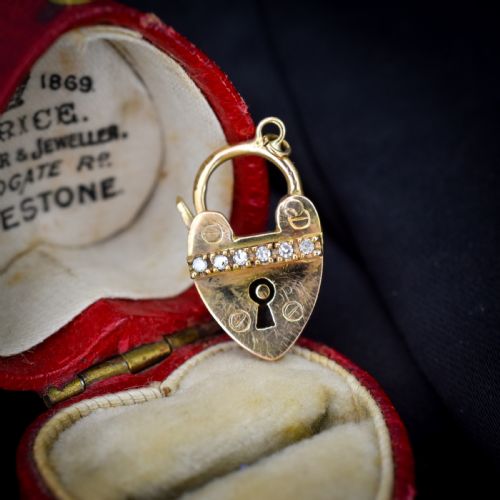


Victorian Gold Heart Clasp
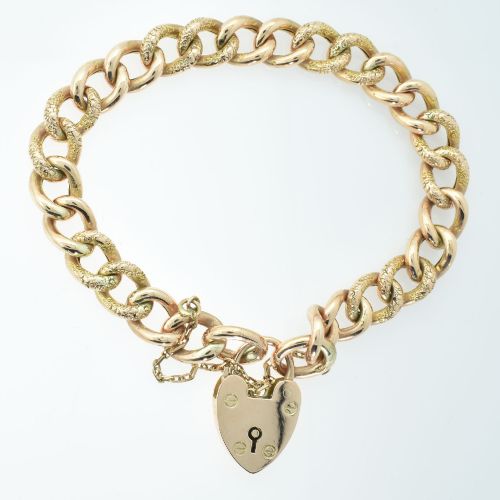
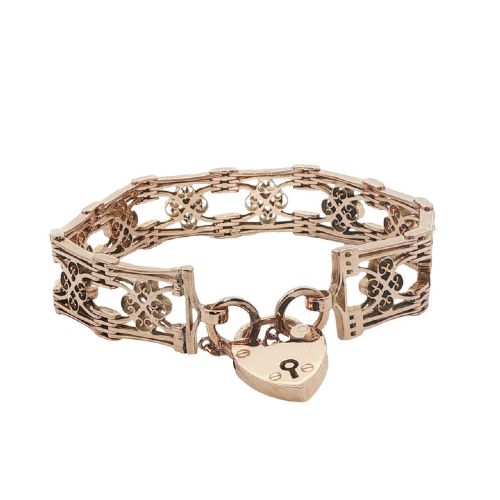
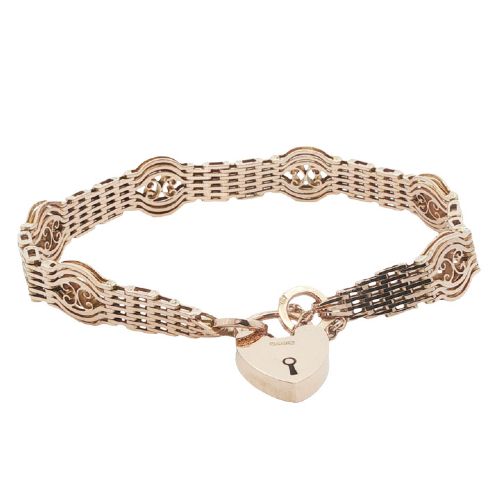
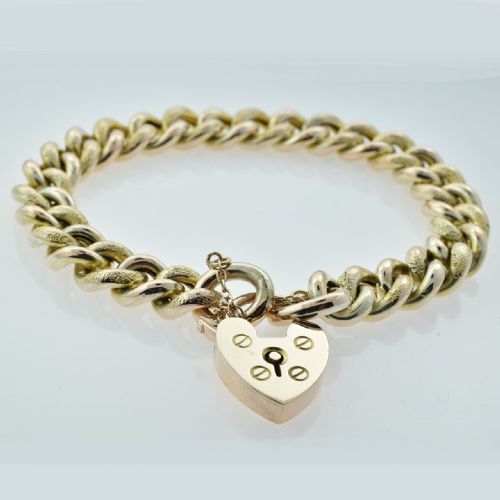
A victorian gold heart clasp is a sentimental fastening found on gate and curb link bracelets, prized for its secure snap and romantic symbolism.
Victorian Gold Heart Clasp
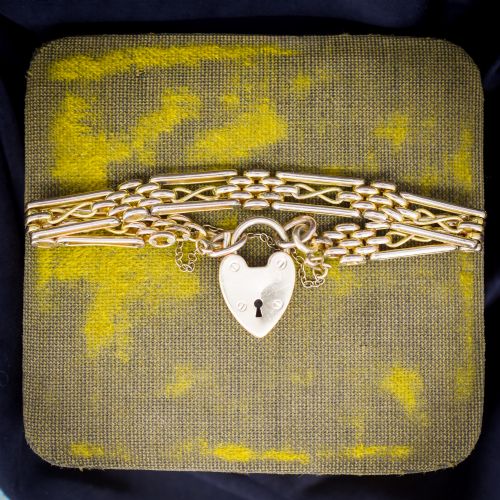
When you search for a victorian gold heart clasp, you encounter functional jewellery fasteners designed as small, puffed or flat hearts that secure bracelets and pendants. These items appear primarily on gate bracelets and curb link chains from the nineteenth and early twentieth centuries.
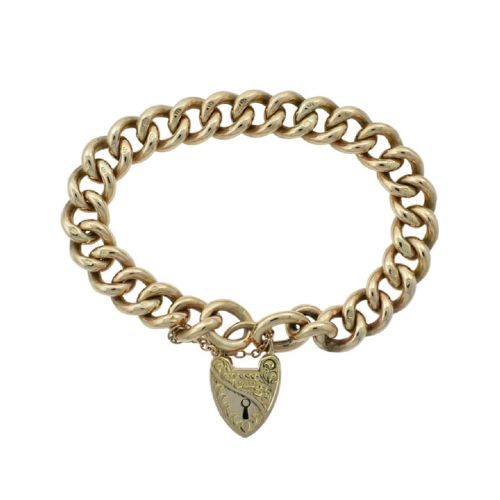
The selections span the Victorian and Edwardian periods, stretching into later revivals and mid-century interpretations. Most examples function as padlocks on heavy chain bracelets, though smaller variants serve directly as charms or pendants.
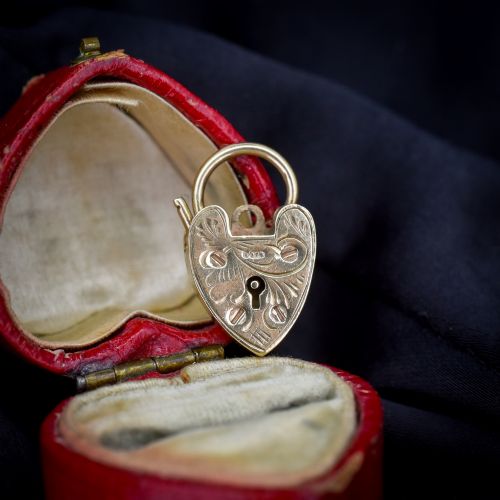
The physical form varies from plain polished gold surfaces to deeply engraved foliate motifs and gem-set faces. Certain pieces integrate rubies, pearls, diamonds, or turquoise into the heart design, reflecting the sentimental jewellery traditions of the era.
Materials and construction
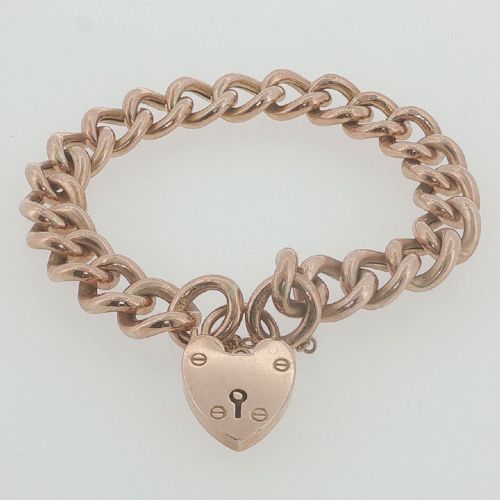
Makers shaped these clasps from various grades of gold, notably nine-carat and fifteen-carat variations in yellow, rose, and standard tones, alongside rolled gold alternatives. Rose gold dominates the surviving selection, often paired with matching curb link or gate chains.
Goldsmiths utilised manual engraving techniques to cover the front of the heart with floral scrolls and geometric patterns. Gemstones including seed pearls, rose-cut diamonds, and turquoise were flush-set or claw-set into the gold surface by hand.
Certain tiny padlocks feature miniature opening purse designs, proving that Victorians loved hiding tiny compartments inside their fasteners.
Evaluating the craftsmanship
The integrity of the internal spring mechanism dictates the reliability of the clasp, separating robust everyday fasteners from weakened examples. A crisp snap upon closure indicates proper tension in the hidden steel leaf spring within.
The depth and clarity of the hand engraving distinguish superior pieces from mass-produced or worn items. Crisp, sharp leaf and scroll work signifies skilled hand tool usage, whereas smoothed surfaces suggest heavy wear over decades.
The Victorian Gold Heart Clasp Glossary
- Gate bracelet
- A wide bracelet constructed from parallel flat links joined by vertical connector bars, frequently fitted with a heart padlock.
- Curb link
- A chain style featuring uniform, slightly twisted oval links that lie flat against the wrist. This sturdy chain structure provides the standard foundation for heavy padlocks.
- Rolled gold
- A composite material formed by bonding a thin layer of solid gold to a base metal core under heat and pressure. This technique offered the appearance of solid gold at a lower production cost.
- Seed pearl
- A tiny, naturally small pearl often half-drilled and glued or pegged onto a backing. These small pearls create delicate floral or star patterns on Victorian jewellery.
Victorian Gold Heart Clasp: Frequently Asked Questions
What is a heart padlock?
A heart padlock is a functional clasp shaped like a small padlock with a heart outline, used to secure charm bracelets and gate chains.
These clasps feature a spring-loaded arm that pushes inward to attach to a jump ring, combining security with ornamental appeal.
How do I wear a vintage clasp?
You wear these pieces suspended from a neck chain as a pendant or attached to a sturdy link bracelet as the primary fastener.
Ensure the spring mechanism holds firm before wearing it on active wrist chains to prevent accidental loss.
What gold purity is common?
Nine-carat gold appears most frequently in these items, offering a durable alloy suited for daily wear on heavy link chains.
Fifteen-carat gold pieces also occur, displaying a richer, warmer hue due to the higher gold content within the metal alloy.
Are these clasps hallmarked?
Many examples feature tiny stamps on the reverse or the internal tongue indicating the gold purity standard of the metal.
Some older pieces retain rubbed or partially legible stamps due to decades of skin contact and polishing over time.