




Ruby Glass Dish
A ruby glass dish brings rich warmth to a room, catching the light in bowls, baskets and tazzas from the Victorian and Edwardian eras.
Ruby Glass Dish
When you search for a ruby glass dish, you encounter tablewares and decorative objects spanning the nineteenth and early twentieth centuries. These pieces appear most frequently as preserve dishes, sugar baskets, butter dishes and centrepiece bowls originating from Victorian and Edwardian makers.
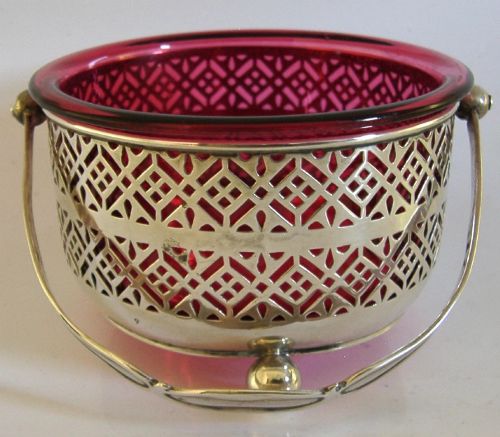
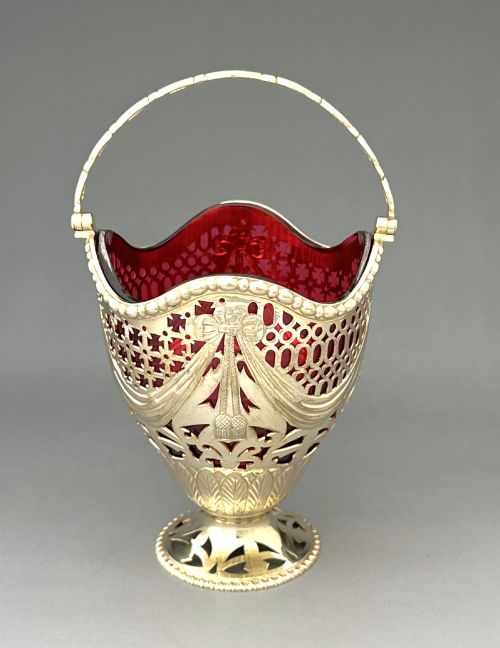
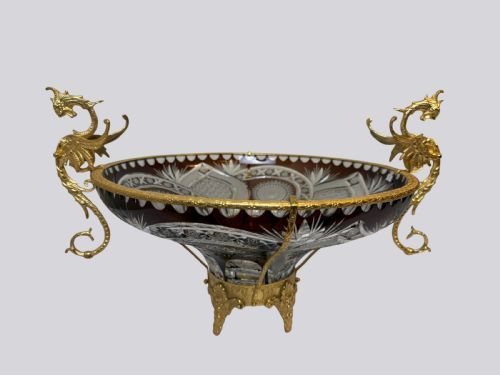
Many examples combine deep red glass vessels with metal mounts such as sterling silver, silver plate, silver gilt or gilt bronze. Others stand alone as moulded, cut or frilled glass bowls, tazzas and salts designed for functional service or display on the dining table.
How they were made
The characteristic red colour of a ruby glass dish derives from the addition of gold chloride to the molten glass batch during production. Artisans shaped these vessels through free-blowing or mould-blowing, sometimes applying cut glass facets or frilled rims while the material remained pliable.
Metalwork frames were produced separately by silversmiths and metalworkers using techniques such as piercing, casting and electroplating. Frames often featured swing handles or fitted stands designed to cradle the removable glass liner securely.
Listings for ruby glass dish items span the Victorian, Edwardian, Belle Epoque and Art Nouveau periods, frequently pairing glass with sterling silver.
What varies in quality
Quality in a ruby glass dish reveals itself in the depth and evenness of the colour within the glass. Superior examples display a rich, saturated tone without muddiness, paired with crisp cutting or delicate gilding that remains intact.
The standard of the metal mount also dictates the overall merit of the piece. Substantial sterling silver or silver-gilt frames with intricate pierced decoration or clear maker marks elevate the craftsmanship above simpler silver-plated mountings.
George Fox·WMF
The Ruby Glass Dish Glossary
- Cranberry glass
- A transparent pinkish-red glass coloured with gold oxide. It forms the primary material for many Victorian tableware items.
- Silver gilt
- Silver that has been coated with a thin layer of gold. This treatment provides a rich two-tone contrast against red glass liners.
- Tazza
- An elevated shallow bowl or saucer supported on a stem and foot. These pieces were traditionally used for serving fruit or sweets.
- Sugar basket
- A small handled container designed to hold loose sugar lumps on the tea table. They frequently incorporate fitted glass liners and matching spoons.
- Pierced work
- Metalwork decorated by cutting or piercing patterns through the surface. It appears frequently on Edwardian and Victorian baskets and stands.
Ruby Glass Dish: Frequently Asked Questions
How do I clean a ruby glass dish?
Wash the glass component gently in warm soapy water using a soft cloth, avoiding abrasive scourers that might scratch the surface.
Keep metal mounts dry and polish silver or gilt elements sparingly with a specialist cloth to preserve the finish.
Were these dishes used for dining?
These vessels served functional roles on nineteenth-century dining tables, holding preserves, butter, sugar and small sweets during formal meals.
Many survived alongside fitted spoons and stands designed specifically for everyday service in domestic settings.
How can I tell Victorian from Edwardian pieces?
Victorian examples often feature heavier cranberry tones and robust, ornate silver-plated frames associated with nineteenth-century manufacturing.
Edwardian pieces tend to display lighter mounting styles, refined piercing, and occasionally cleaner lines influenced by Art Nouveau design.
What is the difference between ruby and cranberry glass?
Both terms describe red glass coloured with gold, though cranberry glass often leans toward a lighter, pinker translucent hue.
Ruby glass can sometimes denote a deeper, more saturated crimson coloration used in nineteenth-century decorative tableware.