
Royal Worcester Hand Painted
Royal Worcester hand painted ceramics combine fine porcelain bodies with detailed natural subjects by notable factory artists spanning the Victorian era to the mid-twentieth century.
Royal Worcester Hand Painted
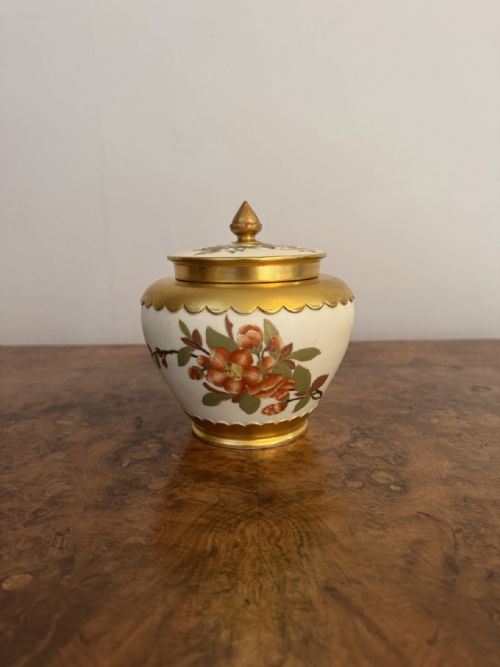
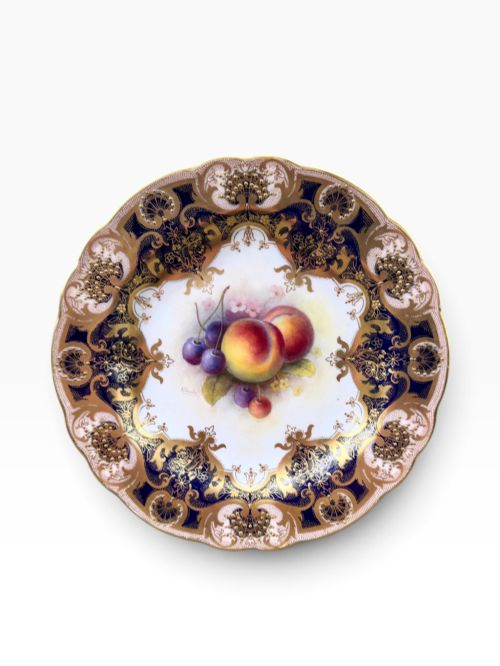
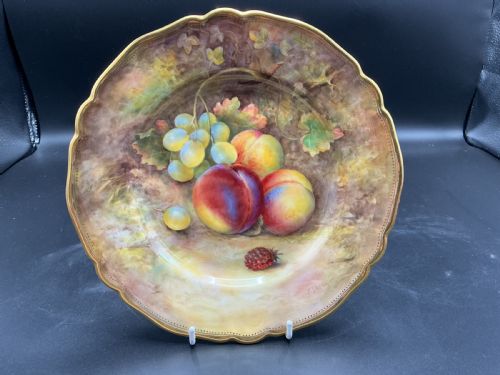
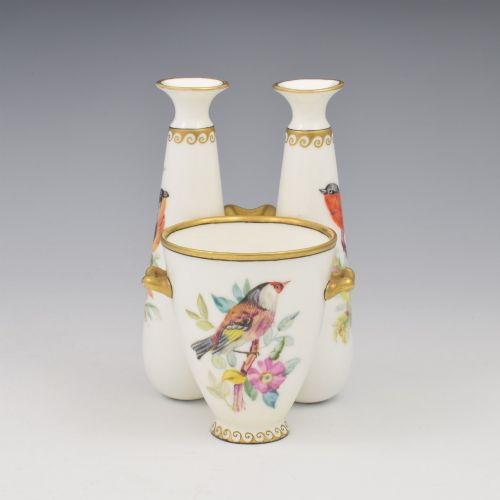
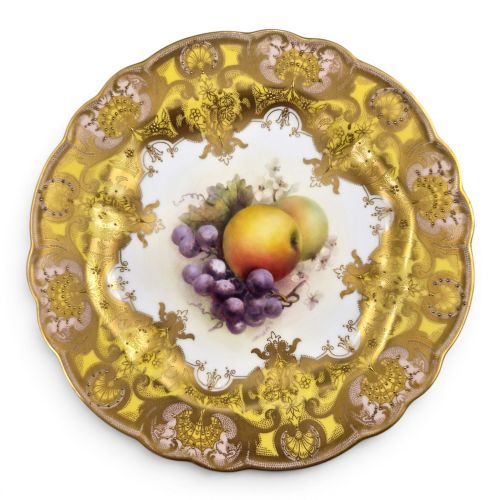
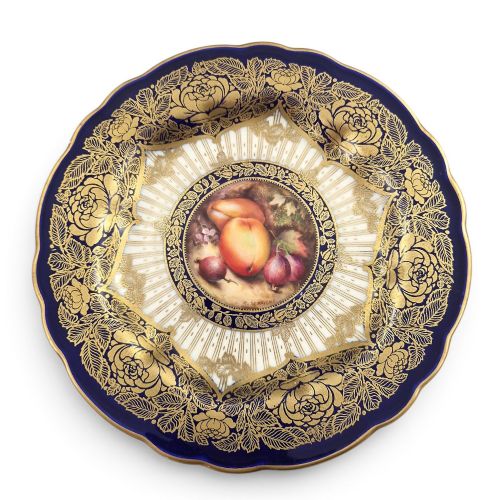
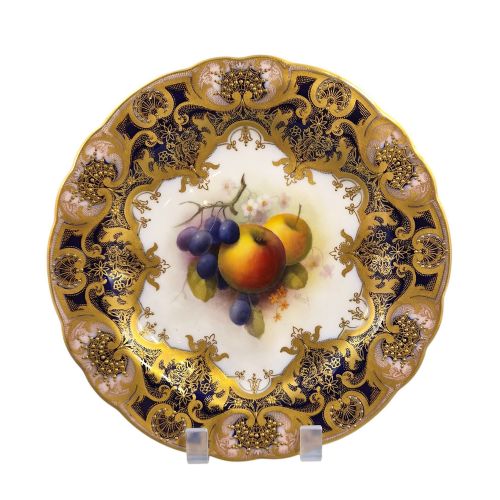
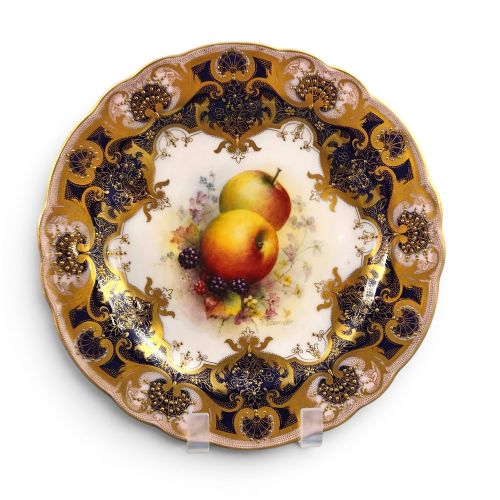
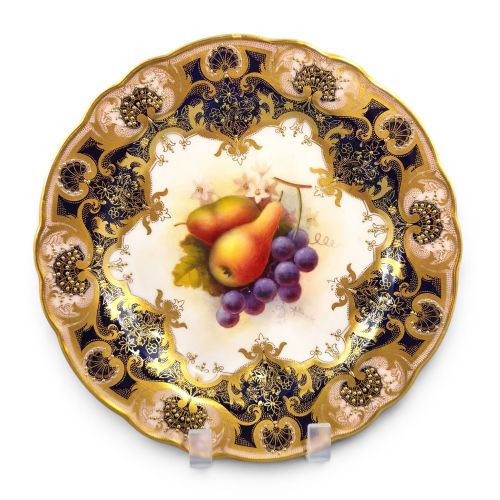
Royal Worcester hand painted pieces encompass decorative cabinet plates, lidded potpourri jars, ewers, and vases finished with individual artistry. The selection ranges from late nineteenth-century blush ivory floral designs to twentieth-century fruit studies by signature painters.
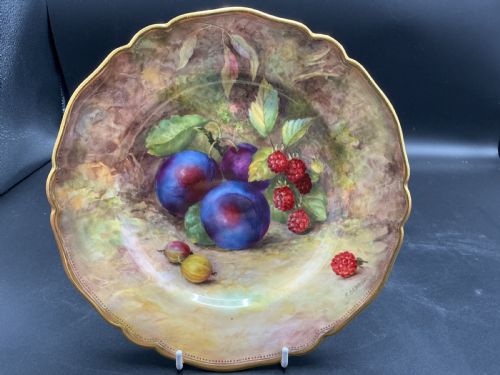
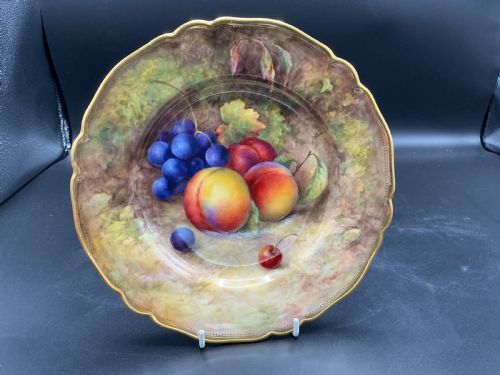
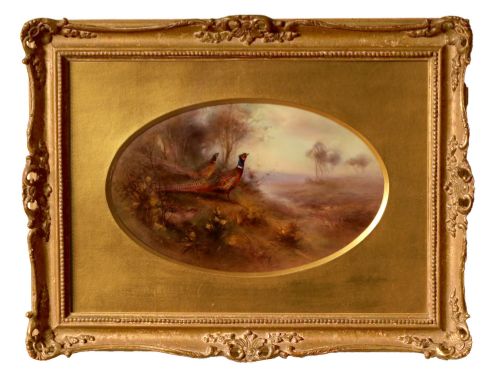
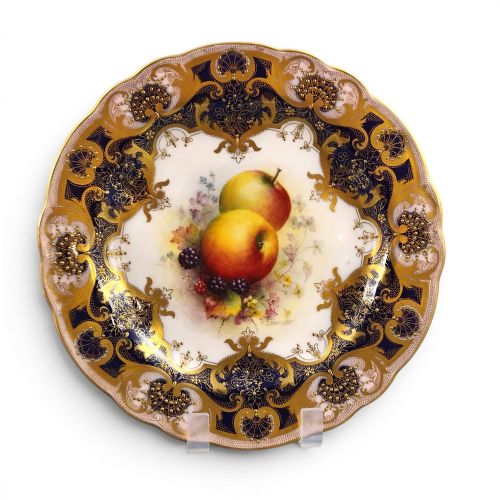
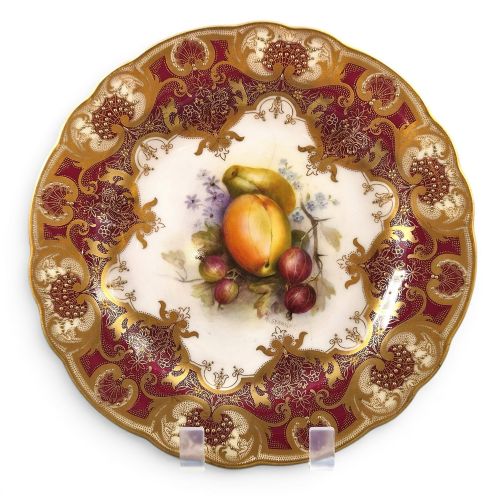
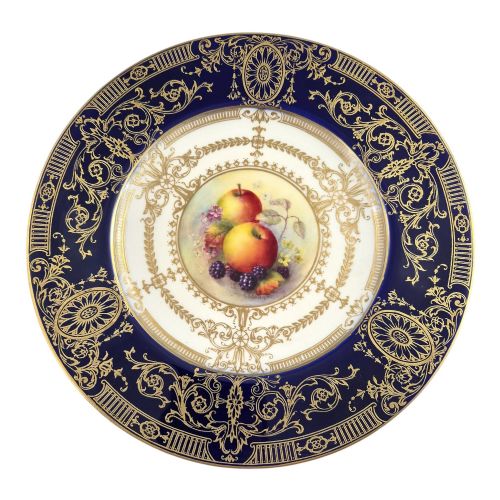
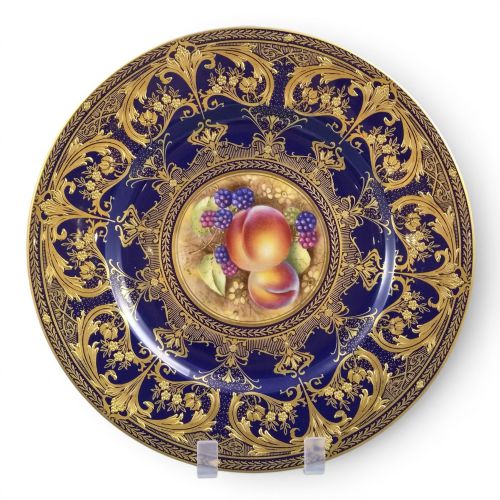
Cabinet plates and fruit-themed service items dominate the later twentieth-century production found here. Earlier Victorian and Edwardian examples lean toward ornithological studies, roses, and classical shapes with gilt handles.
Forms extend from small spill vases and pedestal cups to large urns and wall plaques. Buyers encounter both domestic tabletop items and major exhibition-quality decorative vessels.
What varies in quality
Quality rests upon the skill of the decorator and the complexity of the subject matter. Pieces signed by recognised studio artists command greater attention than standard factory floral patterns due to the depth and realism of the brushwork.
The richness of the gilding, the preservation of the enamel colours, and the ambition of the ceramic form itself distinguish standard production wares from exhibition-tier vessels.
Highland cattle stare out from tiny spill vases, bringing misty Scottish hills directly onto porcelain surfaces.
Albert Shuck·Richard Sebright·James Stinton·John Stinton·Walter Powell·Jack Southall·Harry Davis
The Royal Worcester Hand Painted Glossary
- Blush ivory
- A soft, matte cream-coloured porcelain body introduced by the factory in the late nineteenth century. It serves as a subtle background for gilt edges and hand-painted floral sprays.
- Cabinet plate
- A decorative ceramic plate intended for display in a cabinet or mounted on a wall rather than for dining use. These often feature elaborate fruit or ornithological scenes by named artists.
- Gilding
- The application of gold leaf or gold paint to ceramic edges, handles, and borders. It highlights the structural contours of vases, ewers, and dishes.
- Potpourri jar
- A covered ceramic vessel pierced or perforated to diffuse scent from dried plant materials placed inside. They frequently feature hand-painted roses or fruit decorations.
- Puce mark
- A factory backstamp printed in purple or reddish-purple used during specific nineteenth-century periods to identify Royal Worcester production.
Royal Worcester Hand Painted: Frequently Asked Questions
How do I identify a signed piece?
Look closely near the edge of the painted image for the artist's handwritten signature, such as Sebright or Stinton. These signatures confirm the piece was painted by a specific studio artist rather than transfer-printed by machine.
Matching the signature style with factory date marks helps verify the period of manufacture and adds context to the artwork.
What is blush ivory porcelain?
Blush ivory is a matte, warm-toned ceramic body developed at the Worcester factory during the Victorian period. It provides a muted backdrop that enhances naturalistic floral painting and heavy gilding.
This finish appears frequently on vases, ewers, and jugs produced around the turn of the twentieth century.
How should I display cabinet plates?
Cabinet plates are best displayed using sturdy wall mounts or dedicated display stands inside enclosed cabinets. This protects the hand-painted enamel and gilt borders from accidental knocks and dust accumulation.
Keeping them away from direct sunlight preserves the vibrant tones of fruit and floral studies over time.
Can I use these items for serving food?
Most decorated plates and dishes from this maker function primarily as ornamental display pieces. The delicate enamels and extensive gilding are vulnerable to cutlery marks and frequent washing.
Gentle hand washing in lukewarm water without harsh detergents is necessary if cleaning becomes essential.