
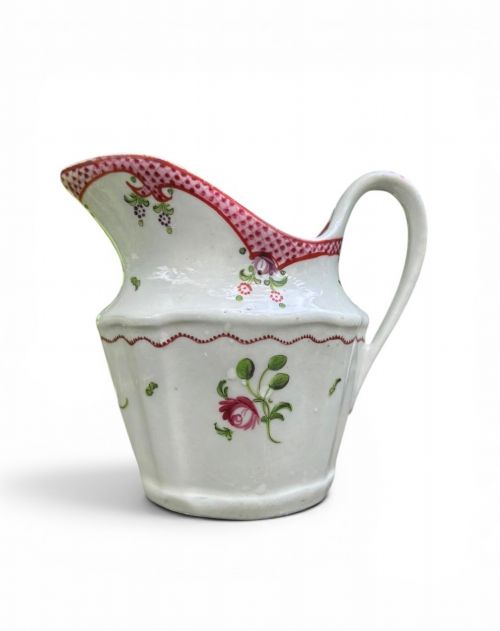


English Porcelain Cream Pitcher
An English porcelain cream pitcher brings tangible history to the table, offering miniature form and intricate hand-painting from centuries past.
English Porcelain Cream Pitcher
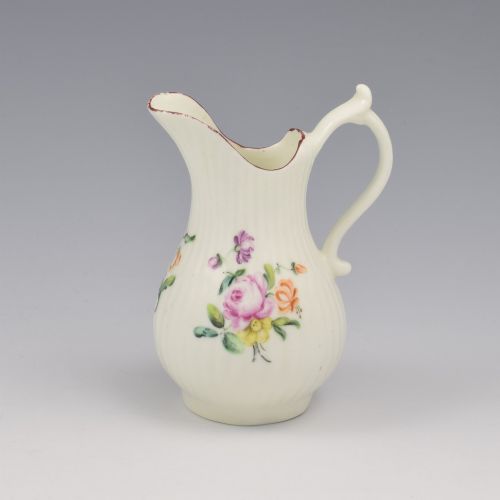
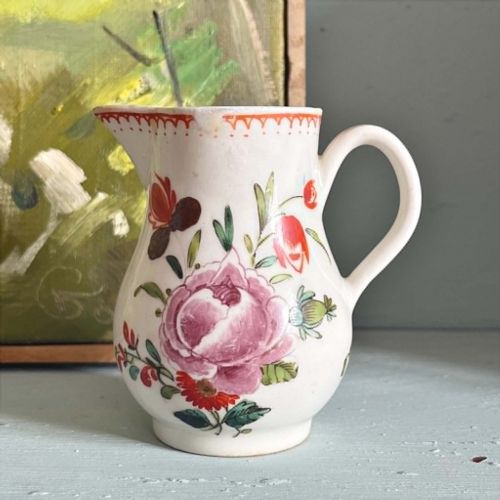
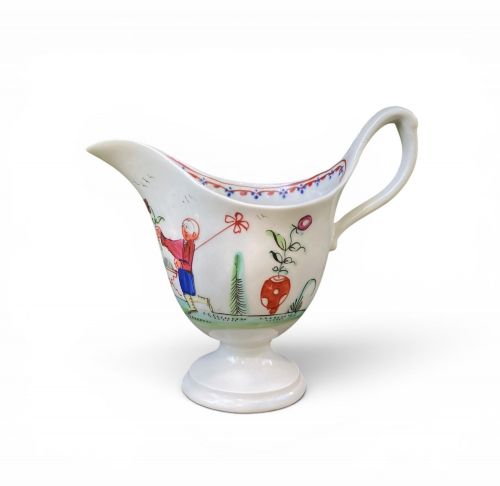
An English porcelain cream pitcher is a small vessel designed for serving milk or cream at the table, taking forms such as sparrowbeak jugs, low Chelsea ewers, and fluted balusters. These pieces emerge primarily from Georgian, Victorian, and Regency periods, reflecting shifting domestic tastes across different centuries.
Makers represented on this page range from early porcelain factories like Bow, Derby, and New Hall to later Staffordshire works and Royal Worcester production. The forms vary from simple clip-handled jugs to elaborate hand-painted pieces decorated with fruit, landscapes, or polychrome flowers.
Materials and Manufacture
Potters shaped these vessels using porcelain, soft-paste porcelain, and occasional earthenware bodies, often applying enamel colours and gold leaf highlights. Early pieces relied on soft-paste recipes that produced warm, translucent bodies susceptible to distinct firing imperfections.
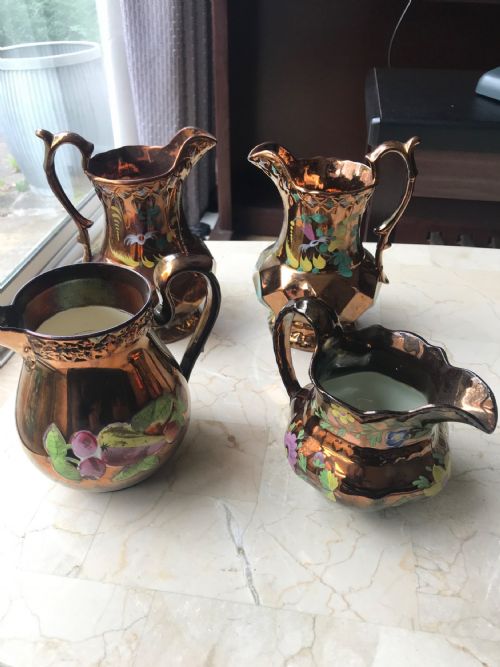
Decoration relied heavily on hand-painting, featuring polychrome floral sprays, topographical views, and intricate fruit studies signed by studio artists. Gilding and copper lustre glazes provided additional surface richness, fixed through subsequent kiln firings.
Some eighteenth-century cream jugs were modelled with handles so tiny they seem designed for mice rather than Georgian squires.
Assessing Quality and Execution
Quality in an English porcelain cream pitcher rests on the crispness of the moulding, the stability of the handle attachment, and the precision of the painted decoration. Superior examples display fluent brushwork and careful control over the glaze, whereas lesser pieces show uneven thickness or muddy enamel transfers.
The sophistication of the porcelain body and the reputation of the manufactory, such as early Worcester or Derby versus later commercial output, significantly influence the distinction between standard utilitarian wares and fine cabinet pieces.
Royal Worcester·New Hall·Derby Porcelain·John Rose Coalport·H and R Daniel
The English Porcelain Cream Pitcher Glossary
- Soft-paste porcelain
- An artificial porcelain composition fired at lower temperatures than true hard-paste, common in eighteenth-century English factories. It yields a warm, slightly creamy body under translucent glaze.
- Sparrowbeak
- A small, pinched pouring spout resembling a bird's beak found on eighteenth-century cream jugs. This shape allows for a precise stream when pouring cream.
- Ewer
- A jug with a wide spout and a large handle, traditionally modelled after classical metal vessels. In ceramics, it often appears in decorative or cabinet forms.
- Baluster
- A vertical architectural form with a swelling lower portion tapering toward the top, frequently seen in eighteenth-century jug profiles. This contour provides a stable base and comfortable grip.
- Polychrome
- Decoration employing multiple distinct colours, typically applied by hand over or under the glaze. It distinguishes hand-painted vessels from monochrome or single-colour transfer prints.
English Porcelain Cream Pitcher: Frequently Asked Questions
How do I date an antique cream jug?
Dating relies on body composition, handle shape, and factory marks where present. Eighteenth-century pieces typically feature soft-paste porcelain and hand-painted floral or landscape motifs.
Later nineteenth-century items introduce firmer porcelain bodies, distinct glaze colours, and impressed or printed factory ciphers that narrow down the exact decade of production.
Can I use these pitchers for serving cream?
While these vessels were originally made for daily dining use, antique porcelain requires careful handling. Hairline fractures and historic glaze wear can be exacerbated by modern dishwashers or rapid temperature changes.
Many collectors prefer to use them for display or gentle table service during special occasions to preserve their structural integrity.
What is the difference between soft-paste and hard-paste?
Soft-paste porcelain is an early English mixture containing glass frit and white clay, fired at lower temperatures to produce a softer lustre. It often shows slight warping from the kiln.
Hard-paste porcelain, developed later, uses true china clay and petuntse fired at extreme heat, resulting in a harder, brighter, and more durable white body.
Why are some jugs called sparrowbeak?
The term describes the characteristic pinched rim that forms a sharp, narrow pouring lip resembling a bird's beak. This specific profile was especially popular on mid-eighteenth-century cream jugs.
It allowed the server to pour small amounts of cream accurately into tea cups without spilling.