


Royal Worcester Fruit
Royal Worcester fruit pieces bring together meticulous hand-painted studies of apples, pears and berries with heavy gilding on fine porcelain.
Royal Worcester Fruit
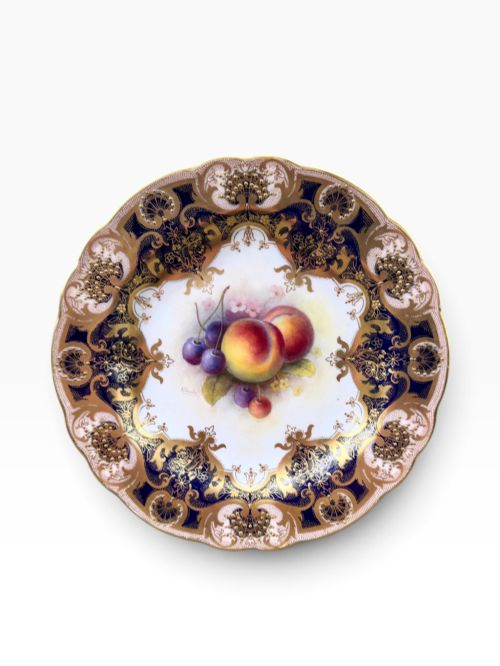
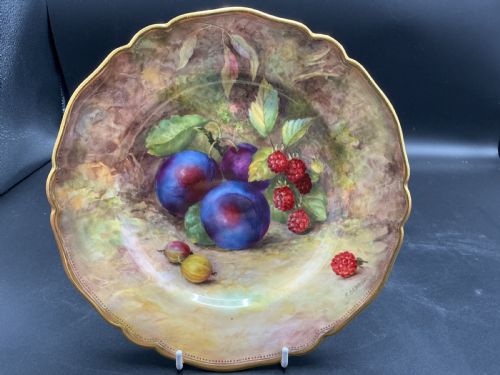
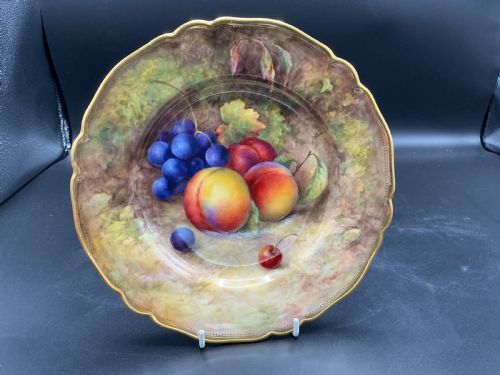
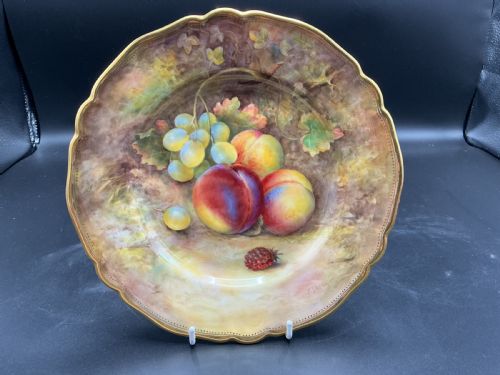
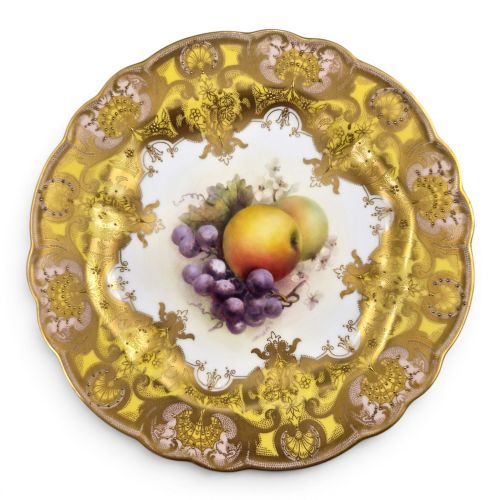
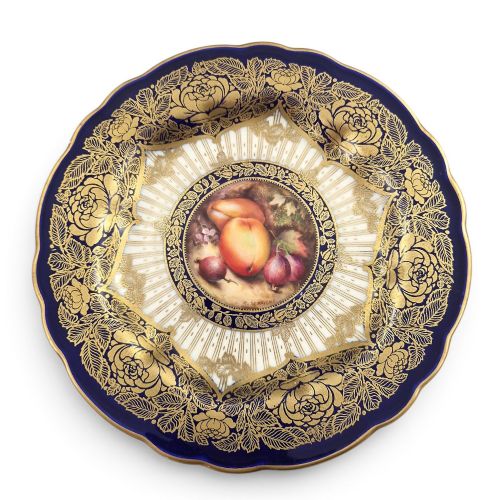
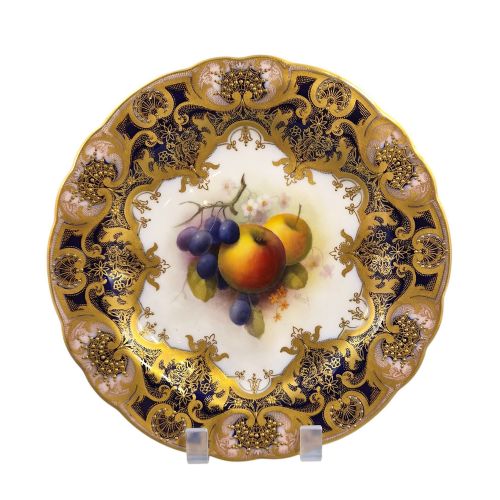
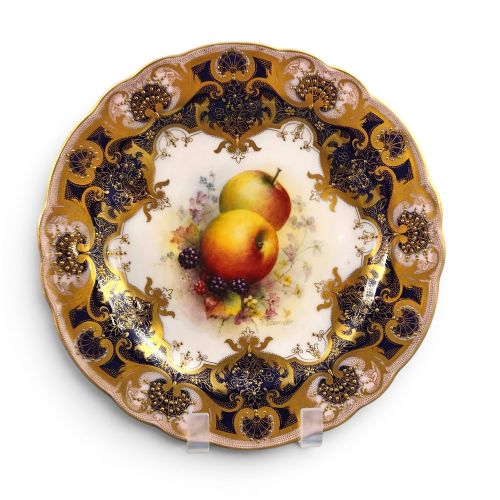
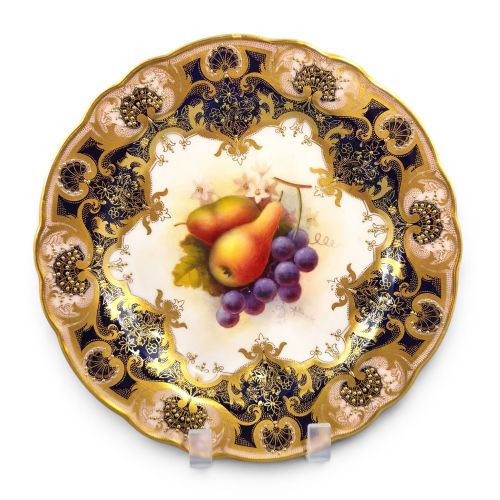
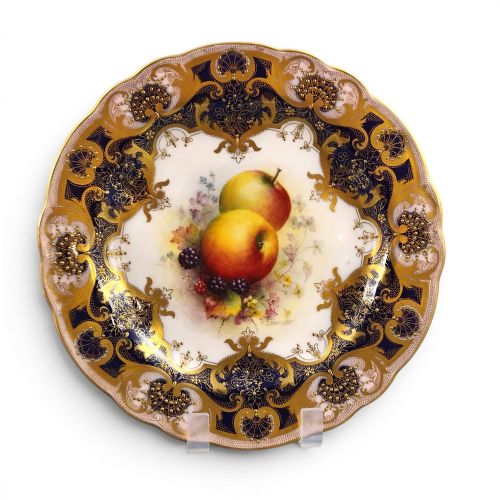
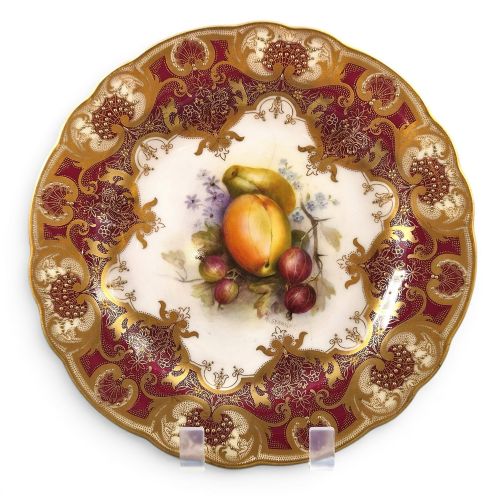
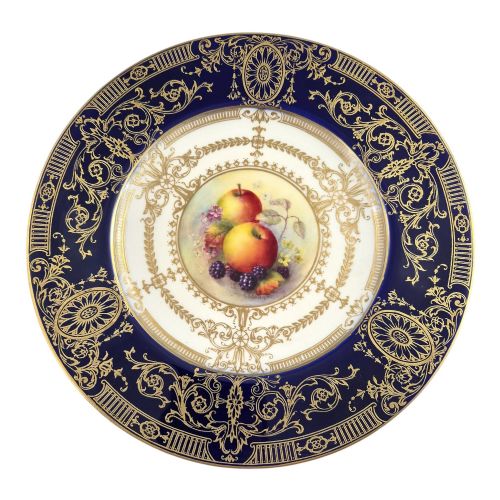
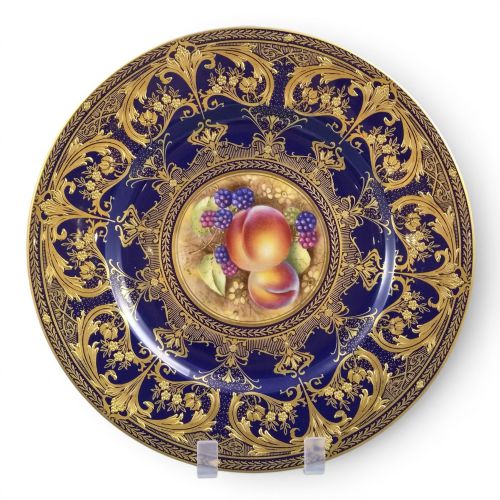
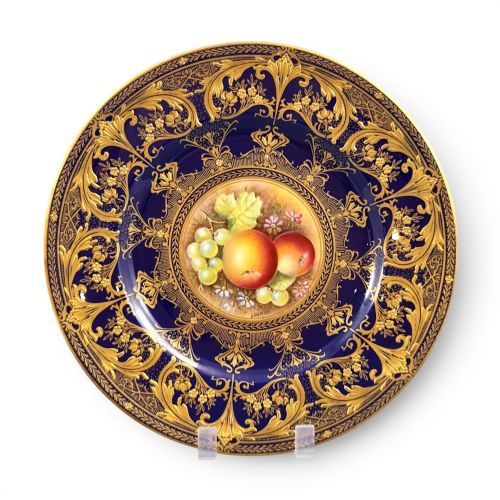
Royal Worcester fruit pieces include cabinet plates, vases, decorative bowls and tea sets adorned with naturalistic depictions of orchard produce. The cabinet plate remains the form most frequently encountered in collections, often featuring scalloped, rope-edge or star-edge borders.
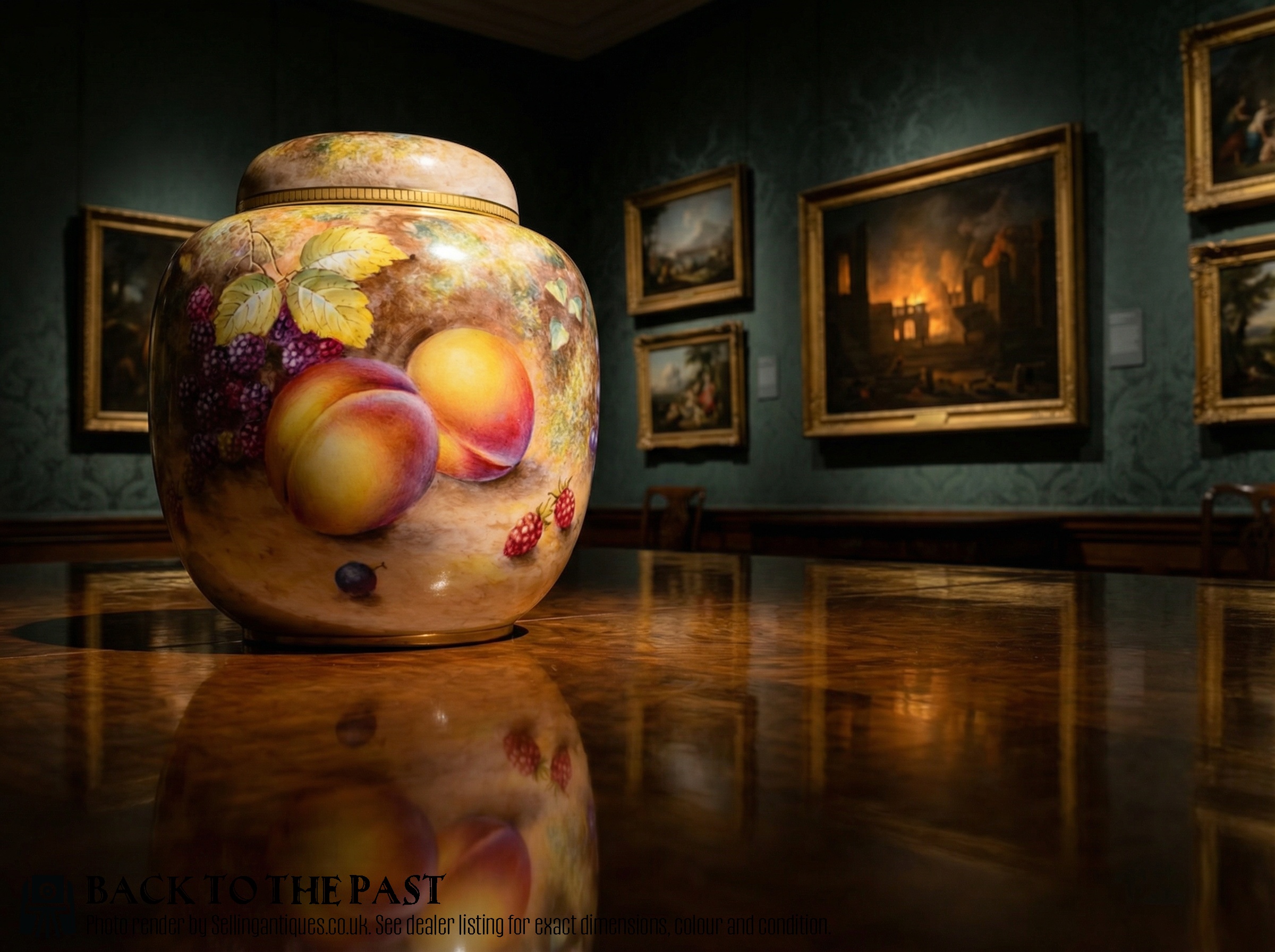
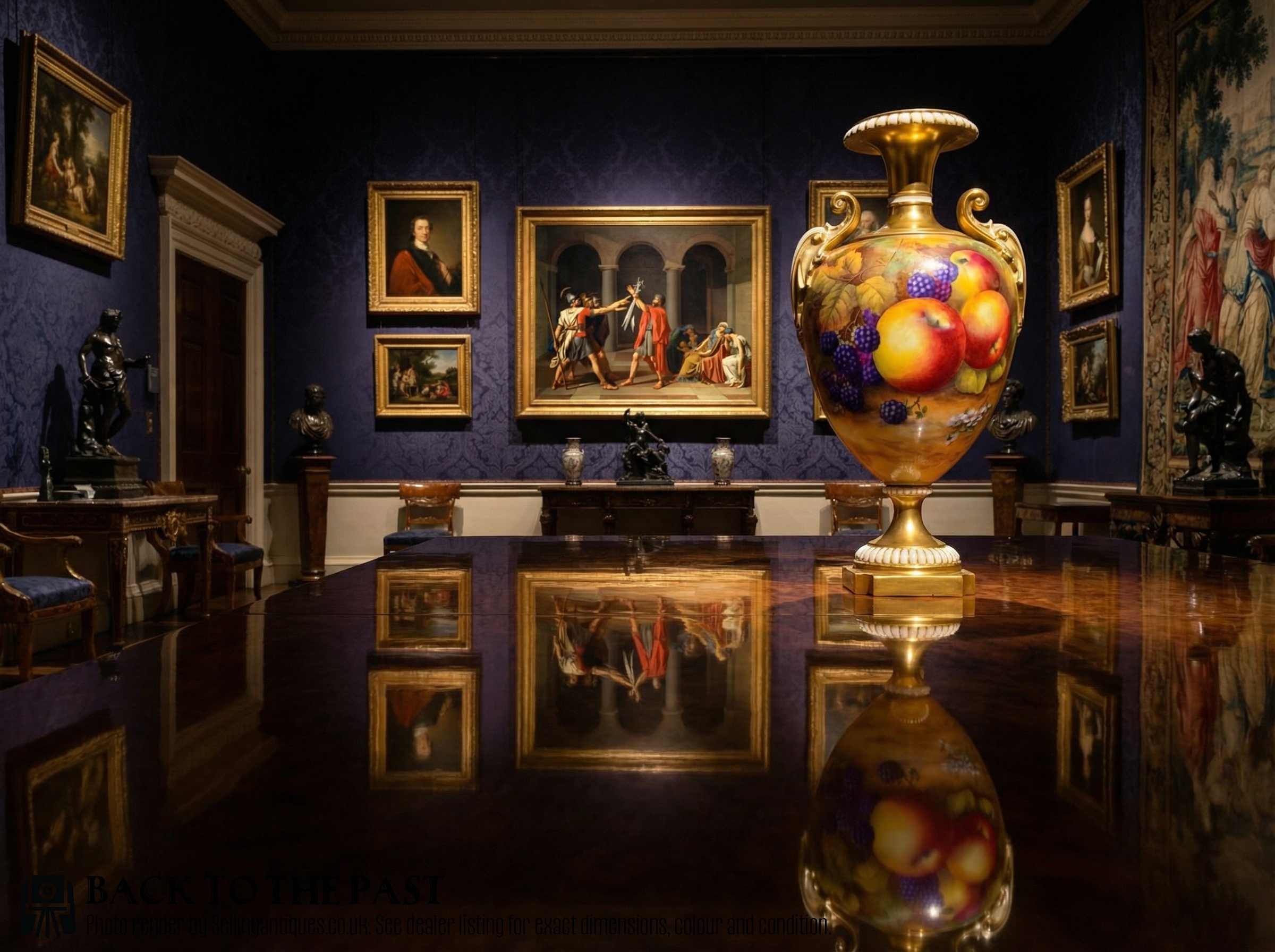
The objects span production from the Edwardian period through the mid-twentieth century, capturing a sustained studio tradition of botanical and agricultural illustration on ceramics. Pieces range from singular coffee cups and saucers to large decorative urns, ginger jars and multi-piece pot pourri sets.
Makers and painters working within this genre focused heavily on recognisable British fruits against shadowed, mossy backgrounds. These works functioned primarily as decorative display items for Edwardian and later interiors rather than utilitarian tableware.
How they were made
Items were thrown or moulded from porcelain, bone china and fine bone china before receiving multiple kiln firings to set the body and the underglazes. Artisans applied rich layers of gold leaf, gilt and enamel around the central painted reserves to frame the composition.
Painting was executed by hand using specialist ceramic paints that could withstand high temperatures without losing tonal depth. Acid etching was frequently utilised on borders to create textured, light-catching patterns beneath the gilding.
Listings feature porcelain forms spanning Edwardian, Art Deco and mid-century periods, utilising bone china, enamel and extensive gold leaf.
What varies in quality
Quality rests significantly upon the identity of the artist and the complexity of the painted subject, with signed works by known studio hands commanding greater recognition. The density, weight and intricacy of the gold leaf and gilding applied to the borders also differentiate standard production from finer output.
The scale of the painted area relative to the porcelain blank affects overall visual impact, alongside the crispness of moulded edges like rope or star patterns. Pieces featuring multiple distinct fruit varieties or comprehensive matching sets demonstrate a higher tier of factory workmanship.
Albert Shuck·Richard Sebright·Brian Leaman·Chivers·H Ayrton·J Southall·Freeman·William Hawkins·John Smith·William Ricketts·HH Price·P Love·T Lockyer·Harry Ayrton·Horace Price
The Royal Worcester Fruit Glossary
- Cabinet plate
- A decorative ceramic plate intended for display on a wall or in a cabinet rather than for dining use. These often feature elaborate painted scenes and gilded rims.
- Pot pourri
- A decorative jar, vase or vessel with a pierced cover designed to hold dried scented plant material. Royal Worcester examples frequently pair this form with hand-painted fruit motifs.
- Gilding
- The application of gold leaf or gold paint to ceramic surfaces to highlight borders and handles. This technique adds reflective contrast to the dark tones of the painted fruit.
- Reserve
- A distinct panel or cartouche left unpainted or framed within a larger decorated surface to highlight a specific artwork. On these wares, the fruit study sits inside the central reserve.
- Acid etching
- A decorative technique where acid bites into the ceramic glaze or metal surface to create a textured pattern before gilding. This process produces complex, matte and shiny gold contrasts on plate rims.
Royal Worcester Fruit: Frequently Asked Questions
How do I identify a signed piece?
Artists typically signed their work directly onto the painted surface near the edge of the fruit cluster, often using initials or full surnames. Factory backstamps on the underside of the porcelain provide additional dating markers and factory ciphers.
Matching the signature against known factory records confirms the period of production and the specific hand responsible for the painted study.
Were these items meant for daily use?
Most cabinet plates, decorative bowls and large vases were produced strictly for display in drawing rooms and cabinets. Tea sets and coffee cups saw occasional domestic service, though their delicate gilding encouraged careful handling.
Today, owners generally preserve these ceramics as display art rather than utilitarian tableware to protect the enamel and gold leaf from wear.
What subjects appear most often?
Apples, peaches, grapes and blackberries dominate the painted scenes, frequently arranged against a dark, mossy forest floor background. Pears, cherries and plums also appear across plates, ginger jars and pot pourri vessels.
The compositions emphasise naturalistic textures, wormholes on fruit skins and dewdrops to showcase the painter's technical skill.
How should I clean porcelain with heavy gilding?
Dusting with a soft, dry cloth remains the safest method for maintaining porcelain surfaces without disturbing fragile gold leaf. Water and chemical cleaning agents can degrade old enamel and wear away thin gilt borders.
Keeping pieces out of direct sunlight prevents the painted fruit colours from fading over extended periods of indoor display.