


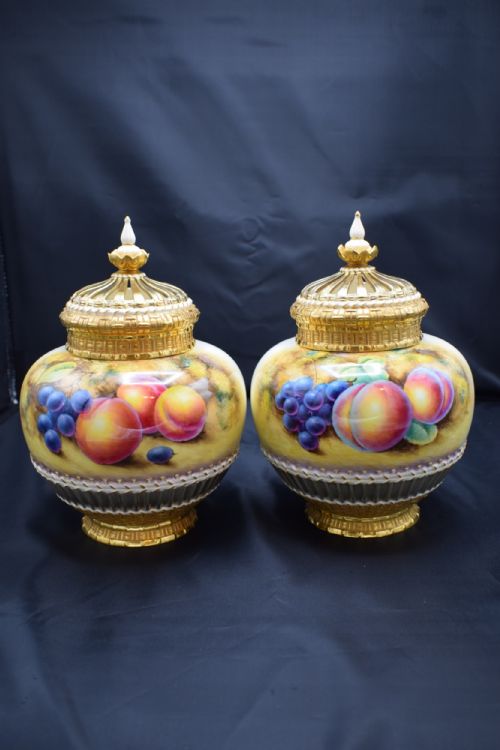


Royal Worcester Fruit Vase
A royal worcester fruit vase brings hand-painted orchard studies and rich gilding into a room, offering a distinct piece of traditional English ceramic history.
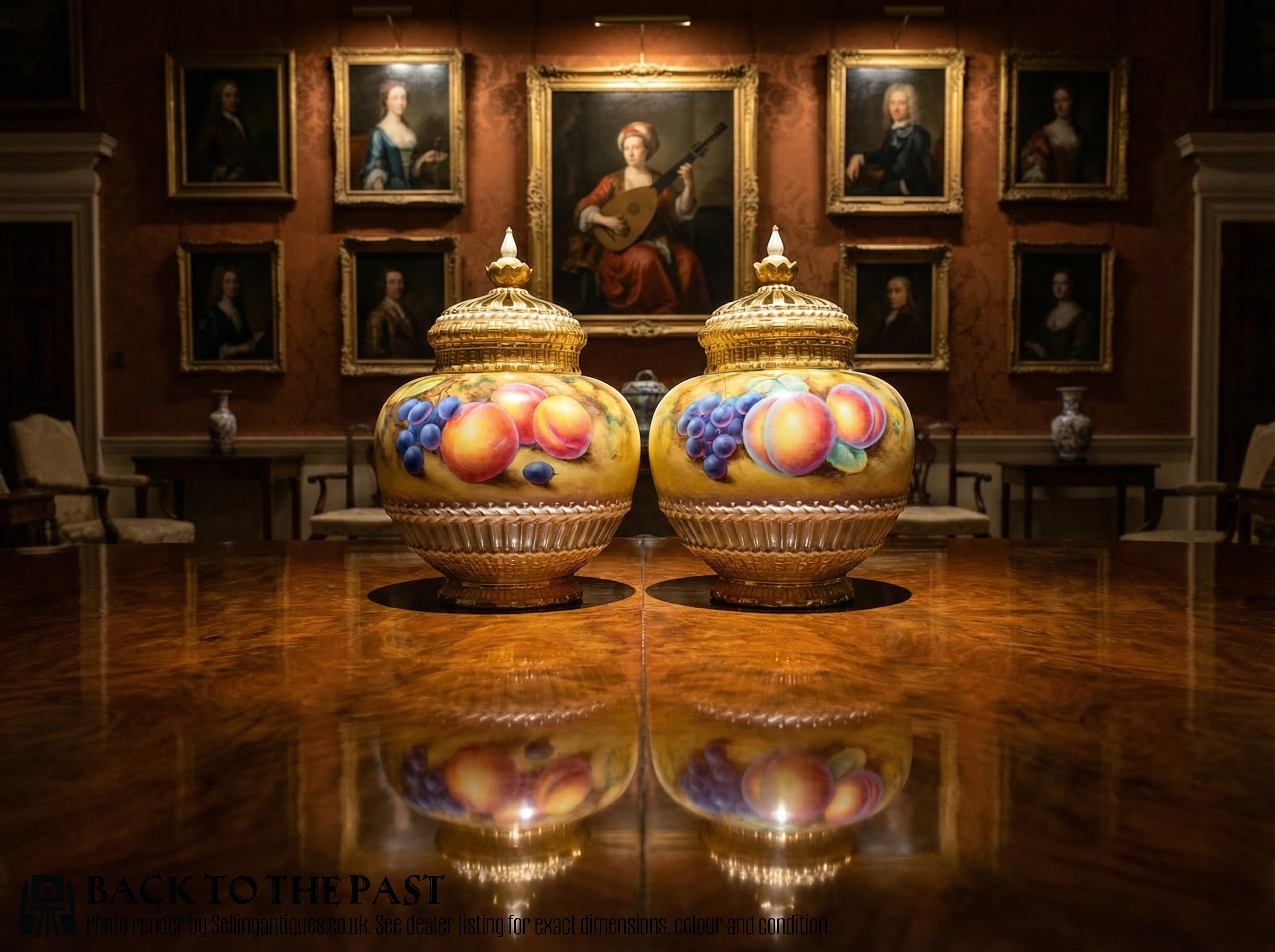
Royal Worcester Fruit Vase
A royal worcester fruit vase represents a long tradition of hand-painted porcelain artistry, typically featuring detailed studies of apples, pears, and berries against soft natural backgrounds. These pieces emerge in various forms across the twentieth century, including lidded ginger jars, pot pourri vessels, and handled ewers.
The objects span multiple decades from the Victorian era through the mid-twentieth century, capturing shifting preferences in decorative forms. Collectors encounter traditional shapes alongside Edwardian variations and later mid-century iterations, all sharing the central motif of carefully rendered orchard fruit.
Makers and decorators applied their skills to diverse vessel types, ranging from miniature spill vases to large decorative urns and covers. Each piece relies on porcelain bodies shaped into classic silhouettes, often complemented by intricate crown tops or pierced covers.
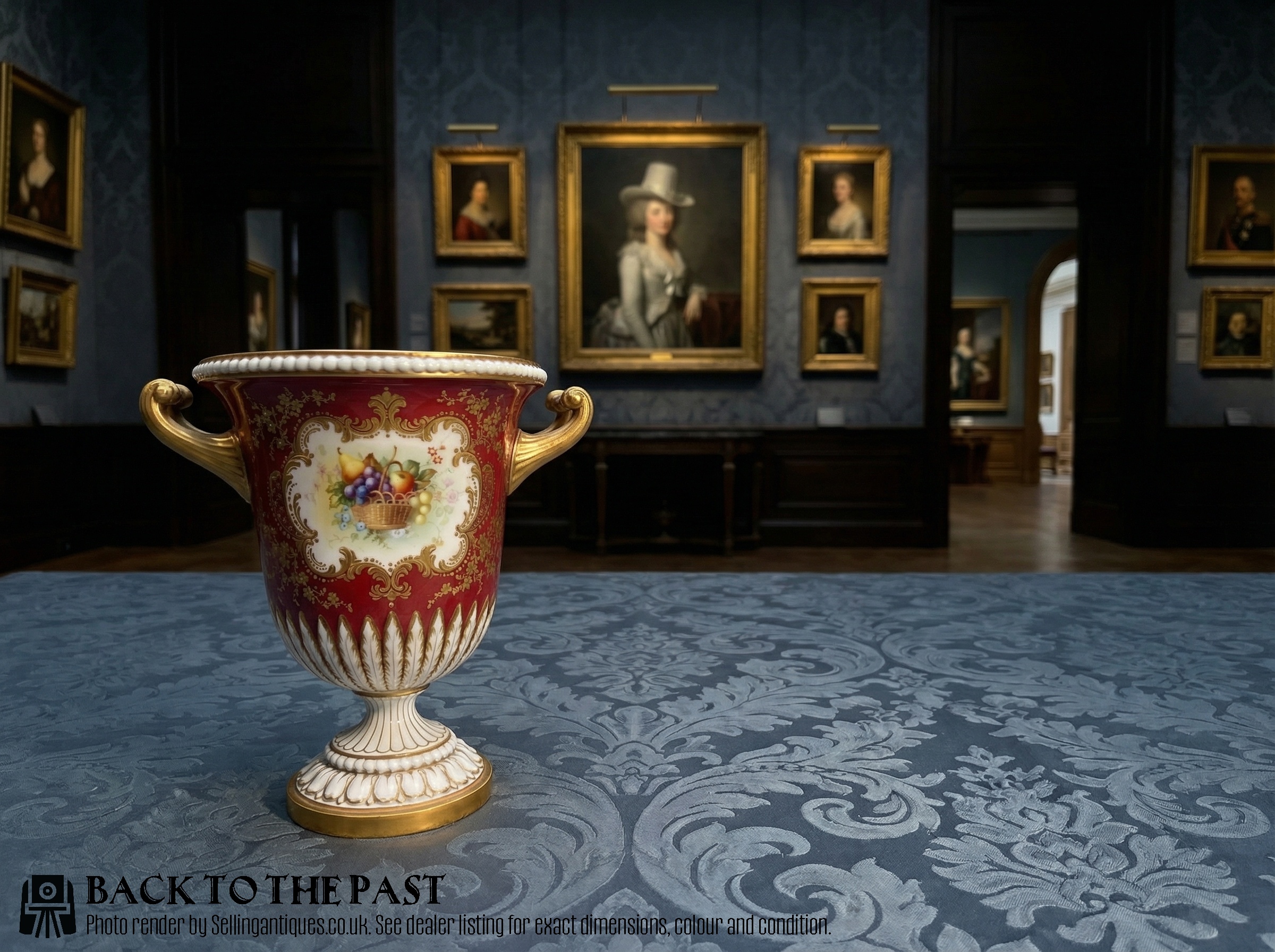
Materials and Technique
The construction of these vessels relies upon fine bone china and standard porcelain bodies shaped into classical and decorative forms. Artisans then applied complex layers of enamel pigments by hand to build up realistic textures and colours for the fruit studies.
Gilding and gold leaf accent the rims, handles, and shoulders of the porcelain, requiring precise brushwork to frame the painted panels. Firing techniques fixed both the polychrome enamel pigments and the metallic lustre onto the surface, creating a durable and polished finish.
Royal Worcester Fruit Vase Retail Price Guide 2026
Typical asking prices for royal worcester fruit vase among the pieces listed under this phrase on Sellingantiques today, from the lower quarter to the upper quarter. They describe what is for sale here now, not the wider market.
Listings feature porcelain forms spanning from the Victorian era through the 1960s, executed in fine bone china with extensive gilding.
Assessing Quality
The distinction between standard and exceptional pieces rests upon the complexity and realism of the hand-painted fruit panels. Master decorators achieved depth through meticulous stippling and subtle shading, whereas lesser examples present simpler, flatter applications of pigment.
The density and precision of the gilding further separate the tiers of craftsmanship, with superior examples displaying heavy, burnished gold work rather than thin, plain applications. The overall balance of the vessel shape and the finesse of any pierced covers or moulded handles also dictate the standing of a piece.
Chivers·Ayrton·William Hawkins·John Smith·Freeman·William Ricketts·HH Price·K Blake·Kitty Blake·Richard Seabright·D.J.Scyner·W.Bee·F. Parker
The Royal Worcester Fruit Vase Glossary
- Pot Pourri Vase
- A decorative vessel featuring a pierced or perforated cover designed to release the scent of dried flower petals and spices contained within. These often include inner lids alongside their main decorative covers.
- Ewer
- A large jug with a flared spout and an ornate handle, traditionally used for pouring water but produced primarily as a decorative display piece in these ceramic ranges.
- Bone China
- A type of soft-paste porcelain incorporating bone ash, which provides a high degree of translucency and strength for delicate vessel walls.
- Gilding
- The application of gold leaf or powdered gold suspended in a medium to the surface of the ceramic, usually fired to create a permanent metallic sheen.
Royal Worcester Fruit Vase: Frequently Asked Questions
How do I identify a painted fruit piece?
Look for naturalistic depictions of apples, pears, and blackberries surrounded by foliage against a shaded background, typically signed by the artist near the base of the painted panel.
Most authentic examples also bear factory backstamps underneath that correspond to the operational periods of the early to mid-twentieth century.
Were these vessels used for flowers?
While spill vases and standard forms could hold stems, many lidded pieces like ginger jars and pot pourri vessels served purely decorative functions in period interiors.
The inclusion of pierced covers on pot pourri items indicates their original purpose for holding scented dried botanicals rather than water.
How should I display my porcelain?
Position the vessels away from direct sunlight to protect the stability of the polychrome enamel pigments and prevent any fading of the delicate fruit colours.
Ensure they rest on stable, level surfaces where accidental knocks from foot traffic or cleaning are entirely avoided.
What do artist signatures indicate?
Signatures denote the specific porcelain painter responsible for the hand-decorated fruit study on that particular ceramic body, reflecting individual studio specialisations.
Many prominent decorators worked extensively for the factory over decades, leaving identifiable styles that assist in dating the piece.