

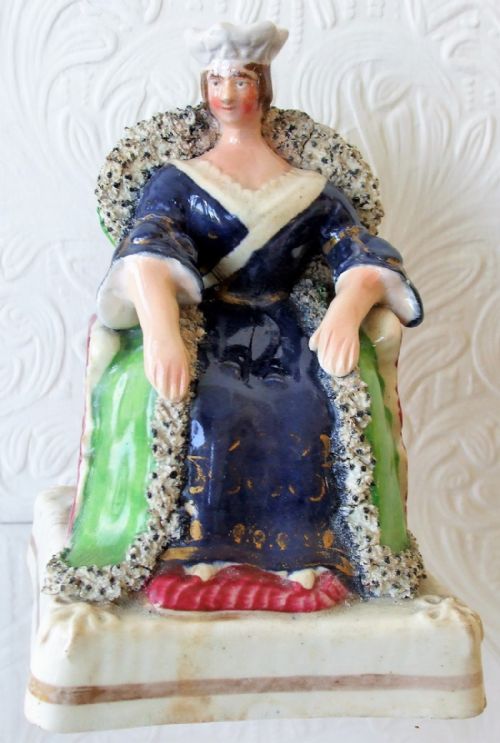
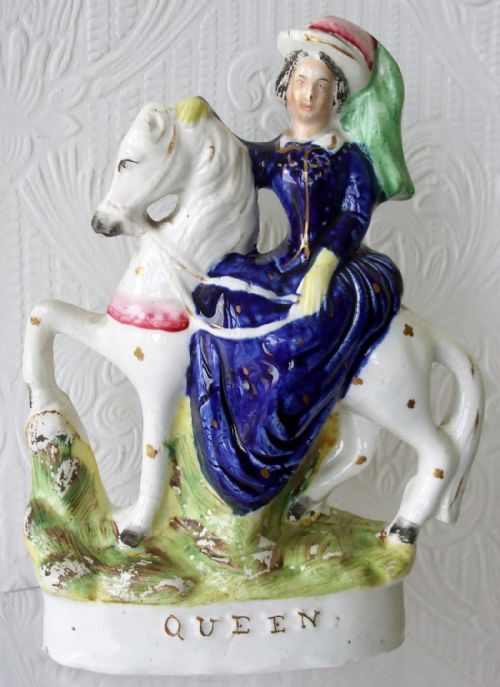
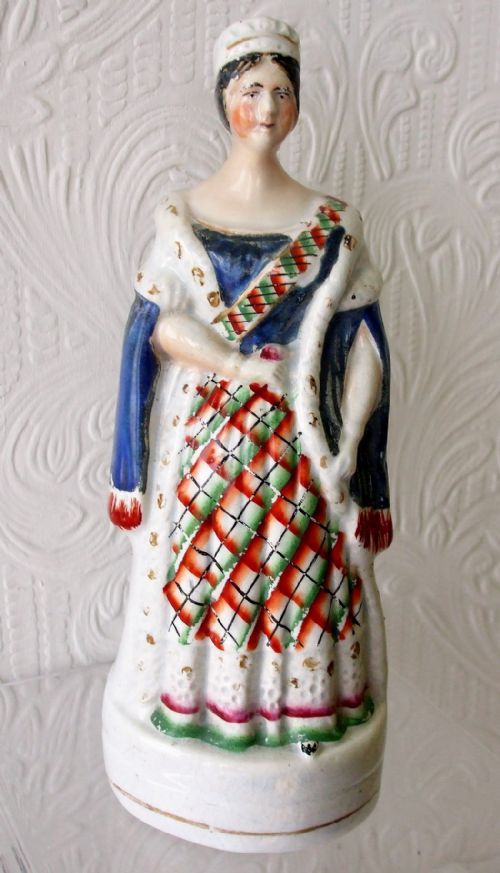
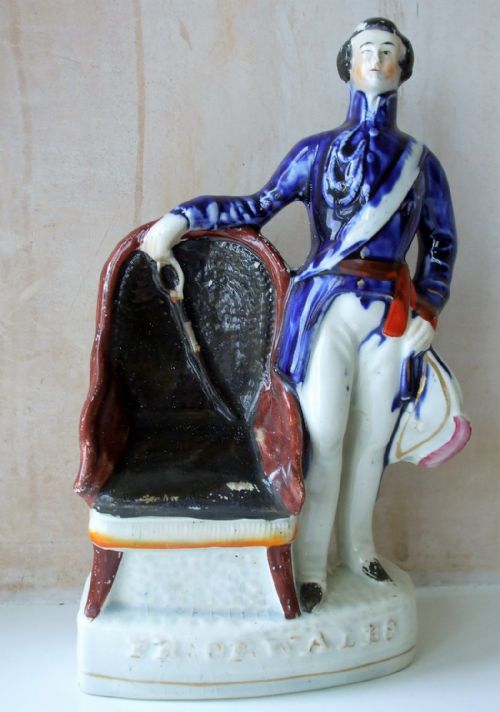
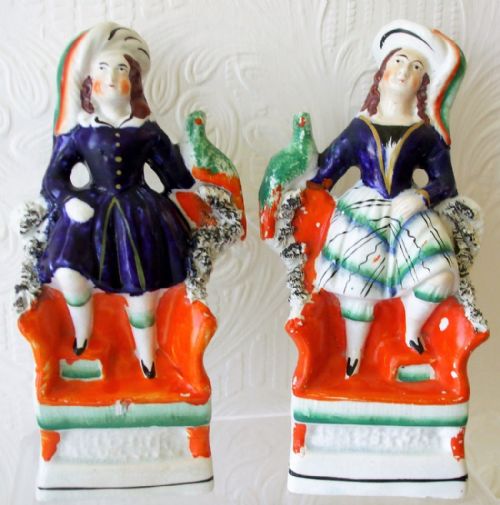
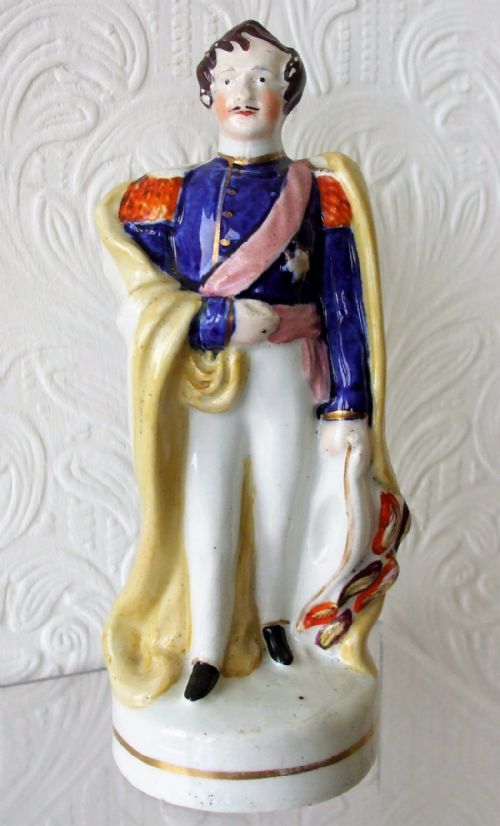


Royal Portrait Ceramic Figure
These royal portrait ceramic figure pieces capture Victorian figures and monarchs in earthenware and parian porcelain.
Royal Portrait Ceramic Figure
A royal portrait ceramic figure portrays monarchs and public figures from the nineteenth century, including Queen Victoria, Prince Albert, and Napoleon III. These decorative objects take the form of single figurines, pairs, and group figures depicting historical alliances or royal families.
Staffordshire pottery dominates the available selection, often rendered as flatback figures designed to be displayed on mantelpieces. Buyers encounter subjects ranging from the Prince of Wales to Princess Alexandra, reflecting the popular patriotism of the Victorian era.
What Varies in Quality
The precision of the moulding and the clarity of the facial expressions dictate the visual success of each portrait figure. Finer examples display carefully painted enamel details and crisp applications of gilt.
Simpler pieces, particularly within the Victorian folk art tradition, rely on heavier glazes and broader brushwork. The complexity of the composition, such as multi-figure groups like the Turkey, England and France alliance, requires greater technical skill from the potter.
Royal Portrait Ceramic Figure Retail Price Guide 2026
Typical asking prices for royal portrait ceramic figure among the pieces listed under this phrase on Sellingantiques today, from the lower quarter to the upper quarter. They describe what is for sale here now, not the wider market.
All listed pieces originate from the nineteenth century, spanning styles from Victorian to Victorian folk art in earthenware and parian porcelain.
The Royal Portrait Ceramic Figure Glossary
- Flatback figure
- A ceramic sculpture modelled in the round at the front while the rear remains flat, allowing the piece to sit flush against a wall or mantelpiece. These figures were predominantly produced by Staffordshire potteries.
- Parian porcelain
- A fine-grained, unglazed porcelain resembling marble, utilised for portrait busts in the nineteenth century. This material gained popularity for its smooth, matte texture.
- Lead glaze
- A glossy coating applied to earthenware before a final firing to seal the porous clay body. It imparts a shiny finish typical of nineteenth-century Staffordshire pottery.
- Biscuit ceramic
- Unglazed ceramic fired once to create a porous, matte body. It provides a tactile surface often chosen for portrait busts.
- Enamel
- Vitreous colour applied over the glaze and fired at a lower temperature to fix the painted details. It forms the vibrant surface decoration on Victorian pottery.
Royal Portrait Ceramic Figure: Frequently Asked Questions
What are royal portrait figures?
These ceramic sculptures depict nineteenth-century monarchs, royal family members, and political figures. They served as domestic ornaments in Victorian homes to display loyalty and patriotism.
Potters typically rendered these subjects in Staffordshire earthenware or parian porcelain. Subjects range from Queen Victoria to Napoleon III.
Where were they displayed?
Makers designed flatback figures to stand on mantelpieces, shelves, or wall brackets where the unadorned back would remain unseen. They brought public figures into private domestic spaces during the Victorian period.
Pairs and larger figure groups often occupied central positions in home displays. Their flat rears made them practical for shallow display surfaces.
How do I identify Victorian pieces?
Nineteenth-century pieces rely on specific stylistic markers such as Staffordshire earthenware bodies, lead glazes, and enamel painting. The subjects themselves, including Queen Victoria and Prince Albert, point directly to this era.
Look for the characteristic flatback construction common among Staffordshire portrait pieces from this period. Parian porcelain busts of figures like Princess Alexandra also signal nineteenth-century manufacture.
How do single figures differ from groups?
Single figures portray one individual, such as Queen Victoria or the Prince of Wales, standing independently. Figure groups incorporate multiple people, such as royal family members or political alliances like Turkey, England and France.
Groups require more complex modelling and composition by the potter. Both formats utilise earthenware, enamel, and gilt decoration.