



English Earthenware Mantle Ornament
These English earthenware mantle ornament examples bring character to a fireplace, offering a glimpse into Victorian parlour display.
English Earthenware Mantle Ornament
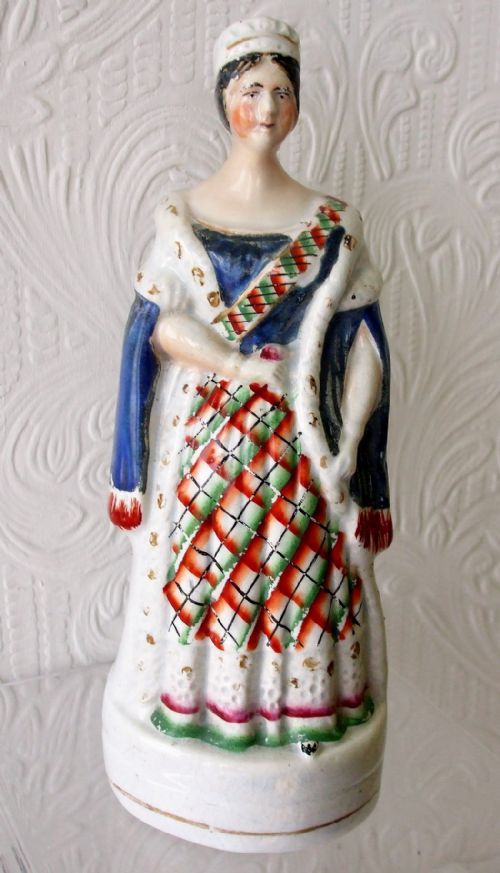
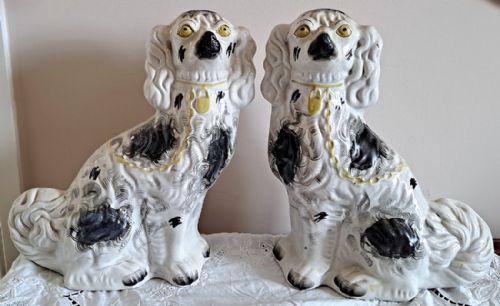
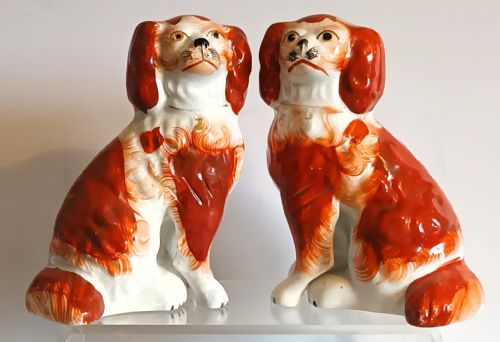
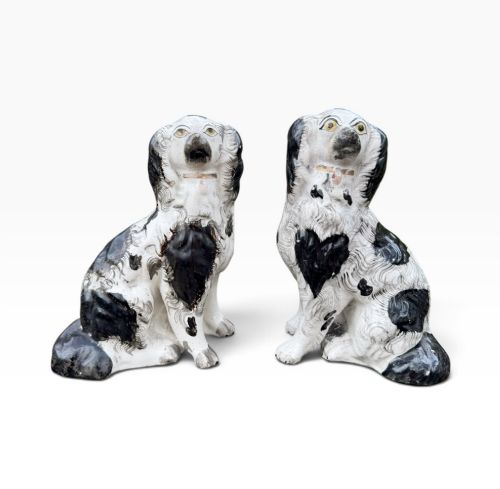
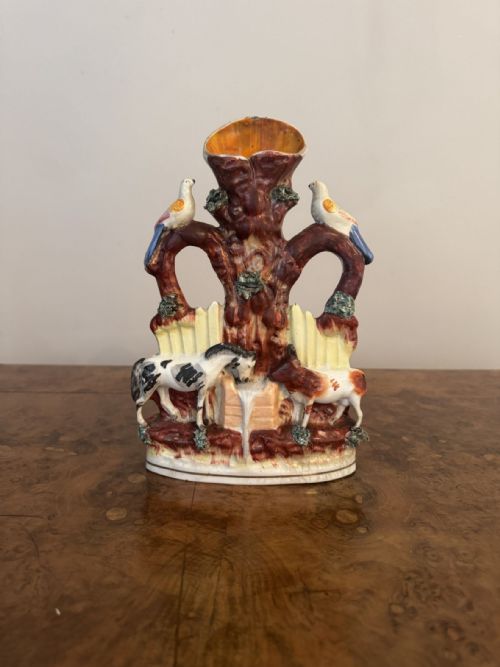
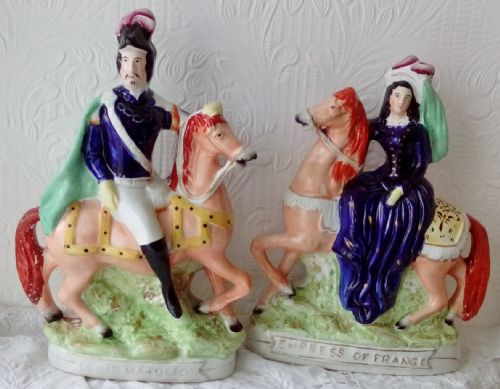
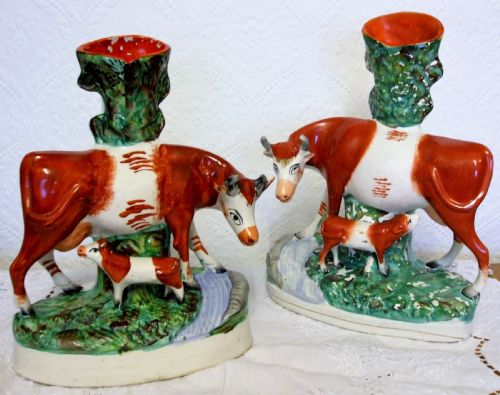
When you search for an english earthenware mantle ornament, you are looking at nineteenth century Staffordshire figures, spill vases, and animal groups designed for display on the shelf. The selection on this page consists principally of Victorian pottery figures, including spaniels, greyhounds, poodles, sheep, cows with calves, and portrait subjects.
The forms span the nineteenth century, including Regency-era pieces alongside items dated around eighteen eighty and eighteen ninety. These range from single flatback figures to matched pairs of dogs and narrative subjects such as Little Red Riding Hood and royal portraits like Louis Napoleon and Napoleon III.
Mantle ornaments served a decorative purpose in period homes, often arranged in pairs to balance either side of a fireplace clock. They reflect popular taste, commemorating figures of the day or depicting domestic and farm animals with naive charm.
How they were made
These items are shaped from earthenware and ceramic, utilising local clays moulded into animal and human forms. Makers applied glazes and hand painted enamels to bring colour to the surfaces, sometimes adding gilt or gold paint highlights.
Details such as glass eyes appear on certain spaniel dogs to enhance realism. The backs of many flatback figures were left unglazed or simply finished, as they were intended to be viewed strictly from the front on a high mantle.
English Earthenware Mantle Ornament Retail Price Guide 2026
Typical asking prices for english earthenware mantle ornament among the pieces listed under this phrase on Sellingantiques today, from the lower quarter to the upper quarter. They describe what is for sale here now, not the wider market.
Object types include spill vases, flatback figures, and portrait subjects from the Victorian period.
What varies in quality
The English Earthenware Mantle Ornament Glossary
- Earthenware
- Porous pottery fired at lower temperatures than stoneware or porcelain. It forms the primary body for these nineteenth century mantle ornaments.
- Flatback
- A figure moulded with a finished front and a flat, often unglazed or minimally decorated rear. This design allowed the ornament to sit flush against a wall or mantle.
- Spill Vase
- A hollow figure combined with a cylindrical holder designed to store wooden spills used for lighting fires or pipes. Spill vases combine practical utility with decorative animal or figural modelling.
- Enamel
- Opaque vitreous composition fused to the ceramic surface during firing to provide bright colours. Enamel decoration was frequently applied by hand over the initial glaze.
English Earthenware Mantle Ornament: Frequently Asked Questions
What is an english earthenware mantle ornament?
An english earthenware mantle ornament is a nineteenth century ceramic figure, animal group, or spill vase made in Staffordshire and placed on fireplace shelves for decoration.
These pieces depict dogs, sheep, cows, and historical figures, capturing the domestic taste of the Victorian era.
Where were these figures made?
The majority of these pottery figures originate from the Staffordshire potteries in England during the nineteenth century.
Potters produced a wide range of decorative wares for the domestic market, utilising local clay and traditional moulding techniques.
Why do Staffordshire dogs come in pairs?
Staffordshire dogs were traditionally modelled and sold in pairs to sit symmetrically at either end of a mantlepiece.
This matched arrangement suited the formal interior decoration of Victorian parlours and fireplaces.
What are flatback figures?
Flatback figures are ceramic ornaments moulded with a detailed front and a flat, unadorned reverse side.
This construction method saved material and allowed the pieces to sit flush against a wall.