



Royal Doulton Stoneware Vases
Royal Doulton stoneware vases bring distinctive ceramic texture and period craftsmanship into a room.
Royal Doulton Stoneware Vases
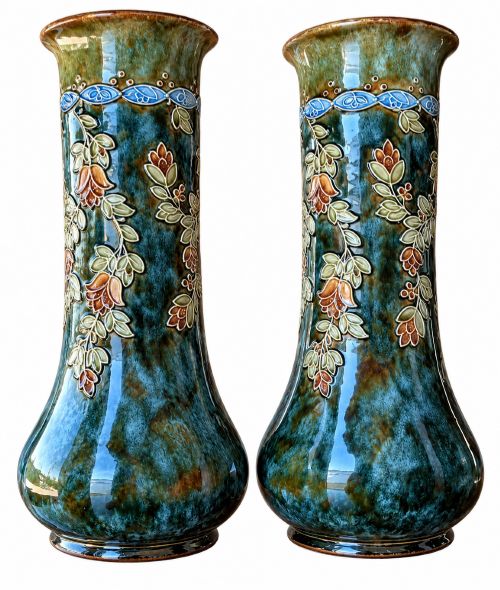
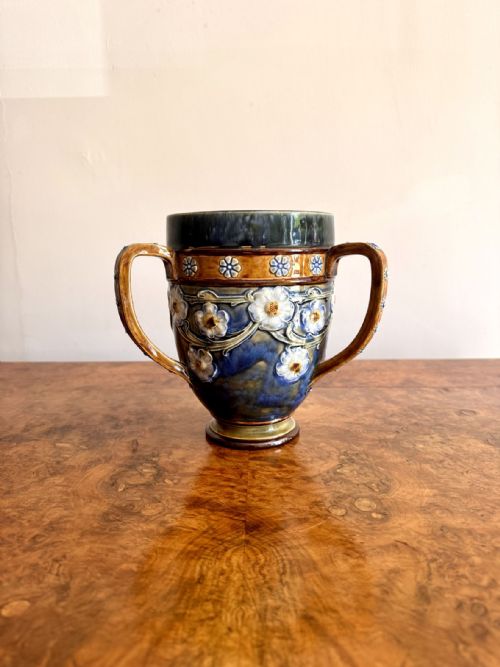
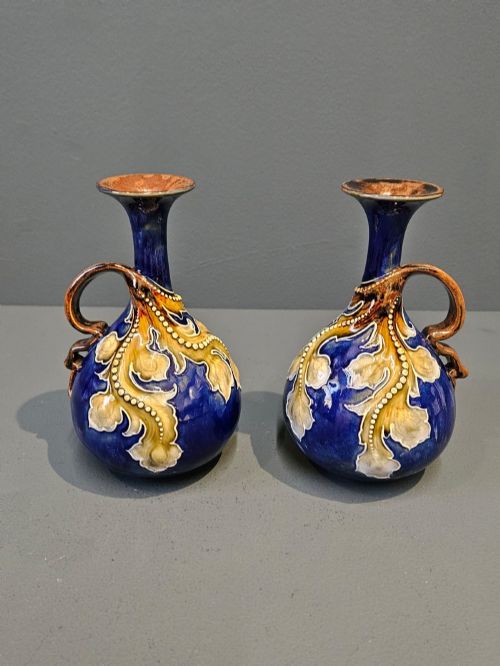
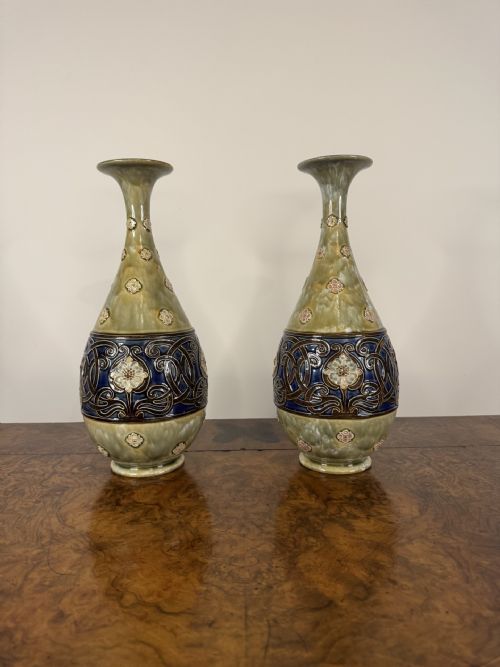
Royal Doulton stoneware vases embody the creative output of British potteries working through the Victorian era and into the early twentieth century. These vessels combine robust ceramic bodies with decorative surface treatments that reflect shifting design movements. When exploring royal doulton stoneware vases, buyers encounter everything from modest cabinet pieces to substantial baluster forms. Most examples on this page date from the Victorian period up to the nineteen-twenties, capturing the height of British art pottery production.
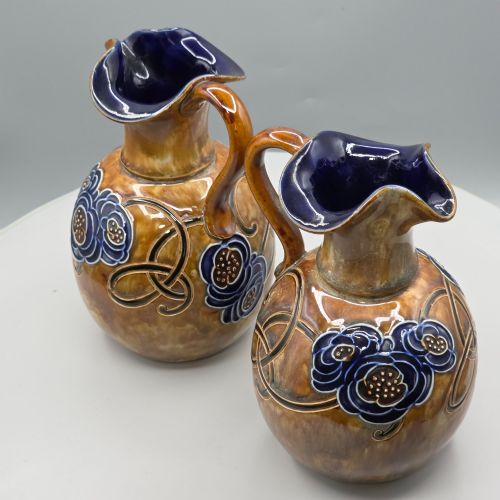
The dominant aesthetic encompasses Art Nouveau curves, Arts and Crafts motifs, and Aesthetic style patterns. Many listings showcase pairs, which hold particular appeal for symmetrical mantelpiece or tabletop arrangement. Forms range from traditional baluster shapes to specialised jugs and decorated vessels. These pieces represent a tangible link to named studio artists who shaped the Lambeth output.
Materials and construction
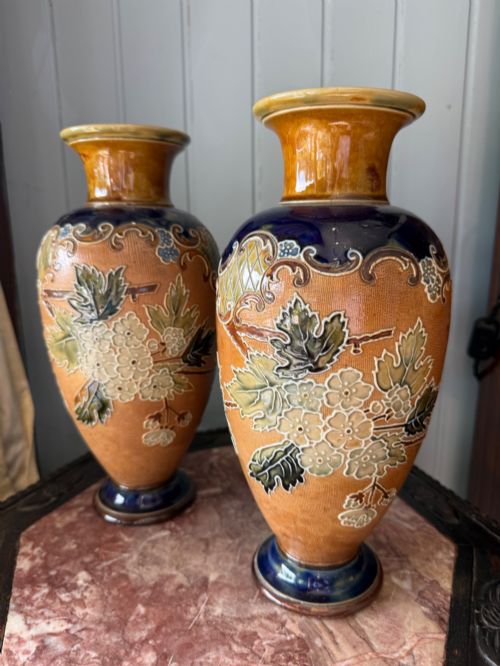
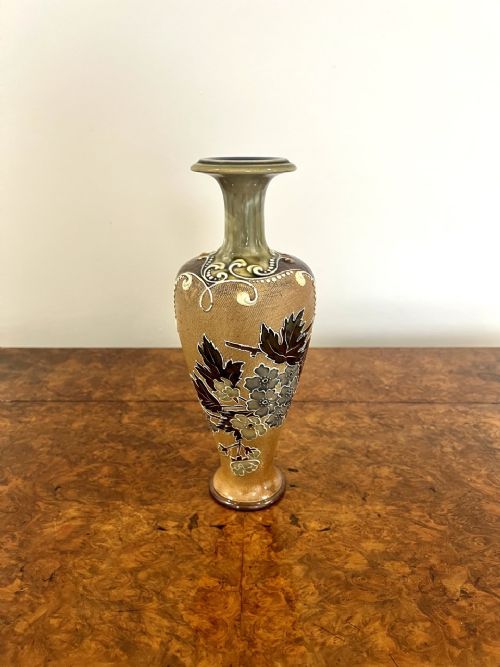
Makers shaped dense ceramic clay to form sturdy stoneware bodies capable of holding rich glazes and enamel details. Artisans applied specialised glaze techniques alongside gold leaf, gilt highlights, and enamel floral decor to create depth on the vessel surfaces. Slater's patent finishes introduced textured lace-like patterns pressed directly into the damp clay before firing.
Individual studio artists added hand-painted elements and incised motifs that made each piece distinct. The firing process vitrified the stoneware body, producing a durable, impervious material that retained sharp surface relief. Workshops then polished or glazed these surfaces to contrast matte textures with glossy colour.
Royal Doulton Stoneware Vases Retail Price Guide 2026
Typical asking prices for royal doulton stoneware vases among the pieces listed under this phrase on Sellingantiques today, from the lower quarter to the upper quarter. They describe what is for sale here now, not the wider market.
Listings feature stoneware and glazed ceramic forms spanning the Victorian era through the nineteen-twenties.
Assessing quality and execution
Superior examples of royal doulton stoneware vases display the distinct hand of a named studio artist rather than anonymous factory production. The crispness of the incised patterns, the complexity of the enamel floral work, and the richness of the glaze separation distinguish finer specimens. Baluster forms with well-balanced proportions and complex Art Nouveau motifs command attention from serious collectors.
The presence of patent techniques, such as Slater's lace-impressed texturing combined with hand-painted foliage, indicates higher ambition in the workshop. Condition of the glaze and enamel decoration remains central to the standing of any piece. Matched pairs executed by notable decorators demonstrate a level of cohesion that elevates their status.
Louisa Wakely·Emily Stormer·Ethel Beard
The Royal Doulton Stoneware Vases Glossary
- Stoneware
- A robust, vitrified ceramic pottery fired at high temperatures until non-porous. This material forms the durable foundation for all these vases.
- Baluster
- A vase shape with a rounded lower body that tapers into a narrower neck. This classic silhouette provides stability and elegant proportions.
- Slater's Patent
- A specialised decorative technique involving pressed lace or fabric textures imprinted into the clay surface. It created a distinctive patterned background for floral enamel work.
- Enamel
- Opaque vitreous material applied to ceramic surfaces for colourful decoration. Artisans used enamel to build up floral and geometric motifs over glazed stoneware.
- Art Nouveau
- A design style characterised by flowing, organic lines and plant-inspired curves. This aesthetic heavily influenced the ornamentation of early twentieth-century pottery.
Royal Doulton Stoneware Vases: Frequently Asked Questions
How do I date these vases?
Dating relies on recorded workshop marks stamped into the ceramic base alongside stylistic indicators like Victorian or Art Nouveau motifs. Comparing the specific shape and decorator signatures against known production periods helps narrow the manufacturing window.
Changes in factory stamps through the late nineteenth and early twentieth centuries provide reliable chronological markers for collectors. Reviewing the listed period helps place individual vessels within the broader timeline of British art pottery.
Are these pieces usually found in pairs?
Many examples survive as matched pairs intended for formal mantelpiece display or symmetrical interior arrangements. Workshops frequently produced decorative vessels in corresponding sets during the Victorian and Edwardian eras.
Finding a matched pair remains desirable for collectors seeking balanced decorative displays. Single pieces also appear regularly, reflecting the varied nature of historical production and survival.
What is Slater's patent decoration?
Slater's patent refers to a specific technique where lace or woven fabrics were pressed directly into damp clay before firing. This created a textured, patterned background across the ceramic surface.
Artists then highlighted these textured areas with enamel floral decor and coloured glazes. The resulting contrast between the rough fabric impression and smooth painted details defined this distinct aesthetic.
How should I display stoneware vases?
These ceramic vessels suit placement on sturdy surfaces where their detailed glazes and textures can be appreciated in natural light. Pairing them with complementary period furnishings enhances their Arts and Crafts or Art Nouveau character.
Ensuring adequate spacing around pairs allows the individual shapes and decorator marks to remain visible. Avoid placing heavy items near high-traffic edges to protect the historic ceramic bodies.