



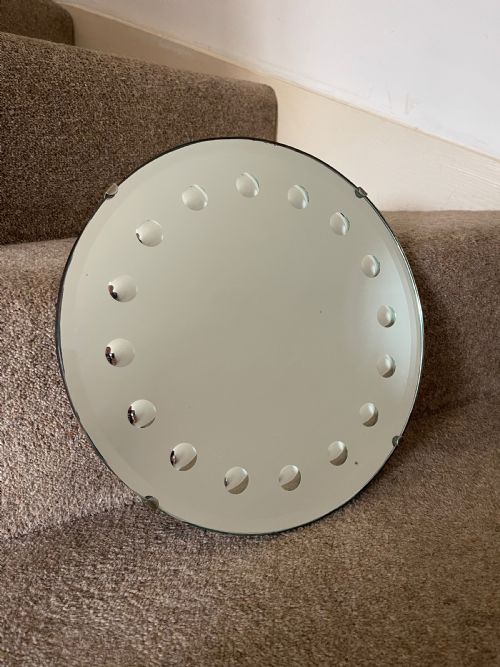


Round Sorcerer Mirror
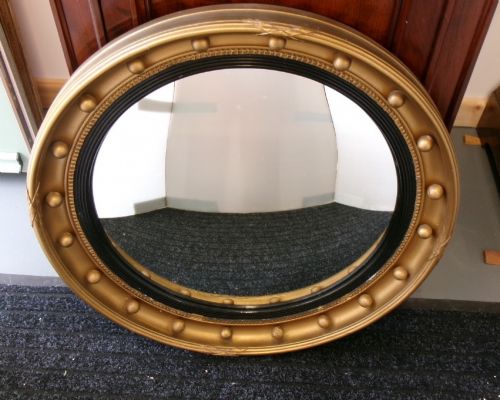
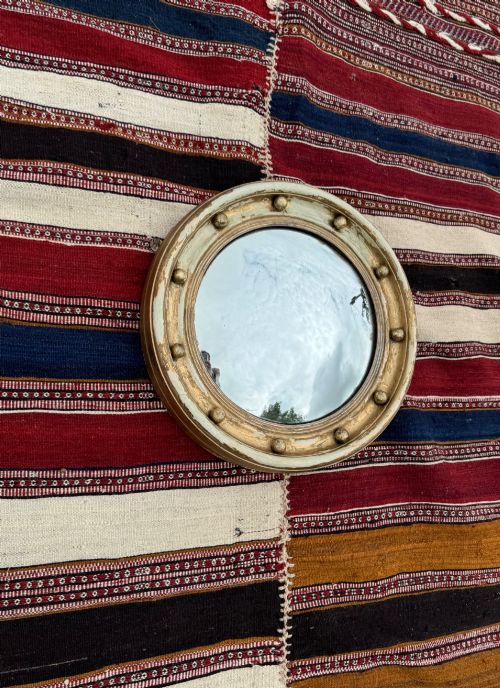
A round sorcerer mirror bends the room into a single curved sphere, catching light and space with Victorian drama.
Round Sorcerer Mirror
When you search for a round sorcerer mirror, you encounter convex wall mirrors designed to distort reflections across a curved glass plate. These convex glasses appear under various historic terms including porthole mirrors, witch's mirrors, and butler's mirrors.
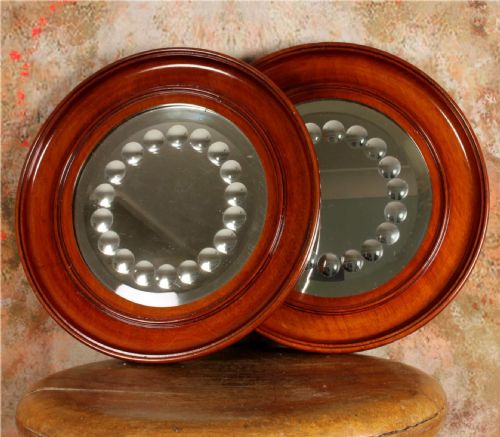
The versions you meet on this page hail primarily from the Victorian era and the late nineteenth century, alongside a few pieces stretching into the early twentieth century. Most examples function as wall mirrors intended for halls and principal rooms, occasionally appearing in matched pairs.
Makers fashioned these pieces in styles spanning Victorian, Regency Revival, and nineteenth century French designs. You also find mid-century revival and art deco interpretations alongside simple sorcerer type mirrors from around eighteen eighty to nineteen twenty.
How they were made
Giltwood and gesso form the decorative frames of these pieces, providing a rich gilded surface that catches the ambient room light. Ebonised wood and solid mahogany also appear in the listings, offering a darker contrast to the bright reflective glass.
The mirror plate itself is silvered glass shaped into a distinct convex curve to create the characteristic fisheye reflection. Craftsmen mounted this curved glass securely within deep wooden and gesso mouldings designed to project outward from the wall.
Listings feature items spanning the Victorian era, eighteen eighty, eighteen ninety, nineteen hundred, and nineteen twenty.
What varies in quality
The crispness of the gesso moulding and the depth of the gilding set the finer pieces apart from simpler output. Intricate ornamentation on the frame indicates a higher tier of Victorian craftsmanship.
The clarity and uniform curve of the glass plate determine the visual strength of the reflection. Well-preserved silvering on the mirror plate maintains the optical impact that collectors prize.
The Round Sorcerer Mirror Glossary
- Convex mirror
- A round mirror with an outward-curving glass surface that shrinks the reflection to show a wide-angle view of the room. This curved form is the defining characteristic of every sorcerer mirror.
- Gesso
- A plaster-like mixture applied to wood frames to build up detailed decorative reliefs before gilding. It allows for intricate moulded ornamentation.
- Ebonised wood
- Timber treated with a dark stain or finish to imitate expensive ebony. This dark finish provides a sharp contrast against the silvered glass plate.
- Butler's mirror
- A traditional name for a convex wall mirror used historically by staff to monitor activity across a large dining room or hall. These mirrors often feature simple circular frames.
Round Sorcerer Mirror: Frequently Asked Questions
What is a round sorcerer mirror?
A round sorcerer mirror is a convex wall mirror designed with curved glass that reflects a wide, fish-eye view of the interior. These decorative objects distort perspective to pull light and space into a single circular frame.
Historically called witch's mirrors or butler's mirrors, they served both practical supervision and decorative display. Victorian homes favoured them for narrow hallways and reception rooms to brighten dark corners.
Where should I hang one?
These mirrors suit spaces where you want to draw the eye and capture maximum ambient light, such as a hallway or above a fireplace. Because the curved glass shrinks and encompasses the whole room, placement opposite a window yields the strongest visual effect.
Ensure the wall fixing is secure because antique frames with heavy gesso and glass carry considerable weight. Hanging the piece at eye level allows you to appreciate the full panoramic reflection.
How do I date these mirrors?
Dating relies on examining the construction of the wooden frame, the composition of the gesso, and the character of the mirror plate. Victorian examples often display deep gilded mouldings or ebonised wood characteristic of the late nineteenth century.
Revival pieces and early twentieth-century sorcerer type mirrors show subtle shifts in proportion and frame decoration. Comparing the backing boards and fixings helps narrow down the period of manufacture.
How do I clean the glass?
Clean the convex glass gently with a soft microfibre cloth and a mild glass cleaner sprayed onto the cloth rather than directly onto the mirror. This prevents moisture from seeping behind the curved plate and damaging the historic silvering.
Take care around the gilded or gesso frame edges, as antique finishes can be fragile. Avoid harsh chemical agents that might strip the original gilding or discolour the wood.