
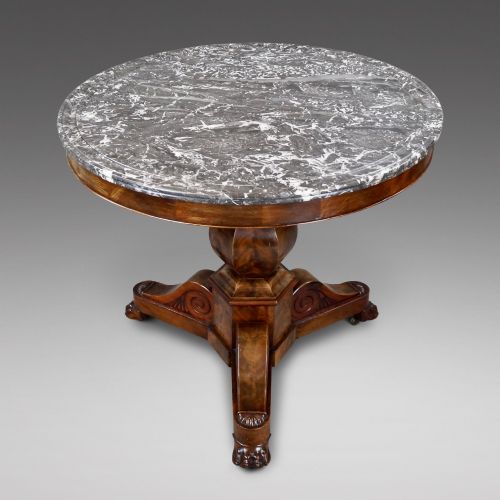
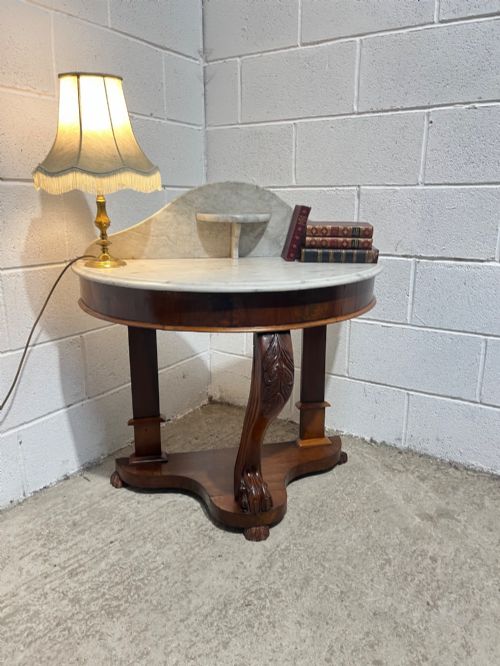
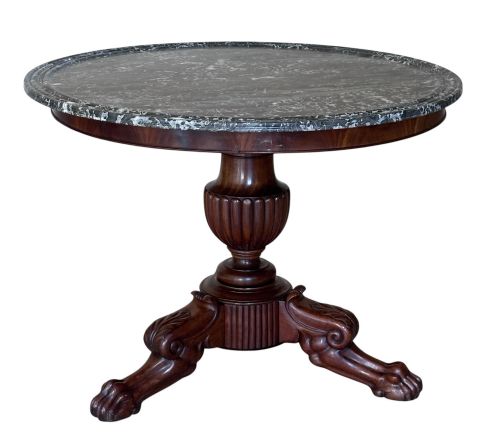
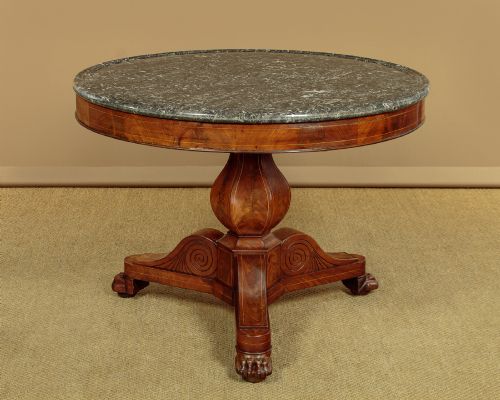
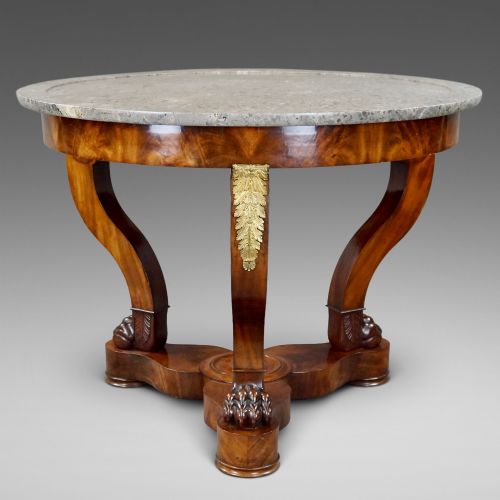
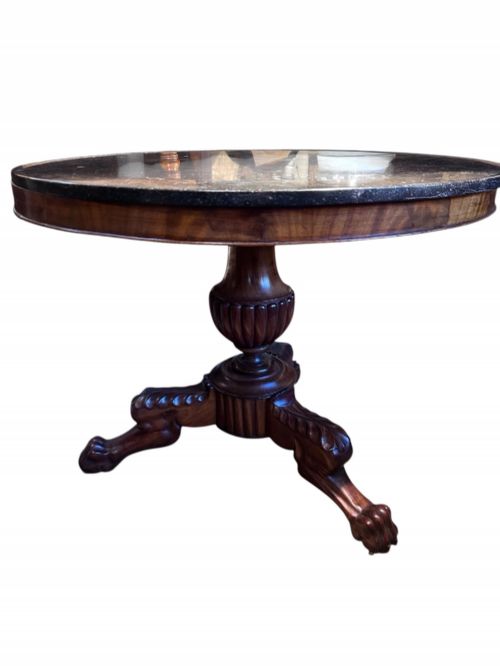
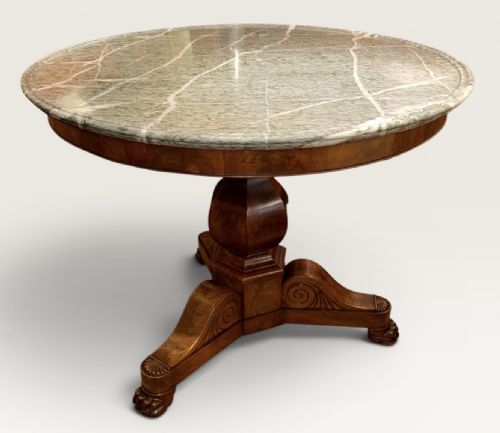


Round Marble Gueridon Table
A round marble gueridon table brings French elegance to a room, offering a sturdy stone surface supported by timber and brass.
Round Marble Gueridon Table
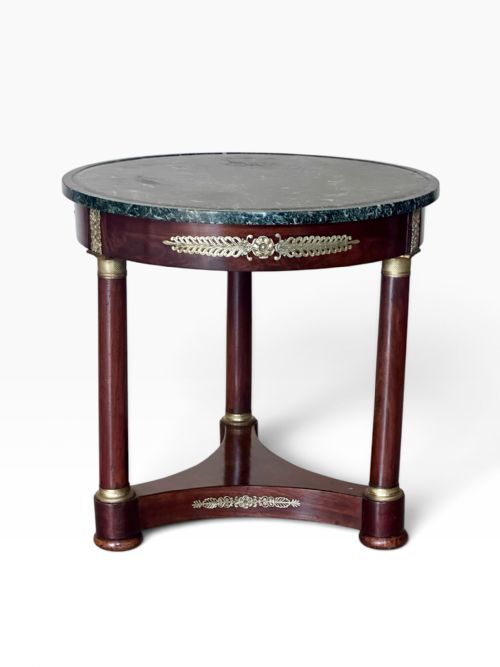
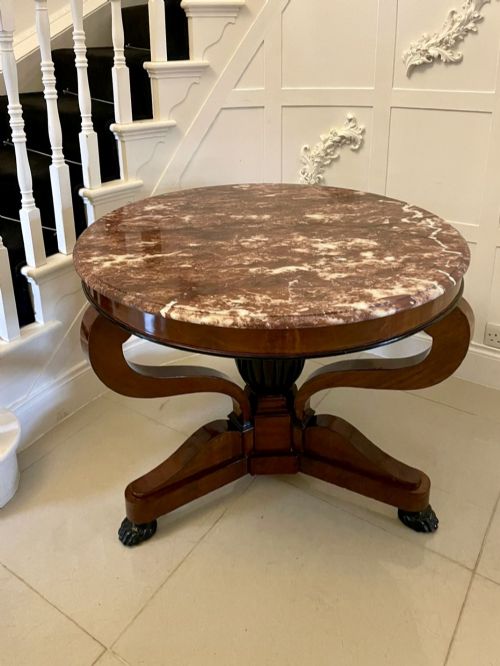
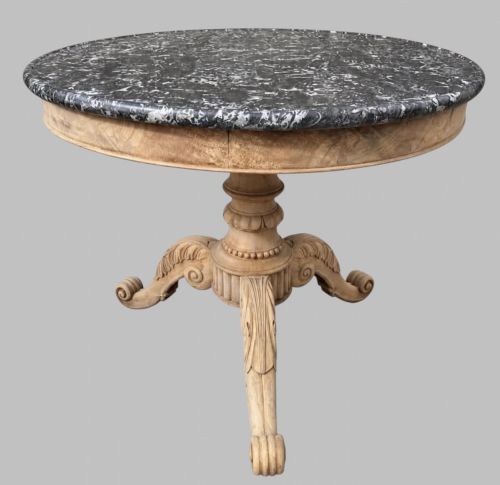
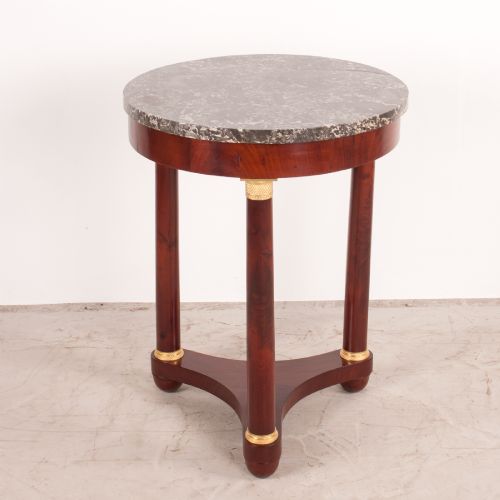
A round marble gueridon table serves as a functional centrepiece or side table, rooted primarily in nineteenth-century French cabinet-making traditions. These tables appear frequently in forms such as centre tables, occasional tables, and bistro tables, designed with a circular stone top above a central pillar or leg configuration.
The evidence shows periods spanning from the early nineteenth century through to the early twentieth century, taking stylistic cues from the French Empire, Louis Philippe, and Louis XVI periods. Most examples employ mahogany, walnut, or painted wood structures paired with contrasting white or black marble surfaces.
How they were made
Cabinet-makers constructed the frames using solid timbers and veneers like flame mahogany, walnut, and kingwood over a sturdy wooden carcase. Many examples incorporate decorative mounts in brass and ormolu, occasionally featuring detailed carved elements such as swans or rams' heads.
The defining feature rests in the heavy circular marble slab fitted precisely to the wooden top. Artisans balanced the substantial weight of the stone by securing the central pedestal or leg supports to stable plinth bases.
Periods represented span from the early nineteenth-century Empire era to early twentieth-century revival pieces.
What varies in quality
Quality reveals itself in the selection of wood veneers and the crispness of any applied bronze or ormolu mounts. Tables utilising finely figured flame mahogany or burr elm display a greater depth of grain than plain timber surfaces.
The integration of the marble top and the stability of the central pillar dictate the structural integrity of the piece. Superior examples maintain firm joints and well-fitted stone without excessive movement or clumsy repairs to the pedestal.
The Round Marble Gueridon Table Glossary
- Gueridon
- A small French table, typically supported by a central column or pillar. This form developed in the seventeenth century and remained popular through the nineteenth century.
- Ormolu
- Gilt bronze mounted onto furniture as a decorative trim. It provides a bright metallic contrast against dark timbers like mahogany.
- Flame mahogany
- Timber sliced to reveal a distinctive flamed or feathered grain pattern. Cabinet-makers reserved this decorative veneer for prominent surfaces.
- Empire
- A nineteenth-century French design style characterised by classical motifs and heavy proportions. Pieces from this period often incorporate bronze mounts and dark wood.
Round Marble Gueridon Table: Frequently Asked Questions
Where should I place a round marble gueridon table?
These tables sit well in the centre of a room as a focal point or function as a side table beside seating. Their compact circular shape allows them to fit comfortably into hallways or corners.
Ensure the floor surface remains level to support the weight of the marble top safely without rocking.
How do I clean the marble top?
Wipe the stone surface with a soft, damp cloth using mild soap if necessary. Avoid acidic cleaners or harsh chemicals that can etch or dull the polished finish.
Dry the marble thoroughly afterwards to prevent water marks from settling into the porous stone.
Are these tables heavy?
The combination of dense timber frames and solid stone slabs makes these pieces substantial in weight. The marble top usually lifts off the wooden base to make moving the table safer.
Two people should lift the heavier components to avoid damaging the joints or dropping the stone.
How do I identify an Empire style table?
Look for classical architectural motifs, dark mahogany timbers, and cast brass or ormolu mounts depicting swans or classical figures. These design cues reflect the influence of early nineteenth-century French taste.
Such details separate Empire pieces from later revival styles and simpler nineteenth-century utility tables.