
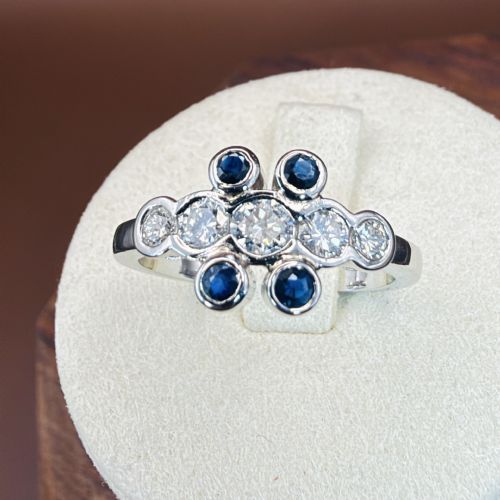
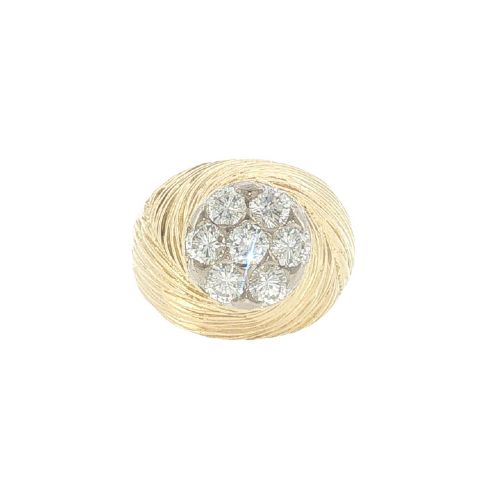
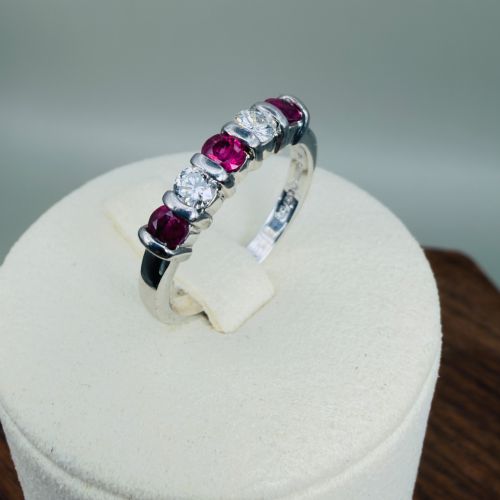
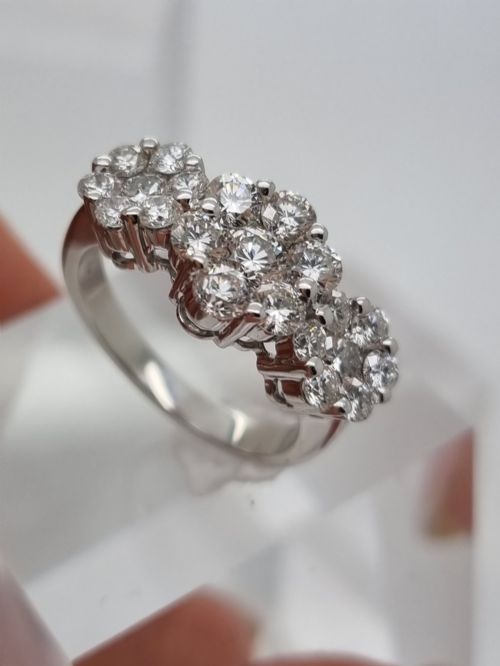
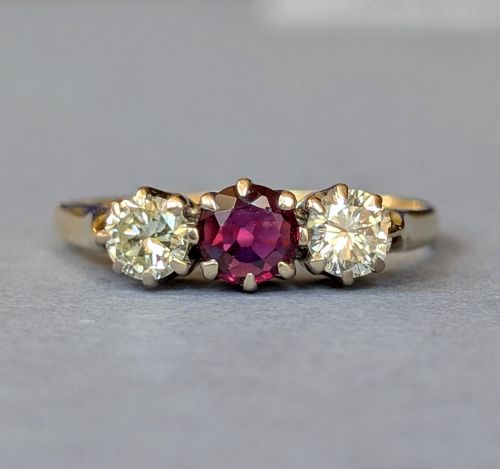
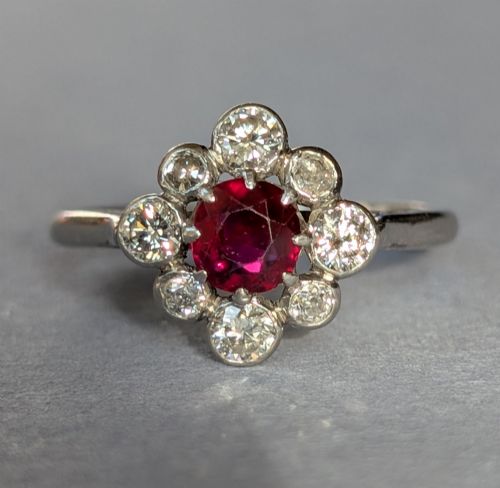
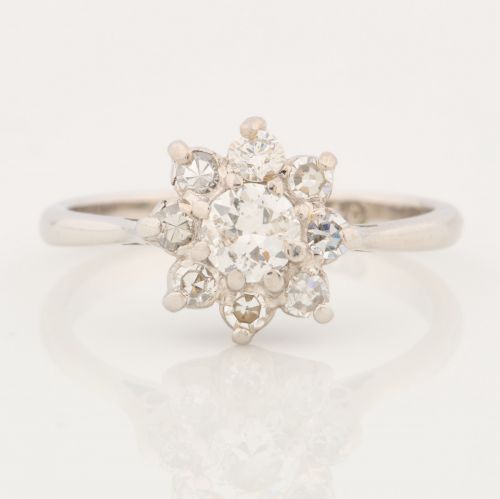
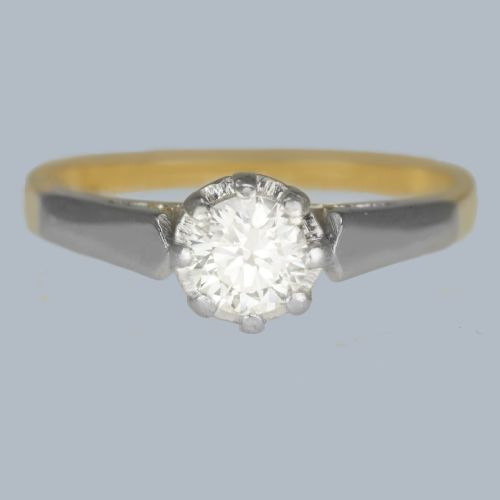
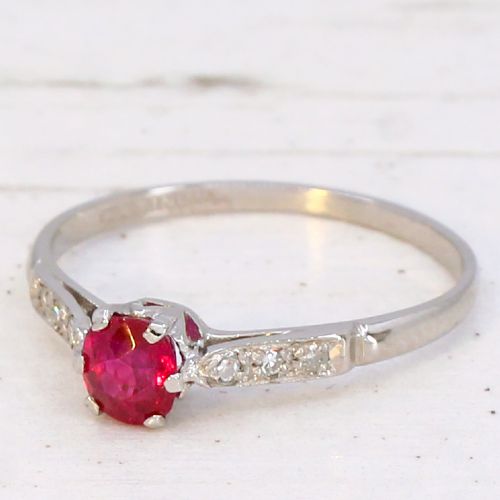
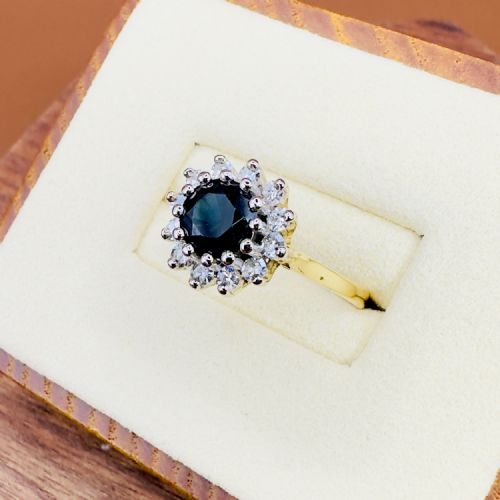
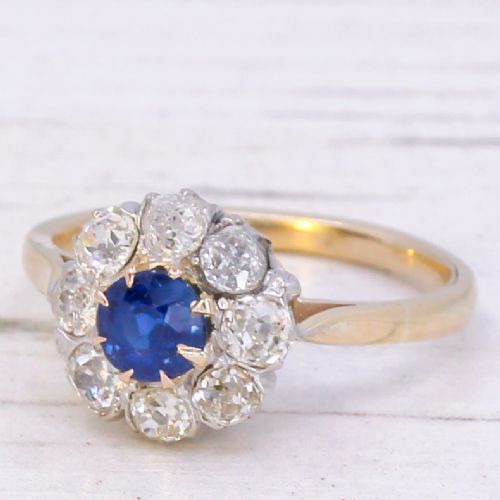
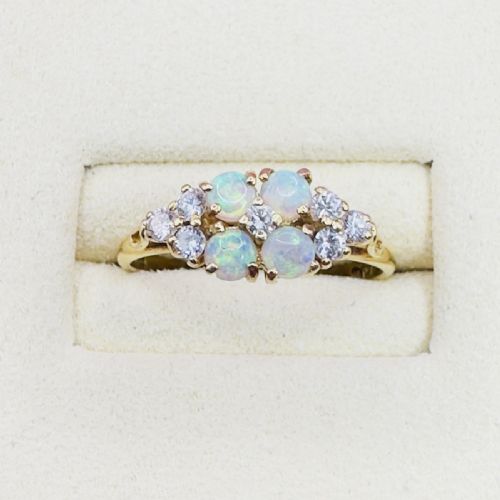
Round Diamond Ring
A round diamond ring brings together enduring metals and circular stones across Edwardian, Art Deco and mid-century periods.
Round Diamond Ring
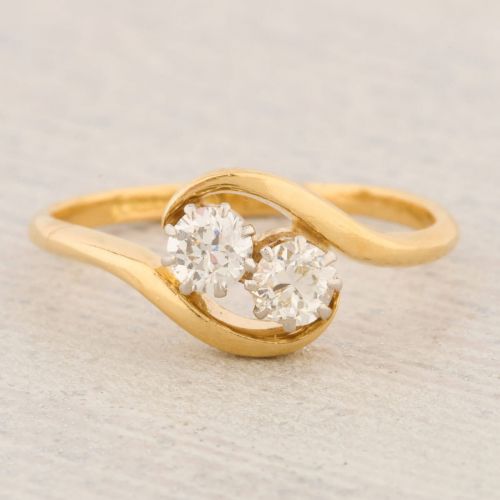
A round diamond ring comprises circular-cut stones mounted in precious metal bands, appearing as solitaires, clusters, multi-stone configurations and eternity bands. The phrase encompasses engagement rings, dress rings and band configurations spanning the Edwardian period through the mid-twentieth century and beyond.
Solitaire and cluster formats dominate the selections found in early twentieth-century designs and later decades. Buyers encounter platinum and gold mountings paired with round stones ranging from old mine cuts to modern brilliant facets.
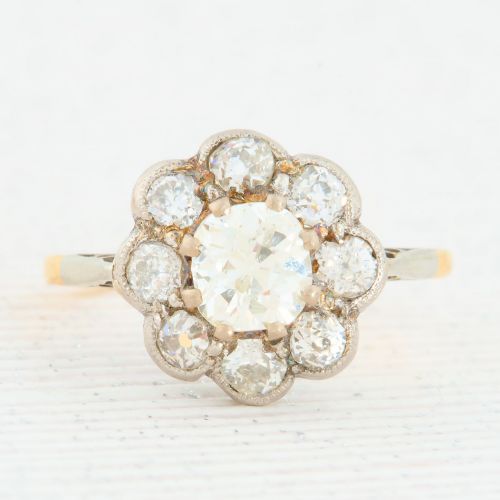
Configured as trilogy stones, multi-stone bands or floral clusters, these pieces serve as both historical artefacts and daily wear jewellery. Each design reflects the mounting techniques and aesthetic preferences of its decade of origin.
How they were made
Goldsmiths utilised platinum and various carats of yellow, white and rose gold to construct secure settings for round stones. Platinum gained favour during the Art Deco era for its strength in delicate, geometric work, while gold remained a staple for bands and clusters.
Gemstones underwent manual cutting and faceting, resulting in old mine cuts, transitional cuts and round brilliants depending on the period. Prongs, bezels and millegrain edges secured each diamond and accent stone by hand.
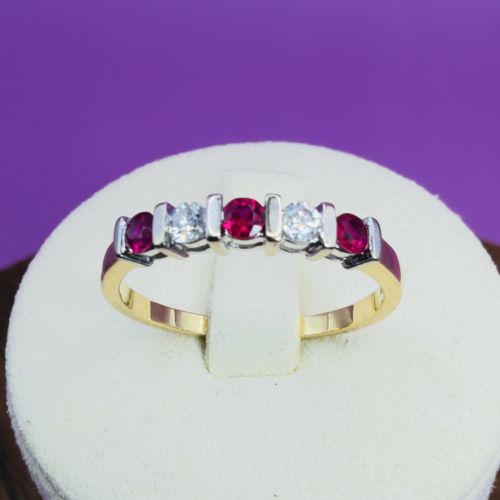
Listings feature platinum, 18ct yellow gold, 18ct white gold, and gold combined with diamonds, sapphires, rubies, aquamarines, opals and emeralds.
What varies in quality
The harmony between the central round diamond and its surrounding metalwork dictates the overall visual impact. Superior examples display precise stone symmetry, secure claw or bezel seating, and balanced proportions that complement the finger.
The integration of accent gems, such as sapphires, rubies or smaller diamonds, influences the distinction of a piece. Master workmanship shows in the crispness of millegrain detailing, the matching of stone colour grades, and the weight and durability of the underlying band.
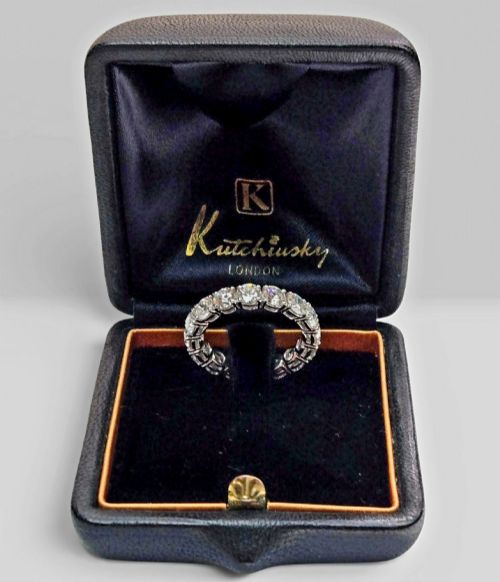
Kutchinsky
The Round Diamond Ring Glossary
- Old mine cut
- An early diamond cutting style characterised by a cushion outline, high crown, small table and deep pavilion. This cut predates modern brilliant standards and glows warmly under candlelight.
- Trilogy ring
- A ring featuring three primary stones representing past, present and future. These configurations frequently combine a central diamond with flanking diamonds or coloured gemstones.
- Cluster ring
- A ring design where a central stone is surrounded by a halo of smaller gems. This arrangement magnifies overall visual presence and allows for creative colour combinations.
- Millegrain
- A decorative technique featuring a line of tiny metal beads along the edges of a setting. This subtle texture adds a refined finish characteristic of Edwardian and Art Deco pieces.
- Eternity ring
- A band set continuously with gemstones encircling the finger. Versions appear with diamonds alone or alternating with sapphires and rubies.
Round Diamond Ring: Frequently Asked Questions
How do I identify an old cut diamond?
Old cut diamonds display smaller tables, higher crowns and characteristic open culets visible through the back of the stone. These geometric differences separate hand-shaped stones from modern machine-cut brilliants.
Examinations under magnification reveal irregular facet shapes and softer edge reflections unique to nineteenth and early twentieth-century lapidary work.
Are platinum and white gold different?
Platinum is a naturally white, dense and durable metal that develops a soft patina over decades of wear without losing substance. White gold is an alloy combined with other metals and typically plated with rhodium to maintain a bright finish.
Over time, white gold may require replating, whereas platinum retains its native colour and structural integrity with basic maintenance.
How should I care for a vintage ring?
Vintage rings require gentle cleaning with warm water, mild soap and a soft brush to remove everyday debris from behind the settings. Professional inspections ensure that antique prongs and delicate millegrain remain secure.
Avoiding harsh chemical dips protects softer accent stones like opals or unheated rubies often found alongside diamonds in historical cluster mounts.