





Baguette Cut Diamond
A baguette cut diamond provides clean, linear facets that define geometric jewellery from the Art Deco period onwards.
Baguette Cut Diamond
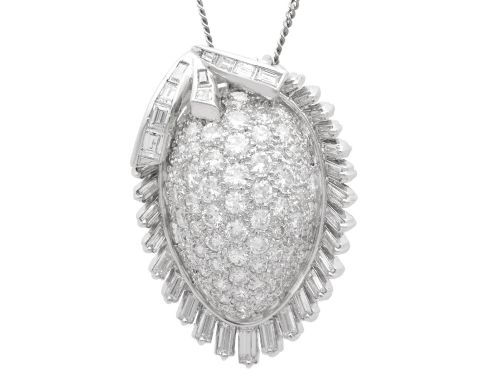
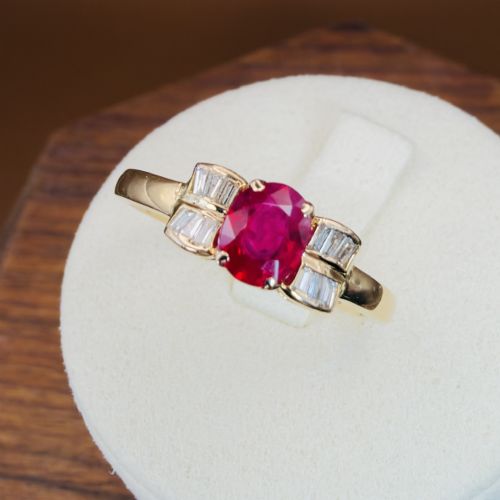
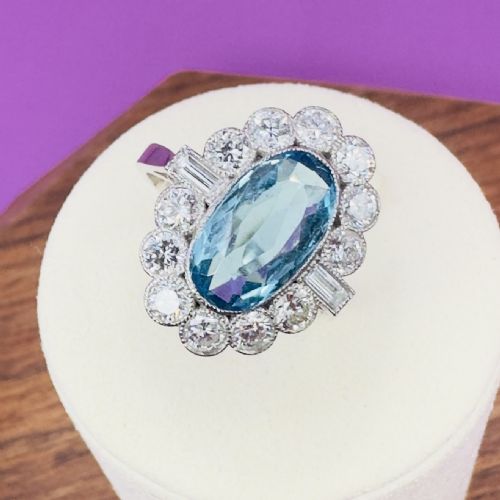
A baguette cut diamond search uncovers jewellery dominated by geometric lines, particularly rings, bracelets, and brooches originating from the Art Deco and mid-century periods. These pieces utilise step-cut rectangular stones to create architectural patterns alongside central gems.
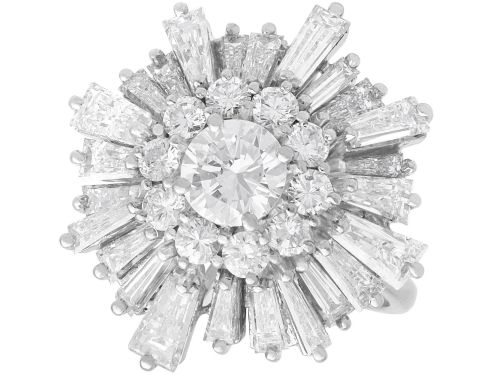
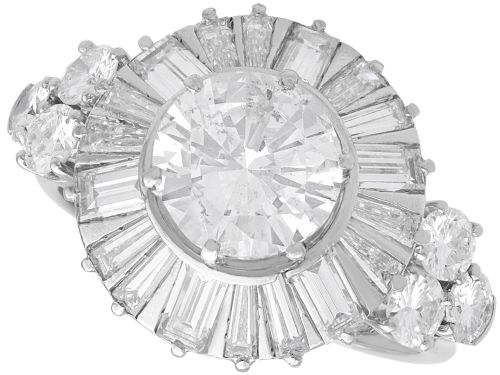
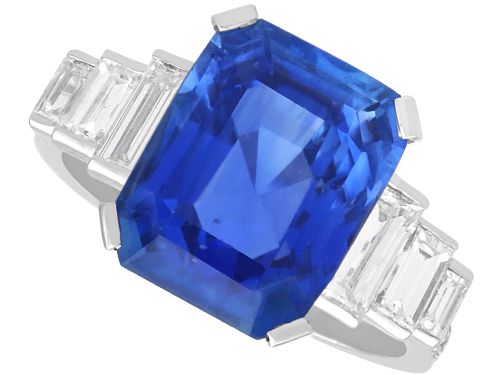
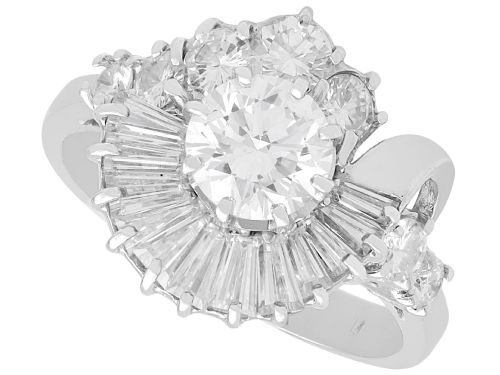
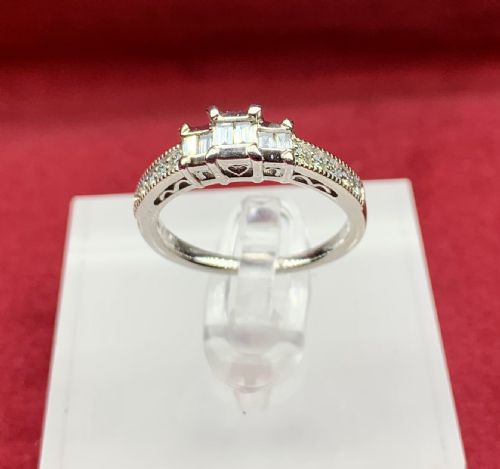
The most frequent items on this page are platinum and white gold rings, often pairing baguette diamonds with emeralds, sapphires, or larger central diamonds. Cluster rings, ballerina settings, and elegant trilogy designs appear regularly across the selection.
Materials and construction methods
Jewellery featuring a baguette cut diamond relies heavily on platinum and 18ct white gold to support the linear stone arrangements. These durable metals allow for secure channel and bezel settings that maintain the sharp rectangular silhouette of the stones.
The construction often incorporates contrasting cuts, such as pairing step-cut baguettes with brilliant, old, or transitional cut diamonds. This technique maximises light play between the broad flashes of step-cuts and the fiery brilliance of older diamond cutting styles.
Assessing the grade of the work
Quality in these pieces rests upon the precision of the stone-setting and the symmetry of the geometric layout. Superior examples display seamless metalwork where channel-set baguettes align perfectly without gaps, preserving the intended architectural rhythm.
The choice of accompanying gemstones also dictates the overall standard, with certified emeralds, unheated sapphires, and high-carat central diamonds elevating the piece. The harmony between the linear baguettes and the primary focus demonstrates the maker's skill.
The Baguette Cut Diamond Glossary
- Baguette cut
- A step-cut diamond shaped into a narrow rectangle with straight or tapered sides. This cut prioritises clarity and clean geometric lines over high brilliance.
- Ballerina ring
- A cluster ring design featuring a central stone surrounded by a radiating halo of tapered baguette or straight diamonds that resemble a dancer's tutu.
- Step-cut
- A diamond cutting style characterised by long, rectangular facets parallel to the girdle. This cut creates an open, hall-of-mirrors optical effect.
- Platinum
- A dense, strong, and naturally white precious metal widely utilised in early twentieth-century jewellery. Its strength permits delicate yet secure settings for small stones.
- Trilogy ring
- A ring featuring three main stones representing the past, present, and future. Baguette diamonds frequently serve as side stones flanking a central gem.
Baguette Cut Diamond: Frequently Asked Questions
What is a baguette cut diamond?
A baguette cut diamond is a small, rectangular step-cut diamond with parallel facets. It is typically used as an accent stone to frame larger gems or to build geometric patterns.
Because of its linear shape, the cut emphasises clarity and structural design over intense sparkle.
How do I care for platinum and diamond jewellery?
Platinum and diamond pieces benefit from gentle cleaning using warm water, mild soap, and a soft brush to remove everyday oils. Storing each item separately prevents the hard diamonds from scratching other pieces in your collection.
Regular professional checks ensure that the delicate channel or prong settings holding linear stones remain secure.
Are these pieces from the Art Deco period?
Many items featuring this cut date from the Art Deco era of the 1920s and 1930s, when geometric designs dominated jewellery manufacturing. The clean lines of the cut suited the modern aesthetic of the time.
Later mid-century pieces also incorporate the shape, often within organic or cocktail ring designs.
Can I wear these engagement rings daily?
Platinum and white gold mountings provide the durability required for daily wear when paired with secure stone settings. Regular inspection of the metalwork helps protect the precise alignment of linear side stones.
Removing rings during heavy manual tasks preserves the structural integrity of older mountings.