



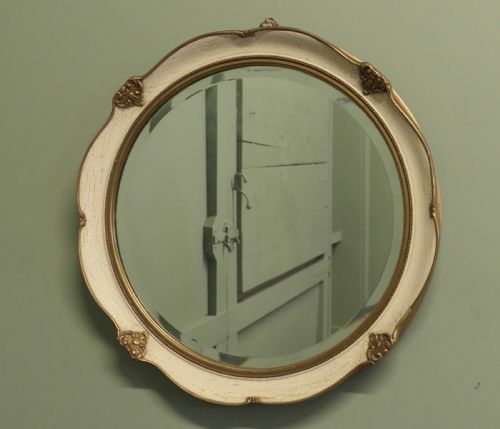
Round Carved Mirror
A round carved mirror brings a distinct optical focal point to a room, channelling light across a wall through curved glass.
Round Carved Mirror
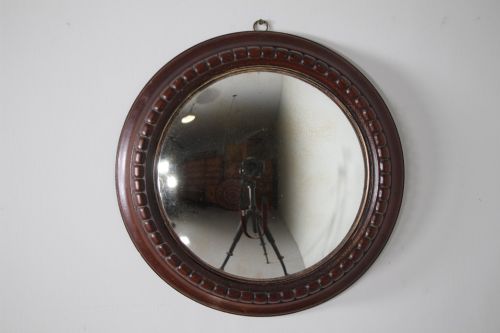
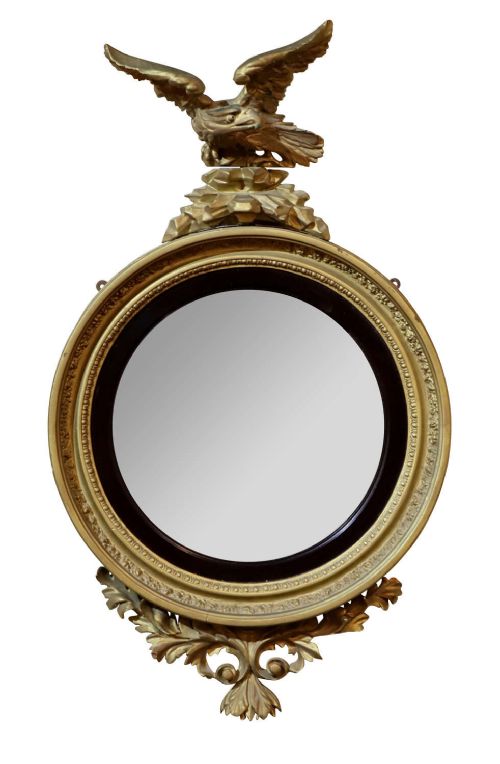
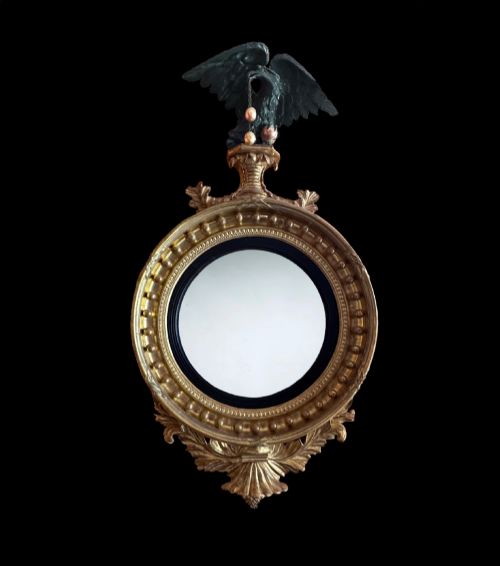
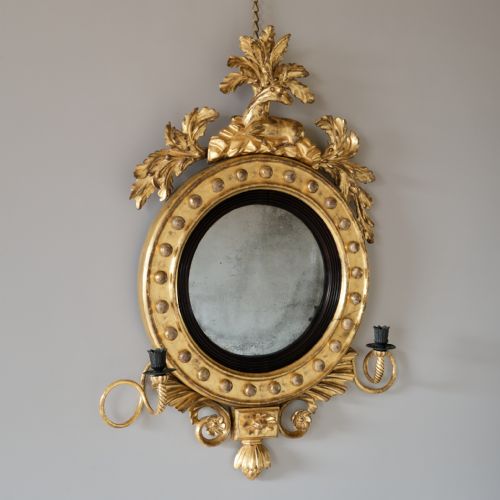
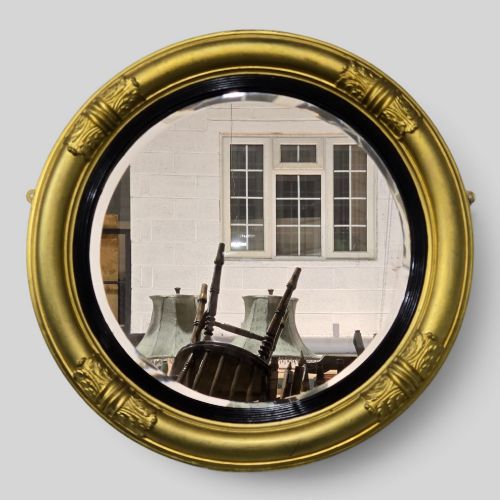
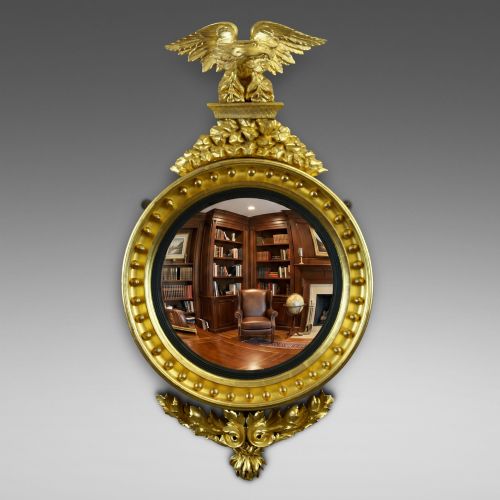
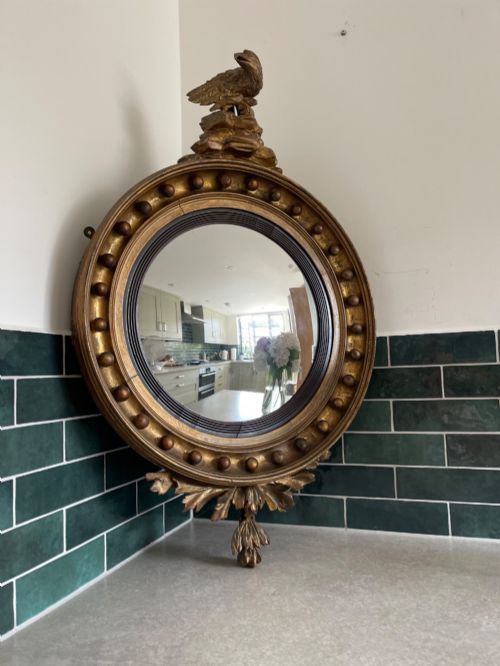
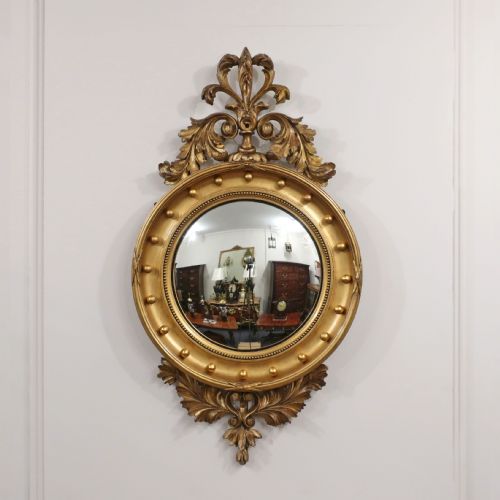
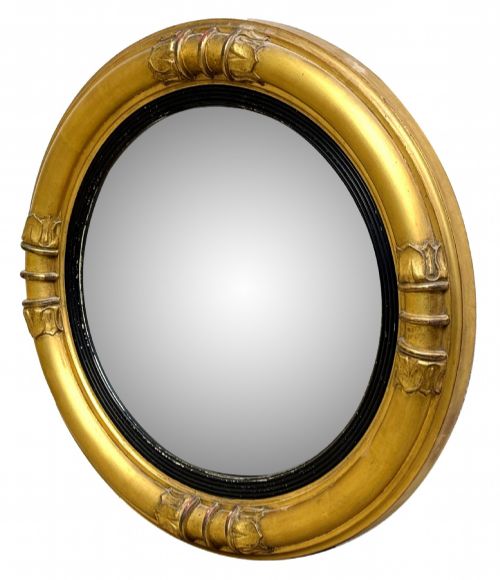
A round carved mirror centres on circular convex formats, frequently encountered in Regency and nineteenth-century pieces alongside Victorian and later twentieth-century iterations. Buyers searching for a round carved mirror will frequently meet convex plates set within heavy giltwood frames, often topped with eagle surmounts or carved dragon motifs.
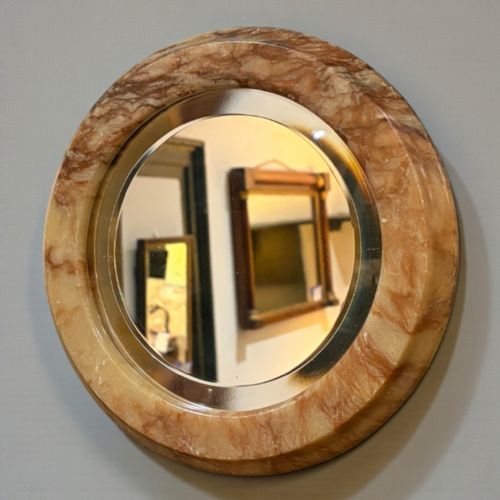
The material forms range from circular wooden frames finished in gesso and gold leaf to ebonised wood, oak, and carved mahogany. Alongside wall mirrors and hall mirrors, larger overmantel examples and architectural salvage occasionally appear in the selection.
Origins span English workshops from the Georgian and Regency periods through to continental examples such as Florentine carvings and French Art Deco designs. The overarching shape remains resolutely circular, drawing the eye through deep moulded wooden surrounds.
Materials and construction
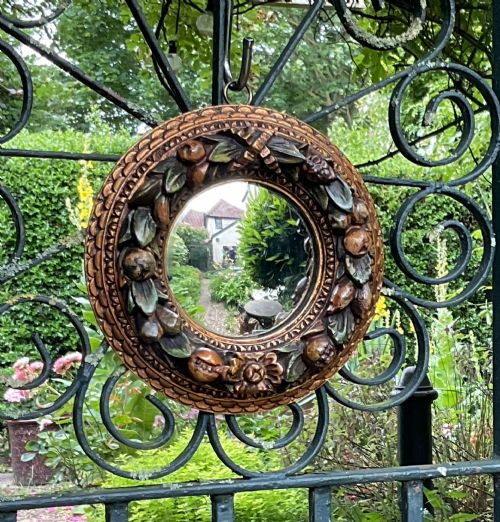
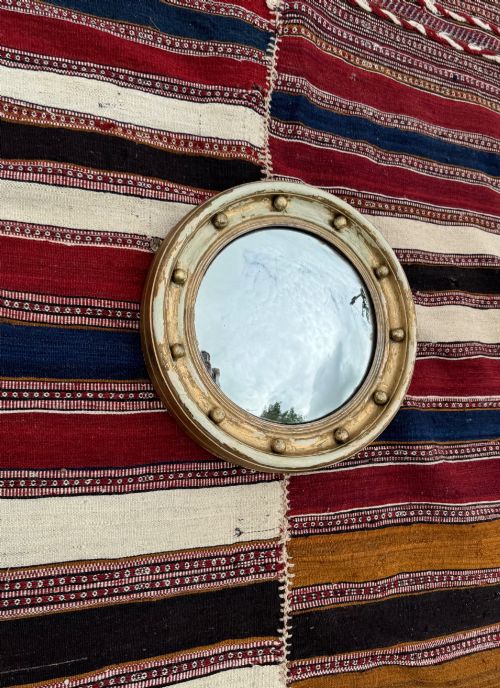
Frames are built from carved wood, timber, or oak, often coated in gesso before receiving layers of gold leaf or gilt finish. This traditional gesso application allows for crisp, intricate detailing such as heraldic birds, foliage, and beaded inner rings.
Mirror glass is typically curved to form convex or sorcerer's plates, designed to capture a wide-angle reflection of the interior. Structural support relies on heavy timber backboards and secure hanging brackets to bear the substantial weight of the framed glass.
Round Carved Mirror Retail Price Guide 2026
Typical asking prices for round carved mirror among the pieces listed under this phrase on Sellingantiques today, from the lower quarter to the upper quarter. They describe what is for sale here now, not the wider market.
The listings show a strong presence of Regency and nineteenth-century pieces, dominated by giltwood and gesso materials configured as convex wall mirrors.
Factors influencing quality
The crispness and depth of the wood carving dictate the visual strength of the piece, particularly on surmounted elements like eagles or dragons. Hand-carved detail displays sharp undercut relief, whereas lesser examples rely on softer moulded composition ornaments.
The preservation of the original gold leaf and the clarity of the convex mirror glass establish the integrity of the object. High-grade items retain their original gilded surfaces and undistorted curved plates, whereas heavily restored or later regilt pieces lack historical depth.
The Round Carved Mirror Glossary
- Convex mirror
- A curved mirror glass that projects outward, creating a wide-angle panoramic reflection of the room. It is frequently referred to as a butler's mirror or witch's mirror.
- Giltwood
- Wood that has been coated with thin sheets of gold leaf over a prepared gesso base. This technique provides a warm, reflective metallic sheen that endures for centuries.
- Gesso
- A plaster-like mixture applied to wood frames to create a smooth surface for carving or gilding. It enables intricate relief ornamentation.
- Surmount
- An ornamental feature placed at the very top of a mirror frame. Common examples in these pieces include carved eagles and mythical beasts.
- Overmantel mirror
- A large mirror designed specifically to hang above a fireplace mantel. They often feature extended horizontal or architectural proportions.
Round Carved Mirror: Frequently Asked Questions
How do I hang a heavy convex mirror safely?
These heavy carved frames require secure fixing directly into wall studs or masonry using appropriate heavy-duty wall anchors. The weight of the timber and glass demands robust hardware rather than standard picture hooks.
Ensure the hanging wire or integrated metal brackets on the back are checked for stability before mounting the piece at eye level.
What is a convex mirror used for?
Historically, convex mirrors were placed in grand rooms or butler's pantries to monitor activity across a wide space from a single vantage point. The curved glass gathers light from multiple angles and disperses it into the interior.
Today, they function primarily as striking optical wall art that breaks up the monotony of flat framed artwork.
How do I tell a Regency convex mirror from a later copy?
Regency mirrors typically exhibit period-specific construction details, including hand-cut timber frames, early gesso application, and original convex glass with minor natural blemishes. The carving on period eagle surmounts shows distinct hand-tool marks.
Later revival pieces often display uniform composition ornament and machine-flat backboards that lack the patination of the early nineteenth century.
How should I clean an antique giltwood frame?
Dust the carved surfaces gently with a dry, soft-bristled brush to remove surface particles without disturbing the delicate gold leaf. Avoid using commercial cleaning sprays, water, or chemical solvents on gilded gesso.
Moisture can soften the underlying gesso and cause the historic gilt surface to flake or lift away from the wood.