




Round Ball Mirror
A round ball mirror is a convex wall glass that distorts and gathers room light, prized for its decorative presence.
Round Ball Mirror
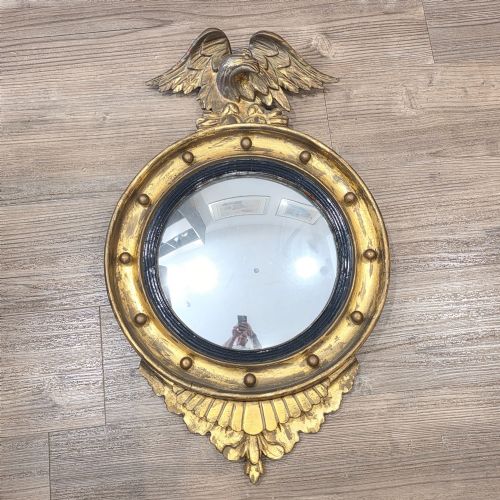
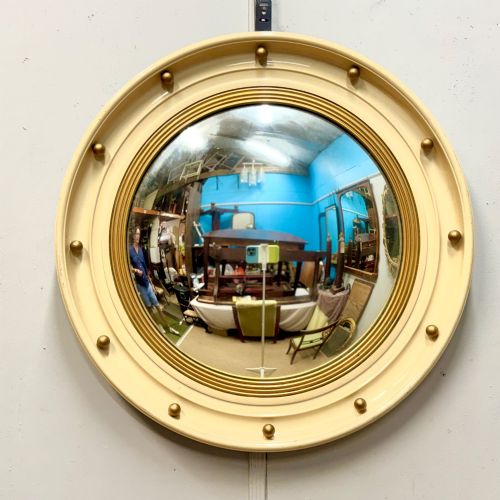
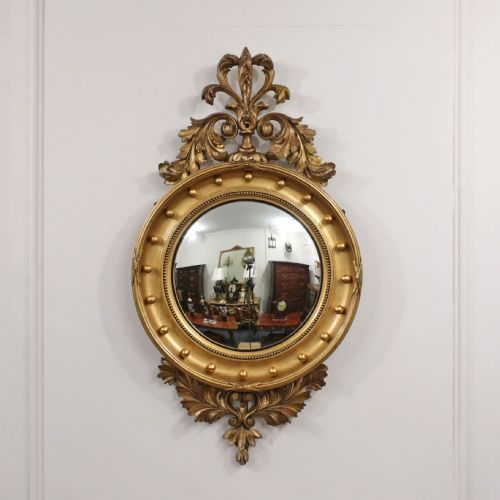
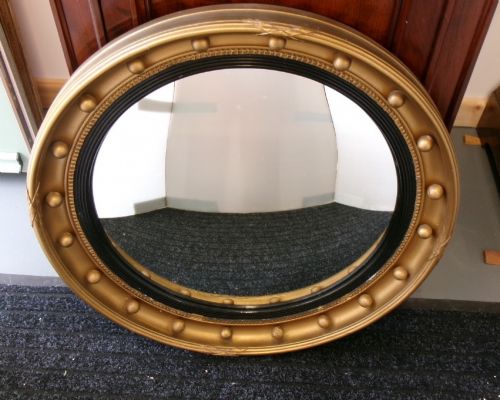
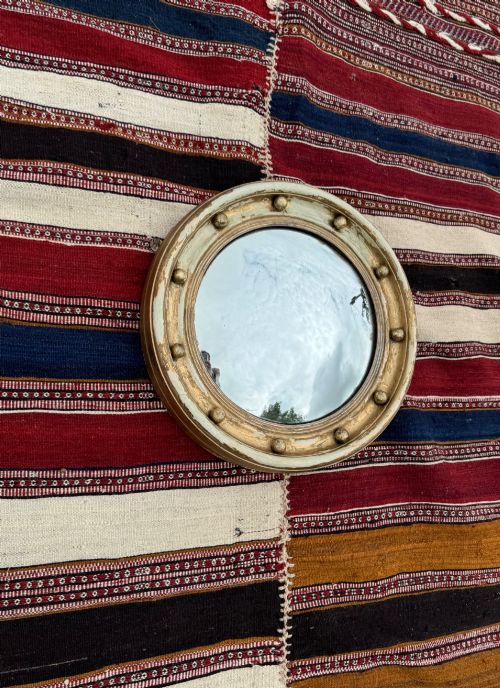
When you search for a round ball mirror, you enter a domain of circular convex wall glasses that distort and gather the light of a room. These pieces appear most frequently in Regency and nineteenth century forms, often described as butler mirrors or porthole mirrors.
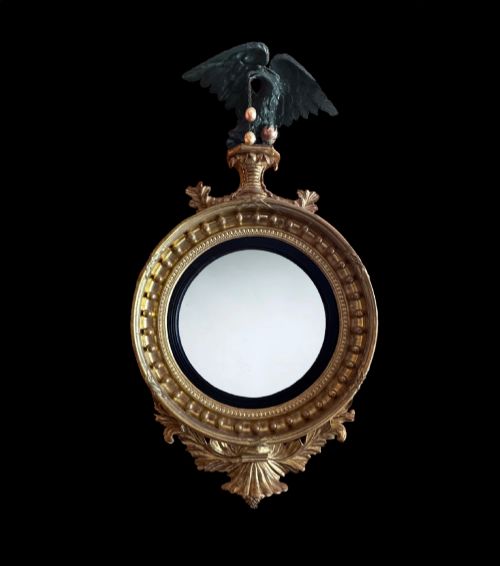
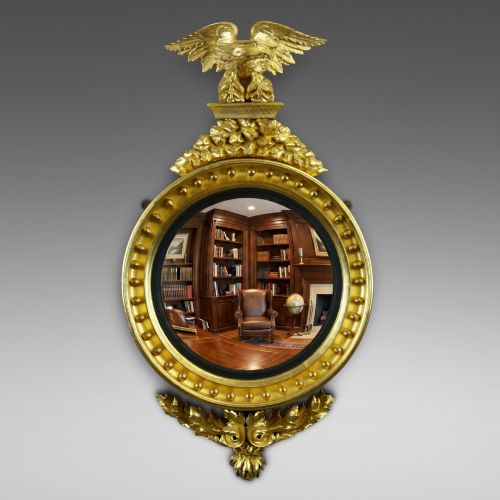
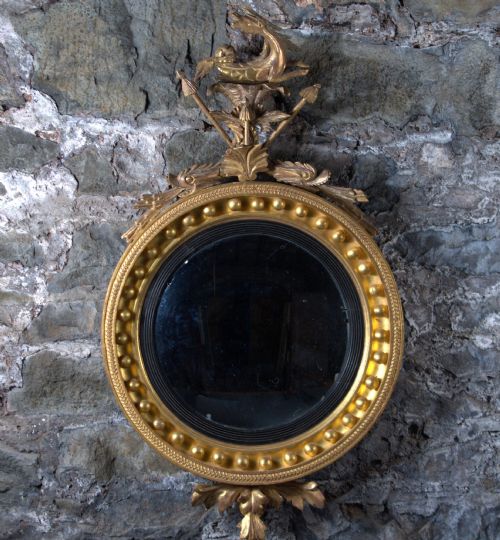
The materials recorded in these listings rely heavily on giltwood, gesso, and ebonised wood framing the curved mirrored glass. Examples range from plain circular frames to ornate designs surmounted by a large spread eagle or carved dragons.
Buyers meet variations spanning strict Regency items to later revivals from the Victorian era and early twentieth century. Wall mirrors and hall mirrors dominate the selection, offering both compact small sizes and large scaled pieces.
What varies in quality
The fineness of the carved wood ornamentation determines much of the visual distinction between examples. Crisp detail in figures like eagles or dragons separates better pieces from simpler frames.
The condition and depth of the original gilding and gesso work dictate the surface character. Preservation of the ebonised slips and the clarity of the convex glass also influence the overall presence of the object.
Listings feature periods from 1800 through the 1920s, with a strong concentration of nineteenth century Regency and Victorian pieces.
The Round Ball Mirror Glossary
- Convex glass
- A curved glass surface that projects outward to reflect a wide panoramic view of an interior space. This optical distortion is the defining feature of these mirrors.
- Giltwood
- Timber coated with a thin layer of gold leaf or gold paint. It provides the bright reflective framing typical of many period pieces.
- Ebonised slip
- A dark, black-stained inner moulding that sits between the main frame and the glass. It adds linear depth to the profile of the mirror.
- Butler mirror
- A traditional term often applied to convex circular mirrors used in domestic halls and living spaces. The name connects them to historic household settings.
- Gesso
- A plaster-like mixture applied to wood frames to create a smooth surface for gilding and carving. It allows for intricate relief details.
Round Ball Mirror: Frequently Asked Questions
Where should I hang a convex mirror?
These mirrors function effectively in principal reception rooms, halls, and dining spaces where their wide-angle reflection captures the entire interior. Positioning them opposite a window maximises the distribution of natural light.
Because the curved glass gathers light from across the room, mounting the mirror at eye level ensures the best visual impact. Consider wall space that allows the circular frame to stand alone as a focal point.
How do I identify a Regency period piece?
Regency examples typically exhibit characteristic gilded wood frames, often accompanied by classical motifs or eagle ornaments. The construction methods align with early nineteenth century cabinet making traditions.
Examining the backboards, fixings, and the composition of the gesso helps differentiate genuine period pieces from later revival items. Timber construction details provide further clues to the age of the frame.
What is the difference between a butler mirror and a porthole mirror?
Butler mirrors and porthole mirrors both utilise convex glass within a circular frame, but naming conventions vary among makers and periods. Butler mirrors often carry associations with domestic service areas and nineteenth century interiors.
Porthole mirrors frequently suggest a nautical or heavy Victorian aesthetic, though the core form remains a circular convex glass. Both terms describe round wall glasses designed to manipulate light and space.
How do I clean convex mirror glass?
Cleaning requires a soft, dry cloth applied gently to the curved surface to avoid disturbing historic framing or gesso. Liquid cleaners should be used sparingly to prevent moisture seeping behind the glass edge.
Avoid abrasive materials that might scratch the silvering on the rear or the surface of the glass. Regular dusting keeps the convex curve clear without risking damage to the antique frame.