
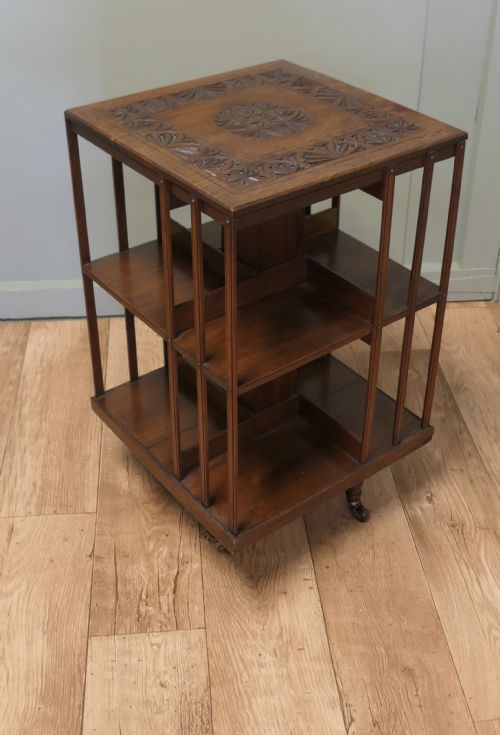
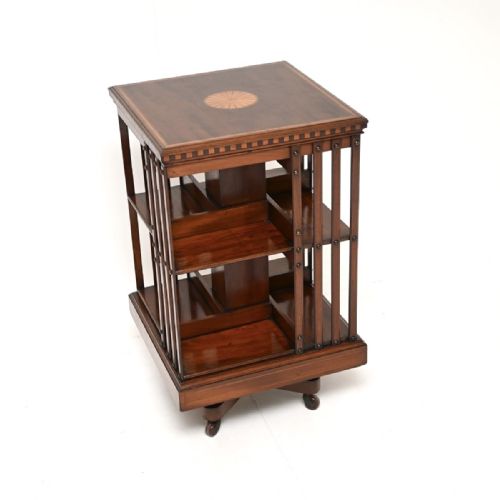
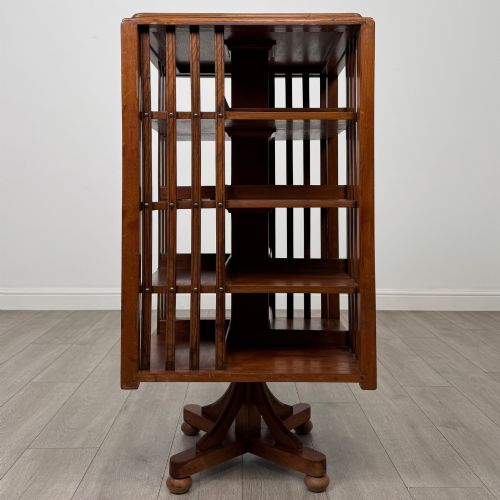
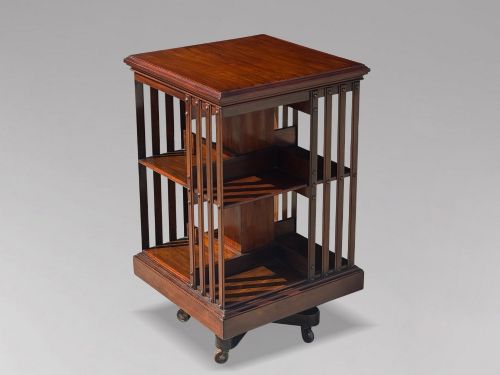


Rotating Library Shelf
A rotating library shelf puts multiple volumes within arm's reach while turning smoothly on a compact stationary base.

Rotating Library Shelf
A rotating library shelf is a practical desk or floor-standing bookcase designed to hold reference volumes and favourite reading within easy reach. When you search for a rotating library shelf, you encounter pieces intended to maximise storage in limited floor space by turning effortlessly on a central axis.
The selections on this page span the Victorian and Edwardian eras, alongside pieces dated around nineteen thirty. You will find standard square designs alongside petite four-shelf variations and large examples built to accommodate heavier collections of books.
Most items originate from British workshops of the late nineteenth and early twentieth centuries, though regional interpretations such as French Provincial and Anglo-Indian variants appear. These pieces serve equally well beside an armchair or freestanding in a study.
Materials and construction
Timbers like mahogany and oak dominate the construction, providing the structural rigidity necessary to bear the substantial weight of bound volumes. Cabinetmakers utilised solid cuts and substantial veneers to build the slatted or panelled sides that contain the books.
Fine decorative touches include satinwood inlay work that contrasts sharply against darker mahogany surfaces. Internal mechanisms incorporate brass and cast iron components to ensure smooth rotation without binding or tilting.
Assessing quality and craftsmanship
Quality rests primarily on the integrity of the internal revolving mechanism and how smoothly the tiers turn under load. Superior examples feature robust hidden pivots that prevent sagging when fully loaded with heavy volumes.
Cabinetwork distinguishes the finer pieces, particularly where inlay is crisp and timber grain is matched across the visible panels. The choice of materials, from plain oak to figured mahogany with satinwood banding, dictates the decorative ambition of the workshop.
The Rotating Library Shelf Glossary
- Revolving bookcase
- A freestanding piece of furniture designed to turn on a central spindle so books on all sides remain accessible.
- Inlay
- A decorative technique where contrasting woods such as satinwood are inserted into recesses within the primary timber surface.
- Slats
- Vertical wooden bars forming the sides of the bookcase tiers to keep volumes securely in place.
- Spindle
- The central vertical shaft that supports the rotating tiers and bears the rotational weight.
Rotating Library Shelf: Frequently Asked Questions
How do I care for the wood?
Dust the surfaces regularly with a dry cloth and apply a quality beeswax periodically to nourish the timber.
Avoid placing the piece near direct heat sources or strong sunlight to prevent the wood from drying out and splitting.
Can these hold heavy books?
Most examples are constructed from sturdy hardwoods like oak and mahogany designed to support standard library volumes.
Larger models handle substantial reference books easily, provided the weight is distributed evenly across the tiers.
How do I date a piece?
Examine the timber selection, construction methods, and any inlay work against known stylistic periods like the Edwardian era.
Details such as the materials used in the internal pivot mechanism also offer clues regarding the approximate decade of manufacture.
Where should I place one?
These pieces function best beside an armchair, desk, or sofa where books need to remain within arm's reach.
Allow enough clearance on all sides to ensure the tiers can complete a full rotation without striking walls or surrounding furniture.