


Rosewood Wood Box
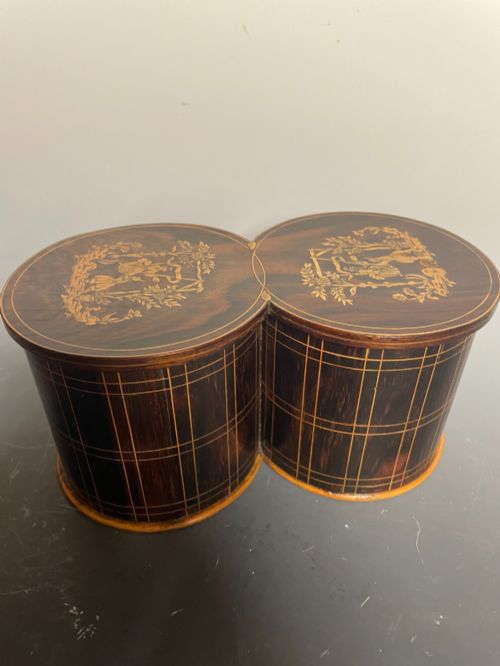
A rosewood wood box brings tactile warmth and dense grain to a desk or table, crafted to hold tea, letters, or jewellery.
Rosewood Wood Box
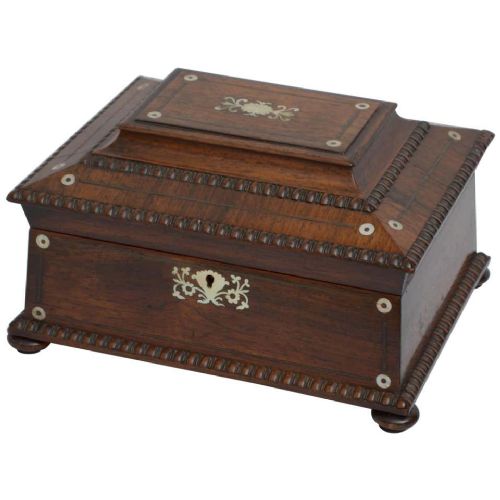
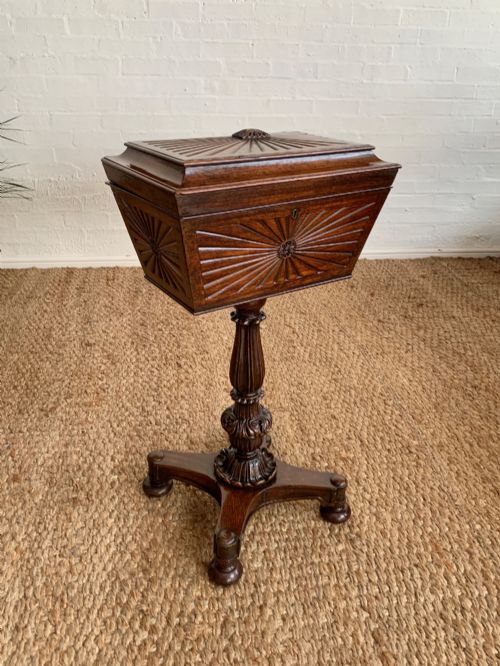
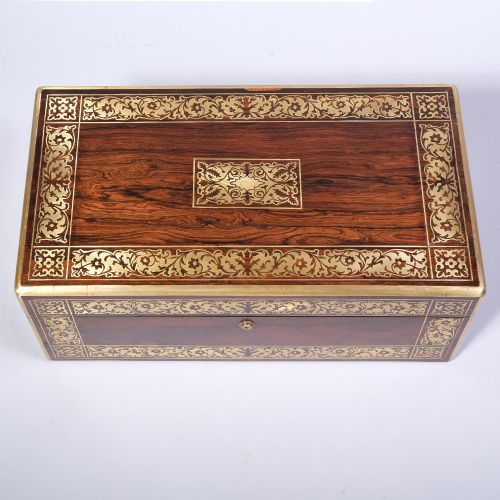
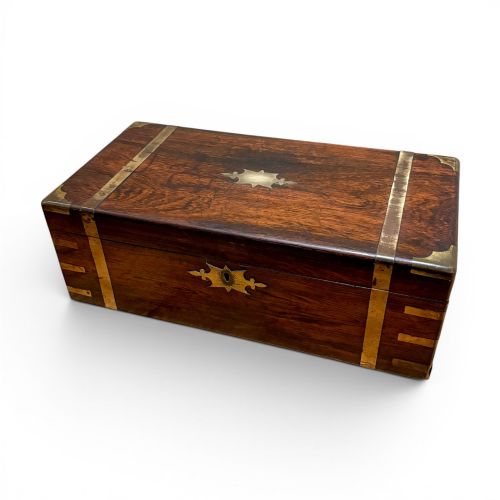
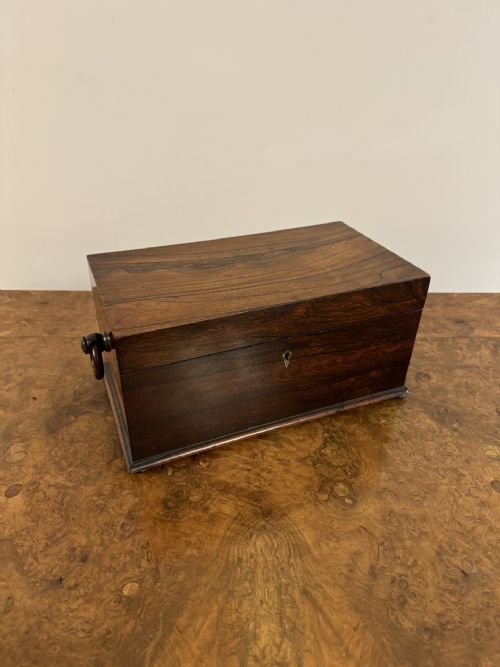
A rosewood wood box encompasses portable writing slopes, tea caddies, and small storage chests produced during the Georgian, Regency, and Victorian periods. Buyers encounter sarcophagus tea caddies, brass-bound writing boxes, and hinged jewellery chests designed for personal valuables or domestic hospitality. These pieces originate largely from English workshops, alongside continental and occasional Asian examples sharing similar timber choices.
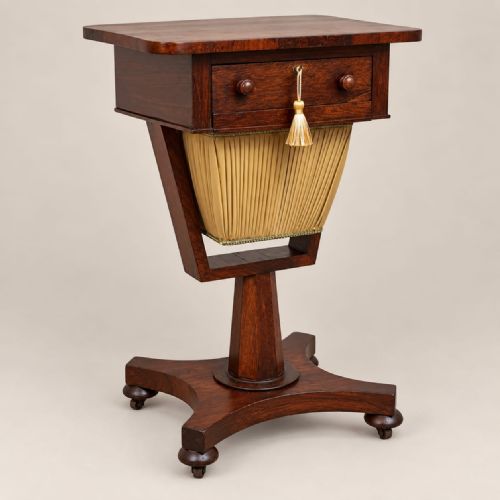
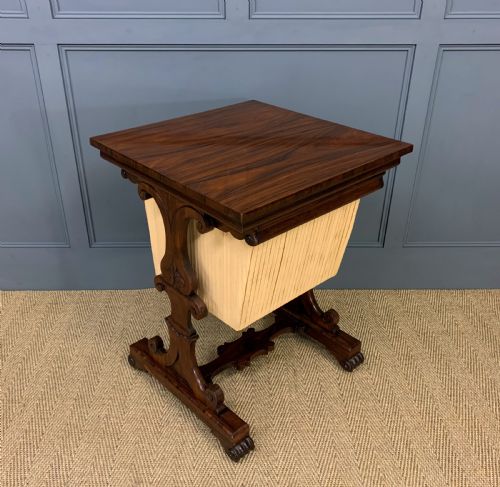
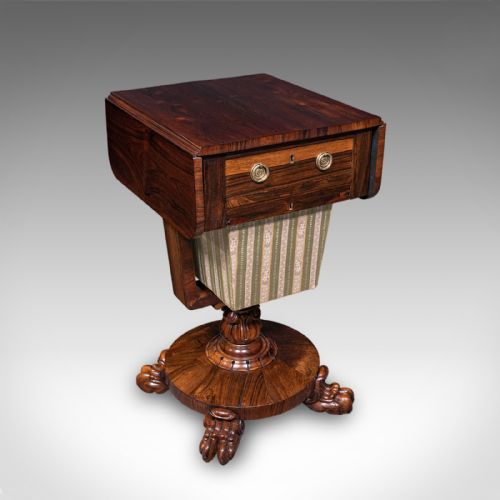
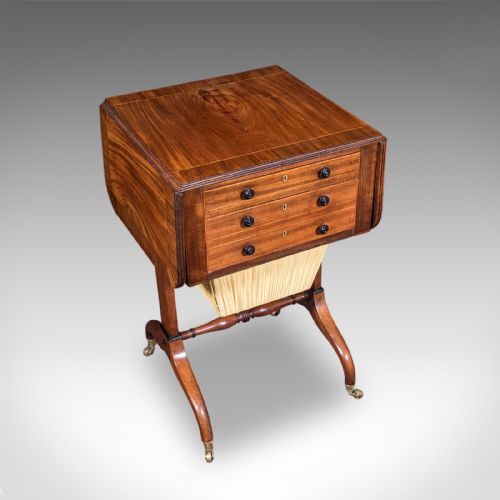
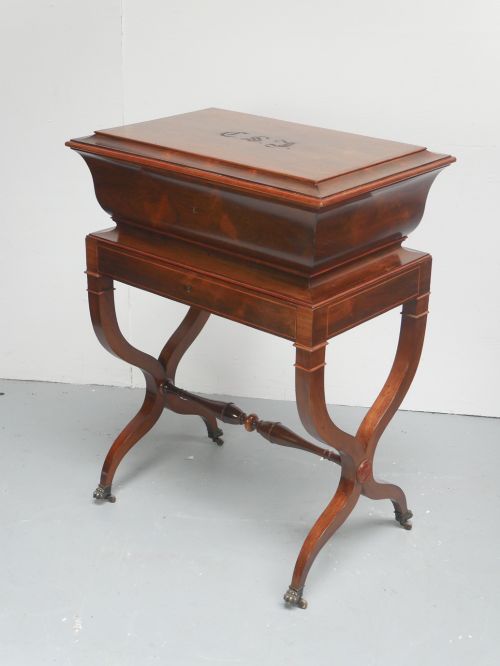
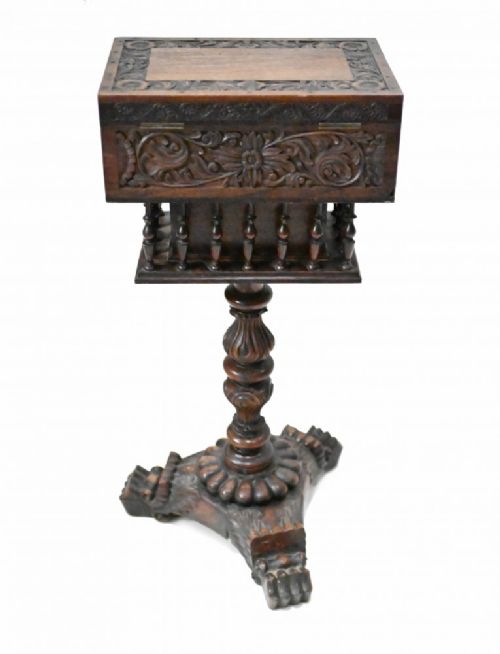
The domestic selection on this page leans heavily toward nineteenth-century writing slopes and tea caddies fitted with interior compartments. Smaller trinket boxes and correspondence chests also appear frequently, reflecting the Victorian appetite for organised personal effects. Larger items such as work tables and occasional tables demonstrate how the timber extended beyond tabletop boxes into fitted furniture.
Makers and makers' circles utilised the dark, richly figured tropical hardwood for display and daily utility alike. While simple trinket containers offer straightforward storage, more elaborate pieces feature secret drawers, fitted trays, and compartmentalised interiors for specialised tasks. Each object retains the characteristic heavy feel and deep reddish-brown tone associated with the timber.
Materials and Construction
Cabinet makers constructed these containers using solid rosewood or thick veneers laid over secondary pine or mahogany carcases. The dense nature of the primary timber demanded skilled hand sawing and precise joinery to prevent warping across lid panels and sides. Brass inlay, stringing, and mother-of-pearl accents were frequently embedded flush into the upper surfaces.
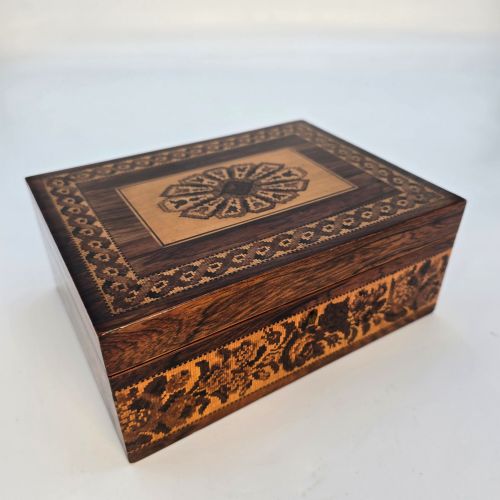
Interiors reveal secondary woods such as boxwood and satinwood, deployed for stringing lines, geometric parquetry, and miniature drawer construction. Tunbridge Ware examples incorporate thousands of tiny coloured wood blocks to form intricate mosaic landscapes and floral motifs on the lid exterior. Textile linings in fabric velvet or silk complete the internal compartments for tea canisters or jewellery.
Secret compartments hidden behind false drawer backs delighted nineteenth-century letter writers who enjoyed guarding their private notes.
Markers of Superior Construction
Quality rests in the grain selection of the rosewood veneer, the crispness of brass stringing, and the integrity of the internal fittings. Superior items retain matching timber grain across multiple panels and feature finely cut dovetail joints on internal drawers rather than simple butt joints. Working locks with original keys and intact maker stamps elevate an example considerably.
The complexity of the interior architecture separates standard containers from exceptional pieces. Finely made writing slopes incorporate secret compartments, folding baize-lined writing surfaces, and well-fitted inkwell trays that move without binding. Tunbridge Ware items depend entirely on the precision of the micro-mosaic timber tiles and the absence of missing elements.
Edmund Nye·Henry Hollamby·Lesage
The Rosewood Wood Box Glossary
- Tea Caddy
- A box designed to store loose tea leaves, often featuring internal lidded canisters and a central glass mixing bowl. These containers reflect the high value placed on tea during the Georgian and Regency eras.
- Writing Slope
- A portable desk with a hinged, slanted lid that folds down to create a writing surface. Inside compartments hold inkwells, pens, and paper.
- Tunbridge Ware
- A form of decorative woodwork produced in Kent, characterised by mosaic patterns assembled from thousands of tiny dyed wood prisms. These create detailed pictorial scenes or geometric borders on box lids.
- Sarcophagus Form
- A box design featuring a stepped, inverted-pyriform profile reminiscent of an ancient stone coffin. This architectural shape proved popular for Regency and Georgian tea caddies.
- Parquetry
- Geometric mosaic woodwork formed by fitting small wooden veneers together in repeating patterns. It frequently decorates the lids and borders of Regency boxes.
- Escutcheon
- A decorative metal plate surrounding a keyhole, usually made of brass. It protects the surrounding wood from wear caused by the insertion of the key.
Rosewood Wood Box: Frequently Asked Questions
How do I date a rosewood box?
Dating relies on construction methods, hardware styles, and prevailing design motifs such as Georgian sarcophagus shapes or Victorian Tunbridge Ware mosaics. Early nineteenth-century pieces often feature thick mahogany secondary woods and fine brass stringing.
Later Victorian examples introduce different hinge types and machine-made screws or varied interior paper linings. Examining the lock mechanism and keyhole escutcheon also provides reliable clues to the exact manufacturing decade.
What were writing slopes used for?
Writing slopes served as portable desks for correspondence, keeping paper, ink, and pens secure while travelling or moving between rooms in large houses. The slanted lid provided a comfortable angle for handwriting before fitted stationery cabinets became common.
Many incorporate secret compartments beneath the stationery wells for confidential documents or currency. Wealthy individuals used them daily in parlours and studies.
How do I care for rosewood furniture?
Maintain rosewood boxes by keeping them away from direct sunlight and sudden temperature shifts that cause timber and veneer to split. Dust gently with a dry, soft cloth and avoid modern silicone polishes.
Occasional application of microcrystalline wax helps protect the polished surface without building up residue. Ensure the room humidity remains stable to protect internal fabric linings and wood joints.
What is Tunbridge Ware?
Tunbridge Ware is specialised wooden decorative work made by gluing together thousands of polygon-shaped timber tiles to form a mosaic picture. Craftsmen in Kent created geometric borders, butterflies, and castles on box lids using natural woods of varied colours.
These pieces require careful handling to prevent the loss of microscopic wooden tiles. They represent a distinct sub-category of nineteenth-century decorative boxes.