




Rosewood Wall Barometer
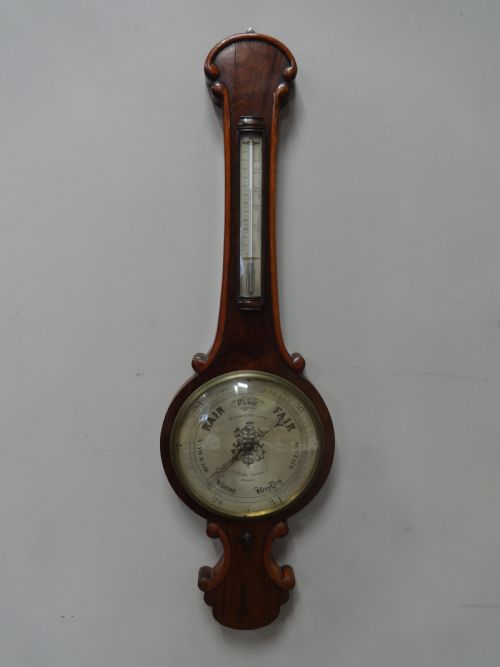
These rosewood wall barometer examples combine practical weather measurement with rich timber grain, offering a distinct focal point for a period interior.
Understanding the rosewood wall barometer
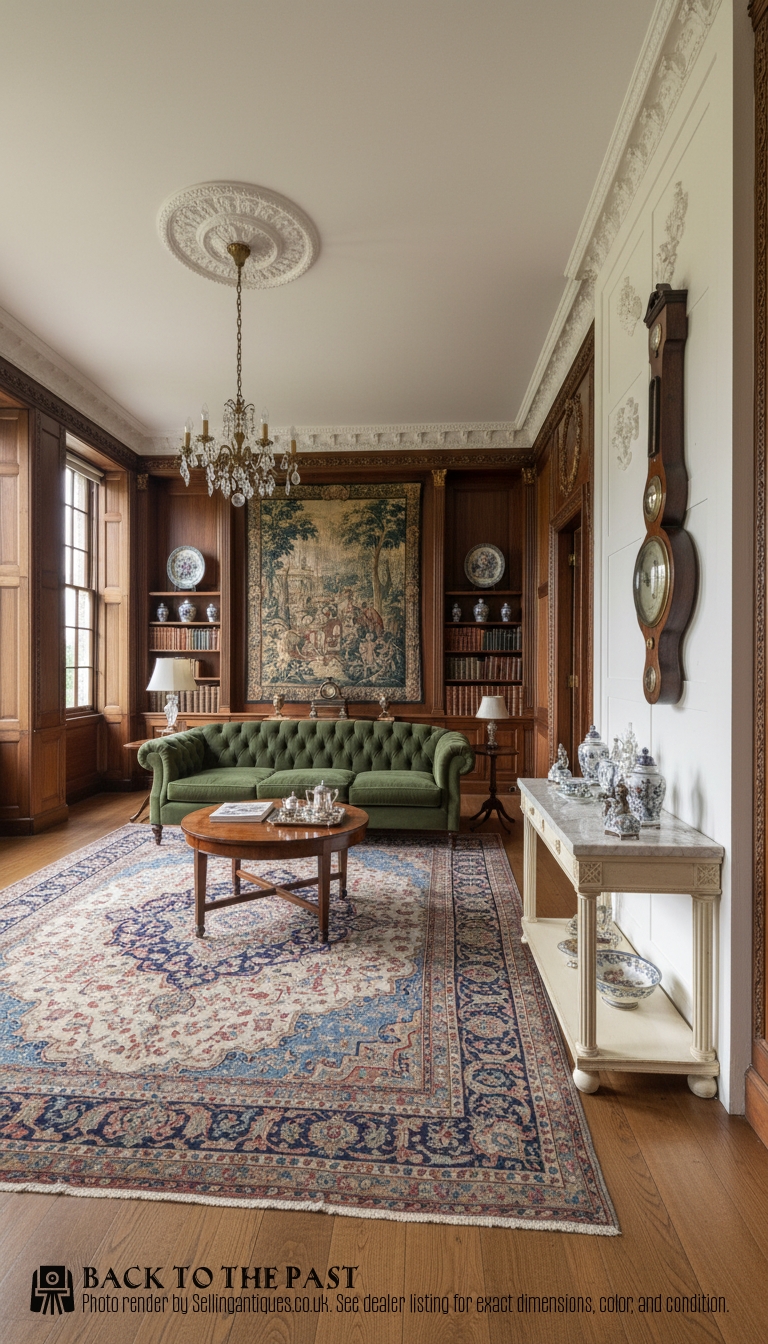
A rosewood wall barometer provides a functional scientific instrument housed within a decorative wooden enclosure designed to hang securely in a room. The items on this page span the nineteenth century, encompassing the Georgian, Regency, and Victorian eras.
The banjo or wheel barometer form dominates the selection, featuring an expanded dial at the base and a long trunk leading to a hygrometer or thermometer at the top. Stick barometers also appear, presenting a slimmer profile that houses the mercury tube directly along the vertical spine.
These pieces originate from British domestic spaces where tracking atmospheric pressure remained essential for daily planning. The surviving examples demonstrate how households combined utility with rich cabinet-making traditions.
Materials and construction
Cabinet-makers constructed the main bodies using solid or veneered rosewood, selected for its dark, richly figured grain. This timber often receives contrasting inlay work utilising mother of pearl and bone to accentuate the edges and dials.
The delicate scientific mechanisms require protective glazed faces framed in brass bezels. Artisans integrated ivory or bone temperature scales alongside engraved paper or metal weather dials inside the wooden cases.
Retail Price Guide 2026
Typical UK retail prices for rosewood wall barometer, calculated from the Sellingantiques database of over a million retail prices indexed since 2003. This retail price guide relies exclusively on Sellingantiques data; no external sources or auction records are used, so the figures do not describe the wider market.
Recorded periods span the nineteenth century, incorporating Georgian, Regency, and Victorian stylistic developments.
Assessing craftsmanship and execution
Quality rests in the precision of the cabinet work and the ambition of the decorative scheme. Finer examples display meticulous mother-of-pearl inlay and balanced proportions across the banjo body.
The inclusion of a named maker on the dial elevates the standing of an instrument. Signed works from provincial centres demonstrate the individual skill of regional opticians and instrument makers.
Corti of Exeter·W. N. Telford Chester
The Rosewood Wall Barometer Glossary
- Banjo barometer
- A domestic weather glass featuring a circular dial at the base and a long trunk, resembling the shape of a musical instrument. This format allowed space for multiple recording dials.
- Stick barometer
- A tall, narrow instrument housing a exposed or glazed vertical tube of mercury without the large bottom dial. It represents a more direct scientific approach to reading atmospheric pressure.
- Mother of pearl
- An iridescent inner layer of mollusc shell utilised for decorative inlay. Artisans cut this material into geometric or floral shapes to contrast against the dark rosewood background.
- Hygrometer
- An instrument measuring humidity, frequently incorporated into the upper triangular or scroll pediment of a banjo barometer. It complements the barometric pressure reading.
- Bone scale
- A measurement plate carved from animal bone, used for thermometer markings. This material predates modern plastics and offers a durable, matte surface for engraved numbers.
Frequently Asked Questions
What is a stick barometer?
A stick barometer is a tall, narrow instrument that displays the mercury column directly in a vertical glass tube. It focuses strictly on atmospheric pressure without the large circular dial found on banjo models.
These pieces offer a more minimalist appearance than their wheel counterparts. They hang easily in hallways or studies where floor space is limited.
How do I date a rosewood barometer?
Dating relies on stylistic clues such as the shape of the top pediment, the complexity of the inlay, and the lettering on the dial. Nineteenth-century pieces often transition from Georgian architectural lines to more ornate Victorian scrollwork.
Makers' signatures also help narrow the timeframe when matched with historical trade directories. The presence of specific decorative details like mother-of-pearl highlights points towards the Victorian era.
Where should I hang a wall barometer?
Barometers require a stable interior wall away from direct sunlight, central heating radiators, and damp exterior corners. Sudden temperature shifts can affect the delicate internal mechanisms and the wooden case.
A secure fixing is essential because these instruments possess heavy wooden bodies and glass faces. Hanging them at eye level ensures easy reading of the weather dials.
Do antique barometers still work?
Many surviving nineteenth-century barometers remain operational, though internal mercury columns require careful handling during transport. The instruments respond to changes in air pressure just as they did when first manufactured.
Collectors view them primarily as decorative antiques with historical mechanical interest. Minor calibration may be necessary to match local meteorological readings.