

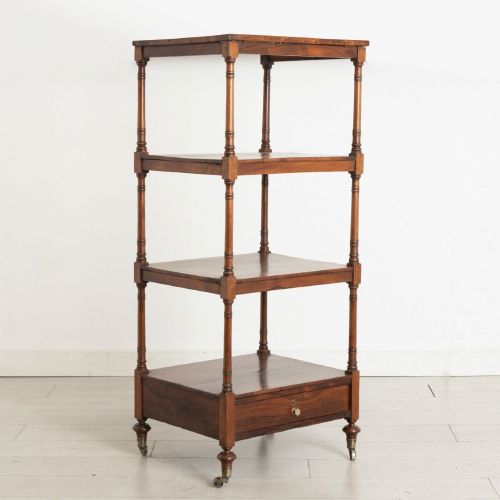


Rosewood Tiered Etagere
These rosewood tiered etagere pieces bring layered open display to a room, rooted in nineteenth century cabinet work.
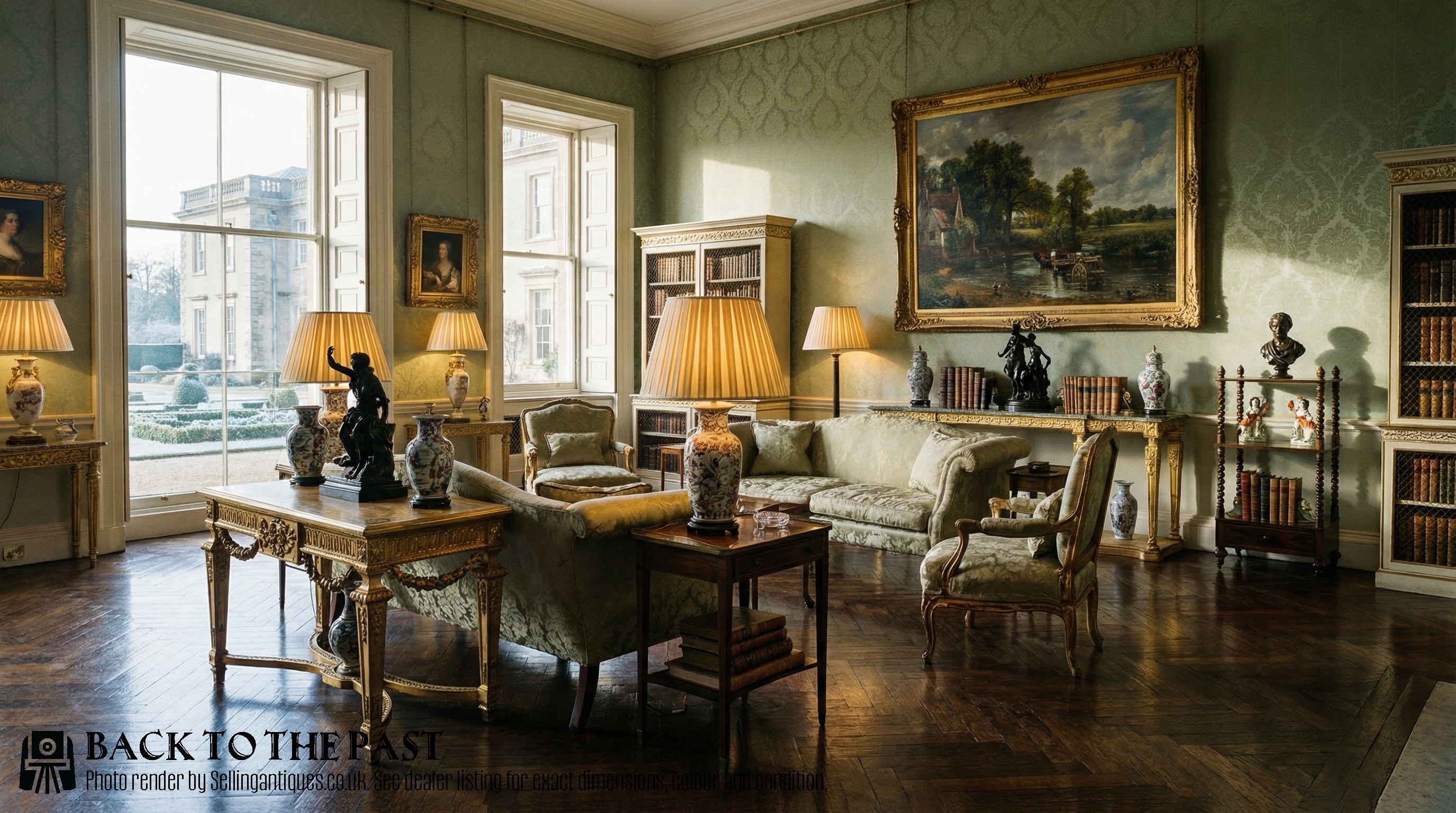
Rosewood Tiered Etagere
When searching for a rosewood tiered etagere, you encounter multi-shelved display pieces designed for books, china, and ornaments. The listings here span Victorian, Regency, and Edwardian periods, alongside Georgian and early twentieth century examples.
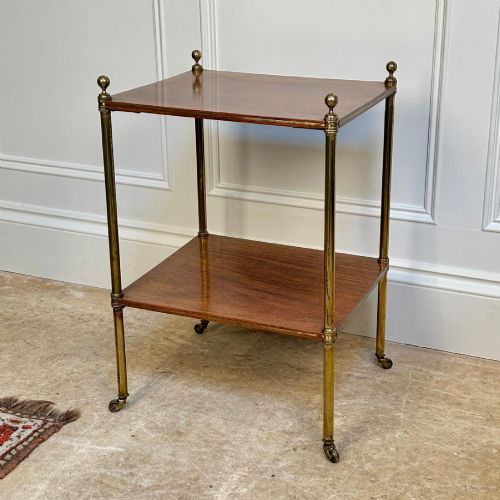
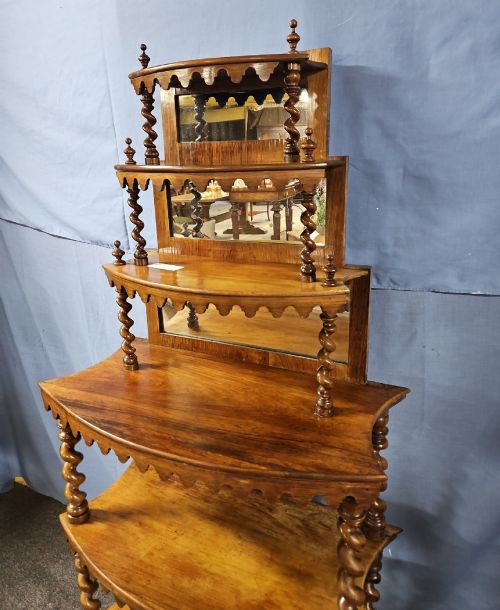
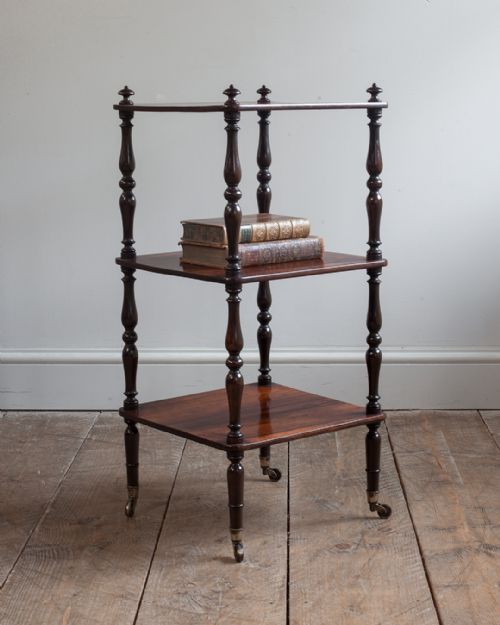
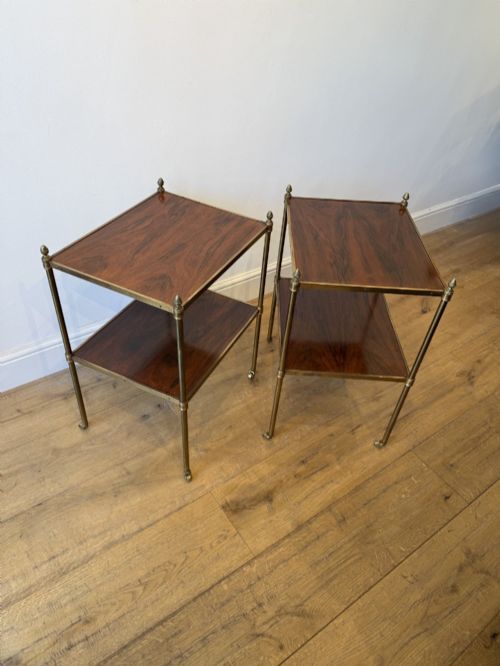
You are most likely to meet standard freestanding rectangular or corner whatnots with three to six tiers supported by columns or spindles. Some examples incorporate brass mounts, mirrors, or small drawers at the base, functioning as display shelves or dumb waiters.
The form appears under several historic names in the inventory, including etageres, whatnots, and central standing buffet shelves. These variations reflect domestic shifts from formal entertaining rooms to informal reception spaces.
Materials and construction
Cabinet makers utilised dense tropical rosewood, often selected for its rich grain, combined with secondary woods like satinwood, walnut, and fruitwood for inlay. Surfaces frequently display contrasting marquetry work alongside bone and ebony details.
Structural stability relies on turned wooden supports or brass columns connecting each tier. Metal mounts, ormolu, and mirrored panels appear on French style pieces and Napoleon III variants, adding reflective depth to the multi-level shelves.
Current listings feature rosewood tiered etagere pieces spanning the Georgian, Regency, Victorian, and Edwardian periods.
Distinctions in craftsmanship
The upper tier of pieces demonstrates finer timber selection, crisper turning on the upright supports, and more intricate floral marquetry or brass mountings. Maker attribution, such as work linked to Edwards & Roberts or Samson & Son, elevates the standing of specific examples.
Simpler provincial whatnots rely on straightforward plank construction and plain turned columns. The crispness of the joinery and the depth of the rosewood finish dictate whether an object sits among standard utility items or superior display furniture.
Mallett·Edwards & Roberts·Samson & Son London·Donald Ross
The Rosewood Tiered Etagere Glossary
- Etagere
- A set of open shelves or tiers used for displaying small objects and ornaments. The form originated in France during the eighteenth century before becoming popular in British Victorian parlours.
- Whatnot
- A nineteenth century term for a movable set of open shelves designed to hold books or ornaments. It developed from the dumb waiter and often stands in a corner or against a wall.
- Marquetry
- Decorative veneer work forming pictorial or geometric patterns using various coloured woods. Craftsmen cut thin slices of satinwood, fruitwood, and rosewood to fit together into intricate designs.
- Ormolu
- Gilded bronze mounts applied to furniture for decorative effect. This technique appears predominantly on pieces influenced by French styles.
- Dumb waiter
- A tiered set of revolving or stationary shelves used for serving food or holding tableware. Several nineteenth century pieces in the inventory carry this designation.
Rosewood Tiered Etagere: Frequently Asked Questions
What is a rosewood tiered etagere used for?
These pieces function as open display furniture for books, ceramics, and small decorative objects in sitting rooms. Nineteenth century households utilised them to organise collections within easy reach of living spaces.
Today, they serve a similar decorative purpose, fitting neatly into corners or against walls to maximise vertical display space without heavy cabinetry.
How do I tell a Regency whatnot from a Victorian one?
Regency and early nineteenth century examples often display restrained classical proportions with clean architectural lines and brass column supports. They frequently date from around eighteen twenty to eighteen thirty.
Victorian pieces tend toward heavier rosewood timber, more elaborate turning on the uprights, and sometimes incorporate mirrors, fretwork, or marquetry inlay reflecting later revival tastes.
Can these shelves hold heavy books?
Most tiers are constructed to support lighter decorative objects, small volumes, and ceramic ornaments rather than heavy folio libraries. The upright spindles and corner joints are stable but built for display rather than weight.
Distribution of weight is best kept balanced across the middle and lower shelves to maintain the structural integrity of the tiered frame.
Where should I place a corner whatnot?
Corner whatnots fit directly into ninety degree wall angles, making efficient use of dead space in smaller rooms. They provide multiple tiers of display while projecting minimally into the floor space of a parlour.
Positioning them away from direct heat sources and strong sunlight protects the rosewood grain and veneer work from drying out.