




Rosewood Tier Table
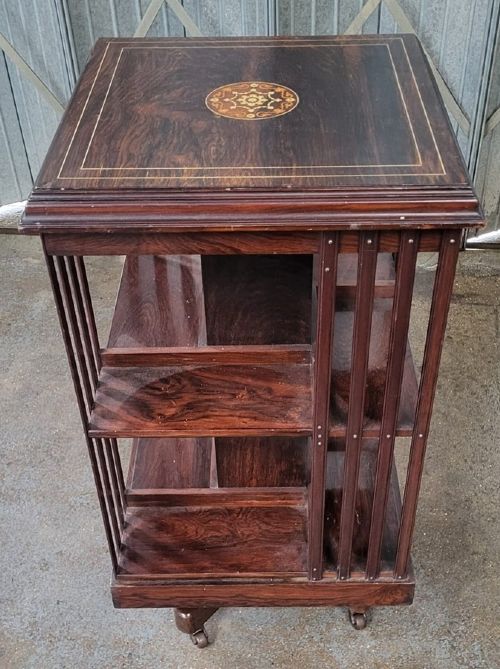
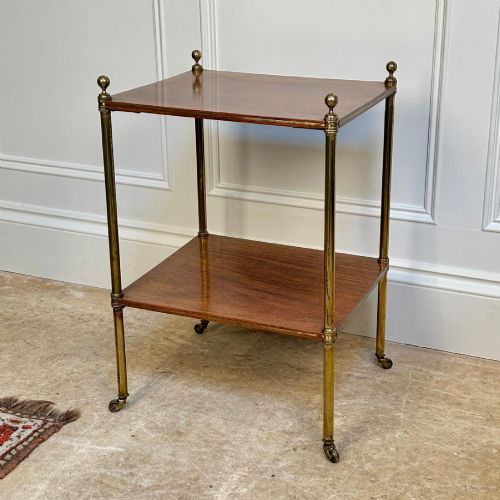
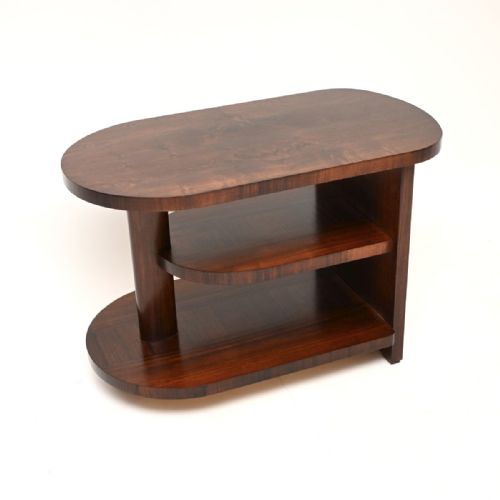
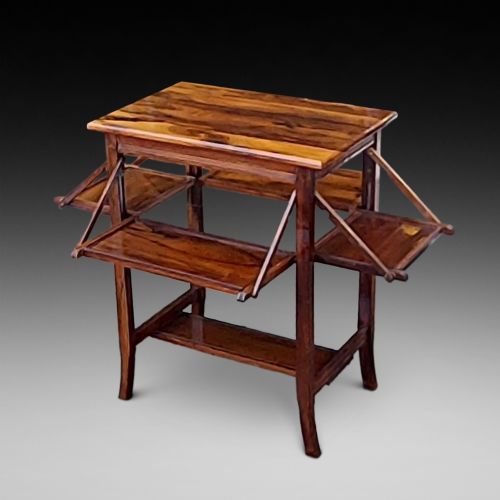
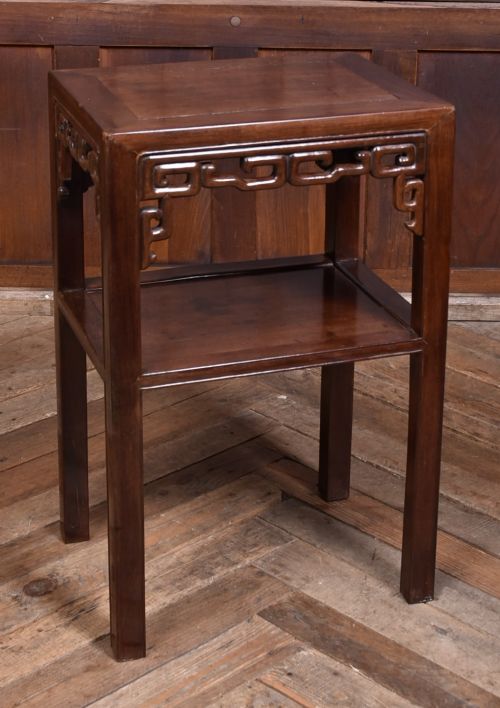
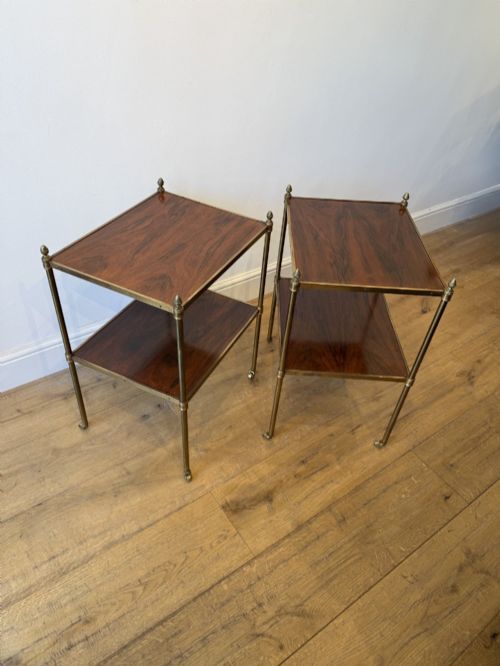
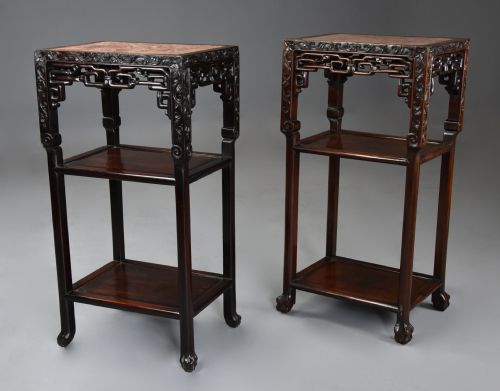
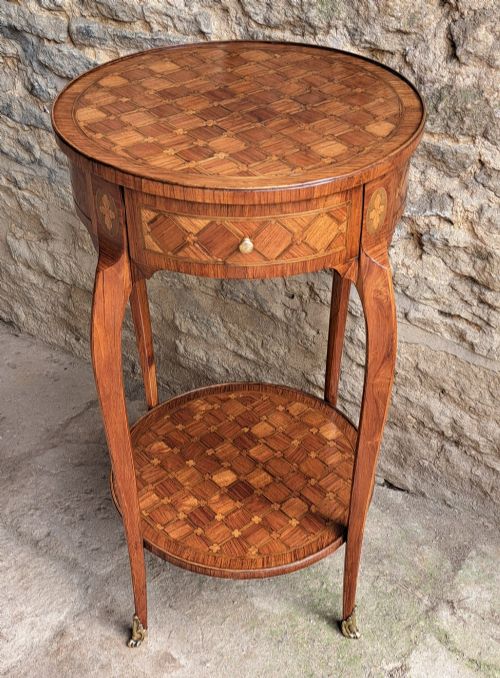
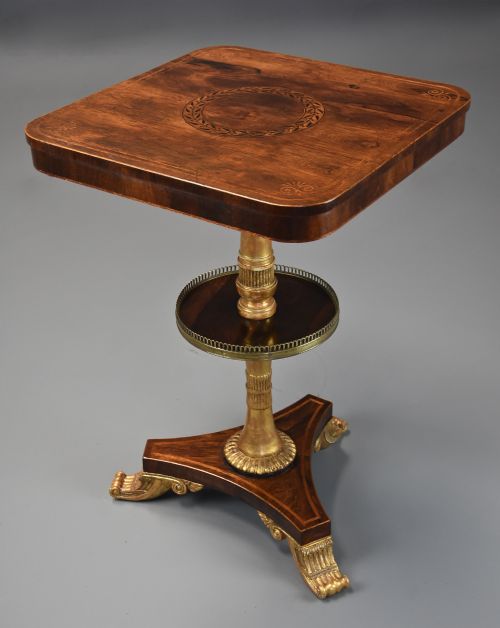
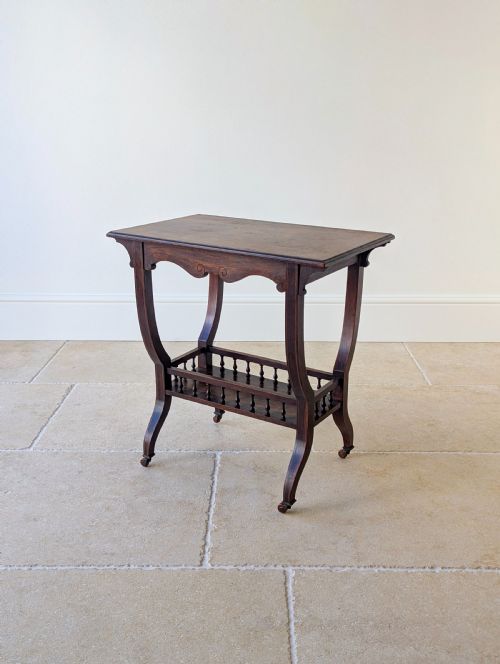
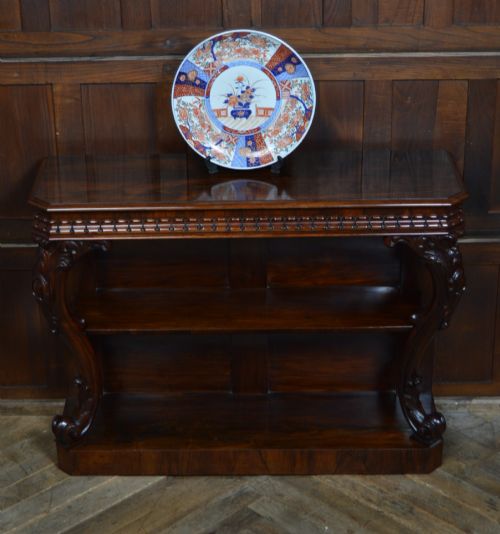
A rosewood tier table brings layered display surfaces into a room through rich tropical timber and tiered shelving.
Rosewood Tier Table
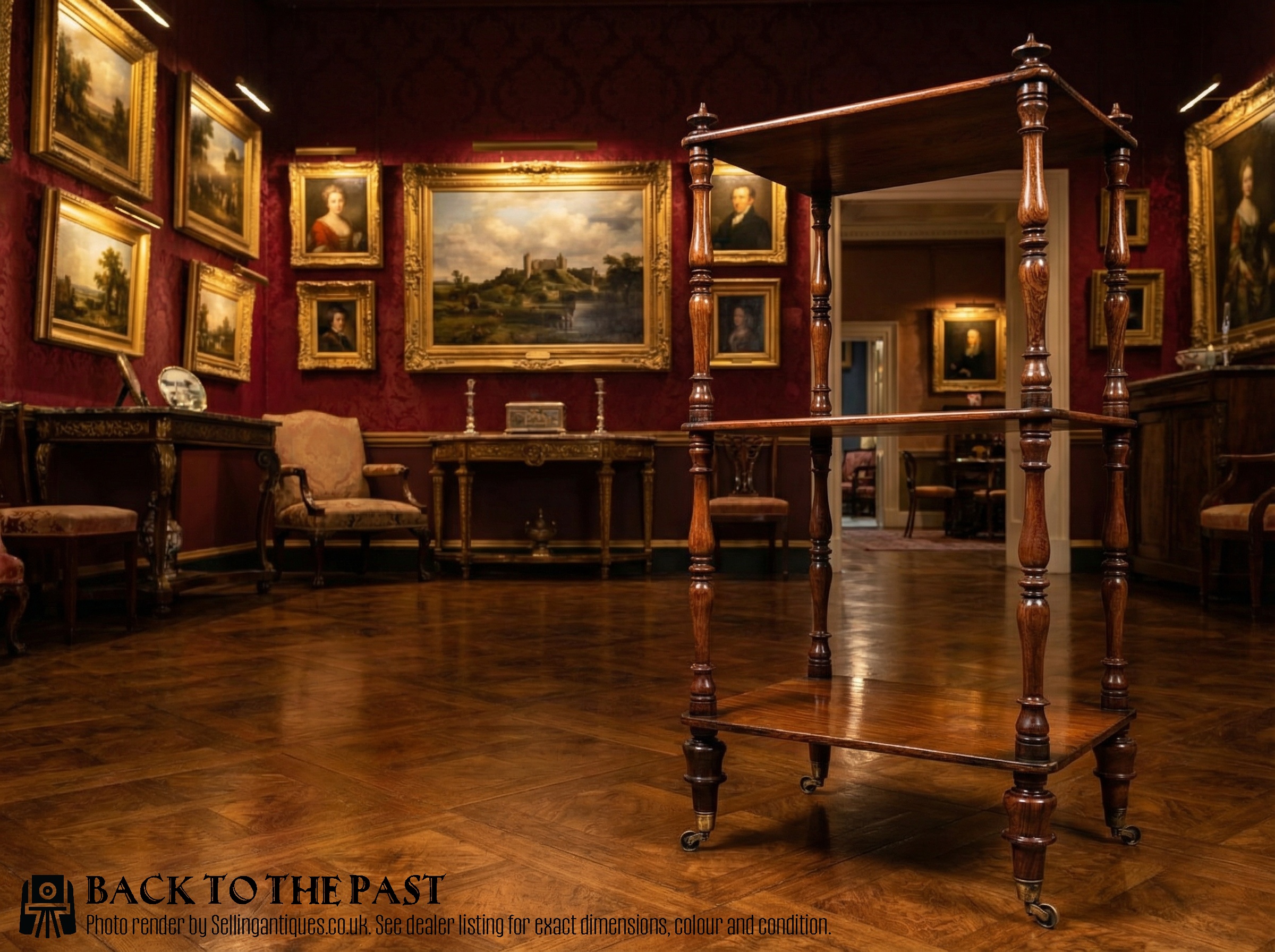
A rosewood tier table provides multiple stacked surfaces for display and utility, frequently taking the form of etageres, whatnots, and occasional tables.
The pieces appearing in this category span the Regency, Victorian, and Edwardian periods, alongside later Art Deco iterations.
Makers utilised these multi-tiered formats for practical household storage, incorporating brass accents and inlaid decoration across side tables and plant stands.
What varies in quality
The refinement of the timber grain and the precision of inlaid marquetry separate standard examples from finer commissions.
Cabinetmaking skill shows in the stability of stacked tiers and the crisp execution of brass stringing or ormolu mounts.
Rosewood Tier Table Retail Price Guide 2026
Typical asking prices for rosewood tier table among the pieces listed under this phrase on Sellingantiques today, from the lower quarter to the upper quarter. They describe what is for sale here now, not the wider market.
Listings feature multiple periods including Regency, Victorian, Edwardian, and Art Deco, using rosewood, kingwood, and brass.
Edwards and Roberts·Collingson and Lock·Robert Strahan·George Bullock·John MaClean·Gillow
The Rosewood Tier Table Glossary
- Etagere
- A piece of furniture consisting of a set of open shelves for displaying small ornaments.
- Whatnot
- An open multi-shelved cabinet used for storage and display.
- Marquetry
- Decorative inlay work using various woods to form patterns on a solid surface.
- Ormolu
- Gilt bronze mounts applied to furniture for decorative effect.
- Crossbanding
- A strip of veneer running along the edge of a table top, grain perpendicular to the centre.
Rosewood Tier Table: Frequently Asked Questions
What is a rosewood tier table used for?
These tables served as versatile furniture for holding books, lamps, and decorative ornaments across sitting rooms and boudoirs. The multiple levels allowed owners to maximise display space without occupying a larger floor area.
Over time, collectors adapted them as lamp stands, bedside surfaces, or dedicated lamp tables in modern interiors.
How do I identify a Regency period tier table?
Regency examples typically exhibit restrained classical lines, dense dark rosewood, and occasional brass stringing or subtle mounts. They reflect the furniture fashions of the early nineteenth century.
Construction details often include finely turned uprights and heavier timber proportions compared to later Edwardian variations.
What is the difference between an etagere and a whatnot?
While both terms describe multi-shelved display furniture, etagere often implies a lighter French-influenced design with decorative marquetry. Whatnot frequently refers to sturdier English multi-tier stands.
Both forms appear across nineteenth-century and early twentieth-century listings with overlapping uses.
How should I care for a rosewood tier table?
Keep the wood away from direct sunlight and dramatic temperature shifts to prevent the rosewood veneers and marquetry from drying out. Gentle dusting with a dry cloth maintains the polished surface.
Avoid placing damp items directly onto the tiers to protect the historic polish and delicate inlay work.