

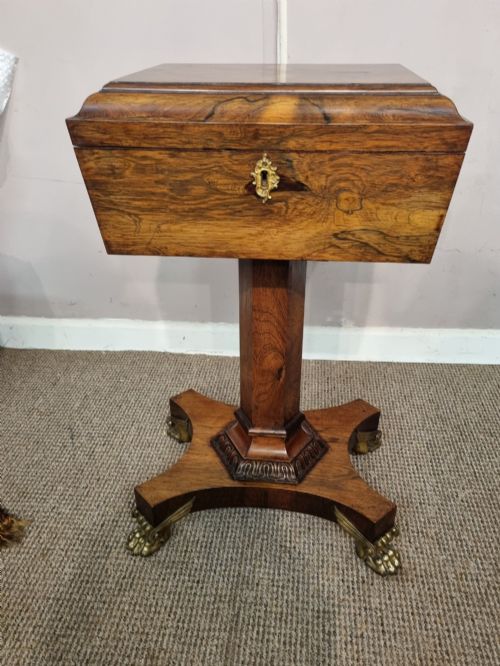


Rosewood Tea Caddy Stand
A rosewood tea caddy stand is a sophisticated piece of period furniture designed to hold tea, bringing elegance and utility to your interior.
Rosewood Tea Caddy Stand
When you search for a rosewood tea caddy stand, you encounter refined pieces primarily originating from the Regency, Georgian, and William IV periods, alongside nineteenth-century examples. These items often appear under alternative names such as teapoys or tea poys, serving historically to safeguard precious tea leaves under lock and key.
The pieces listed here showcase distinct regional and period styles, including Grand Regency designs and items featuring work box interiors. You are most likely to meet refined freestanding examples and those mounted securely on dedicated stands, representing sophisticated tastes of the eighteen-hundreds.
How they were made
Cabinet makers constructed these pieces principally from rich rosewood, frequently incorporating contrasting timbers such as mahogany and burr maple to accentuate the grain. Artisans embellished the dark timber with meticulous brass inlay, creating striking geometric or classical motifs across the lids and panels.
Internal arrangements incorporated delicate glass mixing bowls alongside fitted compartments for loose leaf tea. Silk, velvet, and other luxury fabrics lined the interior work boxes and caddy compartments, showing the high standard of interior upholstery.
Rosewood Tea Caddy Stand Retail Price Guide 2026
Typical asking prices for rosewood tea caddy stand among the pieces listed under this phrase on Sellingantiques today, from the lower quarter to the upper quarter. They describe what is for sale here now, not the wider market.
Listings feature pieces from the Georgian, Regency, and William IV eras, constructed primarily from rosewood with brass and glass elements.
What varies in quality
The standard of cabinetwork separates the ordinary examples from the exceptional ones, particularly in the precision of the brass inlay and the tightness of the mitred joints. Finer pieces demonstrate superior selection of rosewood veneers, displaying rich figuring that remains stable across the panels.
Originality defines the upper tier of the market, where surviving interior fitments, glass mixing bowls, and functioning locks remain intact. Converted or altered examples, while possessing period charm, occupy a different category from untouched specimens.
The Rosewood Tea Caddy Stand Glossary
- Teapoy
- A small stand or table designed to hold a tea caddy, popular during the Georgian and Regency eras. These vessels often contained lidded canisters and a glass bowl for washing tea leaves.
- Rosewood
- A dense, heavily figured timber prized for its dark purple-brown colour and rich black grain patterns. It was the favoured medium for high-status cabinet furniture during the nineteenth century.
- Brass inlay
- The technique of embedding thin strips or shaped pieces of brass into the wood surface to create decorative patterns. Regency craftsmen utilised this method extensively on tea caddy stands.
- Work box
- A compartmented interior fitted beneath the tea storage section designed for sewing implements and needlework. Many teapoys doubled as multifunctional tables for domestic crafts.
- William IV
- A British design period spanning the 1830s characterised by robust classical proportions and heavy scrollwork. Pieces from this era show a transition towards bolder architectural forms.
Rosewood Tea Caddy Stand: Frequently Asked Questions
What is a tea poy?
A tea poy is a pedestal table or cabinet specifically manufactured to hold tea caddies, mixing bowls, and related equipment. Wealthy households relied on them to keep expensive tea leaves secure.
Over time, the form evolved to incorporate work boxes and stationary compartments, shifting from a pure tea service to a general parlour accessory.
How do I date a rosewood teapoy?
Dating relies on examining the structural proportions, timber choice, and decorative motifs such as brass inlay. Regency and Georgian examples tend to feature slender pedestals and refined brass work.
Later nineteenth-century pieces often display heavier proportions and different leg configurations. Comparing the interior fittings with documented period examples aids accurate dating.
Were all tea caddy stands made of rosewood?
While rosewood dominates the surviving examples from the Regency and William IV periods, makers also utilised mahogany and other native timbers. Burr maple frequently appears as an interior secondary wood.
Rosewood was chosen for its dark, luxurious appearance which suited formal drawing rooms and sitting areas.
How do I care for antique rosewood?
Antique rosewood requires protection from direct sunlight and dramatic changes in humidity to prevent the timber from splitting and the veneers from lifting. Regular dusting with a soft, dry cloth maintains the polished surface.
Avoid using modern silicone sprays or heavy liquid polishes, which can damage the historic finish over time.