

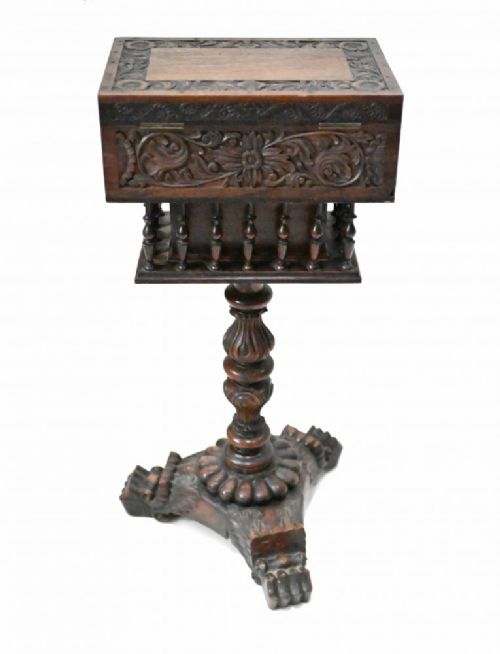


Rosewood Pedestal Caddy Table
A rosewood pedestal caddy table brings refined Regency and Victorian proportion to a room, offering clever internal storage alongside striking timber grain.
Rosewood Pedestal Caddy Table
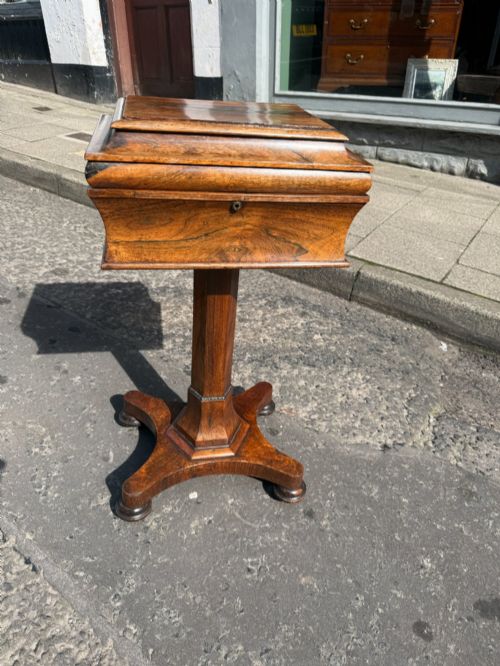
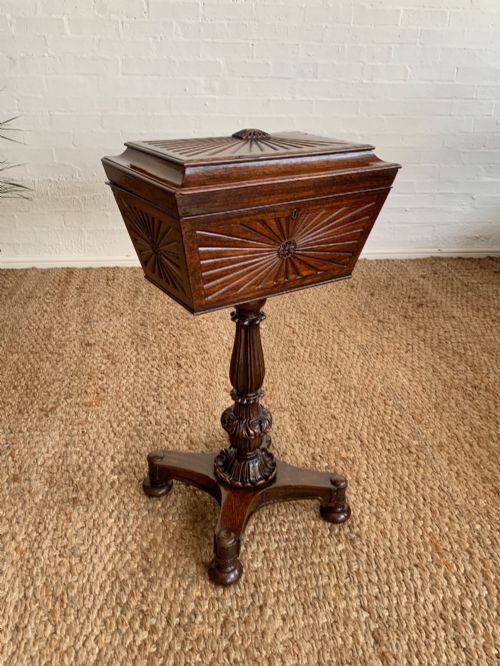
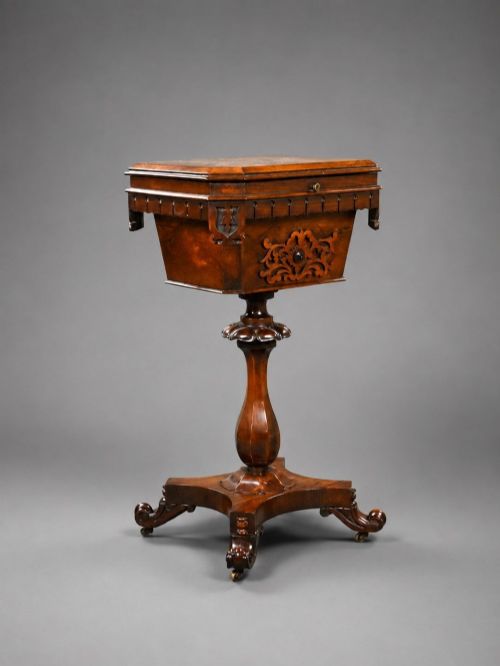
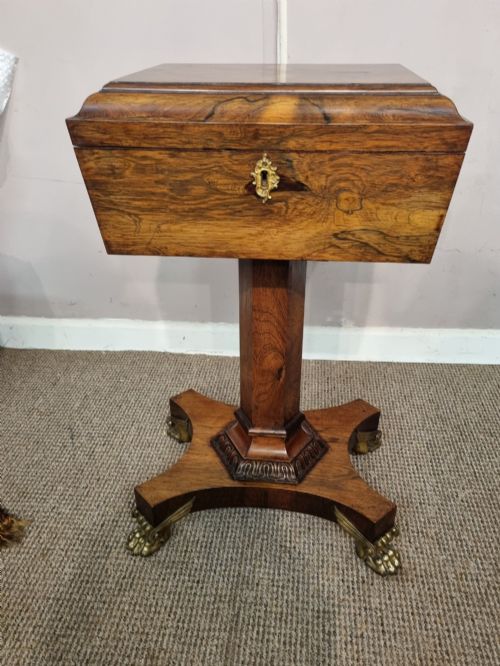
A rosewood pedestal caddy table, also known as a teapoy or work table, combines a lidded top compartment with a central pillar and a sturdy base. These pieces emerged to hold valuable tea or sewing equipment in the principal rooms of fashionable homes.
You will most frequently meet Regency and William IV examples on this page, alongside 19th Century iterations and occasional Anglo-Indian colonial pieces. The forms range from traditional lidded tea containers to combined work tables featuring caddy tops and fitted interiors.
How they were made
Cabinet makers utilised dense exotic timbers, primarily rosewood, combined with padouk and mahogany for internal framing and structural support. These woods were expertly selected for rich grain patterns and polished to a deep lustre.
Decoration often involved precision brass inlay and intricate sunburst carving directly into the solid timber. Compartments frequently incorporated delicate glass mixing bowls, fabric linings, and fitted velvet storage sections.
Rosewood Pedestal Caddy Table Retail Price Guide 2026
Typical asking prices for rosewood pedestal caddy table among the pieces listed under this phrase on Sellingantiques today, from the lower quarter to the upper quarter. They describe what is for sale here now, not the wider market.
What varies in quality
The sophistication of the pedestal base and the crispness of the carving set exceptional examples apart from standard workshop production. Carved details such as sunburst motifs reveal the carver's confidence and the patron's investment.
Internal arrangement and timber selection dictate the standing of a piece within the range. Fully fitted compartments with original glass and fabric elements represent higher craftsmanship than simplified later conversions.
The Rosewood Pedestal Caddy Table Glossary
- Teapoy
- A small stand or table designed for holding tea, canisters, and mixing bowls. The term derives from Anglo-Indian origins.
- Caddy top
- A hinged box lid enclosing internal compartments, styled after traditional tea caddies. It sits securely upon the main table frame.
- Regency
- A design period spanning the early 19th century, characterised by classical restraint and architectural lines. Pieces from this era often feature bold rosewood veneers.
- Padouk
- A heavy tropical hardwood valued for its durability and reddish-brown colouration. It appears in colonial and imported furniture forms.
- Sunburst carving
- A decorative radiating motif carved into the timber surface. This technique highlights the central grain of the wood.
Rosewood Pedestal Caddy Table: Frequently Asked Questions
What is a teapoy table?
A teapoy table is a lidded container mounted on a pedestal, originally designed to store expensive loose tea leaves.
Over time, many functioned as work or sewing tables while retaining their distinct compartmentalised tops.
How do I date a rosewood caddy table?
Dating relies on stylistic clues like Regency proportions, William IV pillar designs, and the presence of brass inlay.
Construction methods and timber choices also help separate early Georgian and Regency pieces from later Victorian examples.
Were these tables used for sewing?
Many tables served dual purposes, incorporating internal trays and fabric storage alongside traditional tea compartments.
Work tables with caddy tops allowed ladies to keep sewing gear neatly hidden away in the drawing room.
How do I care for antique rosewood?
Rosewood benefits from stable room temperatures and protection from direct sunlight to prevent the timber from drying out.
Regular dusting with a dry cloth maintains the polished finish without risking moisture damage to the antique surface.