



Rosewood Tea Box Table
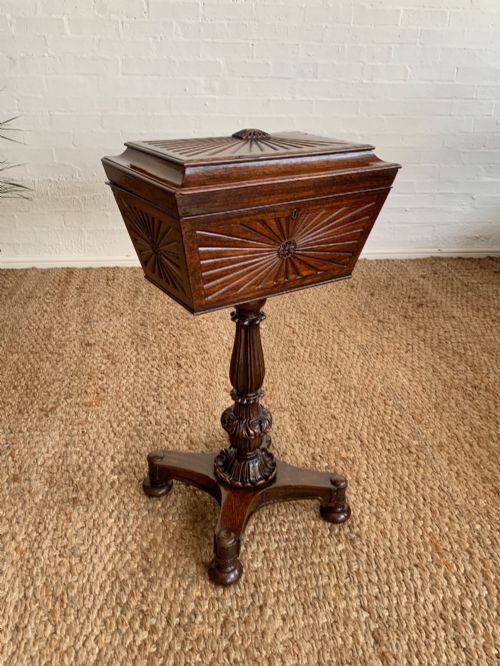
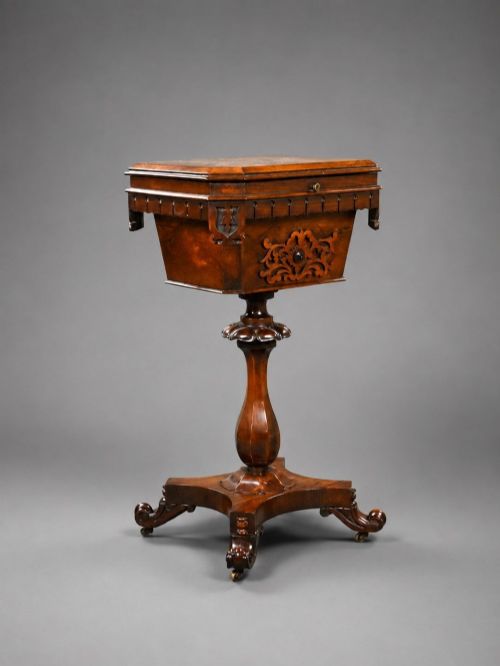
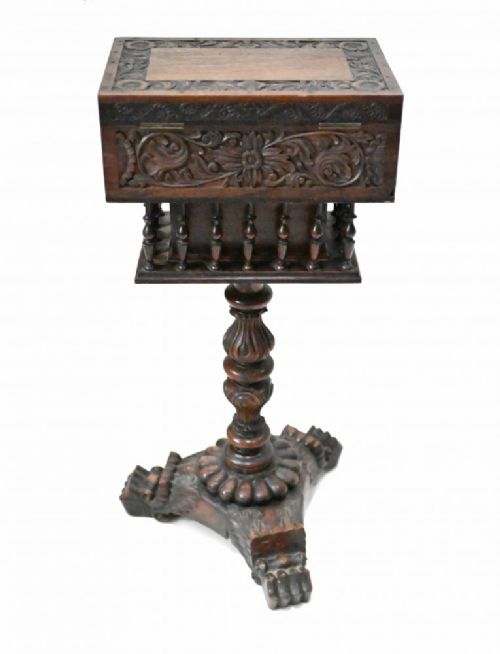
A rosewood tea box table combines a tea caddy and a standing occasional table into one refined piece of furniture.
Rosewood Tea Box Table
When you search for a rosewood tea box table, you are looking at teapoys and work tables designed to hold tea canisters and mixing bowls. The pieces on this page span the Georgian, Regency, William IV, and Victorian periods.
The forms range from brass-inlaid boxes on pillar pedestals to carved Anglo-Indian colonial furniture in padouk and rosewood. Some items also feature work table configurations with caddy tops and fitted interiors.
Materials and construction
Cabinetmakers utilised dense tropical hardwoods such as rosewood and padouk, often building carcasses over secondary timbers. Mahogany and satinwood also appear as structural or crossbanded elements.
Decoration relied on precision brass inlay and contrasting wood borders rather than heavy carving. Interiors frequently incorporated velvet or fabric linings alongside glass mixing bowls.
Pedestal bases stood upon platform feet or scrolled legs, supporting the heavy lidded boxes above.
Rosewood Tea Box Table Retail Price Guide 2026
Typical asking prices for rosewood tea box table among the pieces listed under this phrase on Sellingantiques today, from the lower quarter to the upper quarter. They describe what is for sale here now, not the wider market.
Some tea tables include secret compartments designed specifically to hide the tea caddy key from thieving household staff.
Assessing quality in rosewood tea box table examples
Quality rests upon the crispness of the brass inlay and the grain matching across the rosewood veneers. Superior examples display tight, stable timber joints and well-figured surfaces.
The sophistication of the internal compartment layout separates standard production from finer workshop output. Original glass bowls and intact velvet or fabric linings elevate a piece considerably.
Carved details, such as sunburst motifs or pedestal pillars, demonstrate the sculptor's hand and the overall ambition of the design.
The Rosewood Tea Box Table Glossary
- Teapoy
- A small stand or table designed to hold tea caddies, originating from Anglo-Indian usage. The term derives from Hindi roots relating to three feet.
- Caddy top
- A hinged lid configuration modelled after portable tea caddies, revealing internal compartments. This top style conceals storage wells for loose leaf tea.
- Crossbanded
- A border technique where veneer strips run perpendicular to the main grain direction. This frames the primary timber panel with a contrasting stripe.
- Regency
- A British design period spanning the early nineteenth century, noted for classical revival motifs. Furniture from this era often incorporates brass inlay and bold pedestals.
Rosewood Tea Box Table: Frequently Asked Questions
What is a teapoy table?
A teapoy table is a specialised piece of nineteenth-century furniture designed to store and serve tea. These stands typically feature a lidded box on a central pillar pedestal.
Inside the top compartment, makers built small wells and compartments to hold different varieties of tea leaves alongside a central mixing bowl.
How were tea box tables used?
In the Georgian and Regency periods, tea was an expensive commodity stored under lock and key by the head of the household. The host mixed the leaves inside the table compartment before servants poured the brew.
Later Victorian examples often doubled as work tables for sewing and needlecraft while retaining their decorative lidded tops.
How do I date a rosewood tea poy?
Dating relies on stylistic clues and construction methods from periods like the Regency, William IV, and Victorian eras. Earlier pieces from around 1800 often feature delicate brass inlay and slender pillar supports.
Later nineteenth-century iterations tend toward heavier proportions, bolder carved details, and different pedestal base configurations.
Can I use a teapoy as a side table?
These tables adapt well to modern living rooms as compact side tables or lamp stands. The lidded top provides convenient enclosed storage for small household items.
Care should be taken to protect the historical rosewood veneer and delicate interior linings from moisture and direct sunlight.