

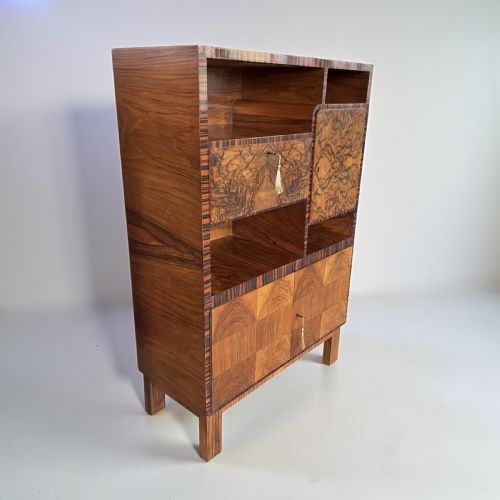


Rosewood Standing Shelves
Rosewood standing shelves are multi-tiered display units and bookcases that bring rich dark timber and tiered utility to a room.
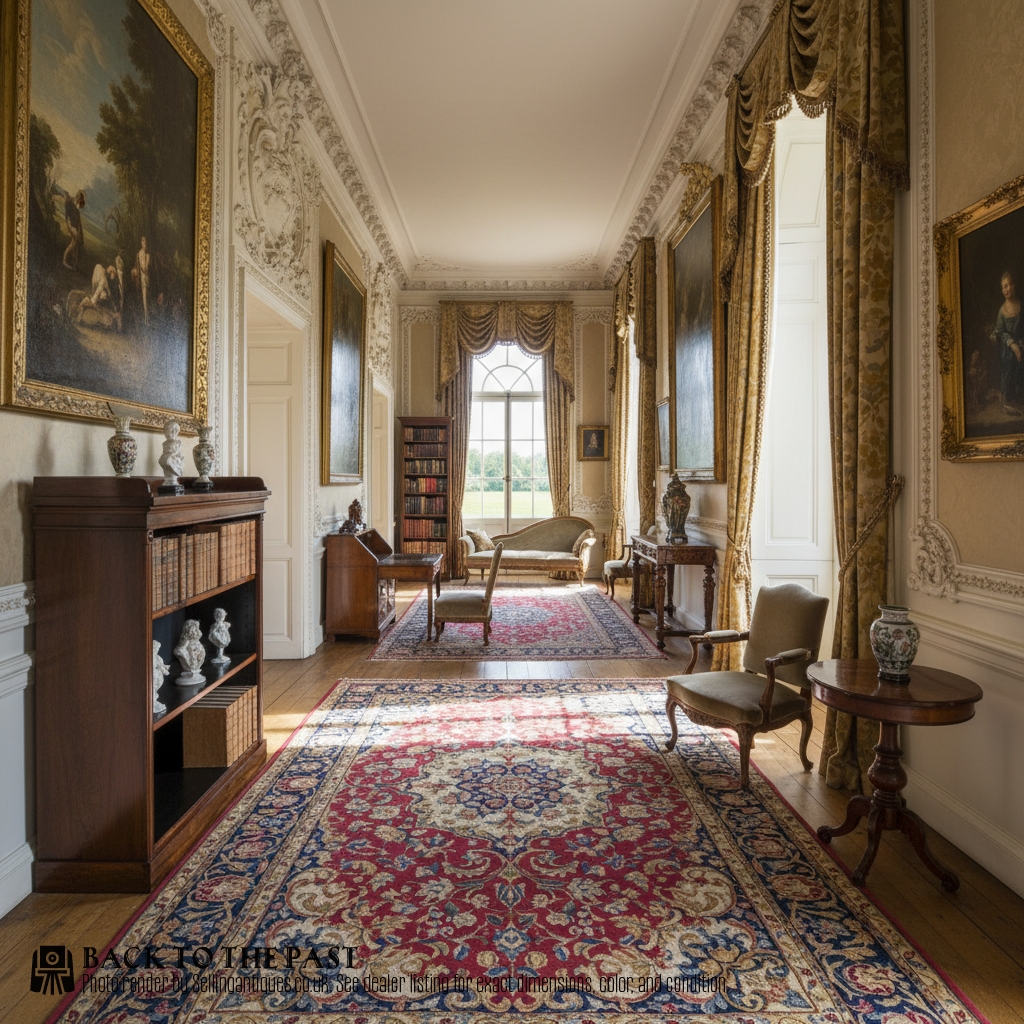
Rosewood Standing Shelves
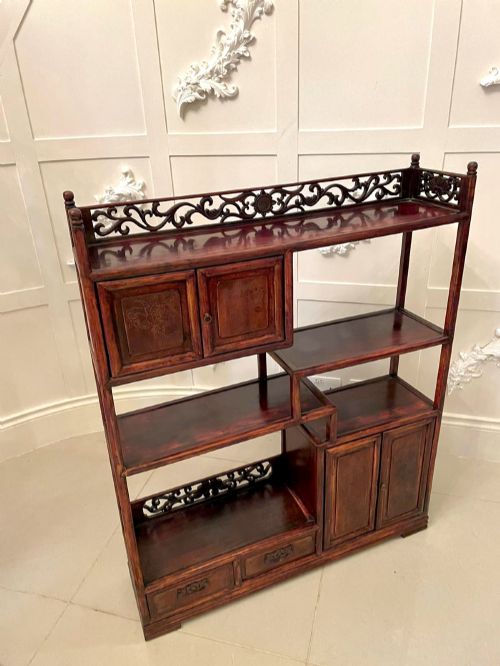
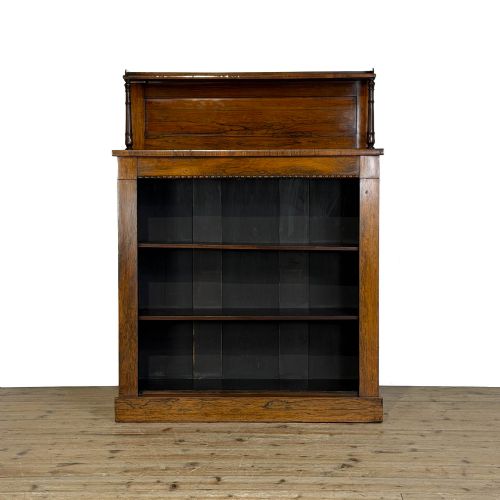
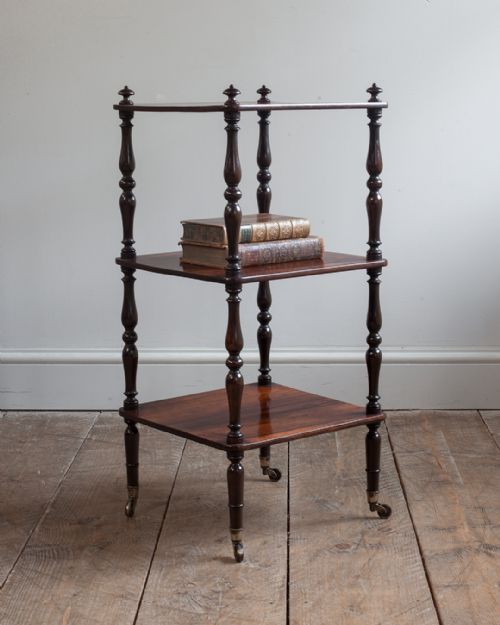
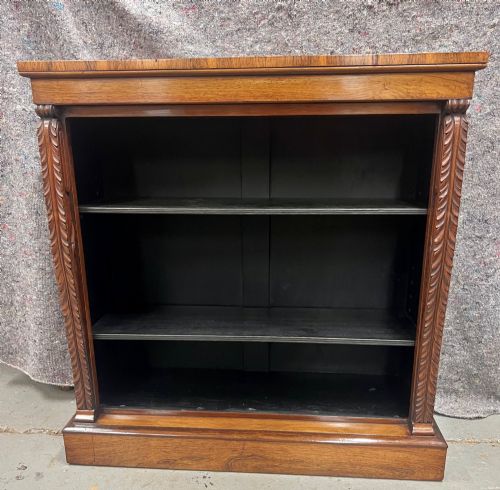
Rosewood standing shelves encompass various open bookcases, tiered étagères, and multi-functional whatnots designed to hold books and display ornaments. When you search for rosewood standing shelves, you encounter pieces that span the Georgian, Regency, William IV, Victorian, and Edwardian periods.
The most common formats on this page are tiered whatnots and open bookcases resting on the floor rather than hanging on walls. Makers from the nineteenth century favoured this timber for freestanding furniture because its dense grain suited slender uprights and delicate shelves.
Forms range from simple three-tier stands to grander double-sided bookcases and corner units fitted with brass accents or glass panels. These versatile items served libraries, drawing rooms, and boudoirs as both storage and display surfaces.
Materials and construction methods
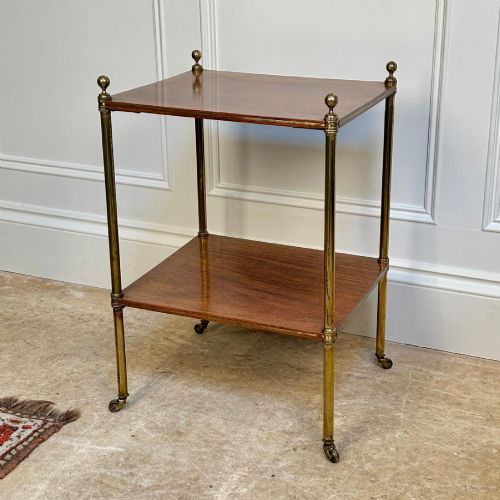
Cabinet makers utilised dense rosewood, often complemented by secondary timbers such as mahogany, walnut, pine, and hardwood for internal framing. Brass fittings, castors, or wirework frequently reinforced the tiered uprights of whatnots and étagères.
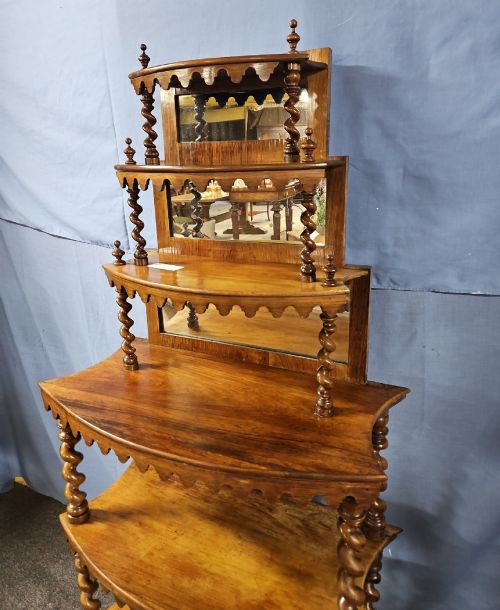
Construction relies on precise joinery to support multiple open tiers without sagging under the weight of books or porcelain. Many examples incorporate turned wooden columns or delicate spindle supports holding horizontal shelves together.
The listings span the Georgian, Regency, William IV, Victorian, Edwardian, and Art Deco periods, predominantly featuring rosewood alongside brass, glass, and mahogany.
Factors that separate the tiers of craftsmanship
The distinction between standard utility items and finer pieces lies in the selection of the rosewood veneer or solid timber, alongside the crispness of the turned columns. Superior examples display harmonious grain matching across tiers and robust structural integrity in the upright supports.
Details such as finely cast brass gallery rails, integrated drawers, or secondary materials like ormolu and mirror glass elevate a piece from a simple stand to a distinguished item of cabinet work.
Gillows·Samson And Son London
The Rosewood Standing Shelves Glossary
- Whatnot
- A freestanding piece of furniture consisting of multiple shelves for displaying ornaments or books. It gained immense popularity during the nineteenth century.
- Étagère
- A piece of furniture consisting of a series of open shelves for displaying small objects. This French term often applies to lighter, decorative shelving units.
- Canterbury
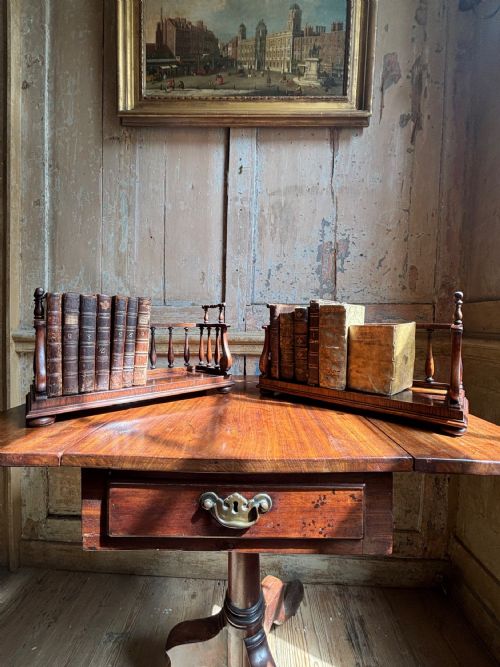
- A low stand with partitioned sections originally designed for holding sheet music or books. Some Victorian examples combine this storage box with upper shelving tiers.
- Waterfall bookcase
- A set of open shelves where each successive tier is set back from the one below, creating a stepped profile resembling cascading water.
- Ormolu
- Gilded bronze ornamentation applied to furniture, often seen on finer French and English decorative pieces from the nineteenth century.
Rosewood Standing Shelves: Frequently Asked Questions
What is a whatnot?
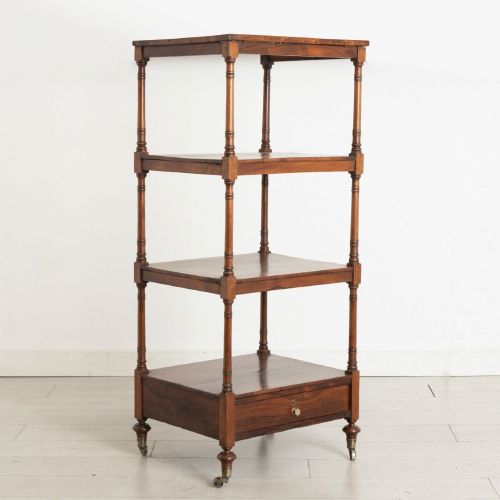
A whatnot is a multi-tiered freestanding shelving unit designed for displaying ornaments, ceramics, and books in nineteenth-century interiors.
They typically feature three to six open shelves supported by slender turned columns and sometimes incorporate a small drawer at the base.
How do I date a rosewood bookcase?
Dating relies on stylistic clues such as the Regency preference for classical proportions or the heavier, carved detailing associated with the Victorian era.
Examining the secondary timbers used in the internal framing and backboards also helps narrow down the period of manufacture.
Where were standing shelves used?
These pieces found places in drawing rooms, libraries, and boudoirs as versatile units for organising books and displaying decorative objects.
Their open construction allowed them to divide spaces or stand against walls without blocking light or making a room feel cramped.
Are these shelves sturdy enough for heavy books?
Most standing shelves and open bookcases were built to bear the weight of heavy leather-bound volumes, particularly robust Regency and Victorian examples.
However, lighter étagères and delicate multi-tiered whatnots are better suited to lighter display items rather than massive libraries.