



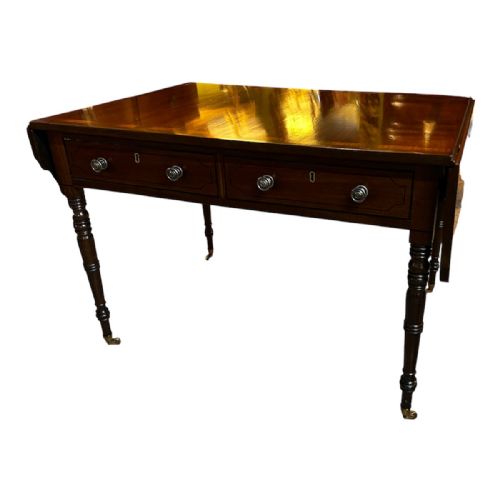
Rosewood Sofa Desk
A rosewood sofa desk brings the rich grain and versatile form of the nineteenth century directly into a modern room.
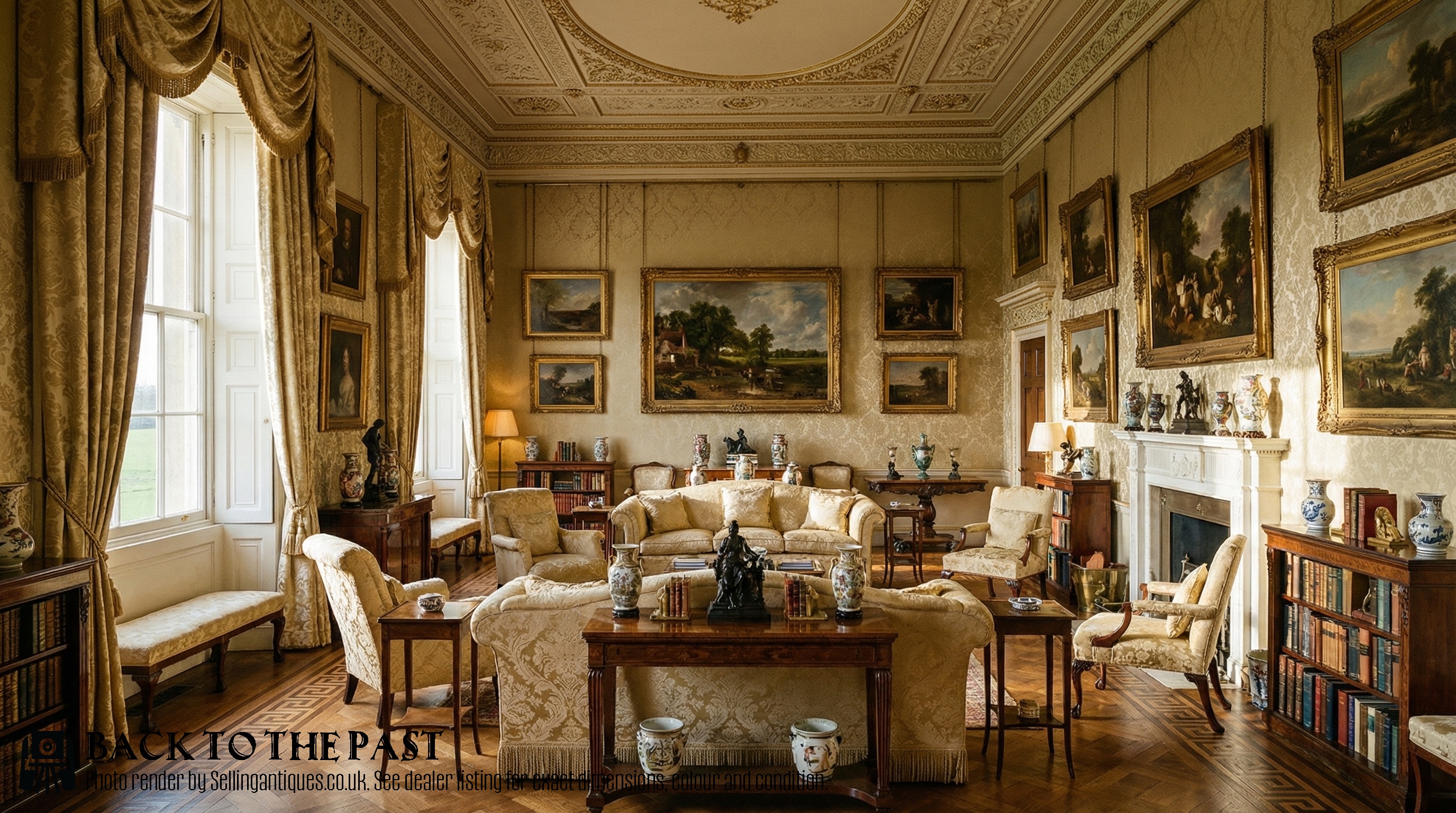
Rosewood Sofa Desk
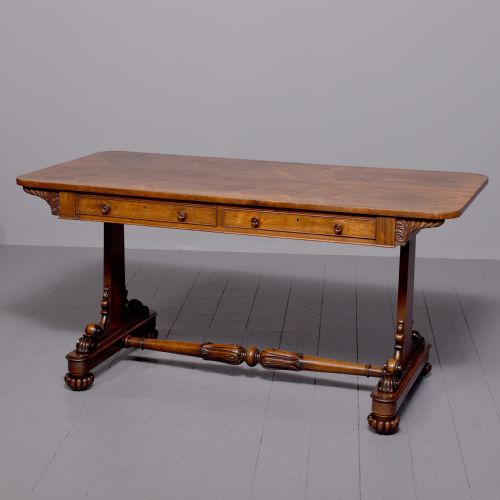
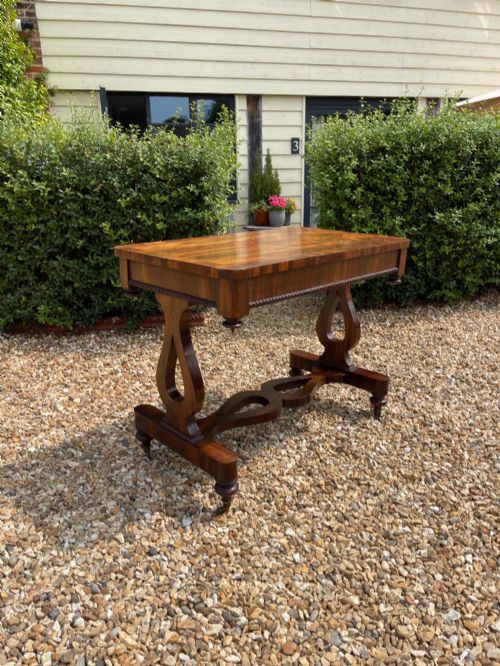
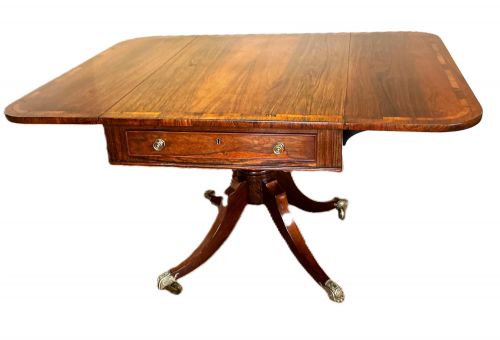
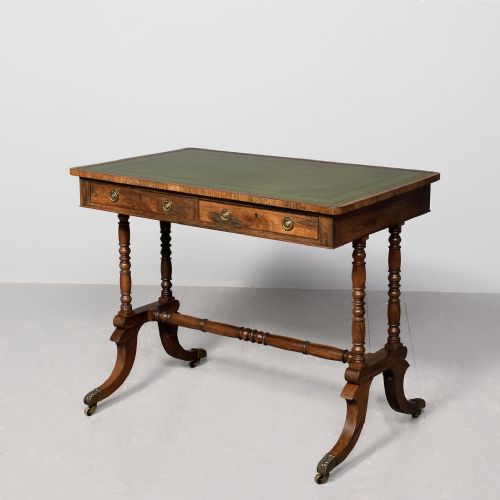
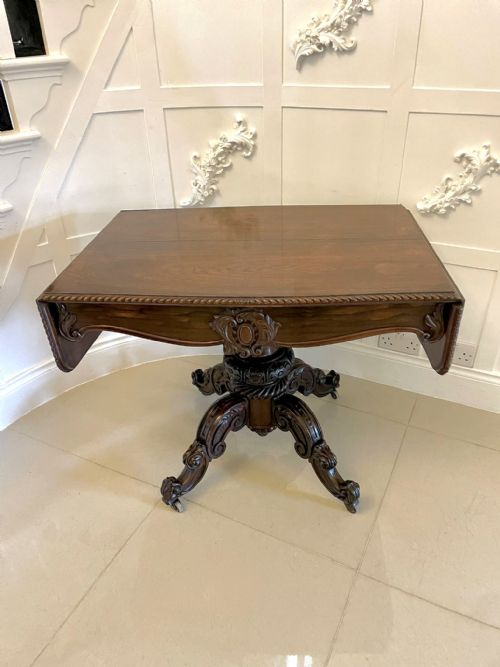
A rosewood sofa desk encompasses tables designed for writing, reading, and display, originating predominantly from the Regency, Georgian, and Victorian eras. These forms frequently appear as freestanding library tables, drop-flap sofa tables, and writing desks placed centrally within a room rather than pushed against a wall.
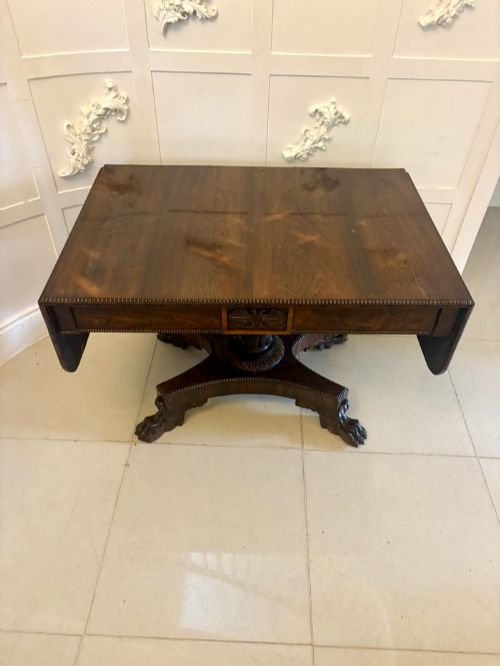
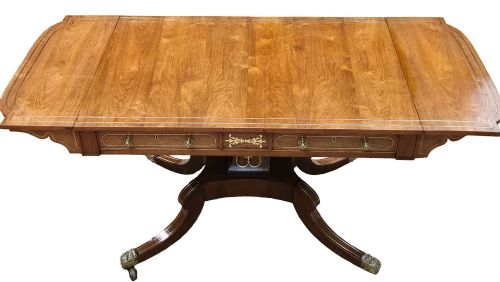
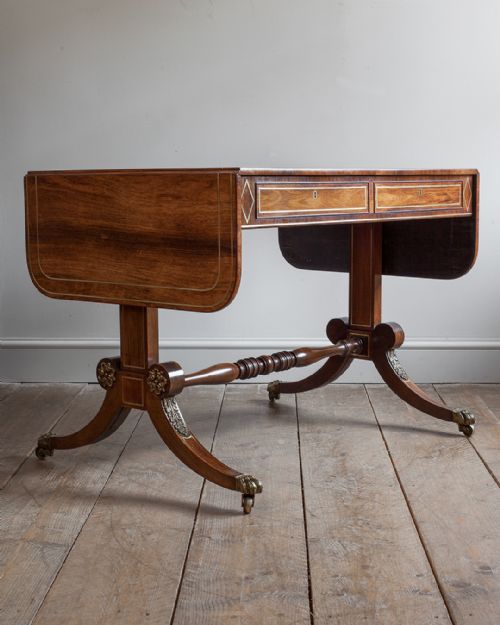
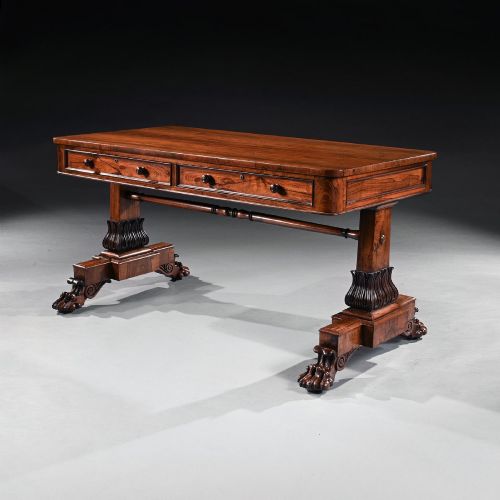
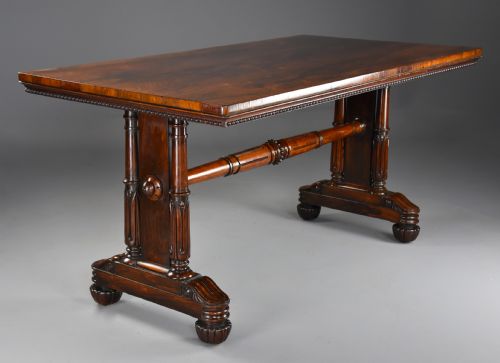
The version most commonly encountered on this page is the Regency or early nineteenth-century rosewood sofa table, often fitted with drawers and supported on pillar or trestle bases. Pieces from this period share a deliberate symmetry and clean architectural proportions intended to sit behind a sofa or in the middle of a parlour.
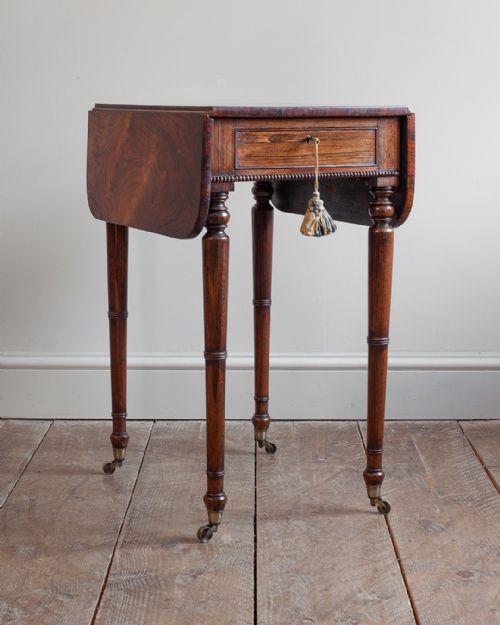
Makers and workshops of the nineteenth century utilised the dense, dark grain of rosewood to create striking focal points for formal libraries and drawing rooms. Alongside standard writing tables, variants include centre tables, work tables, and occasional side tables bearing the characteristic warm hues of the timber.
How they were made
Cabinetmakers constructed these tables using solid timber and substantial veneers of rosewood, occasionally incorporating secondary woods such as mahogany, oak, and pine for drawer linings and internal framing. The dense nature of rosewood allowed artisans to plane smooth, durable surfaces suited to daily writing and domestic use.
Decoration relied heavily on precision brass inlay, marquetry, and wood inlay, set flush into the dark ground of the rosewood. Brass mounts, lion paw feet, and drop handles provided structural accents, while drop-flap mechanisms and concealed drawers demonstrated advanced nineteenth-century joinery.
Listings feature rosewood alongside supporting materials such as brass, mahogany, oak, and zebrawood across the Regency, Georgian, and Victorian periods.
What varies in quality
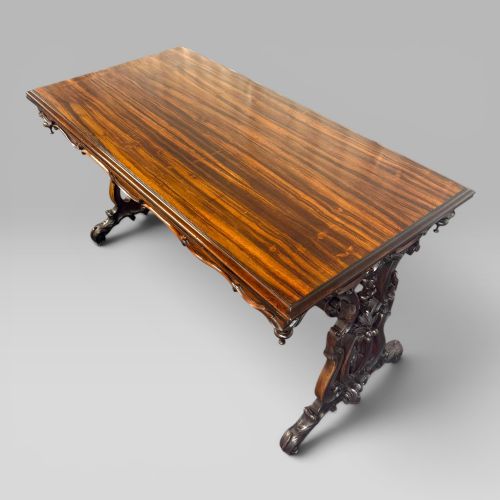
The depth and figuring of the rosewood grain set the visual standard for each piece, with highly grained veneers and book-matched surfaces commanding higher regard. Finely executed brass inlay and crisp carving upon the pedestal or lion paw feet distinguish superior workshops from more utilitarian production.
Structural integrity depends on the original stability of the stretcher bases and drop-flap hinges, which should operate smoothly without sagging. The crispness of the drawer dovetails and the retention of original brass fittings indicate the level of care invested by the original maker.
Mein of Kelso·Gillows
The Rosewood Sofa Desk Glossary
- Sofa table
- A rectangular table traditionally designed to stand behind a sofa, typically featuring drop leaves on either end and two small drawers.
- Library table
- A large freestanding table used for reading and writing, finished on all sides so it could sit in the middle of a room.
- Freestanding
- Finished on all four sides to allow placement anywhere in a room rather than flat against a wall.
- Marquetry
- Decorative veneer work forming pictures or geometric patterns using various woods and contrasting materials.
- Regency
- A British design style spanning the early nineteenth century, characterised by classical restraint, architectural lines, and ancient Greek or Roman influences.
Rosewood Sofa Desk: Frequently Asked Questions
Where did these tables sit?
These tables were designed to sit centrally in a room, often positioned directly behind a sofa or placed within the middle of a library.
Because they are finished on all sides, they functioned as versatile writing surfaces away from the walls.
How do I spot a Regency piece?
Regency pieces typically display classical symmetry, clean architectural lines, and dark rosewood veneers often accented with brass inlay.
Look for pedestals, sabre legs, or carved lion paw feet characteristic of the early nineteenth century.
Can I use one for a desk?
Many of these pieces were built specifically as writing tables or library tables, featuring convenient drawers for paper and writing implements.
Their comfortable working height makes them well-suited for daily use as a compact desk in a modern study.
What is a drop flap?
A drop flap is a hinged leaf on either end of a table top that can be raised to extend the surface area or lowered when space is limited.
This mechanism allowed nineteenth-century homeowners to adjust the footprint of the furniture depending on the activity.