
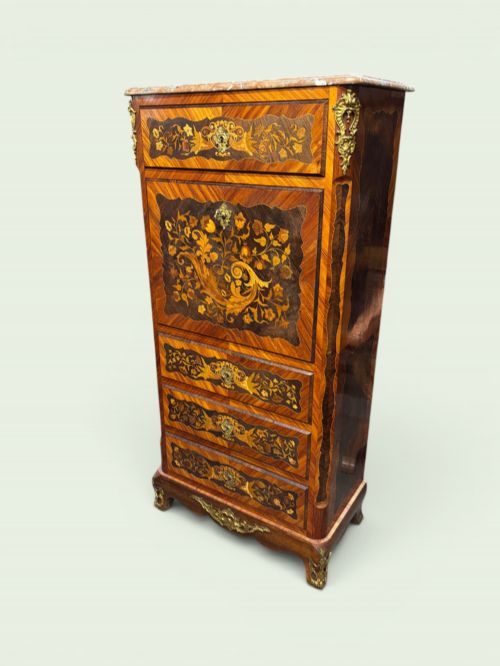


Rosewood Secretaire Cabinet
A rosewood secretaire cabinet combines practical writing space with enclosed storage, offering rich timber grain and concealed compartments that appeal to collectors of period furniture.
Rosewood Secretaire Cabinet
A rosewood secretaire cabinet is primarily a writing surface combined with enclosed storage, appearing in forms such as side cabinets, chiffoniers, Wellington chests, and tall abattant desks. These pieces bridge the gap between a chest of drawers and a dedicated writing desk, designed to keep correspondence and valuables secure behind locked panels.
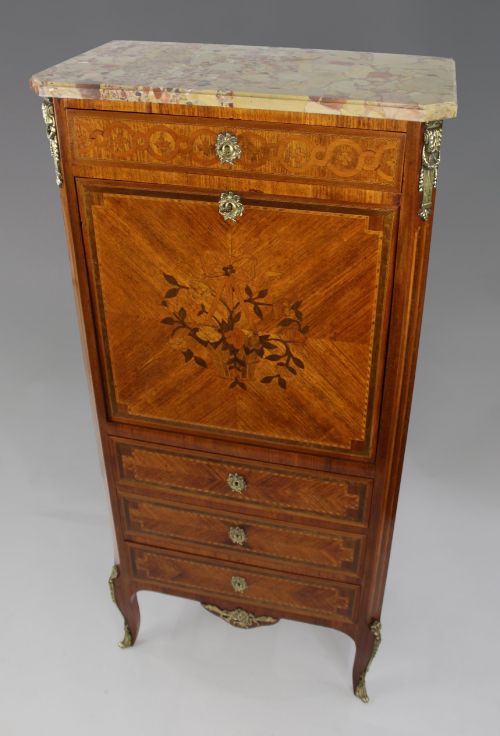
The versions most common on this page date from the nineteenth century, spanning Regency, Victorian, and Continental periods. Examples range from brass-inlaid Regency side cabinets to French marquetry secretaire abattants topped with marble.
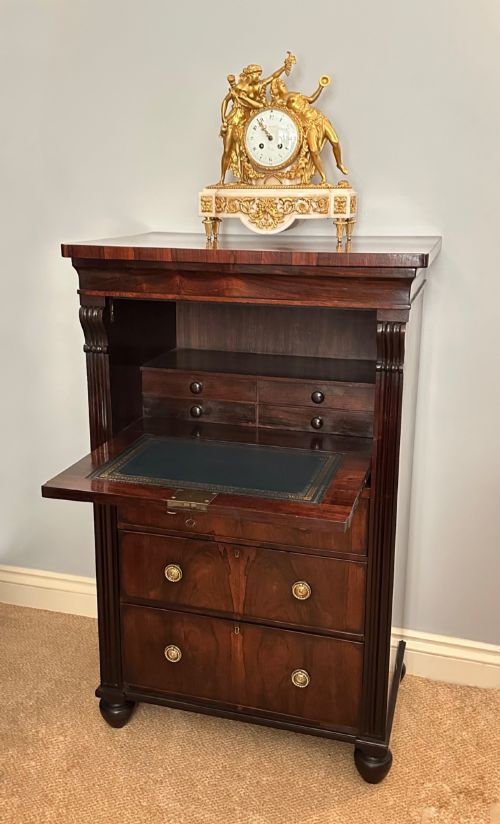
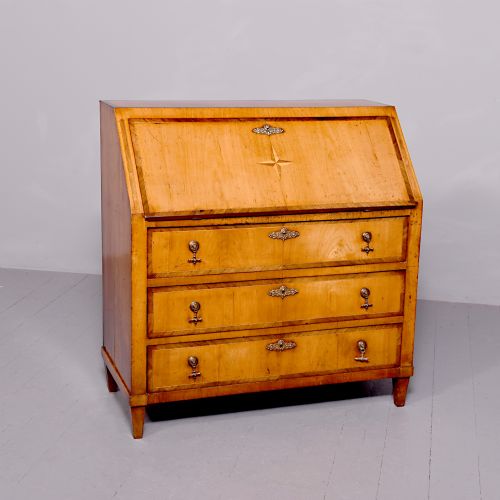
Makers utilised dense tropical hardwoods alongside walnut and maple, incorporating drop-front writing flaps that reveal small internal drawers and pigeonholes. Whether structured as a compact chiffonier or a towering escritoire, the form remains defined by its dual function as both cabinet and desk.
How they were made
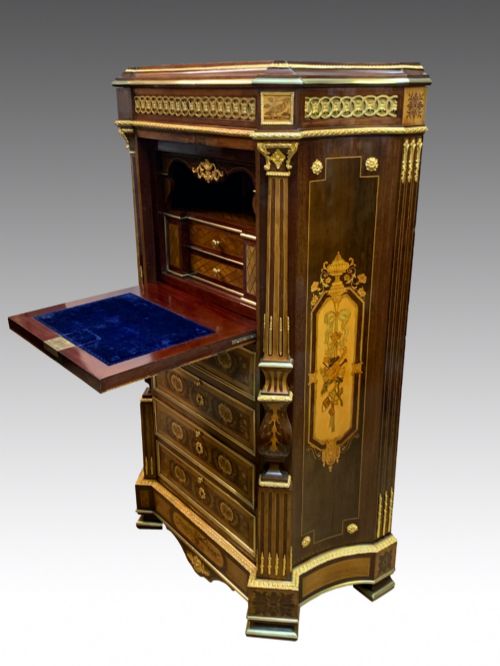
Construction relies heavily on rosewood veneers applied to secondary foundational timbers, often accented with marquetry inlays of contrasting woods, brass stringing, and gilt bronze or ormolu mounts. Cabinetmakers selected figured grain patterns for the exterior drop-fronts and drawer faces to create striking visual symmetry.
Interiors frequently feature fitted pigeonholes, small subsidiary drawers, and writing surfaces lined with leather. Structural elements incorporate solid marble slabs fitted to the upper surfaces of certain French and Continental pieces, supported by robust carcases built with traditional joinery.
Listings feature pieces spanning the eighteenth century through to the 1950s, with a strong concentration of nineteenth-century Regency and Victorian examples.
What varies in quality
Quality in a rosewood secretaire cabinet depends on the precision of the timber matching and the intricacy of any brass inlay or marquetry work. Superior examples display seamless veneer application across curved surfaces and tightly fitted internal mechanisms for secret drawers.
The refinement of cast ormolu mounts and the weight of the original marble tops further distinguish finer workshops from standard production. Structural integrity in the drop-front hinges and internal pigeonhole construction marks the division between utilitarian furniture and high-grade cabinetmaking.
Maison Krieger
The Rosewood Secretaire Cabinet Glossary
- Secretaire abattant
- A tall vertical cabinet featuring a drop-front writing flap that conceals fitted interior compartments. This form is common in French Continental furniture.
- Wellington chest
- A tall, narrow chest of drawers secured by a single locking side pilaster bar. Versions in these listings incorporate a secretaire drawer.
- Ormolu
- Gilt bronze mounts applied to cabinet furniture for decorative enrichment. It appears frequently on French revival pieces.
- Marquetry
- Decorative patterns formed by the insertion of different coloured wood veneers into a background panel. This technique defines many Continental escritoires.
- Chiffonier
- A low cabinet with doors or drawers, often topped by a raised shelf tier. Regency examples frequently include a secretaire drawer.
Rosewood Secretaire Cabinet: Frequently Asked Questions
How do I use the drop-front desk?
The drop-front writing flap lowers to a horizontal position, supported by internal stays or the edge of the lower carcase. This reveals a fitted interior with pigeonholes and small drawers intended for writing materials.
When not in use, the flap lifts back into a vertical position and locks securely, concealing the contents of the desk.
What is a secretaire chiffonier?
A secretaire chiffonier is a low cabinet that incorporates a pull-out or drop-front writing drawer near the top. These pieces date predominantly from the Regency period.
They offer a compact footprint combining surface display space, enclosed lower storage, and a functional writing desk.
How do I identify a Regency piece?
Regency secretaire cabinets often feature clean architectural lines, rosewood veneers, and precise brass inlay or stringing. They typically date from the early nineteenth century.
Proportions are balanced, and brass lion-paw feet or ring handles frequently appear on these models.
Are the marble tops original?
Many French and Continental secretaire cabinets feature fitted marble slabs designed as an integral part of the upper structure. These are usually heavy and rest directly on the timber carcase.
Checking the fit against the upper moulding helps determine if the marble corresponds to the period of the cabinet.