


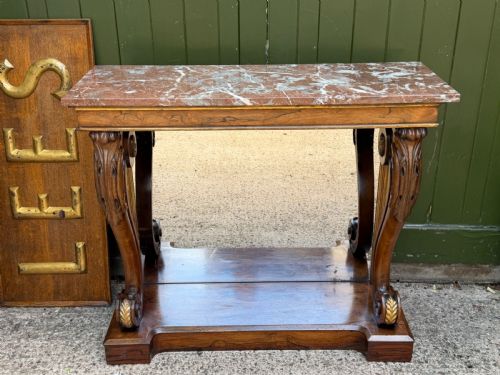


Rosewood Pier Mirror
These rosewood pier mirror designs are substantial nineteenth-century furnishings built to frame architectural spaces with rich timber and reflective glass.
Rosewood Pier Mirror
A search for rosewood pier mirror leads to a selection of nineteenth-century furnishings, primarily comprising wall mirrors, console tables, pier cabinets, and chiffoniers from the Regency and Victorian eras. These items often combine figured timber with mirror glass, marble tops, and gilt wood details designed to fit narrow wall spaces between windows.
The pieces appearing on this page span the 1800s, including specific Regency examples alongside later 1900 interpretations and Louis XVI revival styles. While standalone mirrors feature, many listings include console tables and pier cabinets that incorporate mirror backs as integral structural elements.
Buyers encounter forms influenced by cabinetmakers and designers of the period, occasionally referencing specific makers such as Donald Ross. The combination of rosewood with parcel-gilt and brass mounts defines the core aesthetic of these architectural furnishings.
How they were made
Craftsmen built these pieces using solid and veneered rosewood over secondary timbers, often applying polished finishes to highlight the natural figure of the wood. Parcel-gilt and giltwood accents were then integrated to catch the light in formal reception rooms.
Structural elements frequently incorporated heavy marble tops on console tables and chiffoniers, supported by carved frames alongside mirror glass panels. Brass mounts and marquetry details completed the construction of the finer pieces.
Rosewood Pier Mirror Retail Price Guide 2026
Typical asking prices for rosewood pier mirror among the pieces listed under this phrase on Sellingantiques today, from the lower quarter to the upper quarter. They describe what is for sale here now, not the wider market.
The listings on this site combine rosewood timber with glass, marble, and giltwood across Regency and Victorian periods.
What varies in quality
Quality rests upon the depth of the rosewood grain and the crispness of the carving found on the giltwood and parcel-gilt details. Superior examples display thoughtful proportions and harmonious integration between the timber frame and the mirror glass or marble components.
The integration of auxiliary materials such as figured marble tops and brass mounts dictates the standing of individual pieces. Earlier Regency items generally exhibit more refined joinery and material selection compared to later revival pieces.
The Rosewood Pier Mirror Glossary
- Pier mirror
- A tall mirror designed specifically to hang on the pier, which is the wall space between two windows. These mirrors often match or sit above console tables.
- Console table
- A table supported by wall brackets or front legs, frequently topped with marble and designed to stand flush against a wall beneath a mirror. This form appears frequently in Regency interiors.
- Parcel-gilt
- Partially gilded woodwork where gold leaf is applied to specific carved details while leaving the underlying rosewood visible. This technique highlights architectural motifs.
- Chiffonier
- A low cabinet featuring shelving or enclosed storage, often topped with a mirror or gallery back. These pieces date predominantly from the Regency and Victorian periods.
- Marquetry
- Decorative inlay work using various coloured woods to create intricate patterns on the surface of furniture. It appears on selected side and console tables in this collection.
Rosewood Pier Mirror: Frequently Asked Questions
What is a pier mirror?
A pier mirror is an architectural glass plate designed to hang on the narrow wall space between two windows. They were built to reflect light and visually expand nineteenth-century rooms.
Many examples are paired with console tables or cabinets that sit directly beneath them, creating a unified focal point in a reception room.
How do I date a rosewood mirror?
Dating relies upon examining the construction techniques, timber preparation, and stylistic markers such as Regency or Victorian design traits. Earlier pieces from the early nineteenth century often feature heavier rosewood veneers and distinct parcel-gilt carving.
Later revival pieces from around 1900 typically adopt Louis XVI or earlier stylistic idioms while retaining similar forms and materials like marble and mirror glass.
Where were these placed at home?
These furnishings were traditionally positioned on the pier wall between tall drawing room windows to maximise natural daylight. They also stood in hallways and formal dining spaces above matching console tables.
Living with them today involves placing them in principal rooms where their reflective glass and figured timber can anchor the interior scheme.
Are marble tops original?
Marble tops on console tables and chiffoniers are characteristic of the Regency and Victorian periods when these pieces were produced. They provided durable, polished surfaces that complemented the dark rosewood frames.
Inspecting the fit and thickness of the marble helps confirm its period context alongside the timber base.