

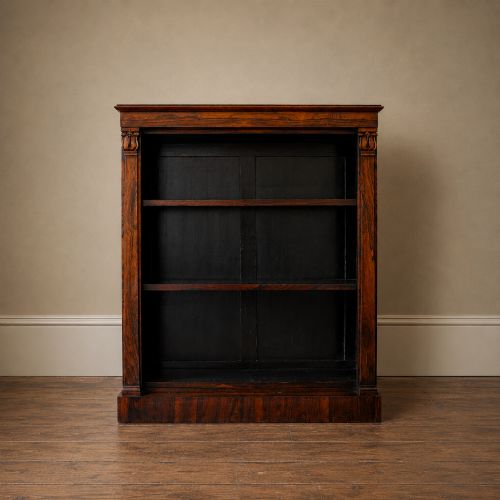
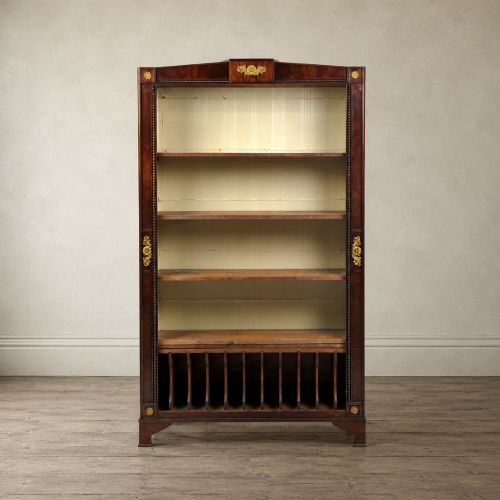
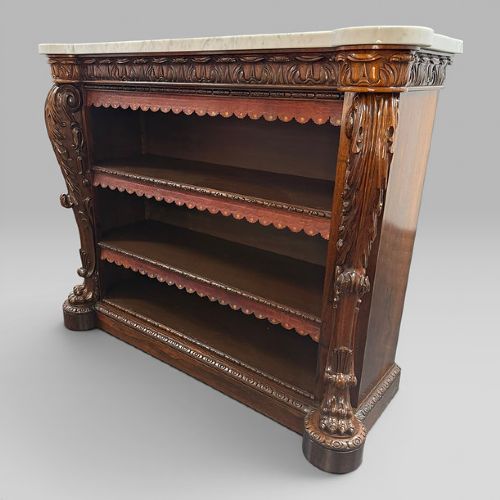
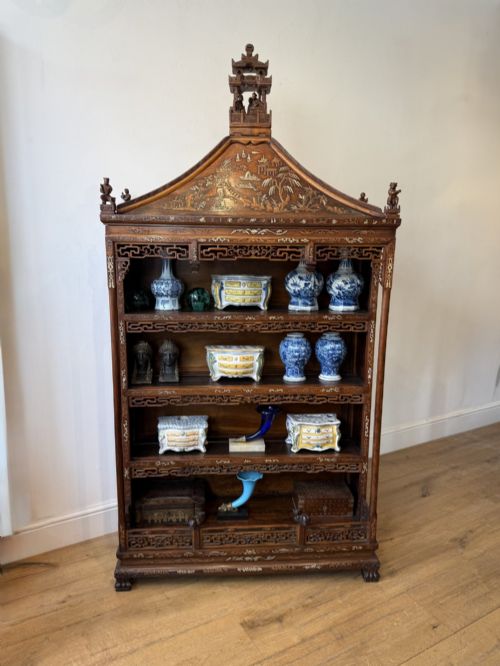
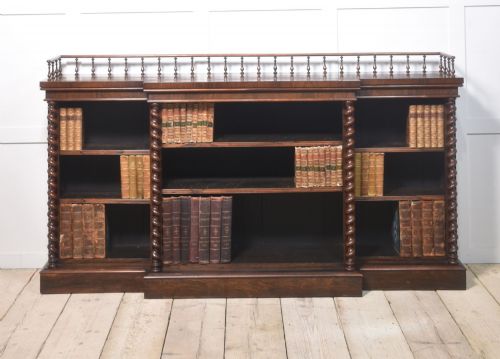
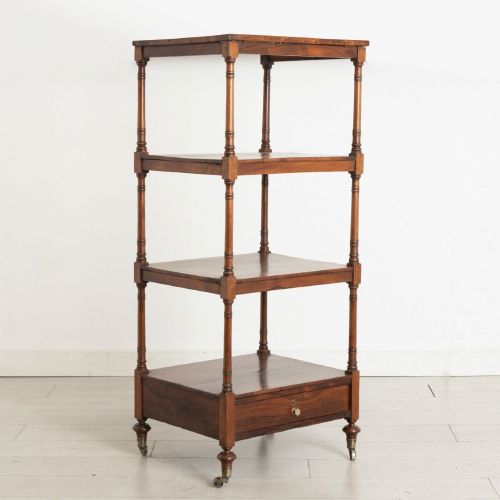
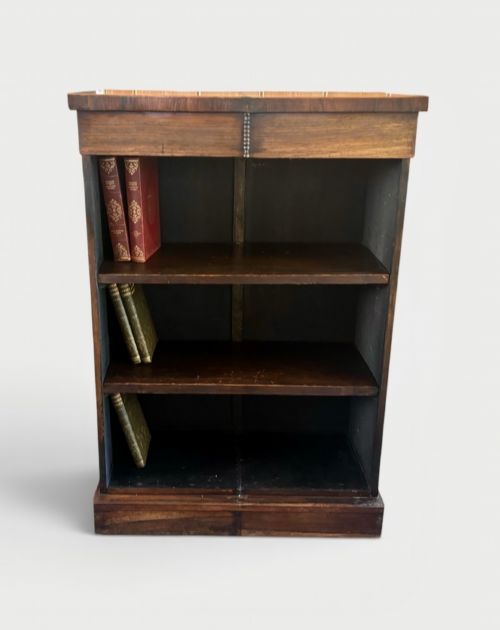
Rosewood Open Shelving
Rosewood open shelving brings rich timber grain and accessible display space to a room, offering both function and architectural presence.
Rosewood Open Shelving
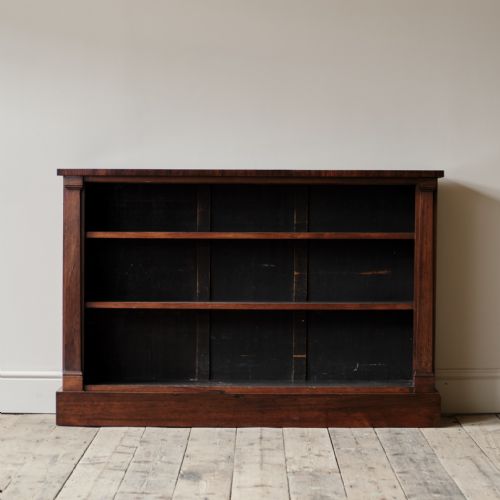
Rosewood open shelving encompasses a range of tiered storage pieces designed to display books and objects without doors. These items appear primarily across nineteenth-century styles, including Regency, William IV, and Victorian periods.
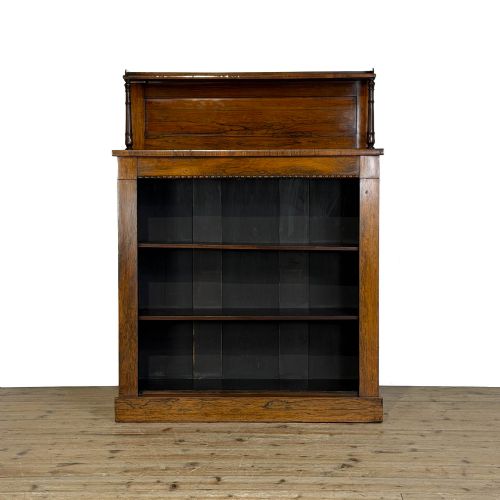
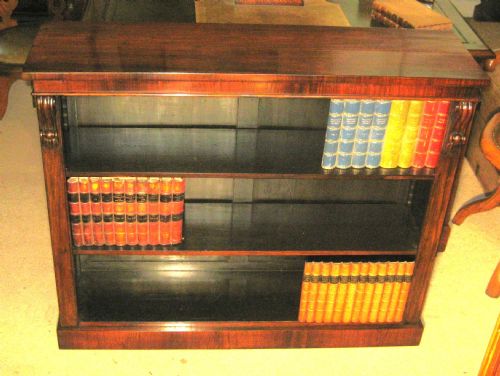
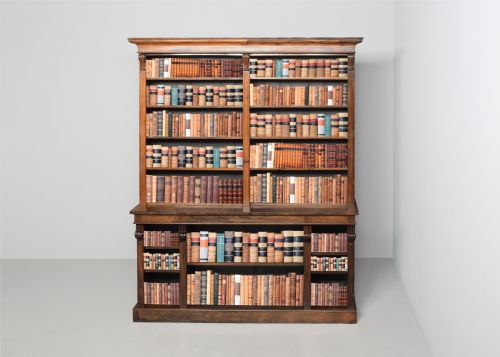
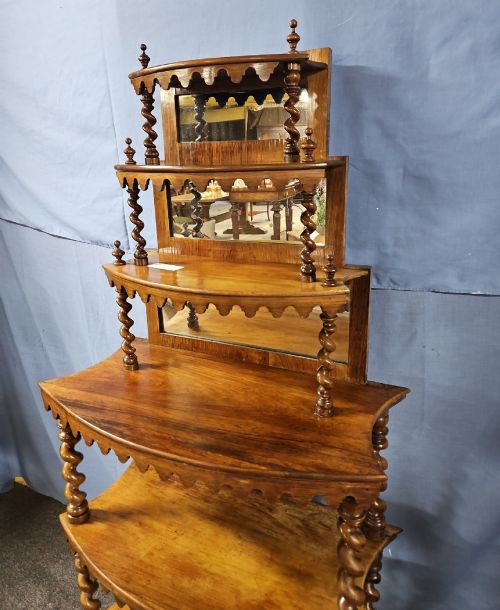
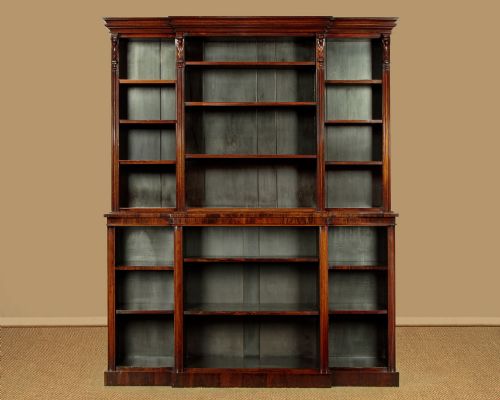
The form spans low bookcases, multi-tiered etagere units, and wall-mounted shelves. Pieces frequently integrate adjustable shelves, breakfront profiles, or marble tops.
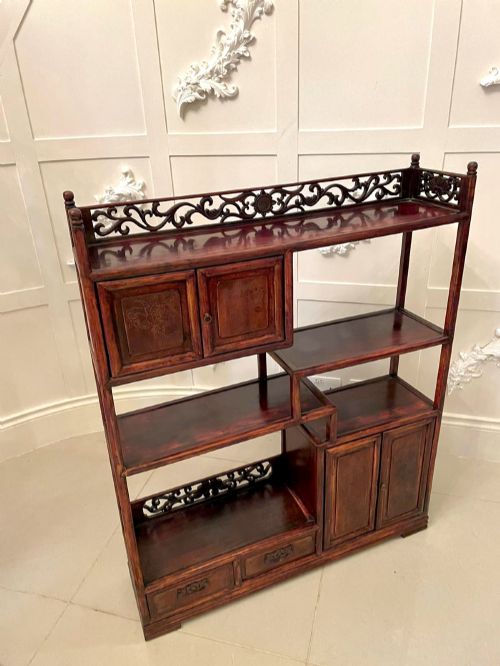
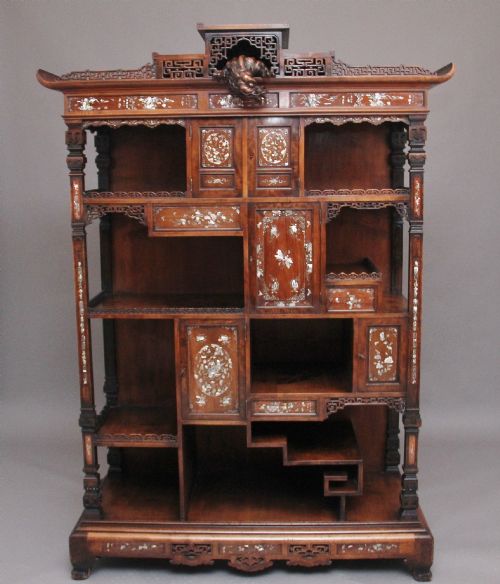
Makers from various regions adapted the timber to Chinese Qing styles, French Empire aesthetics, and Anglo-Indian carving traditions, resulting in varied architectural silhouettes.
How they were made
Craftsmen built these pieces using solid rosewood or applied fine rosewood veneers over secondary timbers like pine and softwood. Structural elements frequently incorporated brass inlay, marble inserts, and carved wooden corbels for support.
Surfaces received careful polishing to accentuate the dark, heavily figured grain of the timber. Metal components such as brass galleries and mounts added functional contrast to the polished woodwork.
Listings feature rosewood, brass, marble, and mother of pearl across nineteenth-century periods including Regency, Victorian, and William IV.
What varies in quality
Quality depends heavily on the selection and matching of the rosewood timber veneers across large surfaces like breakfront shelves. Superior examples show thoughtful grain continuity and crisp carving on corbels and uprights.
Construction details such as adjustable shelf mechanisms and the integration of secondary materials like marble tops or brass inlay separate standard utility pieces from finer cabinetwork.
The Rosewood Open Shelving Glossary
- Rosewood
- A dense, heavily figured timber known for its deep colour and dark grain patterns. It provides a durable and decorative surface for nineteenth-century cabinetwork.
- Etagere
- A piece of furniture consisting of a set of open shelves for displaying small objects or ornaments. These units often feature multiple tiers supported by slender columns.
- Breakfront
- A cabinet or bookcase design where the central section projects forward from the flanking wings. This architectural arrangement creates depth and visual interest.
- Corbel
- A structural bracket projecting from a vertical surface to support weight. In these pieces, they often appear carved beneath upper shelves.
- Chiffonier
- A low cabinet or sideboard, sometimes incorporating open shelving or superstructure. Regency examples frequently combine enclosed storage with upper display tiers.
Rosewood Open Shelving: Frequently Asked Questions
Where should I place rosewood open shelving?
These units suit studies, sitting rooms, or hallways where books and decorative objects remain visible and accessible. Their open nature works best against solid walls that highlight the timber silhouette.
Keep shelves away from direct heat sources and strong sunlight to protect the polished rosewood finish and prevent veneer movement over time.
Are the shelves adjustable?
Many nineteenth-century open bookcases feature adjustable shelf systems utilising wooden ratchets or brass strip supports. This allows the internal layout to accommodate books of varying heights.
Smaller etageres and wall-mounted units typically feature fixed tiers integrated directly into the vertical supports.
What is the difference between an etagere and a bookcase?
An etagere is primarily designed for displaying ornaments, ceramics, and small objects across multiple open tiers, often with lighter proportions. Bookcases focus on linear shelf space for storing volumes.
Some nineteenth-century forms blend both functions by offering shallow open shelving combined with display platforms.