



Rosewood Marquetry Writing Table
A rosewood marquetry writing table brings together rich timber and delicate floral or geometric inlay for a graceful surface.
Rosewood Marquetry Writing Table
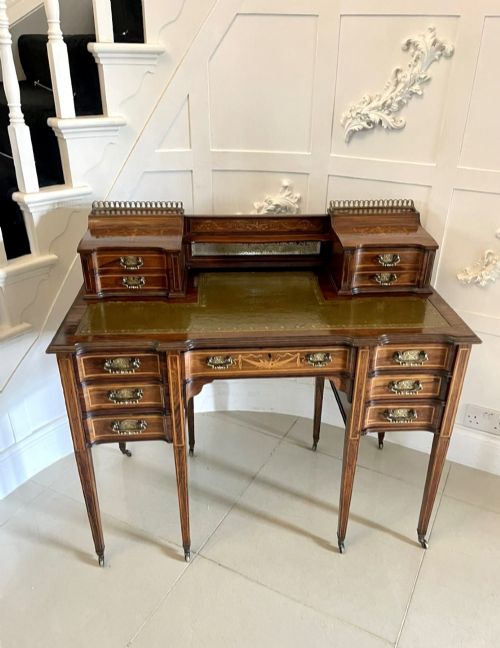
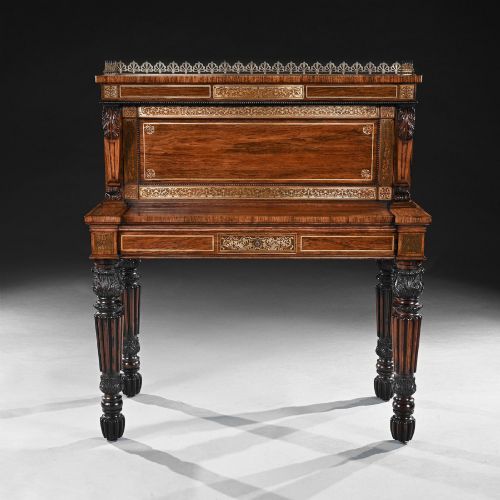
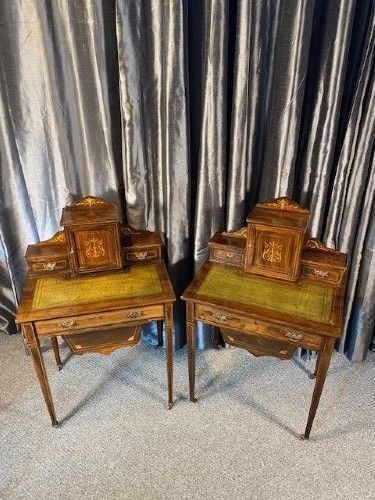
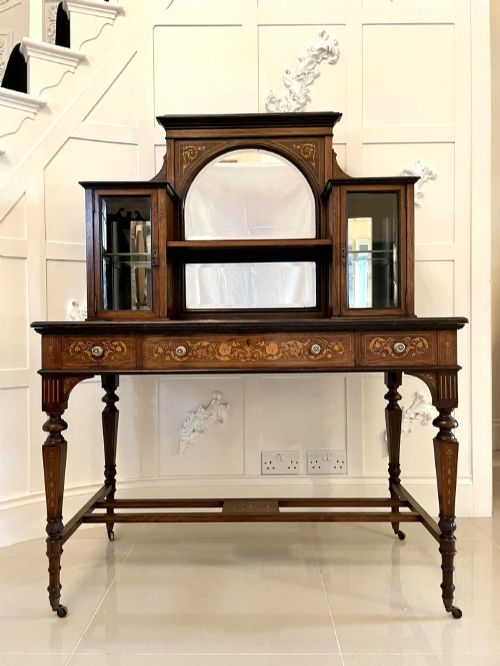
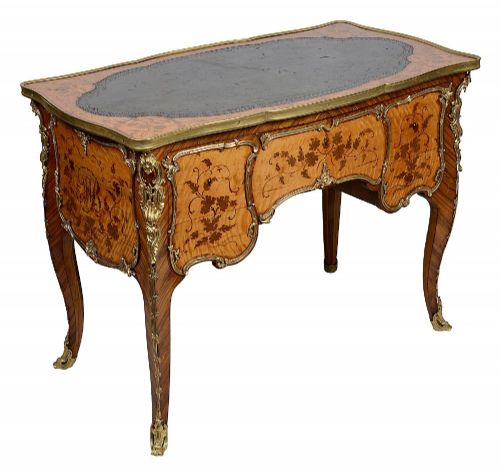
A rosewood marquetry writing table is a refined surface designed for correspondence, letter writing and light study, frequently encountered in Victorian and Edwardian iterations. These pieces span compact ladies' desks and larger freestanding library tables, combining a functional writing space with decorative patterned wood veneers. Buyers on this page will most commonly meet pieces styled after French Louis XV and Louis XVI designs alongside English Victorian variations.
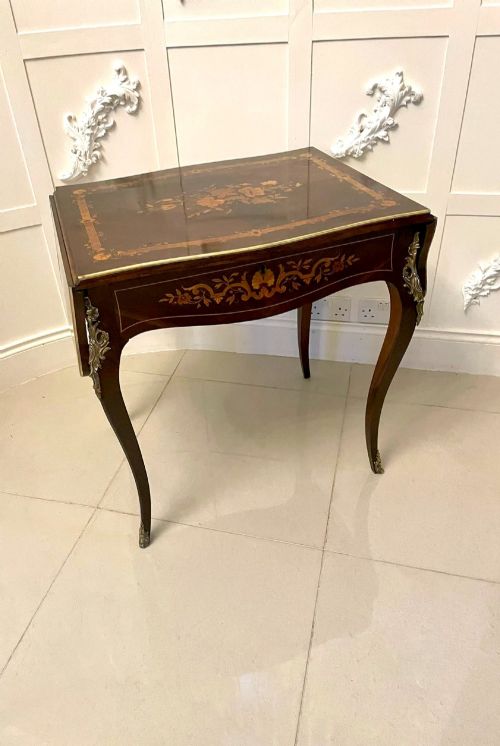
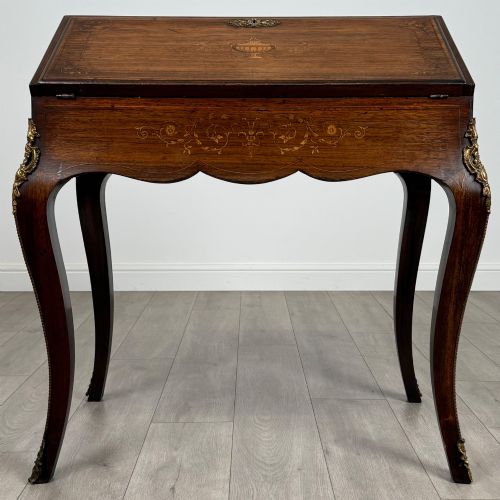
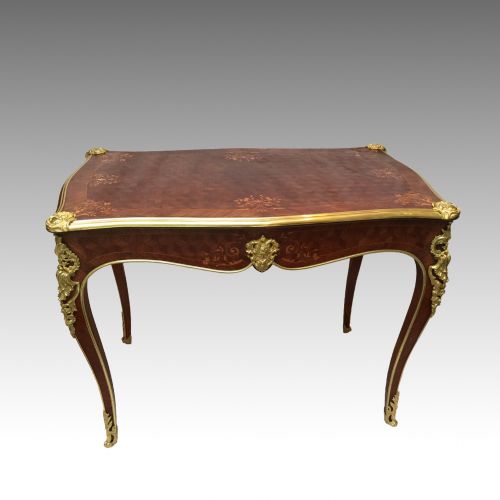
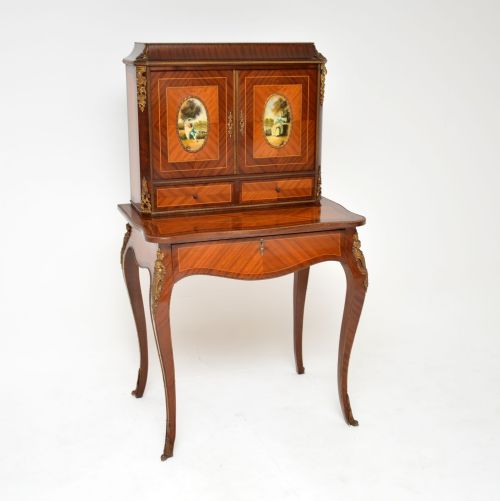
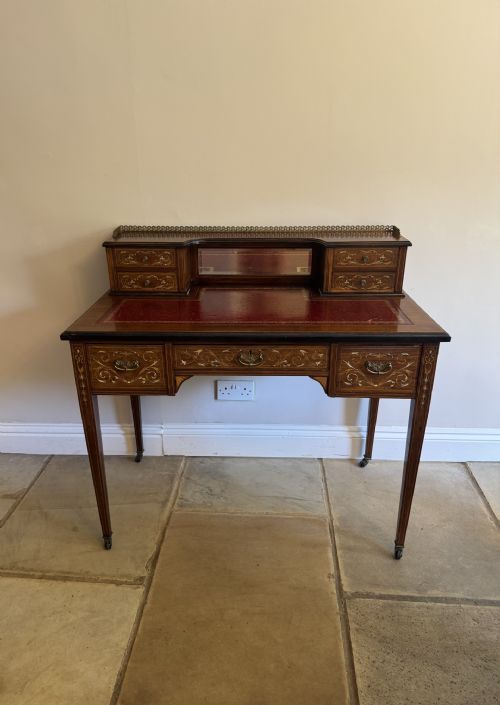
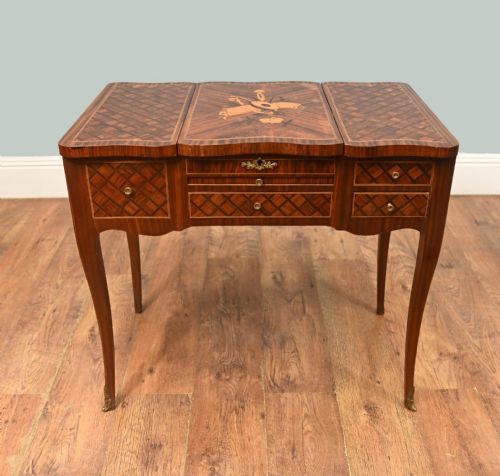
Forms range from the sloping fall-front bureau de dame and the compartmented bonheur du jour to flat-topped centre tables and side work tables. Many examples incorporate intricate floral motifs or geometric parquetry set into the dark grain of the rosewood. The typical construction accommodates a dedicated writing surface, sometimes lined with leather, supported by slender cabriole or tapered legs.
Materials and construction methods
Makers built these pieces using a stable softwood or hardwood carcase faced with fine veneers of rosewood, kingwood, tulipwood and satinwood. Cabinetmakers cut contrasting timbers into delicate floral or geometric marquetry patterns, pressing the pieces into the surface veneers before polishing the wood to a deep sheen. Brass and ormolu mounts were cast and chased to protect edges, frame drawer fronts and embellish the knees of cabriole legs.
Structural joints typically relied on mortise and tenon construction, while drawers featured hand-cut dovetailing. Secondary timbers such as mahogany or oak often lined the interior of drawers and compartments. Leather inserts were frequently pared thin and gilt-tooled around the perimeter to create a smooth, durable writing plane.
Materials recorded across the inventory include rosewood, kingwood, satinwood, fruitwood, brass, leather and ormolu.
Distinguishing quality across the range
The distinction between ordinary and superior pieces rests largely on the crispness of the marquetry cutting and the choice of contrasting veneers. Master cabinetmakers selected timbers with natural grain variations that lent depth to floral petals and architectural scrolls, whereas lesser examples relied on painted details or repetitive, stamped patterns. The precision of the fit between the inlaid elements and the surrounding rosewood ground signals the maker's hand.
Hardware and secondary framing also separate standard production from exceptional work. Gilt bronze or ormolu mounts that are heavily chased rather than cast flat demonstrate higher workshop investment. Additionally, well-figured internal timbers and smooth drawer movement indicate meticulous attention to structural integrity beneath the decorative exterior.
Maple and Co·Gillows Oxford Street Workshop·Collinson and Lock·Jas Shoolbred
The Rosewood Marquetry Writing Table Glossary
- Marquetry
- The art of applying pieces of veneer to a structure to form decorative patterns and pictorial designs. Cabinetmakers cut contrasting woods together to ensure a precise fit.
- Parquetry
- Geometric mosaic woodwork used for floors and furniture surfaces. It creates repeating patterns like cubes or chequers.
- Bonheur du jour
- A light lady's writing desk featuring a small cabinet, shelves or drawers on the upper surface. This form appeared during the mid-eighteenth century in France and gained popularity during the Victorian revival periods.
- Bureau de dame
- A lady's writing desk, often featuring a sloping lid that opens to reveal compartments and a writing surface. These pieces frequently rest on slender cabriole legs.
- Ormolu
- Gilt bronze furniture mounts and decorative ornaments cast and finished by hand. The technique involves applying a gold amalgam to bronze before heating.
Rosewood Marquetry Writing Table: Frequently Asked Questions
What is a bonheur du jour?
A bonheur du jour is a small, light writing desk featuring an upper tier of compartments, drawers or a miniature cabinet. These pieces were designed for personal correspondence and light paperwork in a drawing room.
They emerged in France before becoming a staple of Victorian and Edwardian drawing rooms, often decorated with elaborate marquetry and fine brass mounts.
How do I care for rosewood?
Rosewood requires stable humidity levels and protection from direct sunlight to prevent the timber from drying out or fading. Dusting with a soft, dry cloth preserves the polished surface without the need for heavy waxes.
Applying a specialist wax polish sparingly once or twice a year helps nourish the grain. Avoid placing hot or damp items directly onto the wood.
Where were these tables used?
These tables were principally placed in private sitting rooms, boudoirs and libraries for writing letters and managing household accounts. Freestanding centre tables often stood in the middle of a room to display ornaments when not in use.
Smaller side work tables were kept close to seating areas to hold sewing equipment or writing materials.
How do I tell Victorian from Edwardian pieces?
Victorian rosewood writing tables tend to feature heavier proportions, deeper colour tones and more ornate ormolu mounts. The marquetry often displays rich floral sprays influenced by French revival styles.
Edwardian interpretations generally present a lighter, more slender aesthetic with delicate Sheraton revival satinwood banding and restrained inlay. The construction methods also reflect early twentieth-century manufacturing standards.