
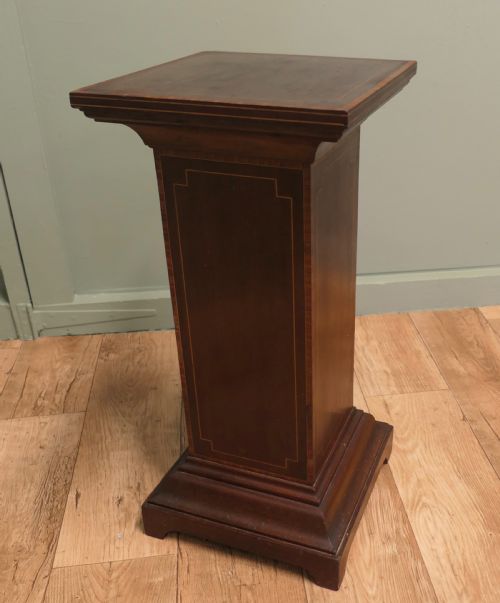
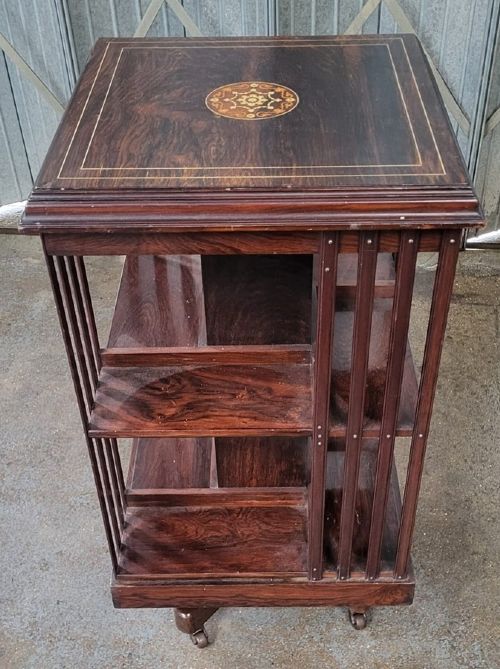
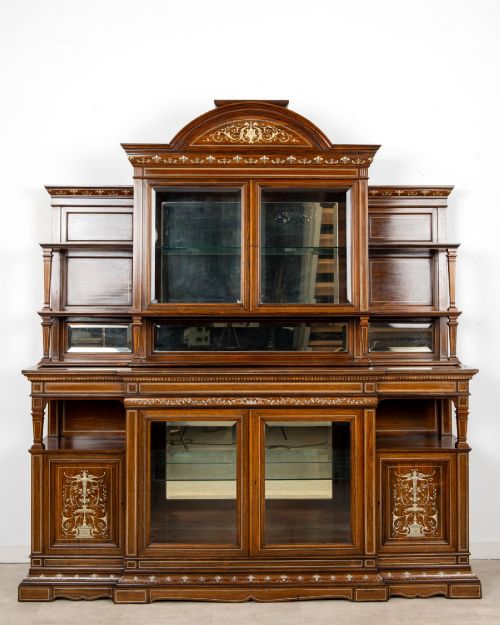
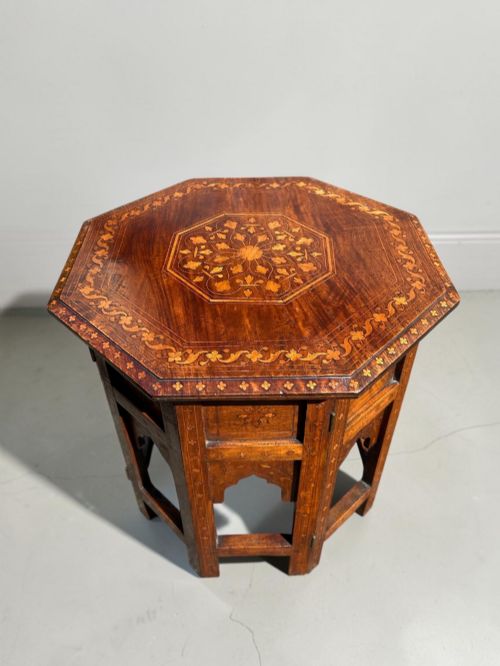


Rosewood Marquetry Stand
A rosewood marquetry stand combines rich timber with intricate patterned inlay, offering a surface that holds books, displays objects or organises desks with distinct period elegance.
Rosewood Marquetry Stand
A rosewood marquetry stand encompasses a variety of elevated display and utility forms found within this selection, ranging from occasional tables and multi-tiered étagères to specialised music cabinets and desk accessories.
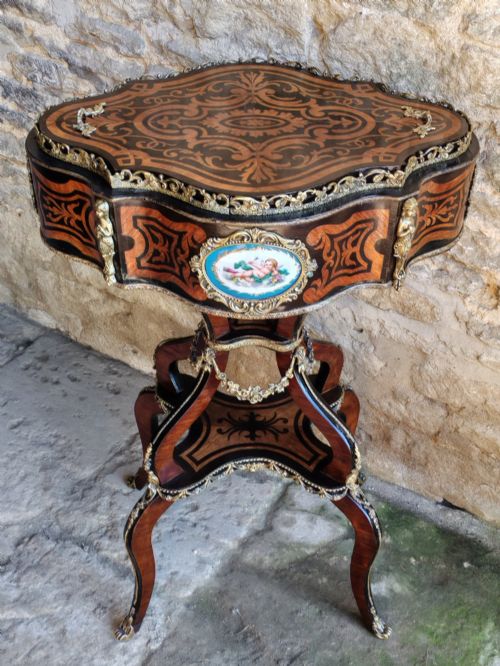
Makers often drew upon French styles, incorporating serpentine outlines, gilt-metal mounts and floral veneer patterns into nineteenth-century designs.
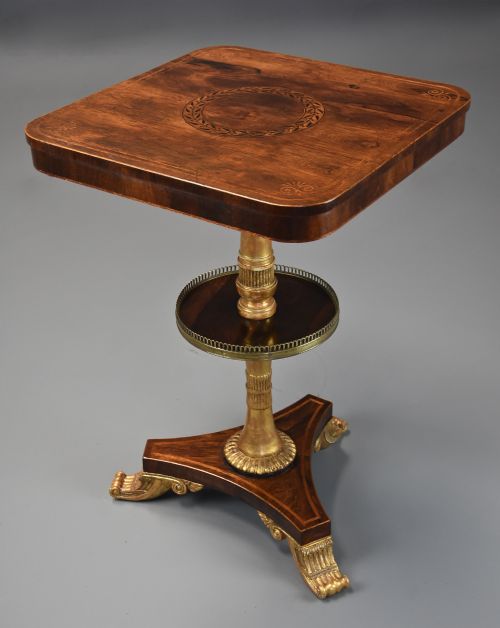
Pieces frequently appear from the Regency, Victorian and Edwardian eras, reflecting changing domestic requirements for refined surface space.
Distinctions in Execution
The precision and complexity of the timber inlay mark the distinction between standard production and masterwork pieces, where contrasting grains fit together seamlessly without excessive filler.
Structural stability and the crispness of cast bronze or ormolu mounts indicate whether a workshop invested time in high-grade finishing details.
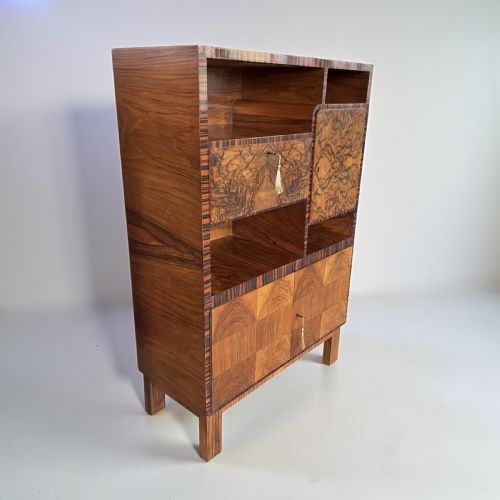
The integrity of the underlying carcase timber and the matching of veneer grains across visible surfaces dictate the overall visual harmony.
Listings feature nineteen-century rosewood marquetry alongside walnut, kingwood, satinwood, brass and ormolu across multiple table and cabinet forms.
Collinson & Lock·Edwards & Roberts·George Bullock·Donald Ross
The Rosewood Marquetry Stand Glossary
- Marquetry
- Decorative veneer applied to a furniture carcase in patterns using different coloured woods, metals or shells. This technique creates pictorial or geometric designs across table tops and cabinet doors.
- Étagère
- A set of open shelves for displaying small objects or ornaments. Multiple tiers are supported by slender columns or uprights.
- Ormolu
- Gilded bronze mounts applied to furniture for decorative accent. The technique involves treating bronze with an amalgam of gold.
- Teapoy
- A small box or chest on a stand used for storing tea. These containers often feature internal compartments and intricate exterior veneer work.
- Vitrine
- A glass-fronted cabinet designed for displaying fine porcelain or curiosities. Glazed panels permit visibility from multiple angles.
Rosewood Marquetry Stand: Frequently Asked Questions
How do I care for rosewood furniture?
Keep wooden surfaces away from direct sunlight and heat sources to prevent the natural oils from drying out. Dust regularly with a soft, dry cloth and avoid silicone-based polishes.
Maintain a stable room humidity to protect the delicate veneer and marquetry inlay from expanding or lifting over time.
How do I identify Regency pieces?
Regency items typically date from the early nineteenth century and often incorporate classical architectural motifs alongside contrasting brass inlay and dark rosewood timbers.
Look for restrained proportions and clean lines that distinguish these items from the heavier ornamentation found in later Victorian revivals.
Where should I place a display cabinet?
Position glass-fronted cabinets and vitrines against interior walls away from heavy foot traffic to protect fragile contents. Adequate ambient room lighting helps illuminate items housed behind glass panels.
Ensure the floor is level so doors and drawers operate smoothly without straining the antique carcase.