


French Style Tiered Table
A French style tiered table brings stacked surface space and continental elegance into a room.
French Style Tiered Table
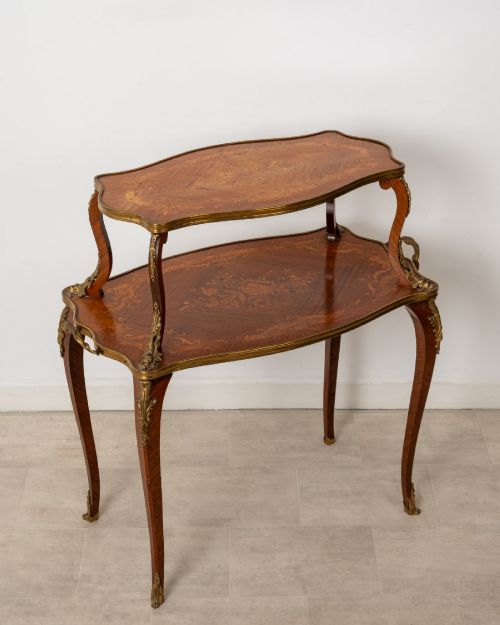
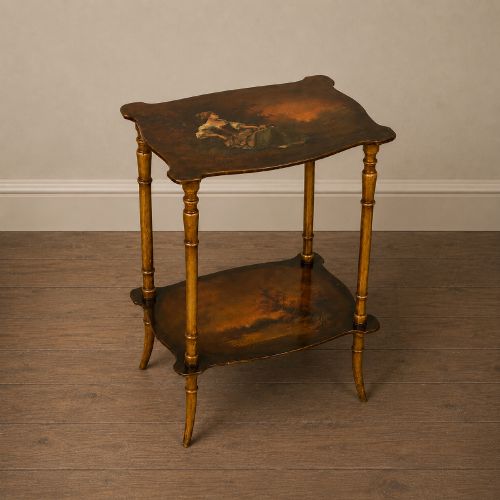
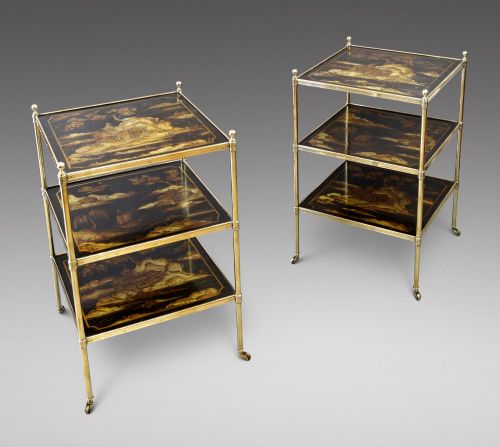
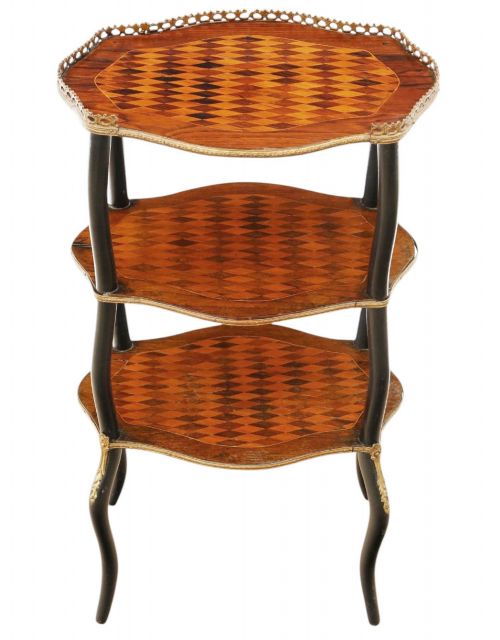
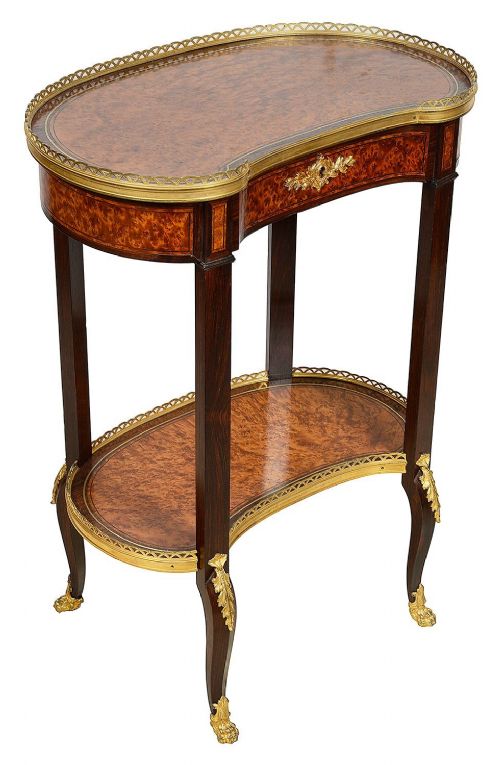
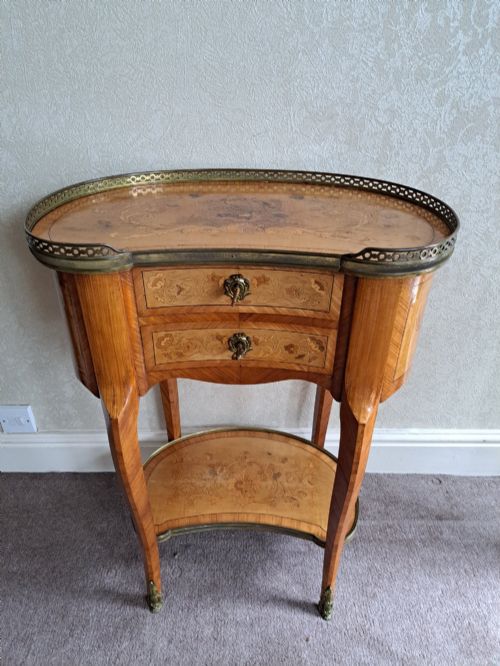
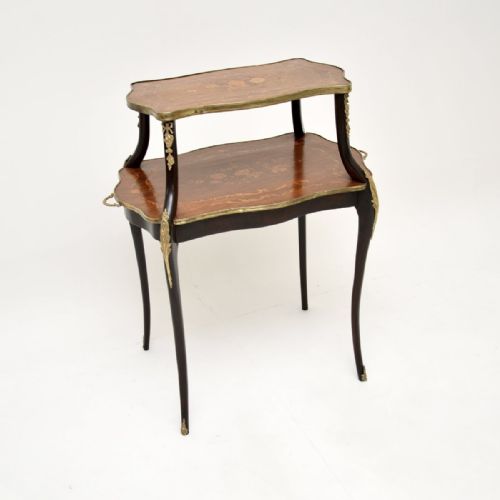
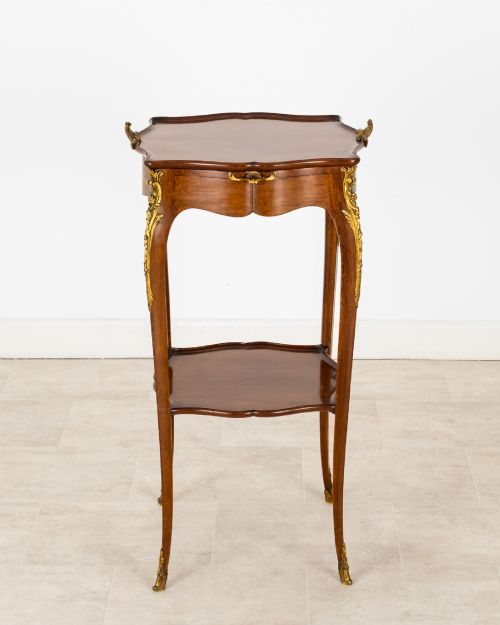
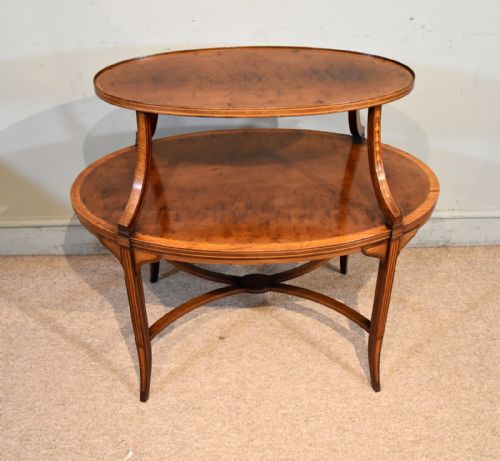
A French style tiered table provides multiple levels of display surface, most commonly seen as etageres or two-tier occasional tables dating from the nineteenth and early twentieth centuries. These pieces reflect historical continental tastes, drawing on Louis XV and Louis XVI revival designs that prioritize decorative utility in sitting rooms and boudoirs.
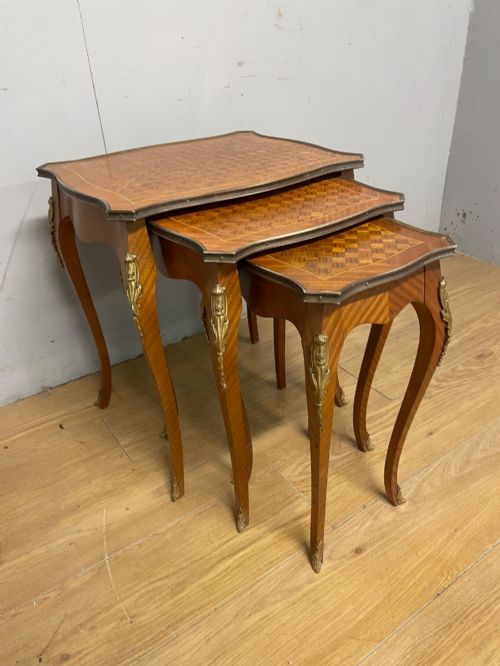
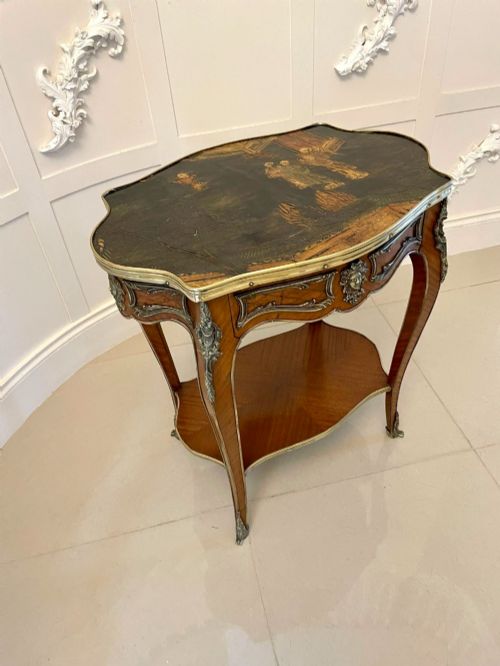
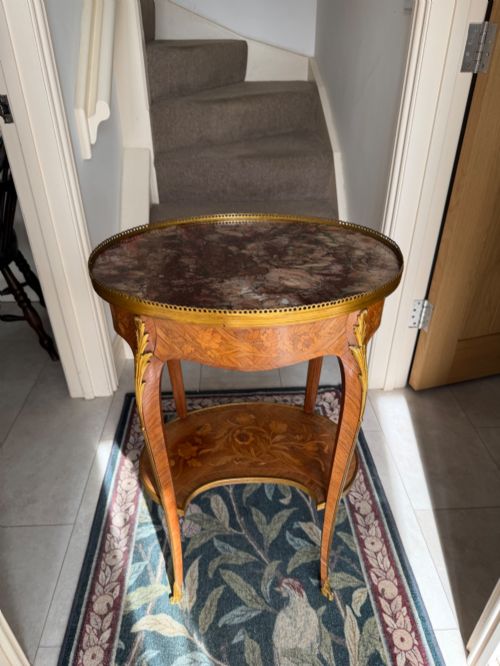
The selection here includes freestanding centre tables, corner lamp tables, and tall display shelves featuring brass mounts and inlaid wooden surfaces. Buyers encounter forms ranging from diminutive walnut side pieces to substantial marquetry tea tables supported by slender cabriole or tapered legs.
Materials and construction
Cabinetmakers constructed these tables using dense timbers such as mahogany, walnut, and kingwood as a carcase, often applying intricate marquetry and parquetry veneers in geometric or floral patterns. Exotic woods were selected for their grain movement and colour depth, providing a rich visual foundation for the upper tiers.
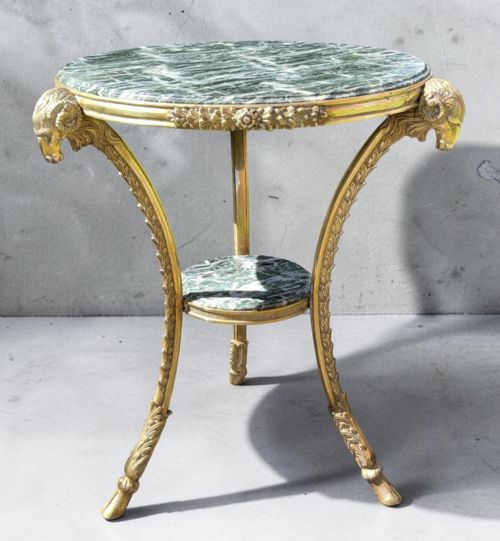
Metal ornamentation played a central role, utilising cast brass, ormolu, and gilt bronze mounts to edge tabletops, accentuate leg columns, and frame gallery rails. Marble tops also appear frequently, secured within wooden or cast metal frames to create durable, cool-surfaced display ledges.
Ram heads gaze steadily from the corners of cast brass gueridons, watching tea cups come and go.
Judging quality
Quality rests in the crispness of the bronze and ormolu chasing and the precision of the veneer work, where finer pieces display seamless joins and harmonious grain matching across multiple shelves. Lesser examples rely on stamped metal fittings of softer definition and simpler timber selections without contrasting stringing.
Structural integrity differentiates standard production from master craftsmanship, particularly in how securely the vertical supports and brass galleries join the tiers. The weight and gauge of the cast metal mounts and the retention of original surface polishes heavily influence the standing of an individual table.
François Linke·Tehan·Edwards & Roberts·Gabriel Viardot
The French Style Tiered Table Glossary
- Étagère
- A piece of furniture consisting of a set of open shelves for displaying small objects or ornaments. Multiple tiers are supported on slender columns or uprights.
- Ormolu
- Gilded bronze used as a decorative mount on furniture and clocks. The technique involves applying a fine layer of gold amalgam to shaped bronze.
- Marquetry
- Decorative veneer applied to furniture in patterns using different woods, shells, or ivories. Craftsmen cut thin sheets to fit complex pictorial or geometric designs.
- Gueridon
- A small round table supported on one or more columns, originating in France during the seventeenth century. These are frequently topped with marble or glass.
- Parquetry
- Geometric mosaic woodwork used for floors and furniture surfaces. It differs from marquetry by utilising regular shapes like squares, triangles, and diamonds.
French Style Tiered Table: Frequently Asked Questions
What is an etagere table?
An etagere table is a multi-level piece designed to hold ornaments, books, or tea services across stacked surfaces. The open construction keeps rooms feeling airy while multiplying the available display space.
These tables function well beside seating or as freestanding display points in a drawing room.
How do I spot Louis XV style?
Louis XV style pieces exhibit characteristic serpentine lines, asymmetric curves, and cabriole legs ending in scroll feet. Ormolu mounts on these tables typically mimic natural foliage and rocaille motifs.
This aesthetic values fluid movement over rigid symmetry.
Are marble tops original?
Many nineteenth-century French occasional tables and gueridons feature inset marble slabs designed to handle hot cups or damp glasses. These stones were cut specifically to fit the wooden or cast metal gallery rims during initial manufacture.
Matching marble thickness and edge profiles help confirm originality.
How do I care for marquetry?
Marquetry surfaces require protection from direct sunlight and extreme humidity changes to prevent veneer lifting or fading. Regular dusting with a soft, dry cloth maintains the polished finish without building up wax residues.
Avoid placing damp items directly onto antique wood veneers.