
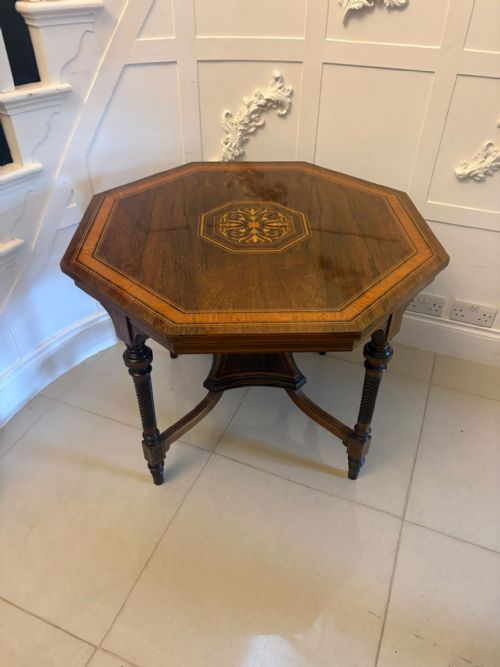
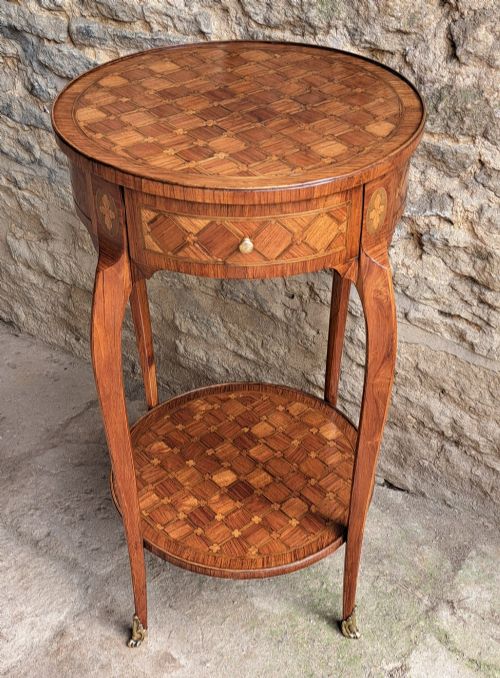
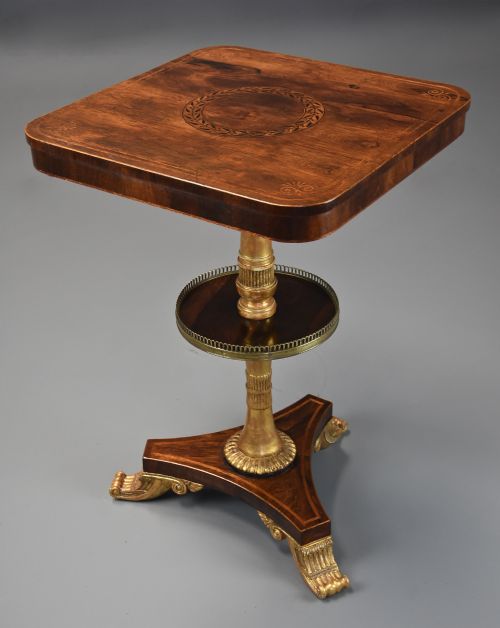


Rosewood Marquetry Occasional Table
A rosewood marquetry occasional table brings patterned wood into a room, serving small spaces with French or Victorian character.
Rosewood Marquetry Occasional Table
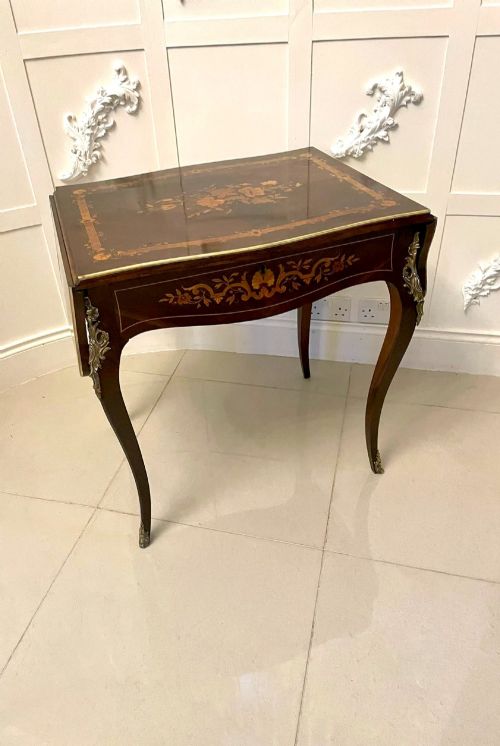
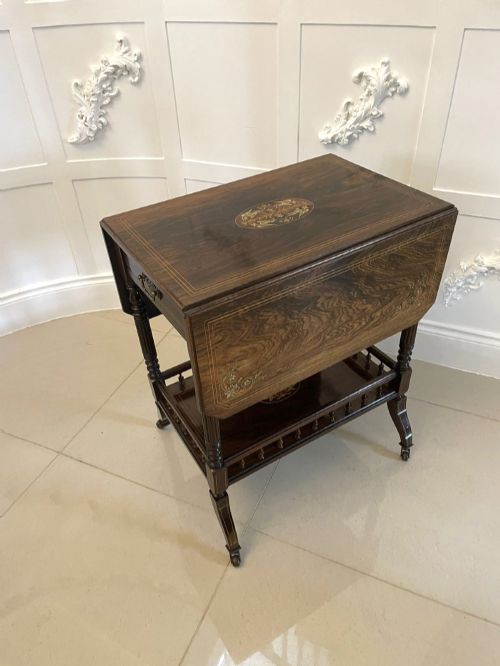
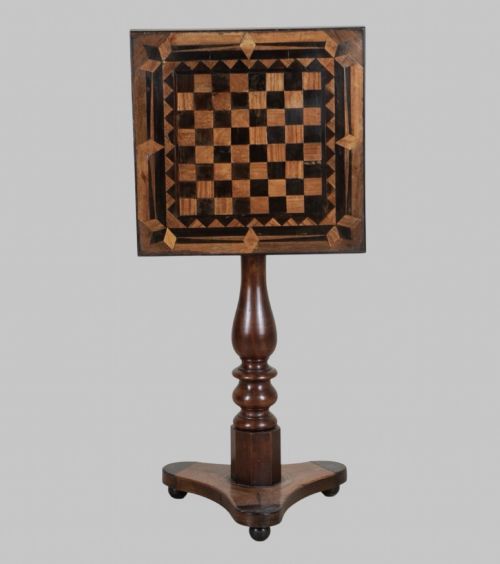
A rosewood marquetry occasional table is a small, movable surface patterned with floral or geometric wood veneers. These pieces appear frequently from the Victorian and Edwardian periods, as well as nineteenth-century French workshops.
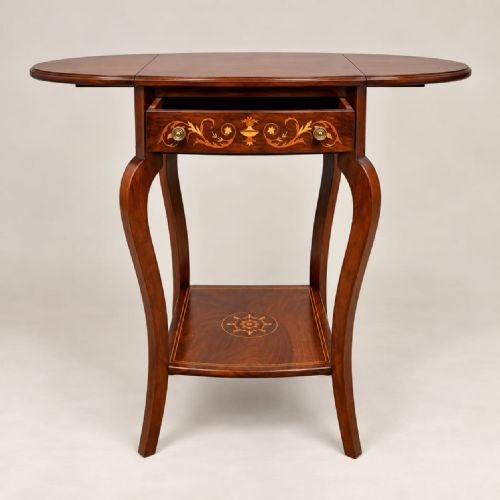
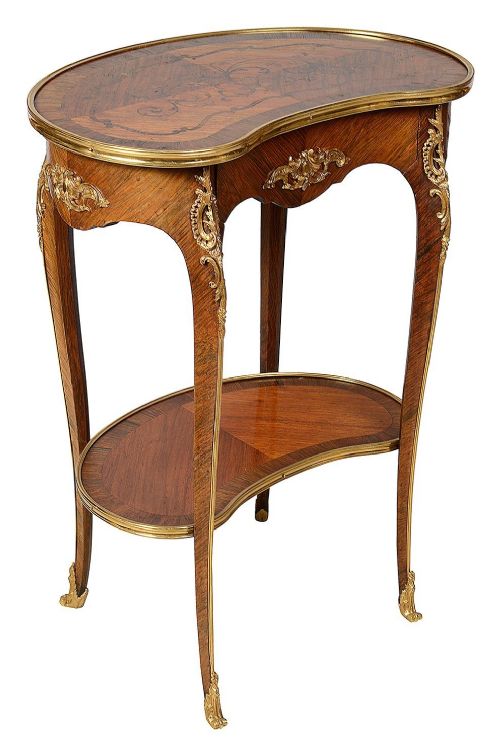
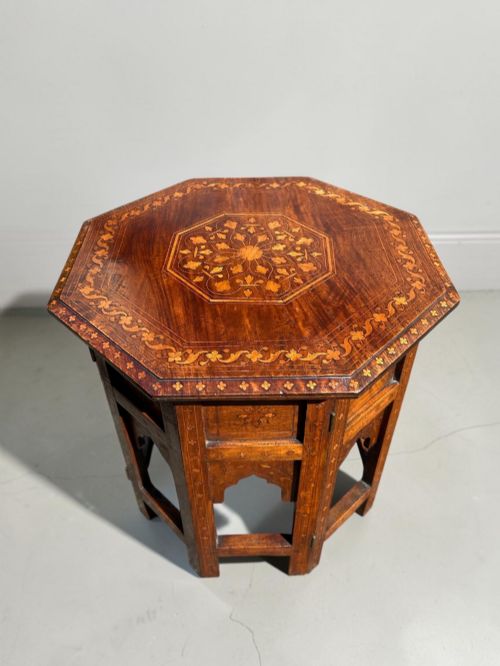
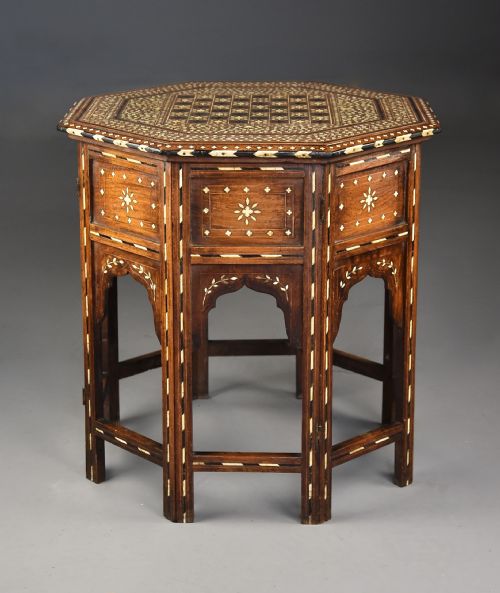
The form varies across the listings, spanning centre tables, drop-leaf tables, octagonal shapes, and tiered etageres. Buyers encounter English iterations alongside French Louis XV revival models and Anglo-Indian productions.
Materials and construction
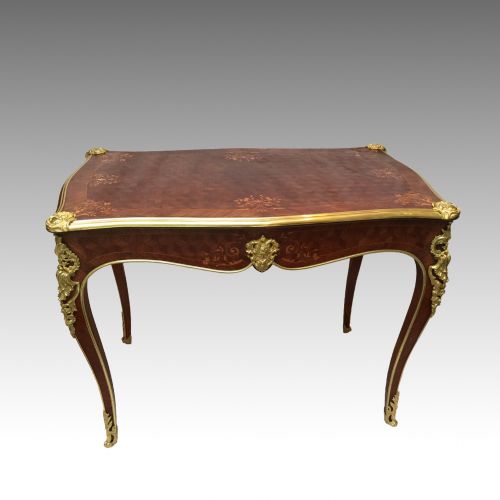
Cabinet makers utilised a dense rosewood carcase or base, often complemented by contrasting timbers such as satinwood, kingwood, boxwood, and mahogany for the veneer work. Ormolu mounts and brass details appear on French revival examples to accent the structural lines.
Marquetry involves hand-cutting thin sections of different coloured woods to form pictorial or scrollwork motifs set into the top surface. These designs are glued to a secondary foundation timber and smoothed down before polishing.
Material selection extends beyond rosewood to incorporate boxwood, satinwood, kingwood, mahogany, and burr-elm.
Separating the ordinary from the exceptional
Quality rests in the crispness of the marquetry cutting and the variety of contrasting woods used within the surface pattern. Tables designated as exhibition quality or bearing workshop attribution display tighter veneer joints and more ambitious floral designs.
The underlying timber selection and the retention of original mounts dictate the standing of a piece. Finer examples maintain crisp carving on legs and supports, whereas standard pieces rely on simpler turned columns and minimal inlay.
George Bullock·Edwards & Roberts·Collinson & Lock·Haentgos Freres
The Rosewood Marquetry Occasional Table Glossary
- Marquetry
- Decorative veneer work formed by fitting together small pieces of wood, shell, or ivory to create pictorial designs on a surface. This technique allows cabinet makers to compose complex floral or geometric scenes across a table top.
- Occasional table
- A small, movable table designed for specific, intermittent use rather than central dining or working tasks. They appear in various heights and top shapes throughout the nineteenth and early twentieth centuries.
- Ormolu
- Gilt bronze mounts applied to furniture for decorative effect, common on French revival pieces. The process involves coating bronze in a gold amalgam before heating.
- Parquetry
- Geometric patterns formed by interlocking pieces of wood veneer, such as cubes or chequers. Unlike marquetry, it relies on repeating angular shapes rather than pictorial motifs.
- Etagere
- A set of open shelves for displaying small objects, often incorporated into lighter occasional table designs. They frequently feature multiple tiers supported by slender uprights.
Rosewood Marquetry Occasional Table: Frequently Asked Questions
Where should I place an occasional table?
These pieces suit living spaces, studies, and hallways where a compact surface is useful for lamps or small decorative items. Their finished backs and detailed tops allow them to stand freely in the middle of a room.
Because they were built for light domestic service, heavy items should be avoided. Placing them away from direct heat sources protects the rosewood veneer from drying out.
How do I care for rosewood surfaces?
Maintenance involves dusting with a soft, dry cloth and applying traditional beeswax sparingly to nourish the timber. Direct sunlight causes rosewood to fade over time, so positioning the table away from windows preserves the natural depth of the grain.
Moisture and alcohol can damage the polished finish, making coasters essential for everyday use. Gentle handling ensures the delicate marquetry inlays remain secure within the surrounding wood.
How can I distinguish French from English pieces?
French tables frequently incorporate ormolu mounts, more flamboyant curves, and lighter satinwood or kingwood contrast veneers in the Louis revival taste. English examples tend towards darker rosewood grounds with boxwood stringing and structured geometric or floral marquetry.
Proportions and leg shapes also offer clues, with French designs leaning towards cabriole supports and English iterations utilising turned or tapered legs. Regional cabinet making traditions dictated the structural framing beneath the decorative surface.
What is the difference between a centre table and an occasional table?
Centre tables are traditionally constructed to be viewed from all sides as independent room centerpieces, often featuring all-over top decoration. Occasional tables encompass a broader category of smaller, movable tables designed for specific spots.
While centre tables frequently occupy large reception rooms, occasional tables include drop-leaf, tiered, and bedside formats. Both utilise rosewood and marquetry, but their historical functions dictated their overall scale and leg placement.