






Victorian Rosewood Parlour Table
These Victorian rosewood parlour table examples combine rich dark timber and refined turning, bringing practical nineteenth-century elegance to any sitting room.
Victorian Rosewood Parlour Table
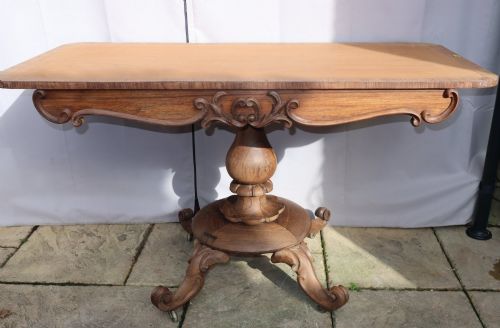
A victorian rosewood parlour table typically appears as a centre table or occasional table, designed to sit prominently within a nineteenth-century drawing room or parlour. These pieces serve as functional furniture for display or gatherings, anchored by sturdy timber frames.
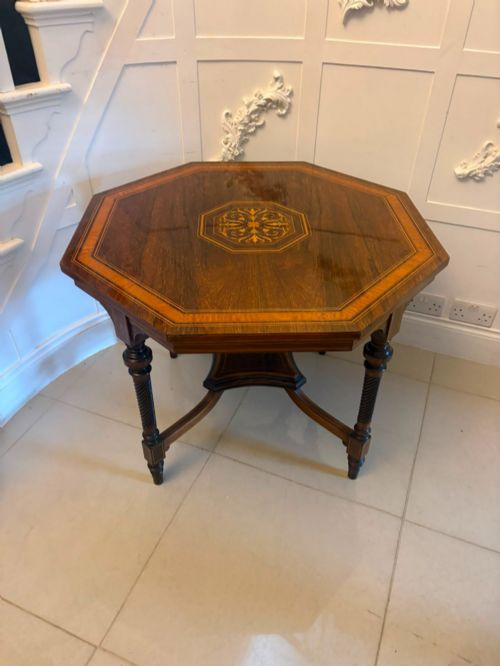
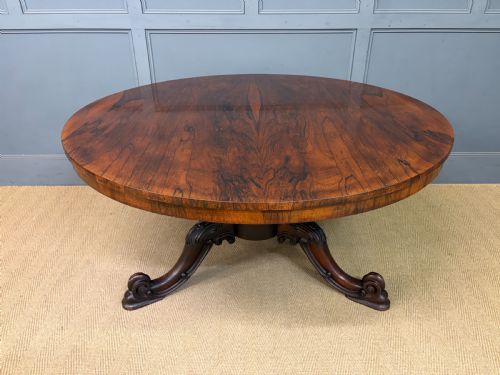
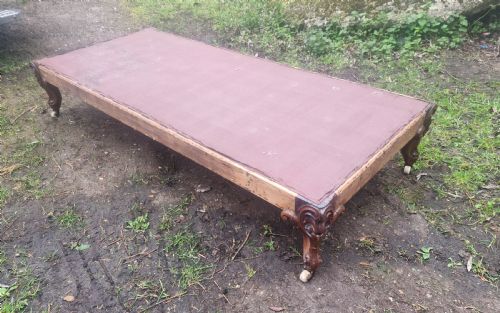
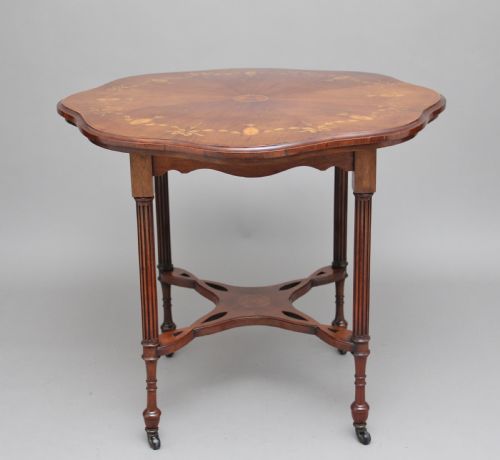
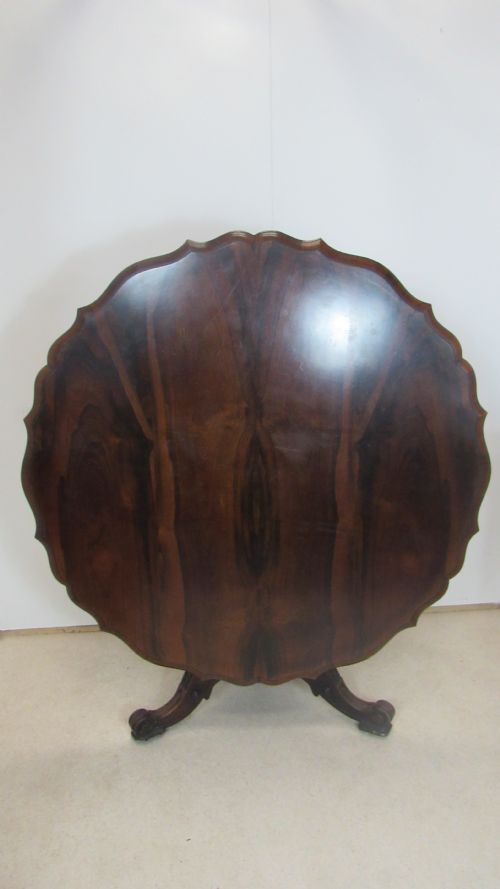
The versions most commonly met on this page span the mid to late nineteenth century, including shaped oval and circular centre tables alongside octagonal occasional variants. Dining tables and games boards also appear among the broader selection of forms.
Origins stretch across the Victorian and Edwardian eras, utilising traditional British cabinet-making methods. Each piece reflects the domestic interior fashions of its decade, balancing utility with decorative presence.
Construction and materials
Cabinet-makers relied heavily on solid timber and rich veneers, utilising rosewood for its deep grain and heavy density. This primary material forms the smooth surfaces and structural legs of the tables.
Decoration is achieved through contrasting boxwood and satinwood inlay, alongside intricate wood inlay and marquetry patterns. Brass fittings and ceramic elements occasionally appear on specific forms, adding functional detail to the joinery.
Victorian Rosewood Parlour Table Retail Price Guide 2026
Typical asking prices for victorian rosewood parlour table among the pieces listed under this phrase on Sellingantiques today, from the lower quarter to the upper quarter. They describe what is for sale here now, not the wider market.
The listings span from the mid-nineteenth century through the Edwardian period, utilising rosewood, satinwood, boxwood inlay, and brass.
Judging the work
Differences across the range depend on the precision of the inlay work and the crispness of any carved detailing. Finer examples display meticulous marquetry and smooth, uninterrupted rosewood surfaces.
Proportion and stability separate standard utility pieces from more ambitious centre tables. A balanced form with well-executed turning and cohesive timber selection defines the upper tier of these nineteenth-century items.
The Victorian Rosewood Parlour Table Glossary
- Centre table
- A freestanding table finished on all sides, designed to stand in the middle of a room rather than against a wall. These pieces often feature shaped tops and elaborate pillar supports.
- Occasional table
- A small, movable table used for specific, temporary purposes such as holding books or tea. They appear in various geometric shapes including octagonal formats.
- Marquetry
- Decorative veneer work forming pictures or geometric patterns by fitting together contrasting pieces of wood. Cabinet-makers used this technique to enrich table tops.
- Loo table
- A large round or oval parlour table used for the nineteenth-century card game loo, often fitted with a tilting top mechanism. The tilting function allowed the table to be stored flat against a wall when not in use.
- Inlay
- The technique of inserting pieces of contrasting material into a recessed base to form a decorative design. Boxwood and satinwood were frequent choices for these linear details.
Victorian Rosewood Parlour Table: Frequently Asked Questions
What is a Victorian rosewood parlour table?
A Victorian rosewood parlour table is a nineteenth-century freestanding or occasional piece constructed from heavy dark timber, historically used in formal sitting rooms for display or tea.
These tables range from circular and oval centre designs to smaller octagonal occasional forms, reflecting the changing interior tastes of the period.
How were parlour tables used originally?
In nineteenth-century homes, these tables served as central surfaces for displaying decorative objects, lamps, or books. Some variations, such as loo tables, featured tilting tops specifically designed for card games.
They occupied prominent positions in the drawing room where guests were entertained, combining practical utility with social display.
How do I care for rosewood furniture?
Rosewood benefits from a stable environment away from direct sunlight and extreme temperature fluctuations, which can dry out the timber and veneer. Regular dusting with a soft, dry cloth maintains the finish without needing heavy polishes.
Occasional applications of traditional wax help nourish the wood and preserve its deep natural grain over time.
How can I tell the difference between Victorian and Edwardian examples?
Victorian examples tend to feature heavier timber construction, deeper carved details, and rich dark rosewood surfaces reflecting mid to late nineteenth-century tastes. Edwardian pieces often display lighter proportions and more delicate inlay work.
Examining the underlying timber framing and the style of the marquetry helps clarify the manufacturing period.