


Rosewood Library Cabinet
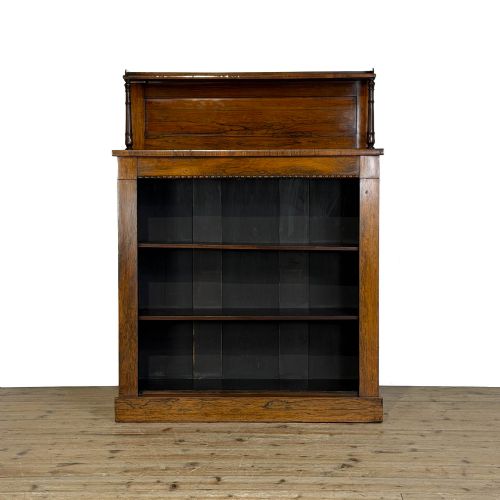
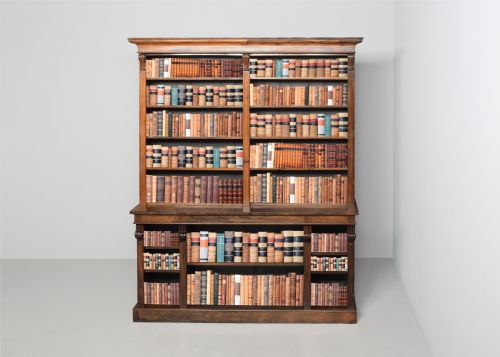
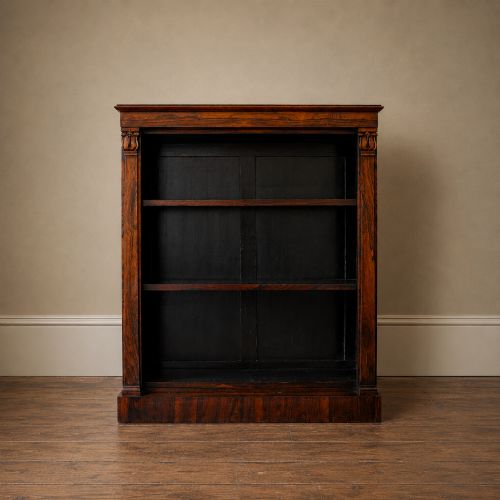
These rosewood library cabinet pieces are substantial places for books and papers, built to anchor a serious room.
Rosewood Library Cabinet
A rosewood library cabinet brings together rich timbers and practical shelving, designed for serious collections of books. When you search for rosewood library cabinet, you find pieces spanning the Georgian, Regency, William IV, and Victorian periods.
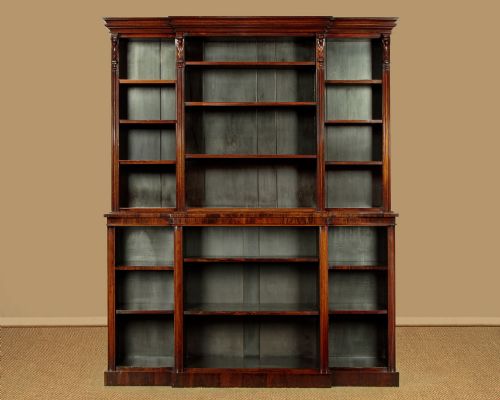
The versions most common on this page are open bookcases and breakfront low bookcases, alongside glazed bookcases and side cabinets. Many examples incorporate adjustable shelves, brass inlay, and enclosed storage for papers.
Makers from the 19th century built these pieces to function as the architectural centrepiece of a gentleman's library or study. They range from compact side cabinets to grand breakfront bookcases housing rows of leather-bound volumes.
How They Were Made
Cabinet makers constructed these pieces using dense rosewood veneers laid over stable secondary woods like pine or oak, occasionally employing solid rosewood for structural members. Workshops utilised brass for inlay, grilles, and mounts, while glass featured in glazed doors to protect valuable texts.
Joinery techniques relied on traditional housing joints and dovetailed drawers to support the heavy weight of books. Surface finishes were hand-polished to bring out the deep grain and reddish-brown colour inherent to the timber.
Even a library clock made the cut amongst the bookcases, proving that time management matters when reading.
What Varies in Quality
The standard of timber selection dictates much of the visual weight, with matched grain patterns and continuous veneer runs separating finer examples from simpler ones. Well-executed brass inlay and crisp mouldings indicate a higher grade of workshop production.
Structural integrity depends on the original design of the shelving supports and the stability of the breakfront carcass over time. Pieces with functioning adjustable shelf mechanisms and robust secondary framing command greater attention from collectors.
Gillows·Morant & Co
The Rosewood Library Cabinet Glossary
- Breakfront
- A cabinet whose central section projects forward from the flanking outer sections. This configuration creates visual depth and helps break up the long wall span of a large bookcase.
- Secretaire
- A desk form incorporating a drop-front writing drawer that conceals small pigeonholes and compartments. It combines the storage of a cabinet with a practical writing surface.
- Chiffonier
- A low sideboard or cabinet developed in the early 19th century, typically featuring enclosed cupboards below shelving or a mirror. They served utilitarian storage needs in libraries and sitting rooms.
- Giltwood
- Wood carved and treated with gold leaf or a metallic gold pigment to create a decorative surface. It appears on finer Regency and Victorian frames and mounts.
- Ormolu
- Finely chased and gilded bronze used for decorative mounts and architectural details on Regency furniture. The technique requires mercury gilding or modern electroplating to achieve its characteristic lustre.
Rosewood Library Cabinet: Frequently Asked Questions
How do I spot a Regency piece?
Regency pieces often display classical proportions, architectural cornices, and restrained brass inlay reflecting the influence of Greek and Roman design. The timber choice frequently emphasises dramatic grain movement.
Construction methods from this era also rely on hand-cut joints and heavier secondary timbers hidden behind the exterior veneers.
Are the shelves usually adjustable?
Many open bookcases and library cabinets from the 19th century feature adjustable wooden shelves supported by brass rack strips. This allowed owners to alter shelf heights for varying book sizes.
Fixed shelving is more commonly found in older Georgian pieces or simpler regional workshop output.
How should I care for rosewood?
Rosewood benefits from stable room humidity and protection from direct sunlight to prevent the timber from fading or drying out. Dusting with a dry, soft cloth maintains the polished surface without the buildup of oils.
Avoid placing these cabinets near direct heat sources which can cause the underlying veneers to lift.