
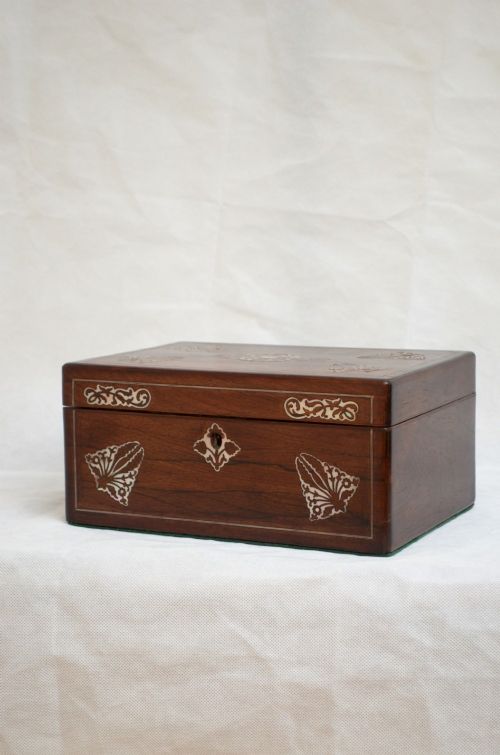
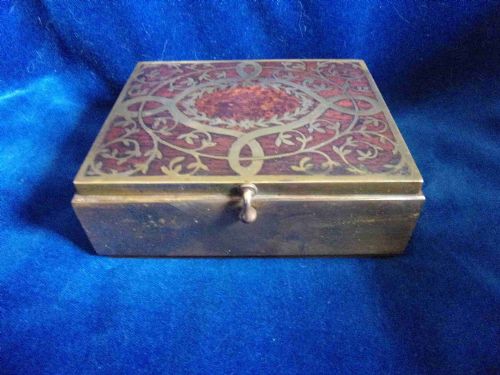


Rosewood Keepsake Box
A rosewood keepsake box offers a tactile way to store your small treasures, drawing on rich dark timbers that age gracefully.
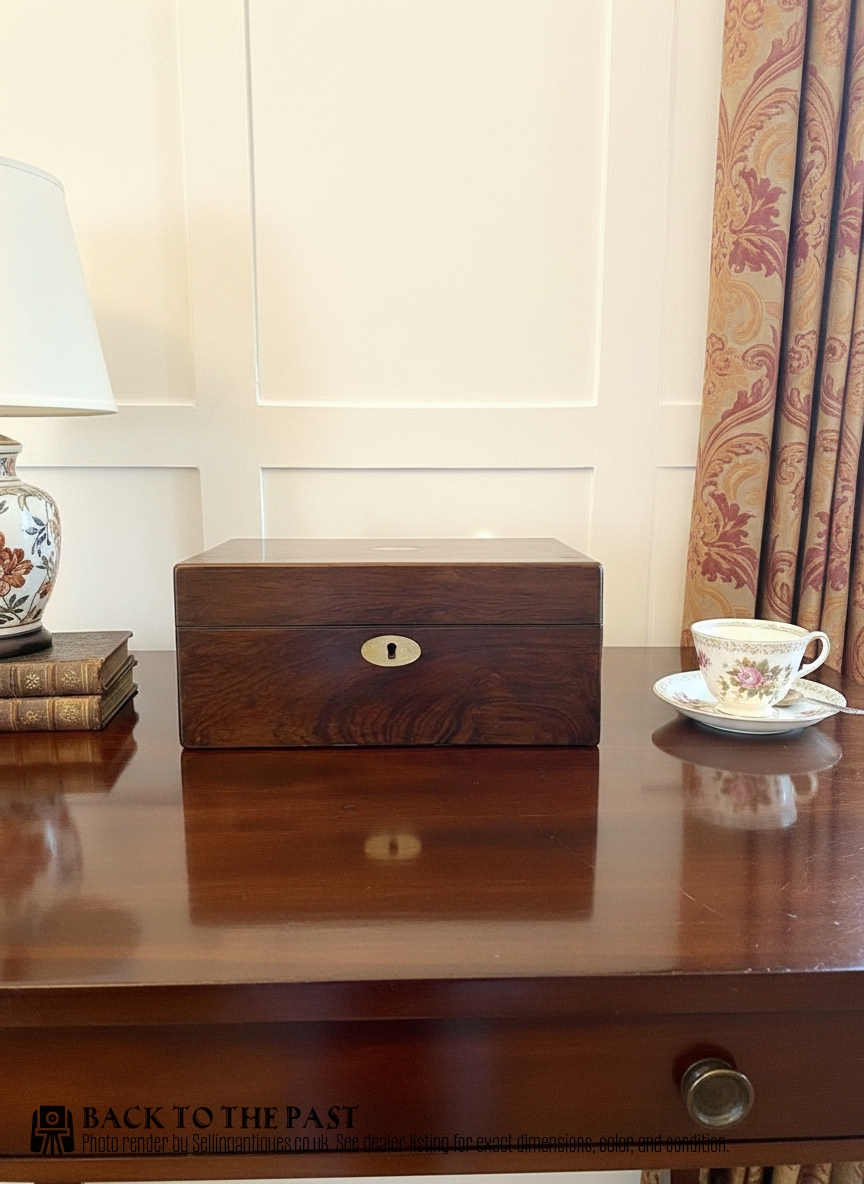
What They Are
A rosewood keepsake box gathers pieces from the Victorian and Regency periods, dating from the nineteenth century around eighteen sixty. These small chests serve as jewellery boxes, dressing boxes, and work boxes designed to house precious trinkets and keepsakes.
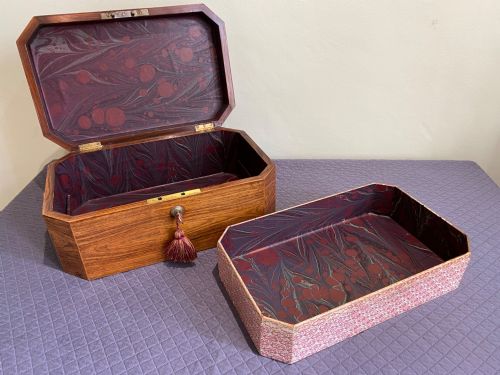
You are most likely to meet rectangular lidded forms made for domestic dressing tables, often featuring compartmented interiors for rings and small items. The examples on this page bring together distinct styles from the nineteenth century with durable construction.
Each rosewood keepsake box reflects the cabinet-making standards of its era, balancing utility with decorative presence. They survive as functional containers that double as small desk or table ornaments.
How They Were Made
Cabinet makers utilised dense rosewood timber for the primary structure, often selecting pieces with rich grain patterns. Surfaces were planed, smoothed, and polished to highlight the natural depth of the wood.
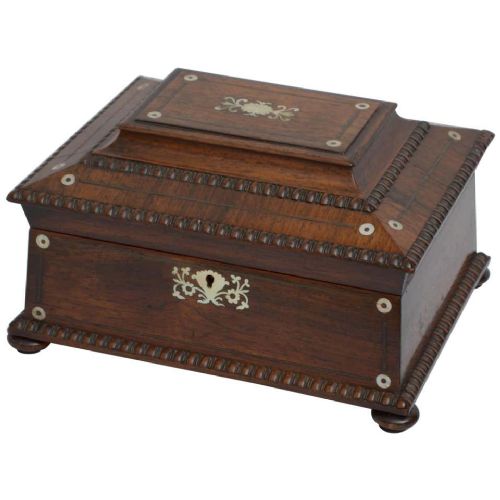
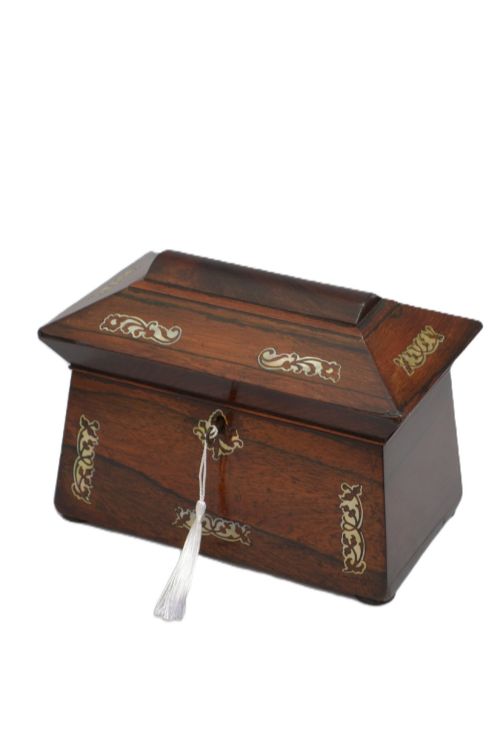
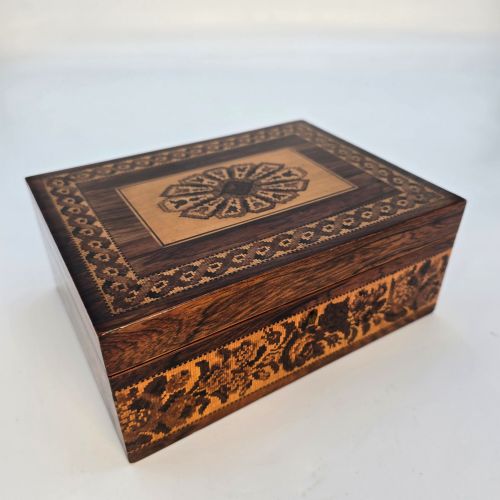
Fine inlay work incorporated contrasting materials such as boxwood and mother of pearl into the rosewood lids and faces. Brass hardware, including escutcheons and hinges, was fitted by hand to secure the lids and compartments.
Retail Price Guide 2026
Typical UK retail prices for rosewood keepsake box, calculated from the Sellingantiques database of over a million retail prices indexed since 2003. This retail price guide relies exclusively on Sellingantiques data; no external sources or auction records are used, so the figures do not describe the wider market.
Listings on this site feature rosewood, brass, boxwood, and mother of pearl across Victorian and Regency styles.
What Varies in Quality
Quality rests in the precision of the marquetry inlay and the careful matching of rosewood veneers across the surfaces. Finer boxes display intricate boxwood and mother of pearl patterns that remain flush with the surrounding timber.
The sophistication of the internal fittings defines the upper tier of these pieces, showing thoughtful compartment layouts for jewellery and letters. Substantial brass work and tight joints further separate the exceptional examples from standard production.
The Rosewood Keepsake Box Glossary
- Rosewood
- A dense, dark timber valued for its distinct grain and deep colour. It provides a durable and decorative shell for nineteenth-century boxes.
- Marquetry
- The art of applying decorative pieces of veneer to a structure to form intricate patterns. In these boxes, it frequently incorporates boxwood and mother of pearl.
- Escutcheon
- A flat brass plate surrounding a keyhole. It protects the surrounding wood and adds a metallic accent to the front of the box.
- Work Box
- A specialised container designed for sewing tools, threads, and small accessories. These interiors often feature lift-out trays and compartmentalised sections.
Frequently Asked Questions
What fits inside a rosewood keepsake box?
These boxes accommodate small personal items such as rings, brooches, letters, and delicate trinkets within their fitted compartments. The internal layouts are proportioned for domestic keepsakes.
Larger dressing boxes also provide space for small glass bottles and grooming tools, keeping everyday accessories organised on a table.
How do I care for rosewood?
Keep the wood away from direct sunlight and excessive heat sources to prevent the rosewood from drying out or splitting. Occasional dusting with a soft, dry cloth maintains the polished finish.
Avoid using liquid cleaners or silicone polishes, as these can damage the historic surface and any delicate marquetry inlay.
How do I date a box?
Dating relies on the stylistic markers of the Victorian and Regency periods, alongside construction methods and materials like mother of pearl and brass. Nineteenth-century examples often exhibit specific hinge types and lining materials.
Comparing the complexity of the marquetry and the form of the brass escutcheon helps narrow the decade of production.
Are these boxes still functional?
The sturdy rosewood construction and working brass hinges mean these pieces remain practical for storing jewellery and small keepsakes today. Their compartments continue to serve their original organising purpose.
Daily use is entirely feasible provided the box is handled with reasonable care and placed on a stable surface.