
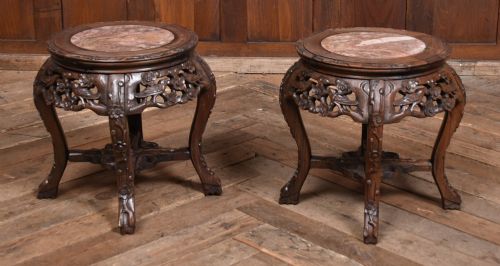
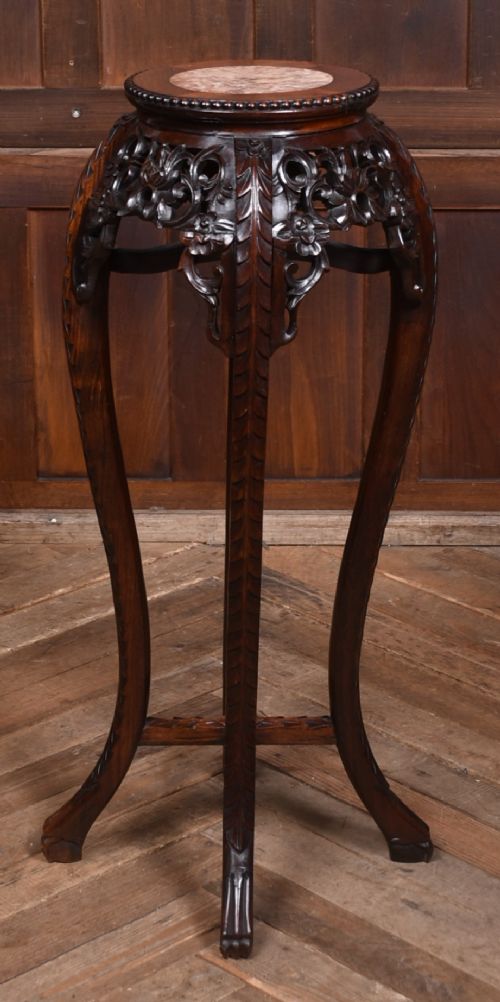


Rosewood Jardiniere Table
A rosewood jardiniere table holds living plants and heavy ceramic bowls, combining sturdy timber frames with decorative surfaces.
Rosewood Jardiniere Table
A rosewood jardiniere table serves primarily as a decorative plant stand, vase holder, or wine cooler. These pieces function as occasional tables in sitting rooms and hallways, designed to elevate plants or vessels above floor level.
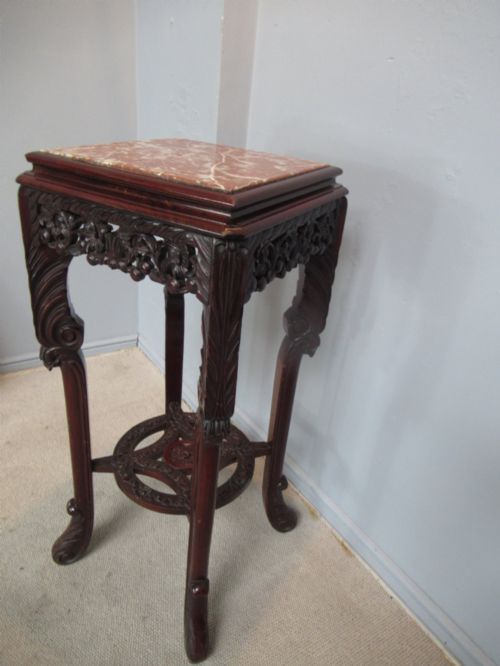
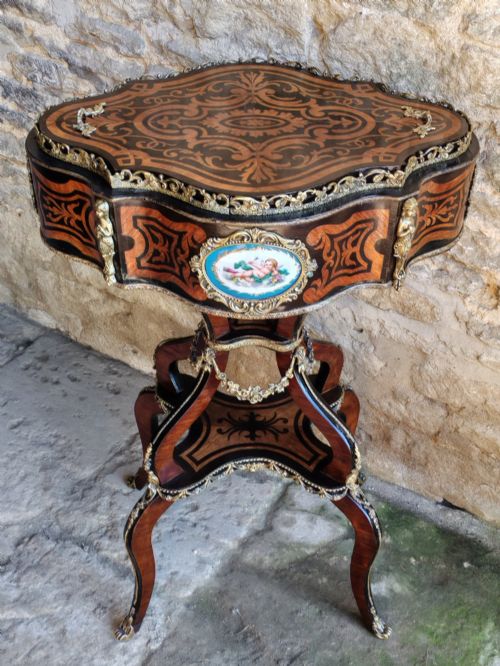
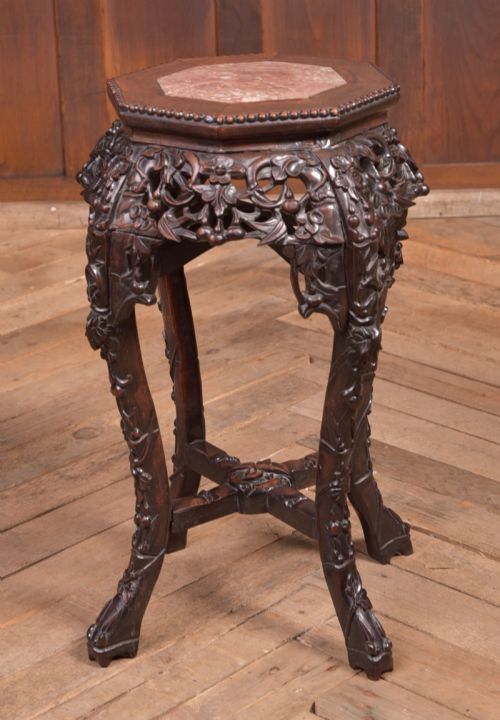
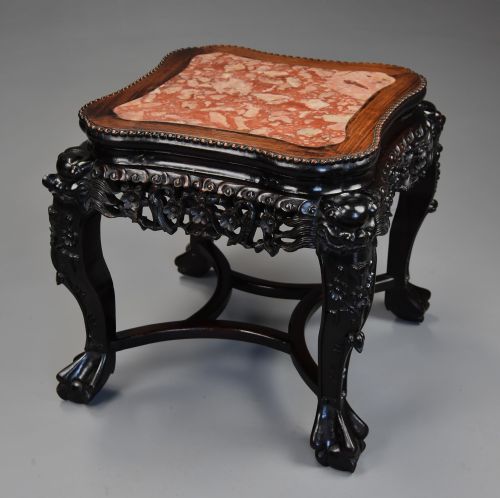
Most examples found here combine the rich timber with contrasting marble inserts, porcelain elements, or gilt metal mounts. Buyers encounter both British period designs in rosewood and substantial Chinese hardwood stands.
The form bridges practical utility and ornamental display, appearing across Victorian, Edwardian, and nineteenth-century periods. Formats range from low pot stands to tall pedestals and occasional tables.
Materials and Construction
Cabinet-makers utilised dense timbers such as rosewood, padouk, and kingwood to support heavy loads of damp soil and stone. These tropical hardwoods resist moisture and hold intricate carved details without splitting.
Inset marble slabs provide a waterproof and cool surface specifically suited for holding pots and vases. Metal mounts in ormolu and gilt bronze add structural reinforcement and decorative contrast to the dark wood.
Listings feature pieces from the Victorian, Edwardian, and Regency periods, alongside Chinese Qing Dynasty exports in hardwood and marble.
Assessing Quality
The depth and crispness of the carved ornamentation separate standard production from superior workshop output. Hand-carved elements display sharp undercut leaves and crisp geometric borders rather than soft, moulded contours.
The selection of the timber grain and the precise fitting of the inset marble top dictate the overall refinement of the piece. High-grade examples feature heavy, figured rosewood or padouk joined with traditional cabinet joints.
The Rosewood Jardiniere Table Glossary
- Jardiniere
- An ornamental pot or stand designed to hold a plant or flower arrangement. These vessels often sit within a dedicated recess or atop a matching pedestal.
- Padouk
- A heavy tropical hardwood with a reddish hue, frequently utilised in Chinese export furniture. It provides the dense structure required for carved plant stands.
- Ormolu
- Gilt bronze mounts applied to furniture for decorative effect. French and nineteenth-century pieces often incorporate these metal details.
- Crocus table
- An alternative term for a bulb or flower table used during the Georgian and Regency periods. These small stands accommodate seasonal plants.
- Whatnot
- A set of open shelves used for displaying ornaments and small objects. Some rosewood variants incorporate plant-holding surfaces.
Rosewood Jardiniere Table: Frequently Asked Questions
What is a jardiniere table used for?
These tables provide a sturdy, raised surface for indoor plants, flower arrangements, and heavy ceramic vases. They protect flooring and furniture from moisture while displaying botanical specimens.
In period interiors, they also functioned as wine coolers or general lamp tables. Their versatile proportions suit corners, window bays, and hallway spaces.
How do I care for a rosewood surface?
Rosewood requires minimal maintenance beyond dusting with a soft, dry cloth. Avoid placing damp pots directly on polished wood without a protective liner.
Keep timber furniture away from direct heat sources and strong sunlight to prevent fading. Natural wax applied occasionally helps nourish the dense grain.
Are marble-top stands waterproof?
The inset marble slab resists water and soil stains from potted plants effectively. This stone centre allows owners to water greenery directly on the stand.
Wooden surrounds still require prompt wiping if water spills over the edge. The stone itself simply needs a gentle wipe with a damp cloth.
How do I distinguish Victorian from Chinese export pieces?
Victorian British stands often follow Regency, William IV, or French styles with turned pedestals and rosewood veneers. Chinese export examples typically feature heavily carved hardwood, padouk timber, and integrated marble tops.
Both traditions date predominantly to the nineteenth century. Examining the joinery and timber species clarifies the origin of the piece.