






Inlaid Wooden Wine Cooler
An inlaid wooden wine cooler is a timber drinking vessel made to keep bottles cool, combining fine cabinet work with practical dining storage.
Inlaid Wooden Wine Cooler
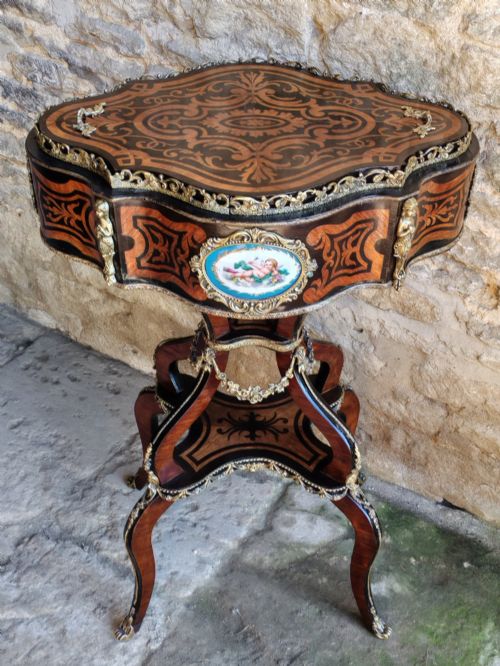
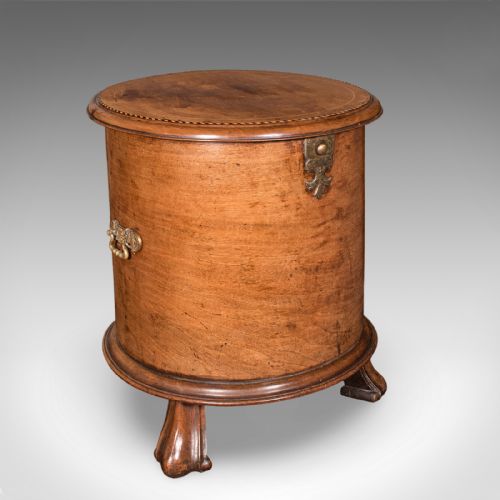
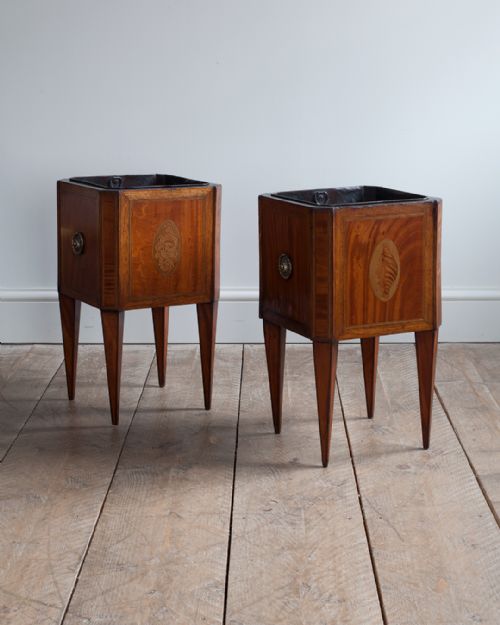
When you search for an inlaid wooden wine cooler, you encounter pieces designed to hold bottles and ice during formal dining. The examples seen on this page span the Georgian, Regency, Victorian and Edwardian periods, appearing in forms such as cellarettes, wine coolers and jardiniere tables.
The most common versions on this page are mahogany cellarettes and satinwood planters decorated with boxwood inlay and marquetry. These items range from serpentine fronted George III designs to late nineteenth century Dutch neoclassical pieces and Edwardian pairs.
Makers and workshops constructed these vessels in various structural formats, including freestanding stands, occasional tables and lidded boxes. Each configuration served the dining room by keeping wine accessible while displaying figured timbers and contrasting stringing.
How They Were Made
Cabinet makers utilised dense hardwoods such as mahogany, walnut, burr walnut and rosewood as the primary structural bodies. They applied contrasting veneers and detailed boxwood inlay to create geometric banding and floral marquetry motifs across the surfaces.
Metal components played a structural and decorative role, with workshops incorporating brass handles, liners and ormolu mounts. These hardware additions provided functional support for lifting heavy loaded vessels while framing the timber grain.
Inlaid Wooden Wine Cooler Retail Price Guide 2026
Typical asking prices for inlaid wooden wine cooler among the pieces listed under this phrase on Sellingantiques today, from the lower quarter to the upper quarter. They describe what is for sale here now, not the wider market.
Listings feature mahogany, satinwood, rosewood and burr walnut across Georgian, Regency, Victorian and Edwardian periods.
What Varies in Quality
The standard of a piece depends upon the depth of figuring in the timber and the precision of the marquetry work. Sharp boxwood inlay and crisp satinwood banding indicate skilled workshop execution.
Construction methods and the presence of original brass hardware distinguish standard production from exhibition pieces. Refined proportion and balanced timber selection separate basic storage boxes from distinguished dining room furnishings.
Freemans of Norwich·Whytock and Reid
The Inlaid Wooden Wine Cooler Glossary
- Cellarette
- A lockable container used for storing wine bottles in a dining room before service. These vessels often feature fitted interior partitions and carrying handles.
- Marquetry
- The art of forming decorative patterns on woodwork by fitting together thin slices of various coloured veneers. This technique creates pictorial designs across tabletops and cooler panels.
- Serpentine
- A furniture front curved in a wave shape, featuring a convex centre flanked by concave ends. This contour requires precise joinery and timber selection.
- Jardiniere
- An ornamental pot or stand designed to hold plants or flowers, frequently adapted in period design to serve as a wine cooler. These items often include metal liners to protect the wood.
- Satinwood
- A durable hardwood noted for its pale golden colour and luminous sheen, frequently utilised for banding and inlay work. It contrasts strongly against darker timbers like mahogany and rosewood.
Inlaid Wooden Wine Cooler: Frequently Asked Questions
What is a wine cellarette?
A wine cellarette is a timber box or stand built to hold bottles and ice in the dining room. They were positioned near the dining table to keep drinks at the correct temperature during long meals.
Many examples feature internal divisions and metal liners. These compartments kept bottles separate and contained melting ice.
How do I date an inlaid wooden wine cooler?
Dating relies upon examining the timber species, the style of the inlay work, and the structural form. Georgian and Regency pieces typically show heavy mahogany with restrained boxwood lines, whereas Victorian and Edwardian versions often display burr walnut or satinwood marquetry.
Hardware details like brass handles and hinges provide further clues to the period of manufacture. Comparing the construction methods to known stylistic periods helps narrow down the decade.
Were these coolers lined with metal?
Many period wine coolers contained fitted metal interiors to hold ice and water directly against the bottles. These removable liners protected the surrounding wooden framework from moisture damage.
Over time, some liners were lost or replaced during repairs. Surviving original metalwork adds authenticity to the piece.
How do I place one in a modern room?
These vessels function effectively as occasional tables, plant stands, or side tables in contemporary interiors. Their compact proportions allow them to sit beside seating areas or in hallways.
The lidded designs also provide discreet storage for household items while retaining their decorative timber surfaces.