


Rosewood Fusee Wall Clock
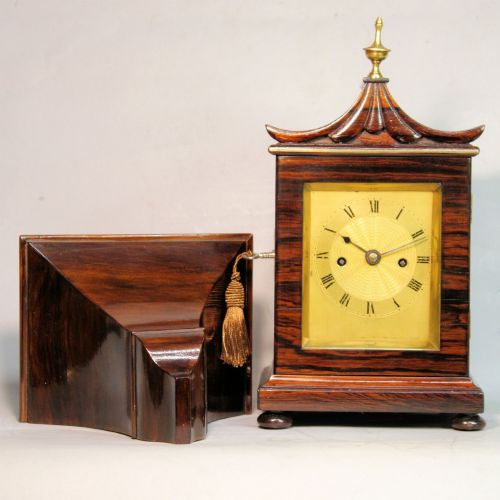
A rosewood fusee wall clock brings precision timekeeping and rich, dark grain into a room, driven by a dependable chain or cord movement.
Rosewood Fusee Wall Clock
When buyers search for a rosewood fusee wall clock, they encounter timepieces spanning the nineteenth century, including Regency, Victorian, and late Victorian examples. These pieces typically take the form of dial clocks, drop-dial clocks, or drum dial clocks, designed to hang securely upon a wall.
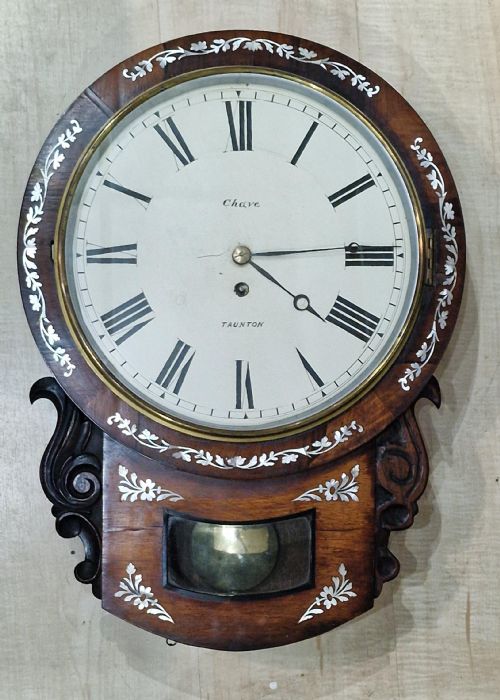
The most common formats on this page are drop-dial clocks housed in rich rosewood cases, often featuring inlaid brass or mother-of-pearl detail. Formats range from octagonal frames to more compact or miniature proportions, originating from both provincial makers and London workshops.
Materials and construction
Cases are constructed from rosewood, selected for its deep, variegated grain, and frequently enhanced with brass inlay, tortoiseshell, or mother-of-pearl accents surrounding the glazed dial. Iron and brass components form the internal mechanisms, where the fusee cone equalises the driving force of the mainspring as it unwinds.
Dial surrounds often take octagonal or round drop-dial configurations, protecting the paper, painted, or metal faces beneath bevelled glass. Movements are engineered as single or twin fusee configurations, occasionally incorporating bell-striking capabilities.
Listings feature nineteenth-century, Victorian, Regency, and late Victorian periods, utilising rosewood, brass, mother-of-pearl, and mahogany.
Assessing craftsmanship and finish
The distinction between standard and superior pieces rests upon the crispness of the rosewood case carving, the subtlety of any brass or mother-of-pearl inlay, and the precision of the dial markings. Finer examples display harmonious proportions in octagonal or drop-dial formats without distortion to the timber.
Internal quality reveals itself in the finish of the fusee movement itself, where clean, well-cut brass wheels and original components dictate mechanical integrity. Signed dials bearing identifiable makers from London or provincial towns elevate the standing of the clock.
Samuel Chave Taunton·Halliday & Rich Bridgwater·L Morris Islington·Kleyser of London·James Bell Bath
The Rosewood Fusee Wall Clock Glossary
- Fusee
- A conical pulley used in mechanical clocks to maintain an even pull on the movement as the mainspring loses tension. This device ensures consistent timekeeping throughout the running cycle.
- Drop-dial
- A clock case featuring a circular dial at the top and an extended lower trunk, often with a glazed window to view the pendulum. This shape became popular for public and domestic spaces during the nineteenth century.
- Drum dial
- A clock design where the case resembles a cylindrical drum enclosing the movement behind the glass face. These models sit compactly against the wall.
- Twin fusee
- A movement incorporating two separate fusee cones and trains, allowing the clock to keep time and strike a bell independently. This setup requires two distinct winding holes on the dial face.
- Mother-of-pearl
- The iridescent internal layer of certain mollusc shells, utilised extensively for decorative inlay on nineteenth-century clock cases. It catches the light against dark rosewood timber.
Rosewood Fusee Wall Clock: Frequently Asked Questions
What is a fusee movement?
A fusee movement uses a conical gear to regulate the power delivered from the mainspring, ensuring the clock runs with consistent force as it winds down.
This mechanical refinement distinguishes better quality nineteenth-century timepieces from standard spring-driven alternatives.
How do I wind a fusee clock?
Winding involves inserting the key into the small hole on the dial face and turning it gently until resistance indicates the spring is fully tensioned.
Take care not to overwind the mechanism, and support the pendulum when moving the clock to prevent damage to the delicate suspension spring.
How can I tell the period?
Dating relies upon case styles, such as Regency proportions versus late Victorian brass inlay, alongside dial signatures and construction techniques.
Earlier nineteenth-century examples often display simpler, cleaner lines, while later Victorian models frequently incorporate more elaborate mother-of-pearl or drop-dial decorations.