

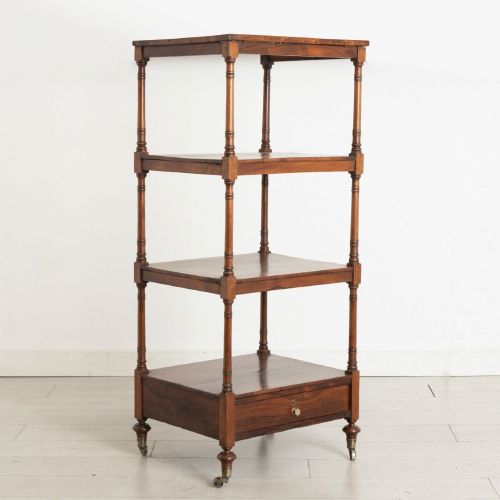


Rosewood Etagere Stand
A rosewood etagere stand brings tiered display space to a room, offering upright wooden shelving crafted for books, ornaments, and display.
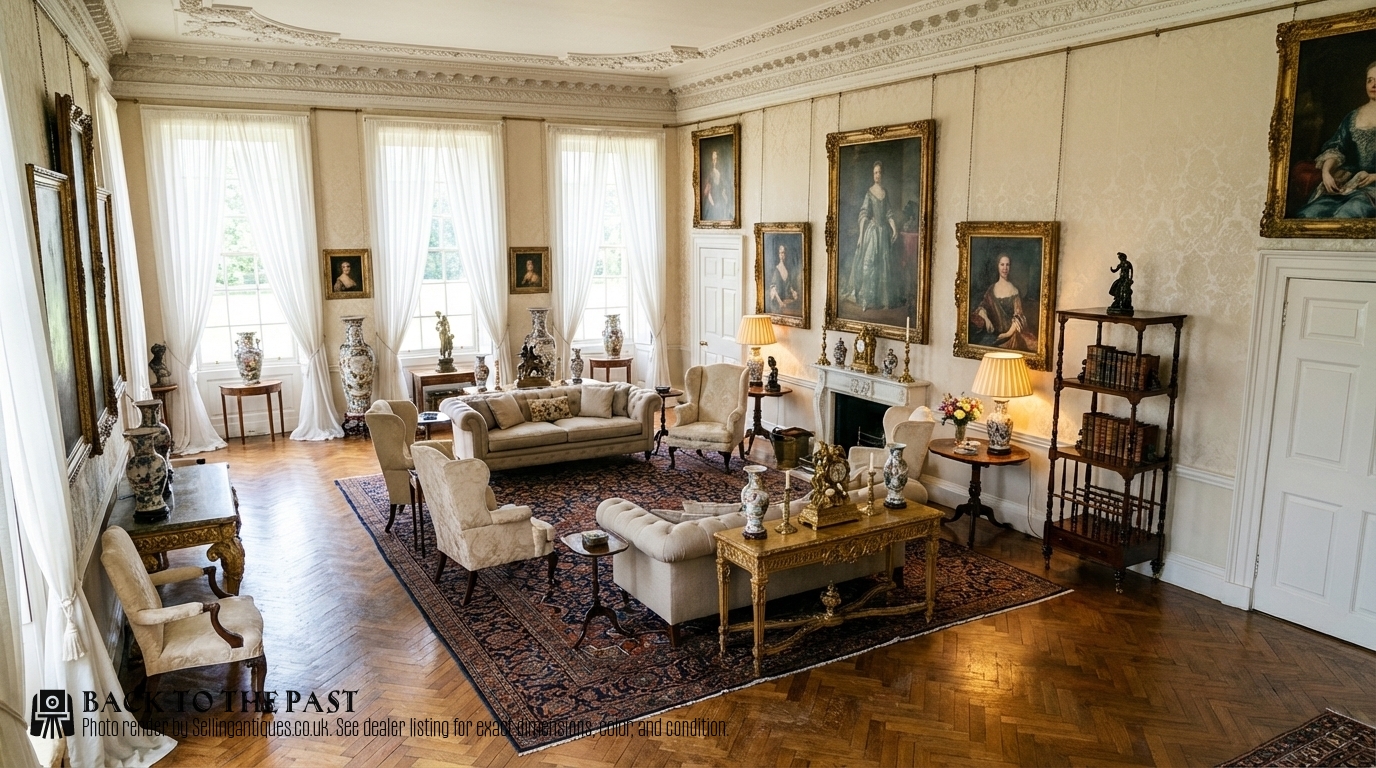
Rosewood Etagere Stand
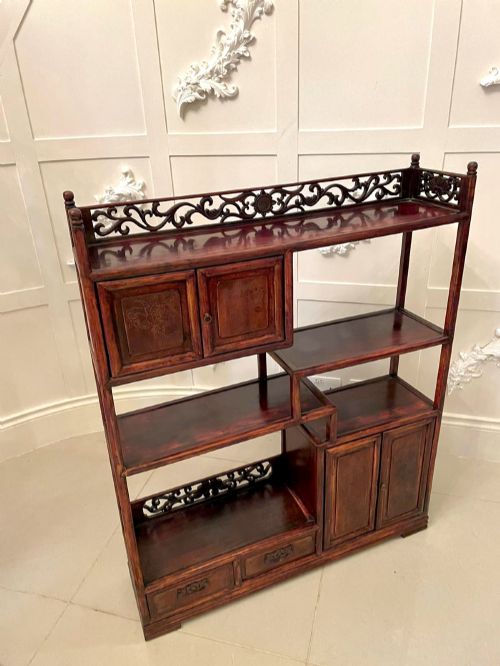
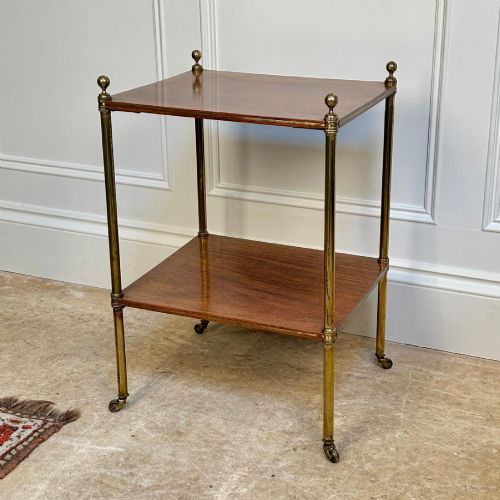
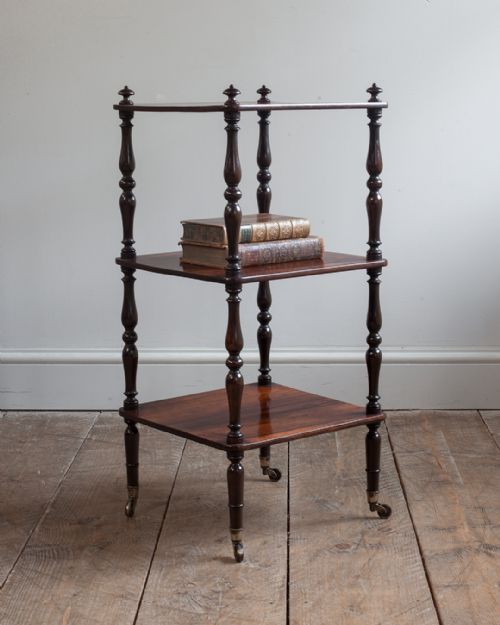
A rosewood etagere stand functions primarily as an open shelving unit, often categorised among whatnots and display shelves in 19th century inventories. These pieces provide multiple tiers supported by upright posts, designed to hold books, ceramics, and decorative objects.
The pieces appearing on this page span the 19th century, incorporating Victorian, Regency, and Edwardian periods. Most examples employ rosewood alongside related timbers such as hardwood, walnut, and satinwood, frequently taking freestanding forms.
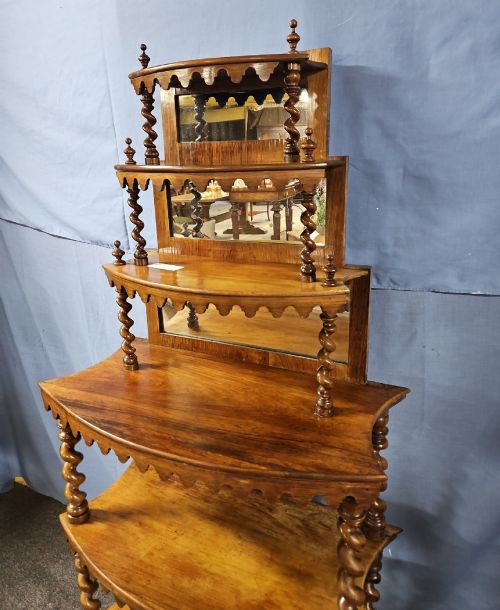
Makers and designers of the period adapted the form into corner units, double-sided bookcases, dumb waiters, and occasional tables. The simpler three-tier and four-tier upright configurations appear most frequently among these listings.
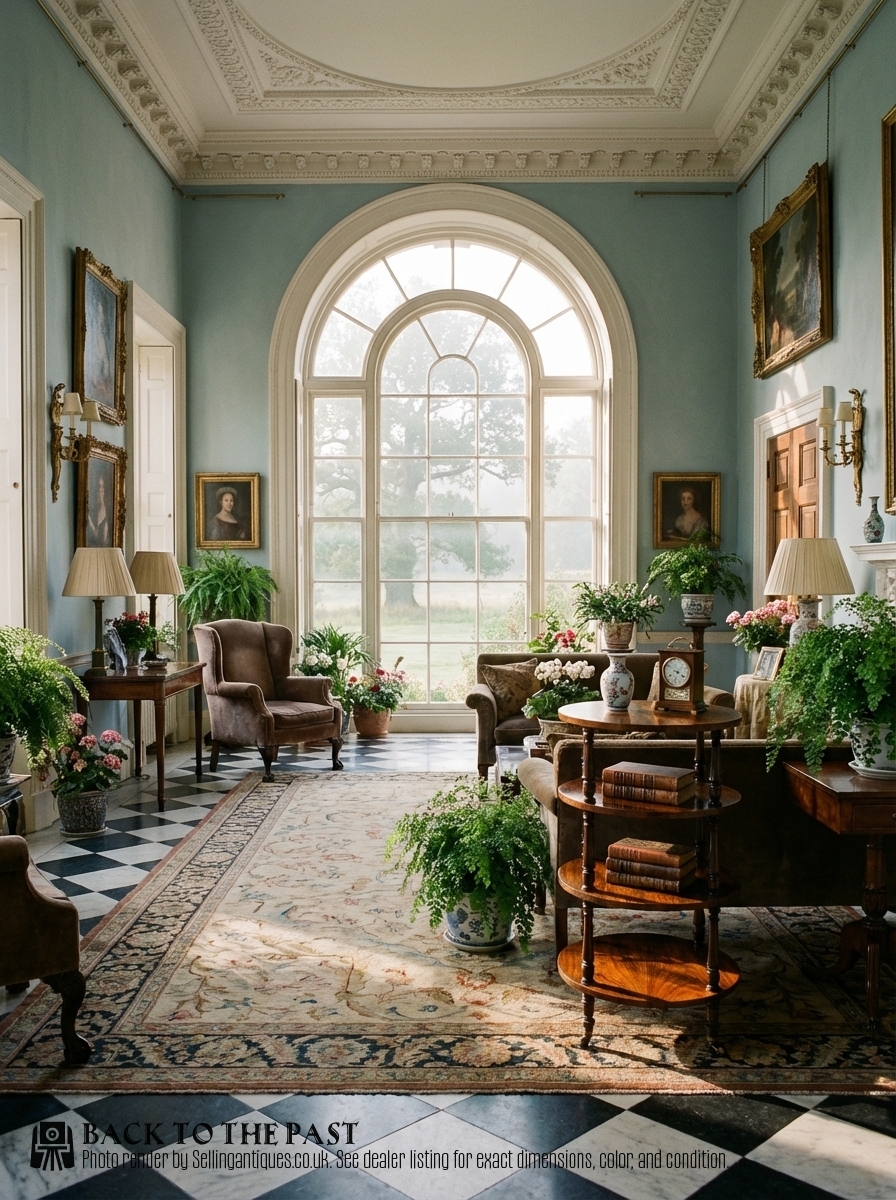
Distinguishing quality across examples
Quality reveals itself through the selection of timber veneers and the crispness of turned supports and joinery. Superior pieces exhibit finer marquetry inlay, robust brass mountings, and balanced proportions across multiple tiers.
Signatures or attribution to recorded makers distinguish exceptional examples from standard production pieces. The integration of functional elements, such as drawers or metamorphic designs, elevates the standard of craftsmanship.
Rosewood Etagere Stand Retail Price Guide 2026
Typical asking prices for rosewood etagere stand among the pieces listed under this phrase on Sellingantiques today, from the lower quarter to the upper quarter. They describe what is for sale here now, not the wider market.
Some nineteenth century examples include metamorphic tables that literally change their mind and turn into tiered shelving.
Edwards & Roberts·Samson & Son London·Donald Ross
The Rosewood Etagere Stand Glossary
- Etagere
- A piece of furniture consisting of a set of open shelves for displaying small objects. This form developed in France and became popular across the nineteenth century.
- Whatnot
- A multi-tiered stand or piece of furniture with shelves for displaying ornaments or books. The name reflects its versatile utility in period interiors.
- Ormolu
- Gilded bronze or brass applied as a decorative mount on furniture. It gained widespread use during the French Rococo Revival and Napoleon III periods.
- Marquetry
- Decorative veneer work formed by fitting together small pieces of wood, shell, or ivory to create pictorial designs. It appears frequently on cabinet furniture from the late nineteenth century.
- Metamorphic
- Furniture designed to transform from one form or function into another, such as a table altering into tiered shelving. These pieces demonstrate inventive nineteenth century mechanical carpentry.
Rosewood Etagere Stand: Frequently Asked Questions
What is a rosewood etagere stand used for?
These tiered stands served historically to display decorative objects, porcelain, and books within reception rooms. Their open shelves allow items to be viewed from multiple angles.
Today, they function well in modern interiors for displaying collections or holding everyday items while occupying minimal floor space.
How do I identify a Regency period stand?
Regency pieces typically date from the early nineteenth century, displaying cleaner architectural lines, classical proportions, and dark rosewood veneers. They often feature simple turned columns and brass accents rather than heavy carving.
Comparison with documented pieces from the 1820s and 1830s helps confirm the period characteristics and joinery methods.
Are corner etageres common?
Corner units appear specifically designed to fit into room junctions, making efficient use of awkward spaces. They share the multi-tiered construction of freestanding stands but feature triangular or quadrant shelves.
Victorian cabinetmakers produced these corner variations to maximise display capacity in smaller parlours.
What is the difference between an etagere and a whatnot?
While both terms describe multi-tiered shelving units, whatnot is a traditional British descriptor frequently applied to nineteenth-century upright display stands. Etagere often implies a French influence or lighter decorative framework.
In practice, makers and dealers used the terms interchangeably across the Victorian and Regency eras.
How do I care for antique rosewood furniture?
Rosewood requires stable humidity levels and protection from direct sunlight to prevent the timber from drying or fading. Regular dusting with a soft, dry cloth preserves the polished surface.
Avoid placing damp items directly on the veneer and consult a professional conservator for deep cleaning or wax maintenance.