



Rosewood Etagere Shelves
Rosewood etagere shelves are tiered open display pieces designed to hold books and ornaments, bringing rich timber grain and architectural verticality into a room.
Rosewood Etagere Shelves
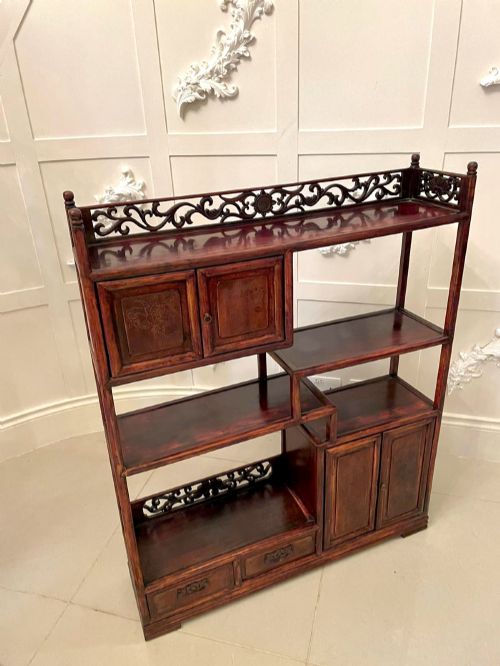
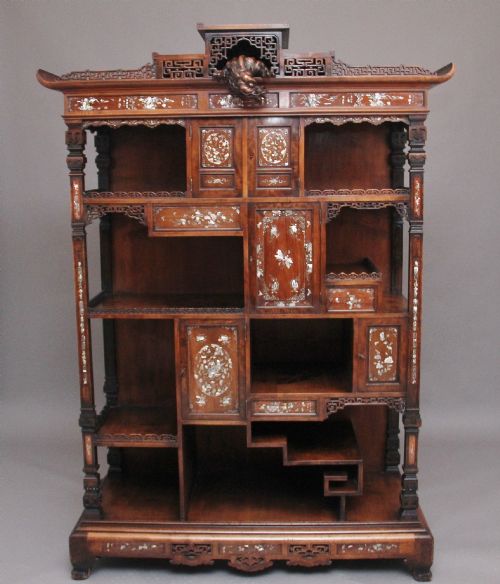
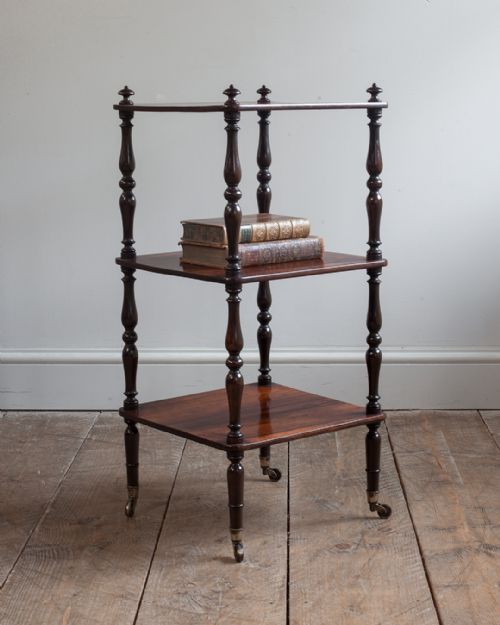
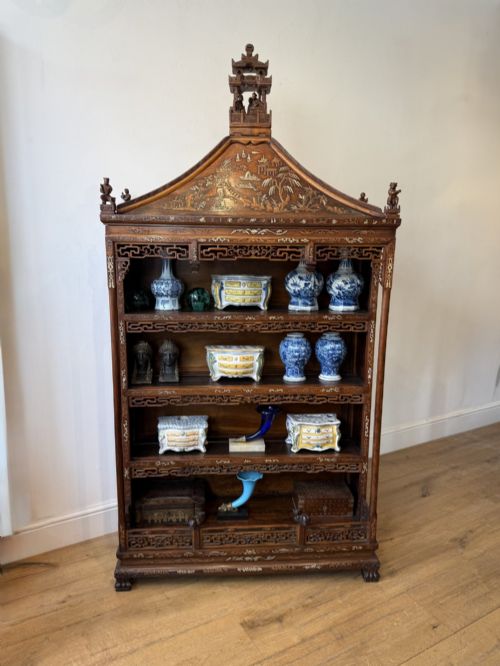
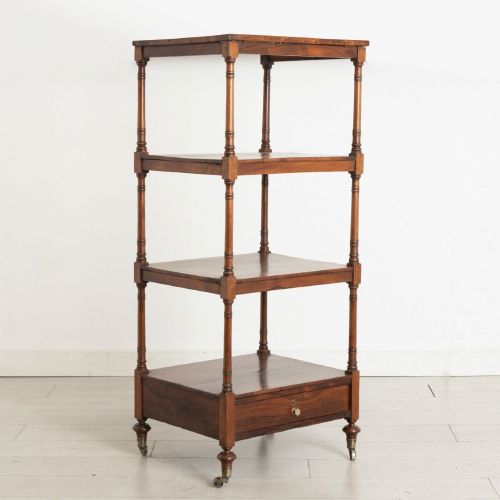
Rosewood etagere shelves belong to a lineage of multi-tiered open display furniture spanning the Regency, Victorian and Edwardian eras. Buyers searching for rosewood etagere shelves will frequently encounter tiered whatnots, freestanding corner units and open bookcases designed for displaying small decorative objects. These pieces range from simple three-tier stands to elaborate double-sided bookcases and Chinese Qing style cabinets.
The materials and influences stretch across different design movements, including French Napoleon III, Chinoiserie and Anglo-Indian carving traditions. While many examples are strictly British Victorian or Regency productions, international aesthetics heavily shaped the forms through inlaid motifs and pagoda silhouettes. The primary function remains the elevation and organisation of treasured items across multiple open platforms.
How they were made
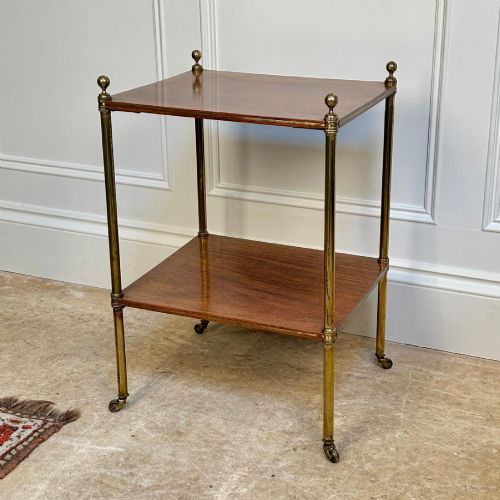
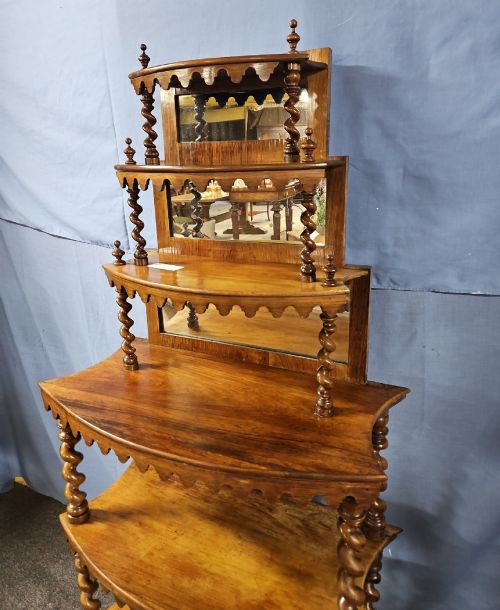
Cabinetmakers constructed these tiered units primarily from dense, richly figured rosewood, frequently supported by slender turned columns or brass uprights. Timber selection mattered immensely for visual weight, as the dark grain provided a striking backdrop for stacked shelves. Hardwood, mahogany and walnut also appeared in related pieces, though rosewood remained the favoured choice for high-status display furniture.
Decoration relied on fine brass mounts, subtle inlay work, or intricate surface carving rather than heavy structural embellishment. French influences brought ormolu mounts and delicate parquetry, whilst Asian export pieces showcased profuse openwork carving in Hongmu and similar dense timbers. Joints were meticulously turned and fitted to support multiple ascending tiers without losing rigidity.
Materials paired with rosewood across these pieces include brass, mother of pearl, bone inlay, and glass.
What varies in quality
The tier count and structural ambition dictate much of the initial distinction, moving from basic three-tier stands up to towering six-tier corner units and double-sided bookcases. Superior examples demonstrate exceptional timber figuring, where the grain pattern of the rosewood flows harmoniously across each shelf and support upright. Poorer specimens rely on flat, uninteresting timber boards lacking depth or chatoyancy.
Casting and metalwork quality separate standard production from exceptional workshops, particularly in the finish of brass castors, galleries and turned finials. Inlaid details executed in mother of pearl, bone or contrasting woods demand precise hand-fitting that reveals the maker's discipline. Proportions also govern value, as unusually small or exceptionally tall symmetrical stands require superior joinery to remain stable.
Samson and Son London
The Rosewood Etagere Shelves Glossary
- Whatnot
- A nineteenth-century multi-shelved stand used for storing or displaying books, ornaments and curiosities. It is essentially synonymous with the etagere in British domestic interiors.
- Ormolu
- Gilded bronze mounts and decorative trimmings applied to furniture. It is frequently found on French-influenced nineteenth-century pieces.
- Shodana
- An asymmetrical Japanese or Chinese display cabinet featuring staggered shelves and compartments. These pieces heavily influenced late Victorian aesthetic taste.
- Hongmu
- A traditional Chinese term for dense hardwoods, including rosewood varieties. It is prized for its heavy weight and deep colouration.
Rosewood Etagere Shelves: Frequently Asked Questions
What were rosewood etagere shelves originally used for?
These multi-tiered stands served as formal display furniture in nineteenth-century drawing rooms for books, ceramics and decorative ornaments. They kept prized possessions visible and organised while adding vertical architectural interest to domestic spaces.
Over time, their role evolved from utilitarian display to focal points for collecting decorative arts, ranging from Japanese blue-and-white porcelain to small bronzes.
How do I tell a Regency whatnot from a Victorian one?
Regency pieces generally exhibit cleaner classical restraint, often featuring plain turned columns, brass castors and rich, dark rosewood grains circa eighteen-twenty to eighteen-thirty. Victorian examples tend to introduce more elaborate turning, fretwork galleries, inlaid details and occasional corner configurations.
Proportions also offer clues, as Regency items frequently favour architectural symmetry, whereas Victorian iterations sometimes lean towards eclectic revival styles like Chinoiserie or Japonisme.
Can these shelves hold heavy books?
Most etagere and whatnot designs are intended for light display rather than heavy library storage. Their slender turned columns and open shelf construction prioritise elegance over weight-bearing capacity.
While lower shelves can comfortably support substantial volumes, upper tiers are best reserved for lighter decorative objects, plates and small collections.
How do I care for antique rosewood furniture?
Keep rosewood furniture away from direct sunlight and heat sources to prevent the rich timber from fading or splitting. Regular dusting with a dry, soft cloth preserves the natural polish without building up waxy residues.
Occasional treatment with appropriate microcrystalline wax helps nourish the dry grain and maintain the deep sheen characteristic of nineteenth-century cabinetwork.