


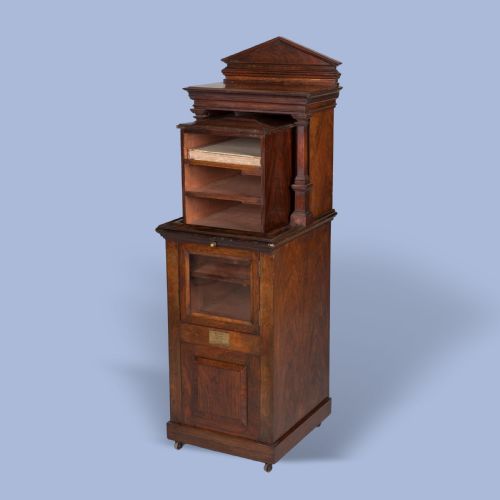


Rosewood Canterbury Cabinet
These rosewood canterbury cabinet pieces are sturdy organisational furniture designed to hold sheet music and periodicals.
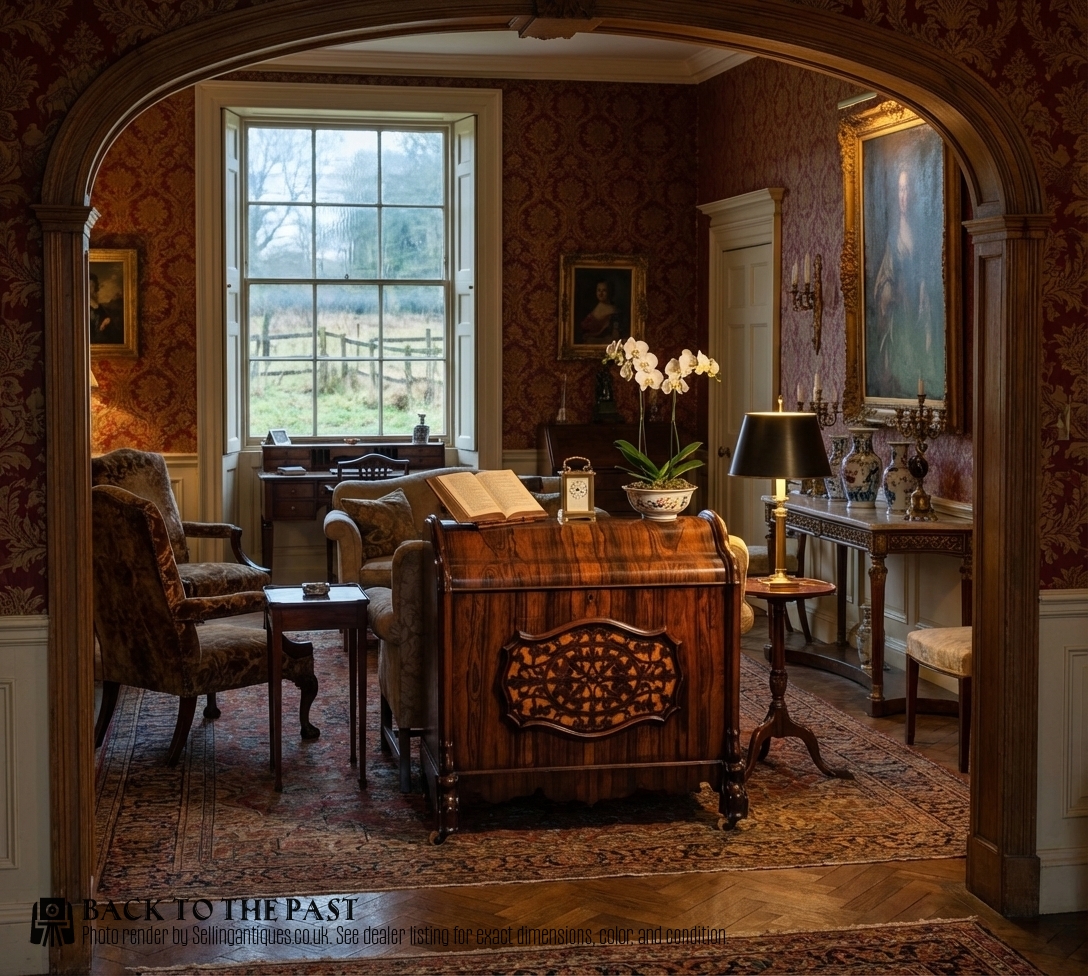
Rosewood Canterbury Cabinet
A rosewood canterbury cabinet combines traditional partitioned rack storage with enclosed shelving or drawer space, originating as a dedicated piece for sheet music and folios. Buyers seeking a rosewood canterbury cabinet encounter diverse nineteenth-century examples spanning William IV, Victorian, and Edwardian periods.
The listings show forms ranging from open canterburys to music cabinets, side cabinets, and étagères with integrated music racks. French and Gothic Revival interpretations appear alongside standard Victorian designs.
Most pieces date from the nineteenth century, utilising dark exotic timbers and incorporating lower drawers or glazed doors. The selection includes multi-functional side cabinets and music cabinets featuring marquetry inlay.
How they were made
Cabinet makers utilised dense rosewood and gonçalo alves timbers, frequently selecting them for their rich grain and deep colour. Surfaces often display marquetry inlay or intricate carved details.
Brass fittings, mirrored glass panels, and ceramic elements appear across the pieces to provide functional hardware and decorative contrast. Structural joinery supports partitioned slots for music storage alongside enclosed cabinet sections.
Rosewood Canterbury Cabinet Retail Price Guide 2026
Typical asking prices for rosewood canterbury cabinet among the pieces listed under this phrase on Sellingantiques today, from the lower quarter to the upper quarter. They describe what is for sale here now, not the wider market.
Materials documented across the pieces include rosewood, gonçalo alves, brass, glass, ceramic, mahogany, and mirror.
What varies in quality
The sophistication of the timber selection and inlay work dictates the distinction between standard production and finer pieces. Elaborate carving, marquetry patterns, and secondary woods such as mahogany elevate individual cabinets.
Multi-functional designs that integrate drawers, mirrors, or specialised partitions demonstrate higher craftsmanship than simpler open frameworks. The integration of brass and ceramic components further separates basic utilitarian items from decorative examples.
The Rosewood Canterbury Cabinet Glossary
- Canterbury
- A low stand or cabinet with partitioned sections, originally designed to hold sheet music or books. It frequently includes a small drawer beneath the rack.
- Marquetry inlay
- Decorative patterns formed by fitting contrasting pieces of veneer into a solid wood background. This technique creates detailed floral or geometric motifs on cabinet doors and tops.
- Gonçalo alves
- A dense exotic hardwood with striking contrasting grain patterns, sometimes called zebrawood. It was utilised in fine nineteenth-century cabinet making.
- Étagère
- An open piece of furniture with multiple tiers for displaying small objects or holding books. In music cabinets, it is often combined with rack storage below.
Rosewood Canterbury Cabinet: Frequently Asked Questions
What is a canterbury cabinet used for?
These pieces were originally designed to hold sheet music, folios, and periodicals in nineteenth-century drawing rooms and parlours. The partitioned vertical sections kept bound scores upright and organised.
Today, they function well as side tables or storage units for modern magazines, records, and books while retaining their period character.
How do I identify a Victorian canterbury?
Victorian examples typically feature dark rosewood timber, turned supports, and distinct vertical divisions for music storage. Many incorporate a shallow lower drawer or are combined with small cabinets and whatnot shelving.
Pay attention to the presence of marquetry inlay, brass castors, and period carved details which help distinguish Victorian and William IV pieces from later revivals.
Are music cabinets and canterburys the same?
While both house sheet music, traditional canterburys rely primarily on open partitioned racks with a lower drawer. Music cabinets usually feature enclosed doors, shelves, or drop-front compartments.
Listings often merge these categories due to overlapping nineteenth-century designs that combined open racks with enclosed cabinet storage.
How do I care for rosewood furniture?
Rosewood benefits from stable indoor humidity and protection from direct sunlight to prevent the timber from fading or drying out. Dusting with a soft, dry cloth is usually sufficient for regular maintenance.
Avoid placing these cabinets near direct heat sources and use mild, wax-based polishes sparingly to preserve the natural finish of the wood.